Pārsa (PAHR-sah)
Land of the Persians
The terraces of Takht-e Jamshid rise out of the high desert like steps to the heavens, their columns casting long shadows across the plain. Fires burn in braziers at dawn, their smoke curling into the sky, carrying prayers not of conquest, but of remembrance. Along the great staircases, reliefs of men and women from many lands bow toward the hall of meeting, carved reminders of the Accord’s promise that all cultures would be honored.
Caravans stream in from the east and west: camels burdened with silk, horses from the steppes, scribes carrying tablets sealed in clay, parchment, and wood. Within the great audience hall, archivists record each treaty in triplicate, their careful hands etching memory into permanence. The scent of incense and ink mingles with the dry air, while voices debate in Persian, Aramaic, and Greek — a chorus of tongues stitched together by philosophy.
In the streets below, children chase one another past gardens fed by qanats, while poets recite verses under cypress trees. Merchants haggle in shadowed bazaars, and travelers from Zhongguo, Suvarnabhumi, and Hellas mingle, each finding words and gestures that bridge their worlds. Knowledge here is not guarded by walls but shared across thresholds, as easily as water poured into a clay cup.
For the people of Pārsa, memory itself is sacred. To destroy a story, a song, or a name would be to shatter a piece of asha — truth, the order of the cosmos. Their land, once scarred by conquest, now carries a new destiny: not to command, but to preserve, so that the flame of wisdom may never again flicker in the wind.
Historical Origins
Pārsa traces its roots to the great Achaemenid Empire, which at its height united vast territories stretching from Anatolia to the Indus. Even after Alexander’s campaigns broke the empire, the Persian plateau remained a cultural and political powerhouse, with Persepolis standing as a symbol of continuity. By the 1st century zc, the Persian heartlands had reorganized into a federated system of satrapies bound more by culture than conquest. The people of Pārsa viewed themselves not as subjects of fleeting kings but as stewards of a civilization stretching back to Cyrus and Darius.
When the near-disaster at the Library of Alexandria brought the world to the brink of cultural loss, it was a Persian voice, Ardashir of Persepolis, who argued most forcefully for a permanent covenant of preservation. Pārsa thus became not only a founding signatory of the Accord but also one of its chief architects. Their ancient tradition of record-keeping, monumental architecture, and Zoroastrian reverence for asha (truth, order) made them natural champions of continuity.
Philosophy & Governance
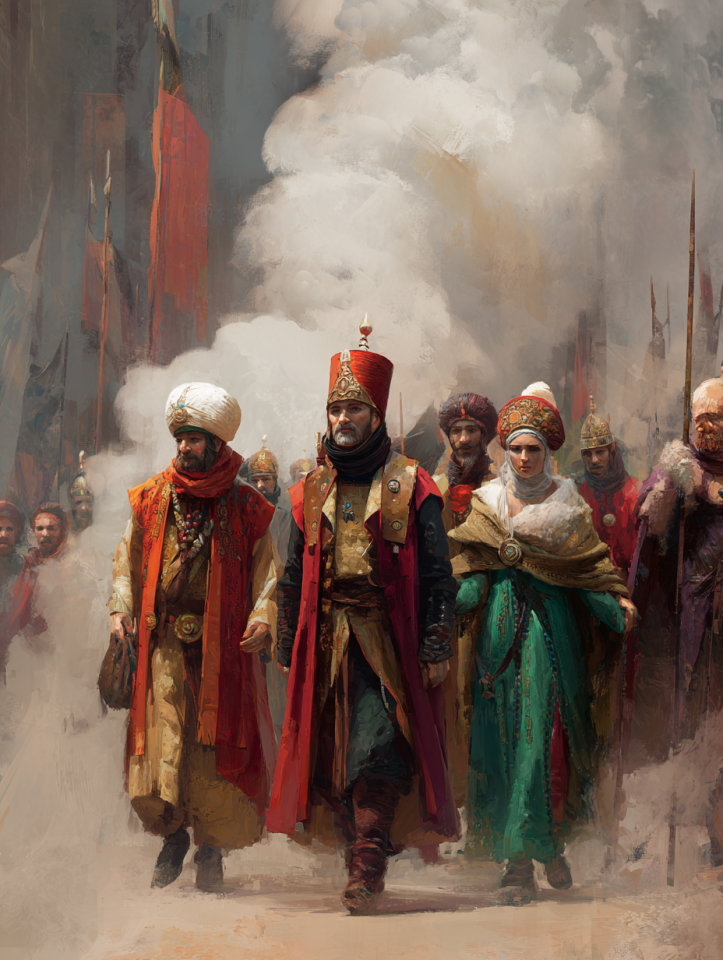
Pārsa is guided by the principle of hama-dan — “all together” — which reflects the Persian belief in unity through diversity. Instead of monarchs ruling absolutely, leadership rotated among councils of nobles, priests, and scholars who formed a triad of governance. While kings still held ceremonial authority, the Accord shifted emphasis from royal lineage to civic stewardship. In Pārsa’s interpretation of the Accord, conquest was folly, but stewardship of knowledge was divine duty.
This governance style produced a blend of pragmatism and idealism. Laws were codified not merely for order but to maintain cultural memory. The Zoroastrian duality of light and darkness was reinterpreted in political terms as preservation versus oblivion, reinforcing their role as guardians rather than conquerors.
Contributions to the Accord
Pārsa brought several foundational elements to the global table:
Administrative Systems: The satrapy model influenced later Accord federations, providing a template for balancing local autonomy with global cooperation.
Record-Keeping & Archives: From clay tablets to parchment, Persians had long traditions of storing decrees, treaties, and genealogies. These methods informed the Accord’s first standards of preservation.
Engineering & Infrastructure: Canal systems and qanats developed in Pārsa were shared widely, ensuring agricultural stability in arid regions.
Philosophical Tradition: Zoroastrian ideals of truth and stewardship inspired the Accord’s ethos that preservation was a universal, moral duty.
Cultural Identity
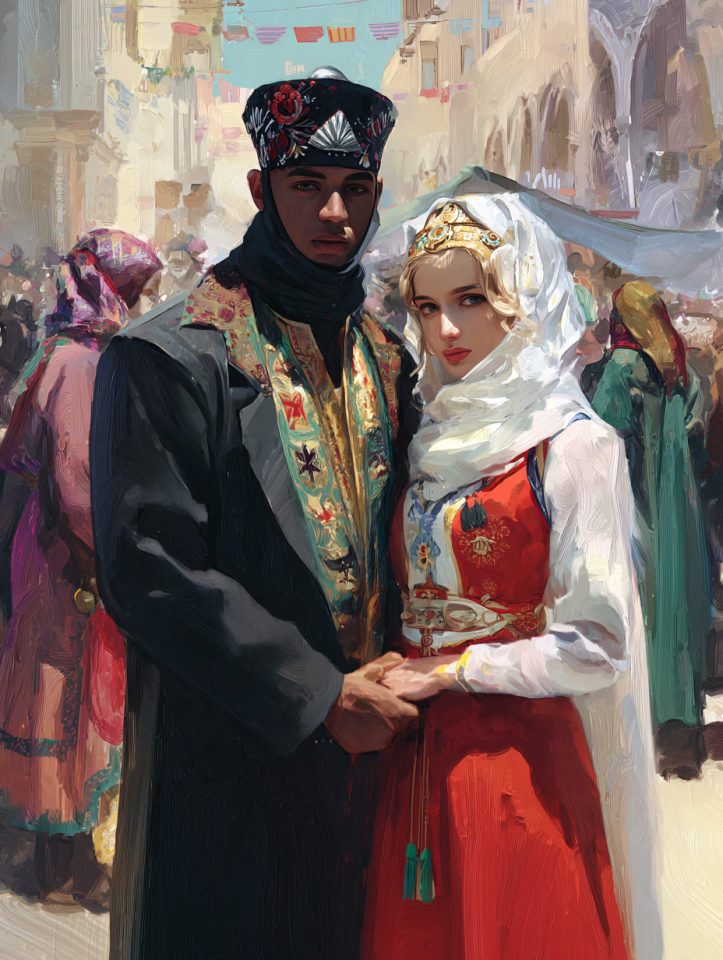
Persian culture shaped much of Koina’s shared lexicon and iconography. Architectural styles of grand columns and fire temples spread into cooperative design, while Persian poetry became a touchstone for beauty in language. Music, rooted in both courtly and nomadic traditions, traveled along caravan routes, influencing neighboring cultures.
The Persians also insisted on ceremonial grandeur in Accord proceedings. To them, ritual reinforced memory; thus, each signing was marked by sacred fire, chanting, and public inscriptions. Language itself became a shared art form: Persian loanwords entered many tongues, especially in the vocabulary of law and governance.
Capital City
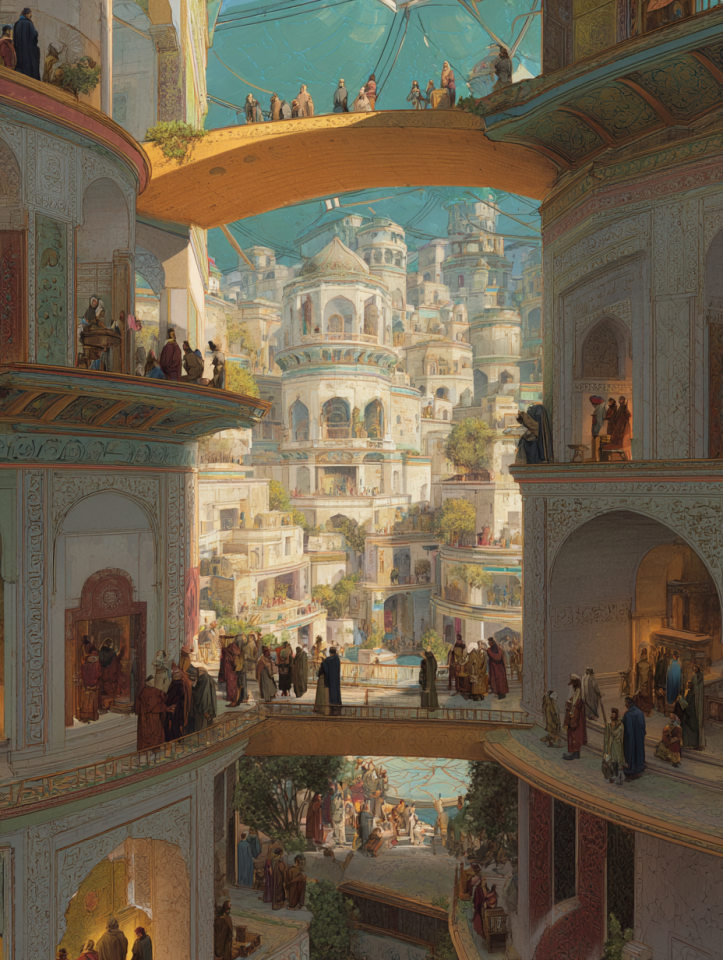
The capital of Pārsa is Takht-e Jamshid (Persepolis) — 29.934°N, 52.891°E — chosen both for its symbolic weight and its architectural splendor. Though partially damaged in Alexander’s time, it was rebuilt as a living seat of the Accord. Its great terrace became the stage for councils, with reliefs of many peoples carved as a reminder of diversity within unity.
Libraries were constructed alongside the ceremonial halls, including one of the Accord’s first Triple Archives (texts stored in three languages and three mediums to ensure survival). Its strategic location between Mesopotamia and the Iranian plateau also made it a natural crossroads for east–west exchange.
Legacy & Global Role
Pārsa remains one of the most enduring pillars of the Accord system. While other blocs shifted focus to navigation, trade, or philosophy, Pārsa anchored the Accord in continuity and order. They became the guardians of treaties, the mediators of disputes, and the protectors of cultural memory. Their archivists traveled widely, helping other blocs develop their own preservation systems, while their engineers shared qanat and irrigation methods far beyond the plateau.
Even centuries later, the Persian model of governance and record-keeping continues to define the cooperative world. Their legacy is not of empire, but of stewardship — a people who transformed the memory of conquest into a philosophy of preservation, shaping the very identity of Koina.
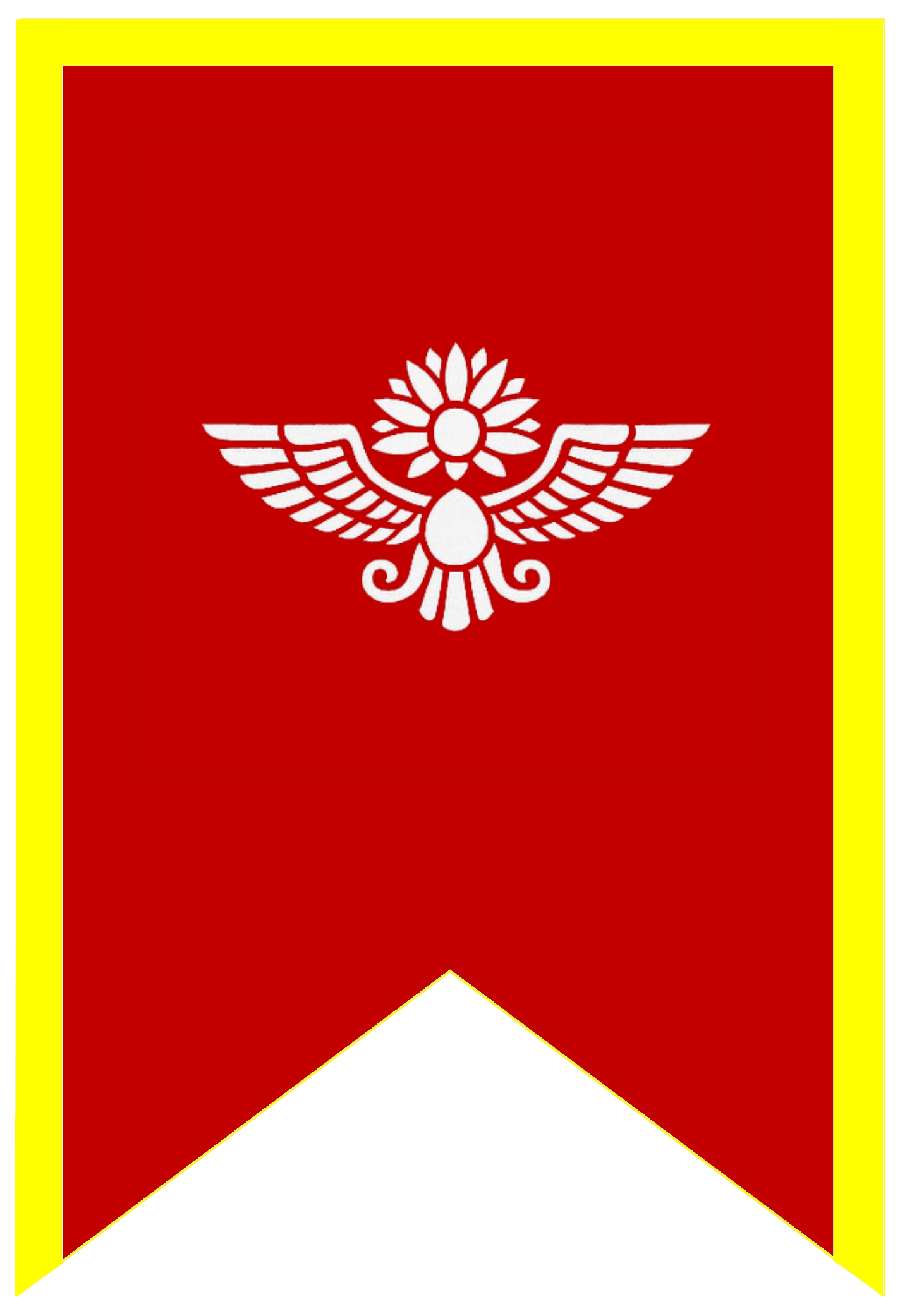
Crimson for royal authority, gold for wealth/power, winged sun as Zoroastrian/imperial symbol.
Type
Geopolitical, Country
Capital
Leader
Leader Title
Related Ranks & Titles
Controlled Territories
Notable Members











Comments