
Āryāvarta (AH-rya-var-tah)
Land of the Noble Ones
The Ganges winds broad and shimmering, its banks alive with chants, prayers, and debate. Pilgrims bathe in sacred waters as scholars sit beneath banyan trees, debating the nature of truth. Across the city of Pataliputra, elephants move slowly through bustling streets, their tusks gilded with inscriptions, carrying scrolls destined for preservation halls.
Wooden palisades ring the city, but its heart beats in the courtyards where monks, nobles, and merchants meet. Here, philosophy is not confined to cloisters but woven into civic life: judges weigh disputes by principles of dharma, while healers consult both Ayurveda and astronomy to guide their remedies. Even artisans and weavers speak with reverence for balance, embedding symbols of cosmic order into their craft.
Travelers arriving from Pataliputra or Zhongguo are greeted by a city both ancient and ever-renewing. Markets spill over with spices, ivory, and manuscripts written in Sanskrit, Prakrit, and Pali. The air carries the mingled fragrance of sandalwood and ink, incense and curry leaves, each a reminder that knowledge here is not distant, but lived daily.
For the people of Āryāvarta, the Accord was a natural extension of their own philosophy. Preservation was not only of texts and monuments but of balance itself: to forget was to lose harmony, to preserve was to awaken compassion. To them, knowledge was a form of liberation — a gift meant not to conquer, but to enlighten.
Historical Origins
Āryāvarta had long been a crucible of thought, where Vedic traditions evolved alongside Buddhist and Jain teachings. Its sages debated the self, the cosmos, and the moral order with equal fervor. By the 0 zc, the Mauryan Empire, centered in Pataliputra, had made the region a hub of administration and philosophy alike.
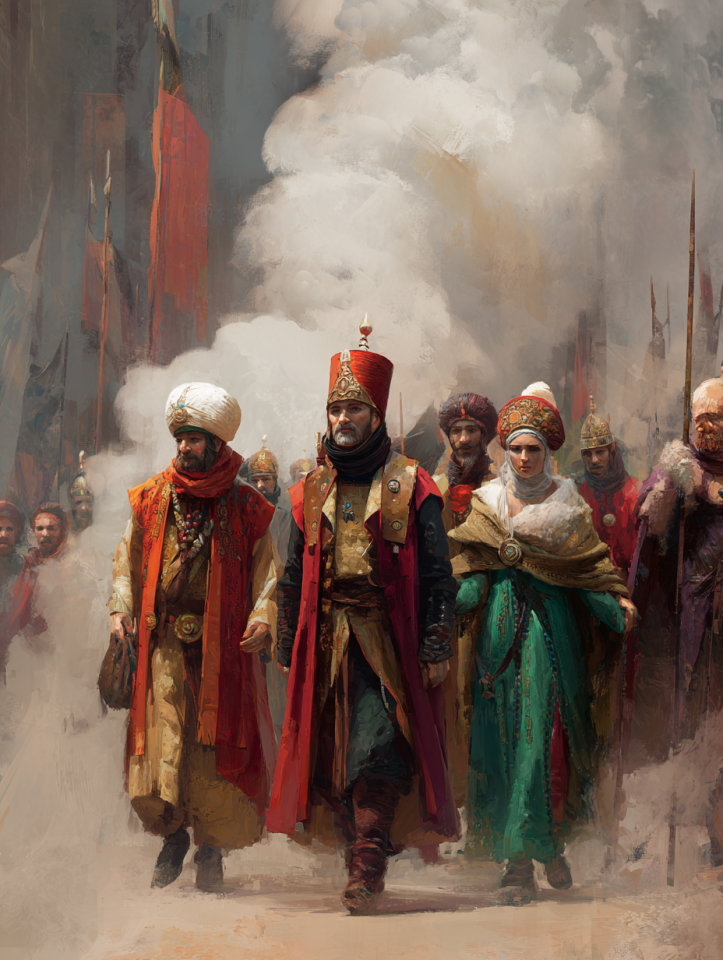
It was Ashoka “Bodhi” of Pataliputra, still youthful but deeply influenced by Buddhist ideals, who stood at the signing of the Accord. He argued that preservation without compassion would be hollow, that memory must serve both justice and mercy. His presence gave Āryāvarta a voice not of dominance but of conscience, shaping the Accord’s foundation around ethics as much as knowledge.
Philosophy & Governance
Governance in Āryāvarta blended monarchy with councils of scholars, priests, and advisors. Kings held ceremonial authority, but the interpretation of dharma guided policy. Laws were expected not only to enforce order but to embody ethical balance.
The Accord magnified this tradition, giving Āryāvarta the role of moral arbiter. Where Hellas framed debates in logic, and Pārsa in order, Āryāvarta asked: does preservation serve compassion? Their contribution was not a single system of rule but a philosophy that linked governance to spiritual responsibility, ensuring that preservation carried moral weight.
Contributions to the Accord
Āryāvarta enriched the cooperative world with profound contributions:
Dharma as Law: Ethics and duty became frameworks for governance.
Mathematics: Early numerals, concepts of zero, and geometric insights.
Ayurveda: Holistic medicine blending body, spirit, and environment.
Philosophical Traditions: Buddhist, Jain, and Hindu schools that tied preservation to compassion and awakening.
Cultural Identity
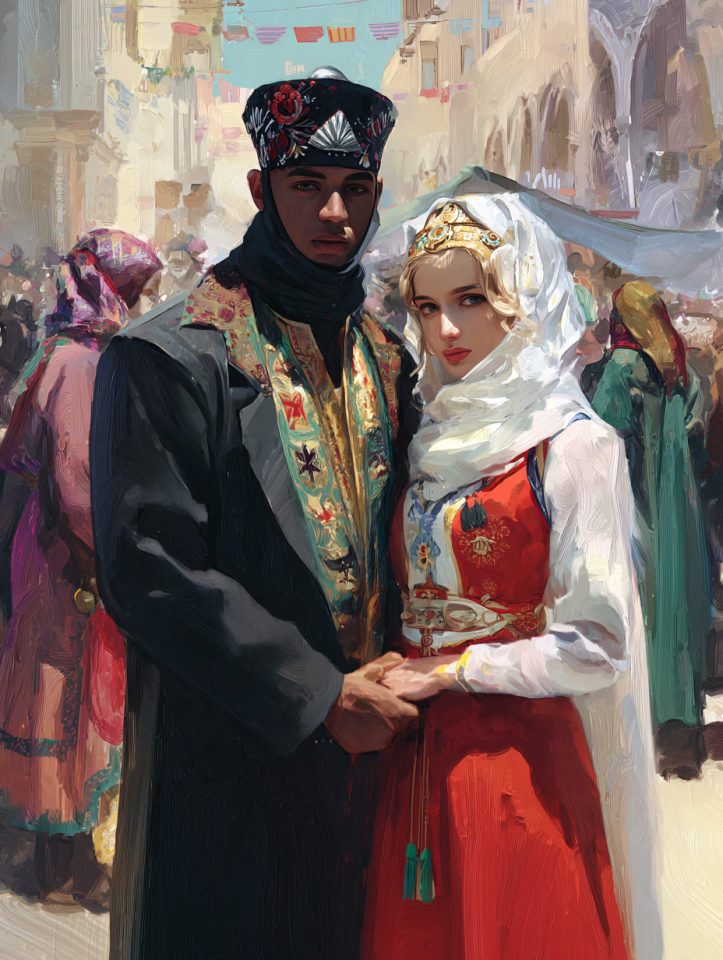
The people of Āryāvarta lived by cycles of ritual, philosophy, and artistry. Temples echoed with chanting, while courts echoed with reasoned argument. Art was infused with symbols of lotus, wheel, and flame — reminders of enlightenment and impermanence.
In the Accord, Sanskrit and Prakrit terms entered the global lexicon. Words like dharma, karma, and ahimsa shaped the shared vocabulary of ethics across Koina. Festivals, music, and dance carried philosophy into public life, ensuring that preservation was experienced communally rather than confined to elites.
Capital City
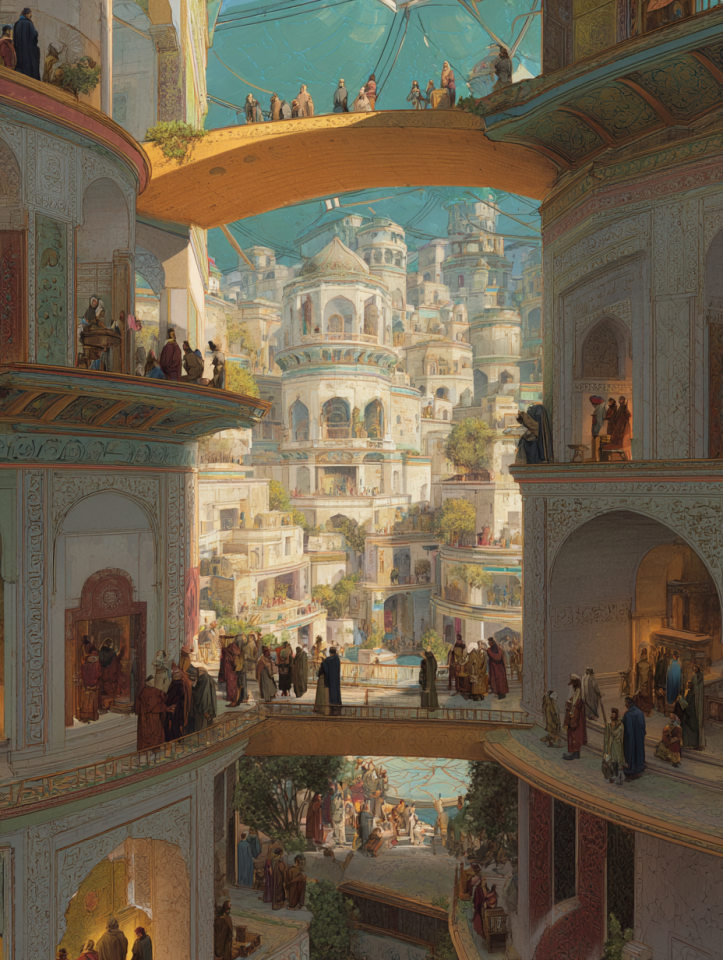
Pataliputra — 25.5941°N, 85.1376°E — rose as both fortress and forum. Its wooden palisades and wide boulevards sheltered vast halls where monks debated scholars, and nobles shared counsel with philosophers. The city was a living library, with monasteries, archives, and schools forming its arteries.
Chosen as Āryāvarta’s Accord seat, Pataliputra became a beacon of convergence. Triple archives stored texts in Sanskrit, Pali, and Prakrit, alongside translations into Persian and Greek, symbolizing the Accord’s spirit of inclusion.
Legacy & Global Role
Āryāvarta gave the Accord its conscience. Where other blocs spoke of order, reason, or balance, Āryāvarta reminded all that preservation without compassion was empty. Their legacy ensured that governance across Koina remained tethered to ethics, even as it embraced reason and order.
Their contributions in mathematics, medicine, and philosophy shaped the very fabric of cooperative life. Centuries later, the teachings of Āryāvarta still remind the world that preservation is not merely memory of the past, but the awakening of wisdom in the present.

Saffron for spirituality, copper for early metallurgy, lotus for purity/wisdom.
Type
Geopolitical, Country
Capital
Leader
Leader Title
Related Ranks & Titles
Controlled Territories
Notable Members









Comments