

Law, Rights & Citizenship
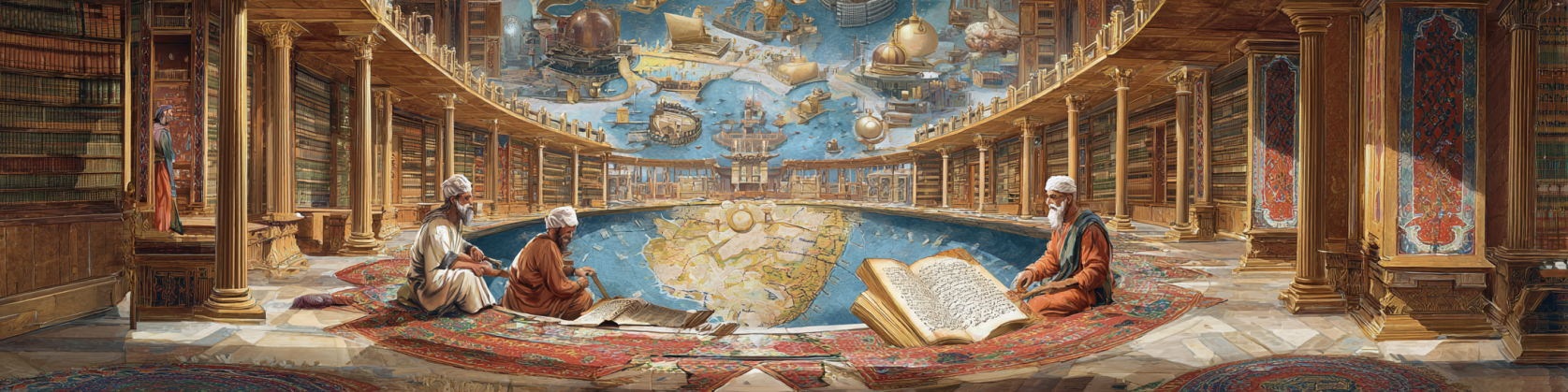
In a shaded courtyard beside the council hall, two neighbors sit across from a table of polished stone. Between them stands no judge, only a Whisper holding a clay tablet and listening in silence. One speaks, then the other; when both are finished, the Whisper draws three circles in chalk — one for each person, one for the balance they share. The discussion lasts until the air cools, ending not in verdict but in agreement. As they rise, the younger neighbor places a hand over his heart — the gesture of restoration. The imbalance is mended; the law has done its work.
Justice in Koina was never born from conquest or written in fear. It grew instead from conversation — from the simple belief that to harm another is to disturb the equilibrium of the whole. Where empires elsewhere codified sin and punishment, Koina refined transgression and repair. Every law begins as a question: What has been unbalanced, and how may we restore it?
Because the state was never divine and freedom never granted from above, citizenship became participation rather than privilege. To live within a city, to speak in its councils, to share in its welfare — these acts define belonging. Law, in this world, is not a chain but a language of care: reason structured into trust.
Law in this world is not a tool of punishment or a mirror of divine decree. It is a humanistic framework, grounded in reason, philosophy, and the pursuit of balance. Justice is not about sin or guilt but about transgression and restoration. Rights are not privileges granted by states but the natural condition of individuals living in community.
From Sin to Transgression
Because the Roman-Christian framework never took hold, the very concept of “sin” does not dominate legal or cultural thought. Wrongdoing is understood as transgression - a disruption of harmony, balance, or trust within the community.
Theft is a transgression against mutual trust.
Violence is a transgression against dignity and balance.
Fraud is a transgression against the rational order of exchange.
This language keeps justice human-centered, not theological.
Restorative Justice
When a transgression occurs, the first aim is restoration, not punishment.
Offenders are asked to reason through their actions and acknowledge the imbalance caused.
Restitution is arranged - returning stolen goods, repairing damage, or contributing service to the community.
Education or apprenticeship may be mandated, particularly if ignorance or lack of skill led to the transgression.
Prisons exist only as short-term holding spaces for those who pose an immediate danger, not as long-term warehouses of people. Rehabilitation, not retribution, is the cultural norm.
Citizenship as Belonging
Citizenship in the New World is based on residence and participation, not ethnicity or birthright.
To live in a community, contribute to its guilds, and take its civic oath is to belong.
Migrants are not seen as outsiders but as new citizens in the making.
Children born in a place are immediately part of its civic fabric - no waiting, no exclusion.
This system creates fluid, overlapping identities: one may be a citizen of a guild, a city, a region, and a federation simultaneously. Each level is a layer of belonging, not a wall of separation.
Freedom as Assumed
In this world, freedom is not a charter or constitution written to constrain power - it is a default condition. Every person is understood to be free by nature. The state does not “grant” freedoms; it only steps in to mediate disputes and safeguard balance.
Freedom of speech, assembly, and association are assumed.
Limitations arise only when speech or action causes transgression against the balance of others.
The underlying question is always: Does this action disrupt harmony or dignity? If not, it is permitted.
This has created a modern culture where debates are open, dissent is normalized, and diversity of opinion is seen as an asset rather than a threat.
The Role of Councils and Guilds
Because law is cooperative, councils and guilds play a major role in enforcement.
Whispers mediate disputes before they escalate into larger conflicts.
Guilds regulate standards and resolve trade disputes.
Citizen assemblies hold the power to veto or approve laws, ensuring accountability.
Higher-level courts exist, but their role is usually arbitration between federations, not punishment of individuals.
Strengths and Vulnerabilities
Strengths
Low rates of systemic crime - restorative systems reduce cycles of violence.
Citizens feel ownership of the law, since it is rooted in philosophy and civic participation.
Freedom feels lived, not abstract - part of daily life, not distant constitutions.
Vulnerabilities
Without punitive deterrents, some repeat offenders test the system.
Restorative practices depend heavily on strong mediators and community cohesion.
Regional variations in custom mean transgressions are not defined identically everywhere.
The Tone of Justice
Justice in this world feels human, direct, and cooperative. A dispute between neighbors is more likely to end in dialogue and restitution than in courts and punishment. Citizens see the law not as an oppressive force but as a rational framework for living together. In the absence of sin, punishment, and “us vs. them,” the law has become a language of balance.
-
World Bible Navigation
-
Governance
Documents detailing the articles of Cooperative Federation.-
The Covenant
The Foundations of Koina
-
Constitution
-
The Persian Constitution
Empire is formed
-
The Persian Constitution: Amendment I
5th - 6th Century ZC
-
The Persian Constitution
-
Bills and Accords
-
The Accord of Alexandria
1st Century ZC
-
The Bill of Rights for All Peoples
3rd Century ZC
-
The Bill of Sovereignty for Cooperatives
3rd Century ZC
-
The Charter of Rights & Duties of the Accord
3rd Century ZC
-
The Covenant of Adjudication
3rd Century ZC
-
On Inheritance
A Treatise on the Balance of Desire, Purity, and Civic Stewardship
-
The Expansion Accord
4th Century ZC
-
The Environmental Accord
12th Century ZC
-
The Communication Accord
18th Century ZC
-
The Technology & Balance Accord
22nd Century ZC
-
The Modern Accord
22nd Century ZC
-
The Accord of Alexandria
-
Constitution
-
The Covenant
-
World Scope
-
Introduction & Scope
-
Arts & Aesthetics
-
Architectural Standards
-
Communication & Memory
-
Crime & Social Order
-
Geopolitics & Power
-
Law, Rights & Citizenship
-
Leadership: Voices & Whispers
-
Freedom & Daily Rhythm
-
Global Institutions
-
Health & Environment
-
Industrialization
-
Religion & Philosophy
-
Sciences & Knowledge
-
Social & Cultural Life
-
Technology & Travel
-
Introduction & Scope
-




Comments