

Caer Afallach
Capital City of Brynwydd
History
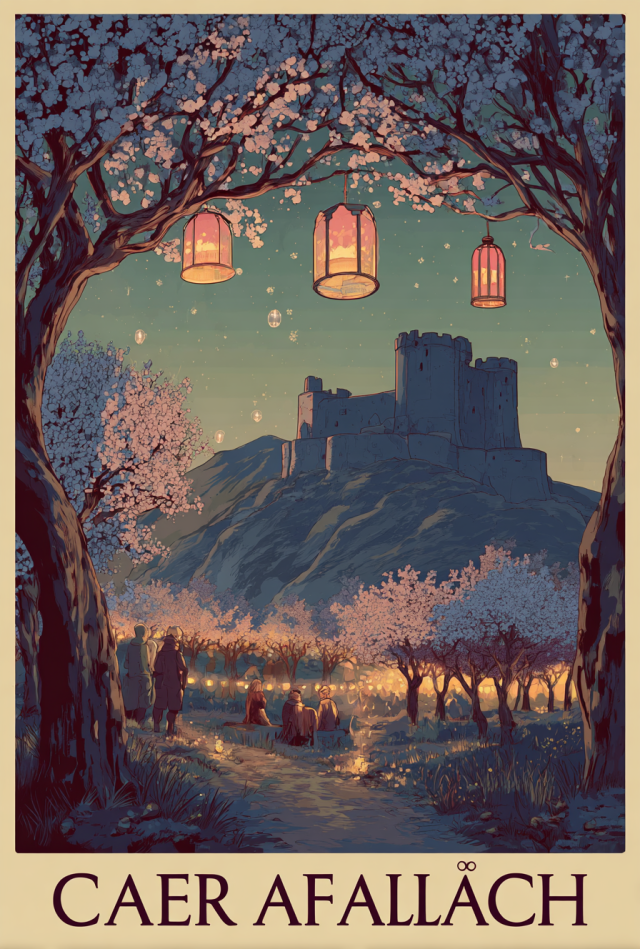
The roots of Caer Afallach lie in a Brythonic hill-fort, one of many strongholds built atop the fertile valleys of southern Britain. Its name, “Afallach,” recalls both an ancient deity of the underworld and the apple groves that flourished nearby. Unlike other forts lost to conquest or decline, Brynwydd remained a center of gathering and learning, its hill never abandoned.
By the first centuries, the city had become associated with the mythic isle of Avalon. Druids, bards, and healers made it their seat, blending ritual with civic deliberation. While Roman legions swept through other parts of the island, the Accord system ensured Brynwydd remained outside conquest, its alliances with neighboring tribes and federations keeping it sovereign.
Through the medieval centuries, Caer Afallach grew as a sanctuary of memory. Poets preserved the Arthurian tales, while councils formalized the role of bardic schools as civic institutions. The arrival of Christian schools added layers without displacing the older traditions, producing a civic fabric where saints and druids are remembered side by side. In modern times, Brynwydd is celebrated as both a cultural capital and a political one, hosting assemblies where philosophy and song weigh equally in governance.
Sights / Destinations
Religion / Cults / Sects
Caer Afallach remains layered in its devotions. Ancient druidic rites honoring the cycles of nature continue alongside festivals for Celtic gods such as Afallach and Brigid. Christian schools of forgiveness and endurance are woven into civic life, their chapels nestled within older sacred precincts. Bardic orders hold semi-religious status, treating song and poetry as acts of devotion. Seasonal rituals tied to solstice, harvest, and apple blossom renewal still draw the city into collective celebration, reflecting its identity as a place where myth, philosophy, and faith are one.
Founding Date
220 bz
Alternative Name(s)
Brynwydd, “Fortress of Avalon”
Type
Capital
Owning Organization
Characters in Location




Comments