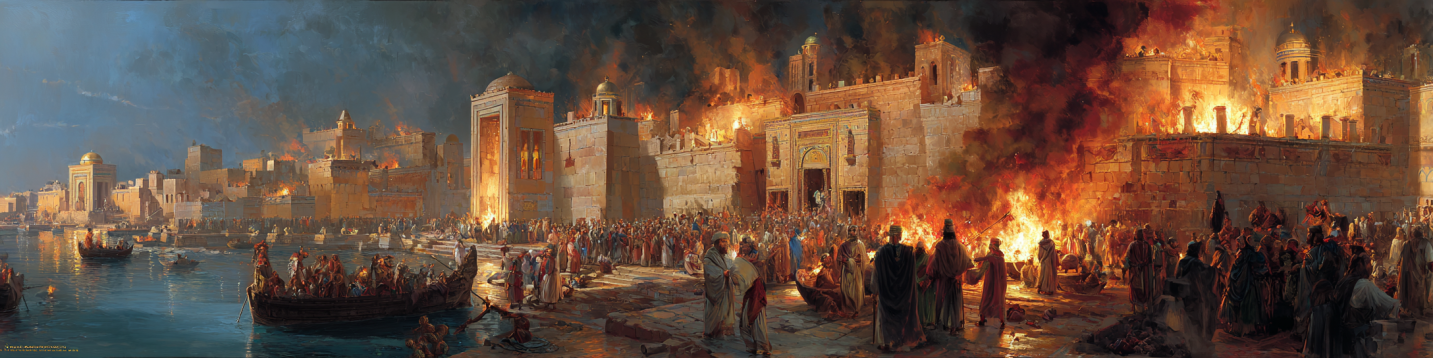
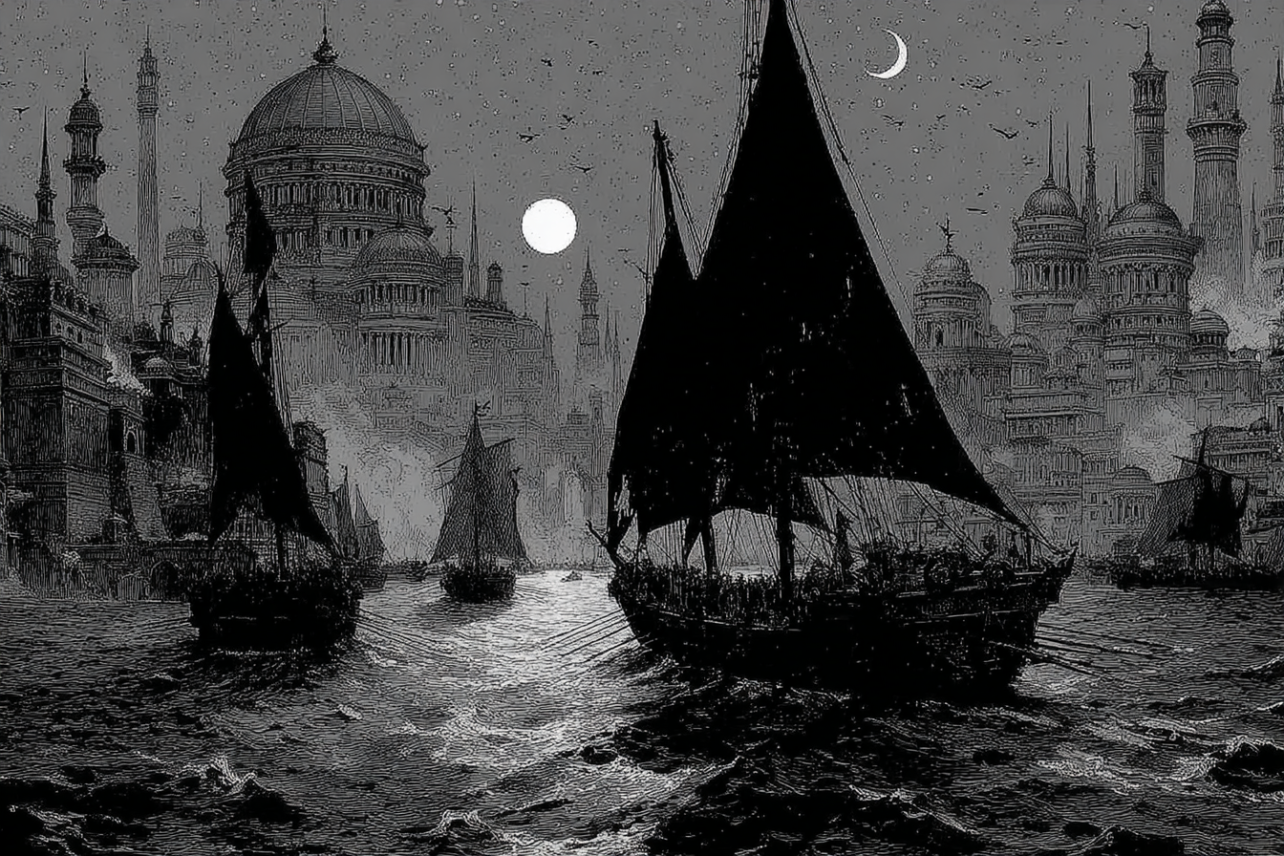
Before the Accords, the ships came in the night, their prows sharp as spears, their sails black against the moon. The quarrels of Alexander’s heirs had spilled again into the sea, and one bold general sought to claim Egypt by fire and iron. His fleet struck the docks of Alexandria, torching warehouses and granaries. Flames leapt high, carried by a desert wind toward the quarter where the Library stood.
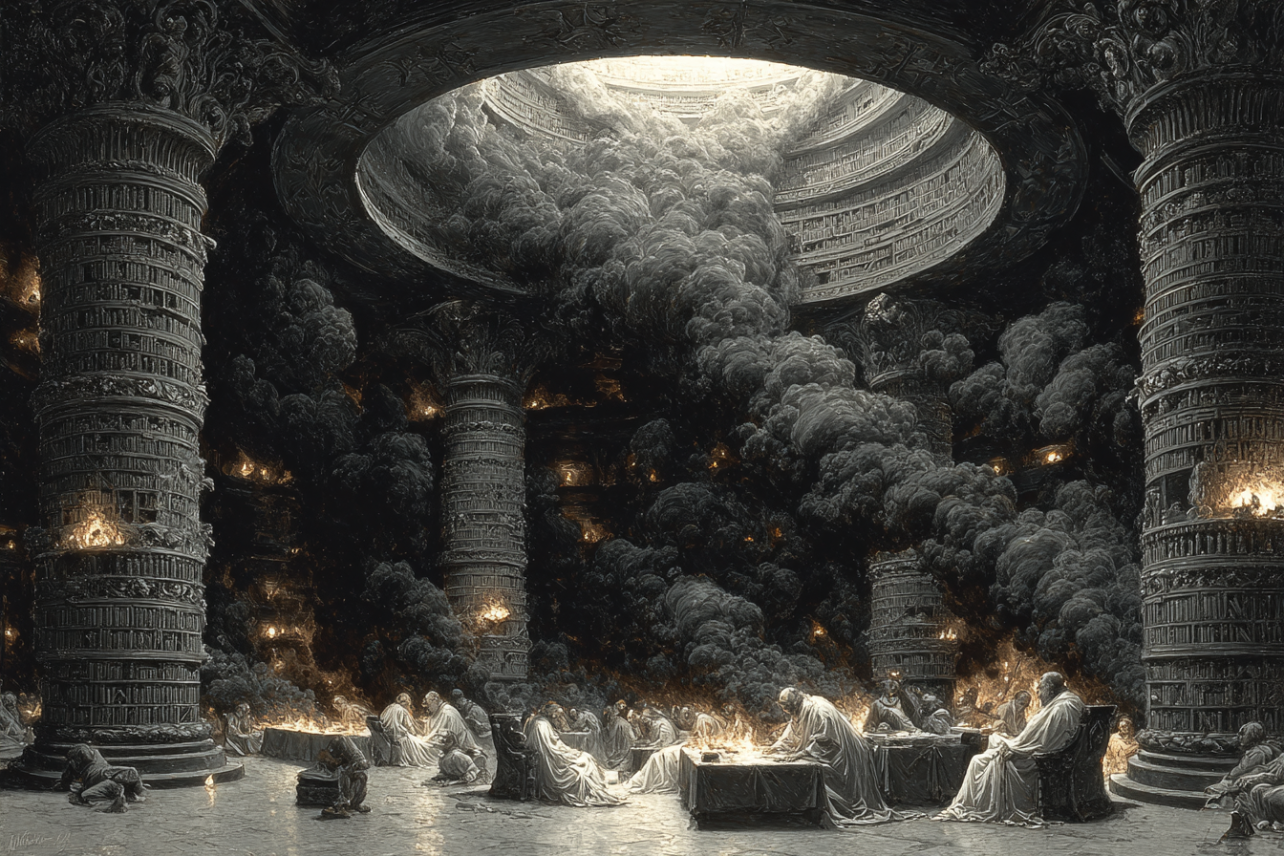
Inside the Library, scribes and scholars worked by lamplight. When the smoke began to creep under the doors, panic surged. Thousands of scrolls — words of Egypt, tablets of Mesopotamia, the songs of Homer, the treatises of India, the calendars of the Mayans carried east by traders — all could be lost in a single breath.
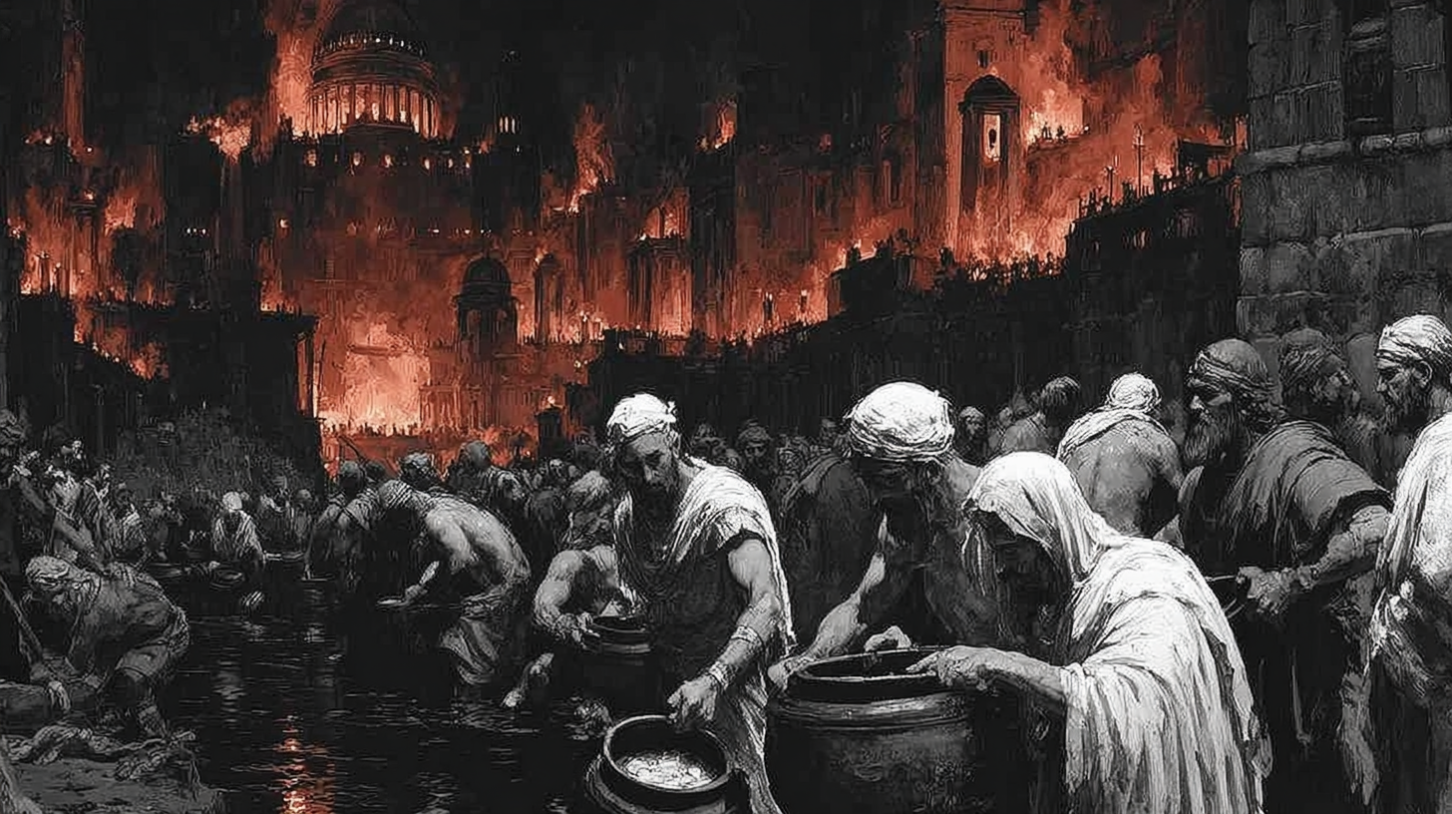
But the city rose. Dockworkers, merchants, and students formed a human chain, carrying jars of water and buckets of sand. Scribes cradled scrolls in their arms as though they were infants. Outside, the fire roared closer. The air grew so hot that papyrus curled on the shelves. Then, as if the heavens themselves refused the erasure of memory, a storm swept in from the sea. Wind and rain lashed the docks, drowning the flames before they could devour the Library.
At dawn, the harbor was a ruin of charred masts and drowned soldiers. But the Library still stood — smoke-stained, but whole.
Messengers sped from Alexandria to Antioch, Persepolis, Memphis, and Pataliputra. The world had glimpsed how fragile its inheritance was. In the months that followed, emissaries gathered in Antioch, where they declared:
Empires may burn. Cities may fall. But memory must endure. To erase it is the gravest transgression and spits in the face of the universe.— Ashoka "Bohdi" of Pataliputra
Thus was signed the Accord of Preservation, not in calm philosophy, but in the shadow of fire. From that night forward, all of Koina would carry Alexandria’s smoke as a warning and a covenant.
Even Destruction Must Be Recorded
These images were drawn by the faithful artists of the Library, who survived the night the city nearly burned. With smoke still in the air and ink smudged by trembling hands, they set themselves to record what must never be forgotten. Each panel captures not only what was seen, but what was felt — the fear, the defiance, and the strange, sacred calm that followed. For those who came after, they left this testimony in line and ash: that knowledge, once kindled, cannot be extinguished.
The first drawing captures the moment of arrival — a silent fleet gliding beneath the moon, their oars cutting the black sea like blades. The sails, dark against the stars, seem almost spectral, carrying the intent of men who believed themselves destined to conquer. The viewer feels both awe and foreboding: the calm before fire, the breath before the scream. The harbor’s still water mirrors the city’s innocence, moments from being shattered.
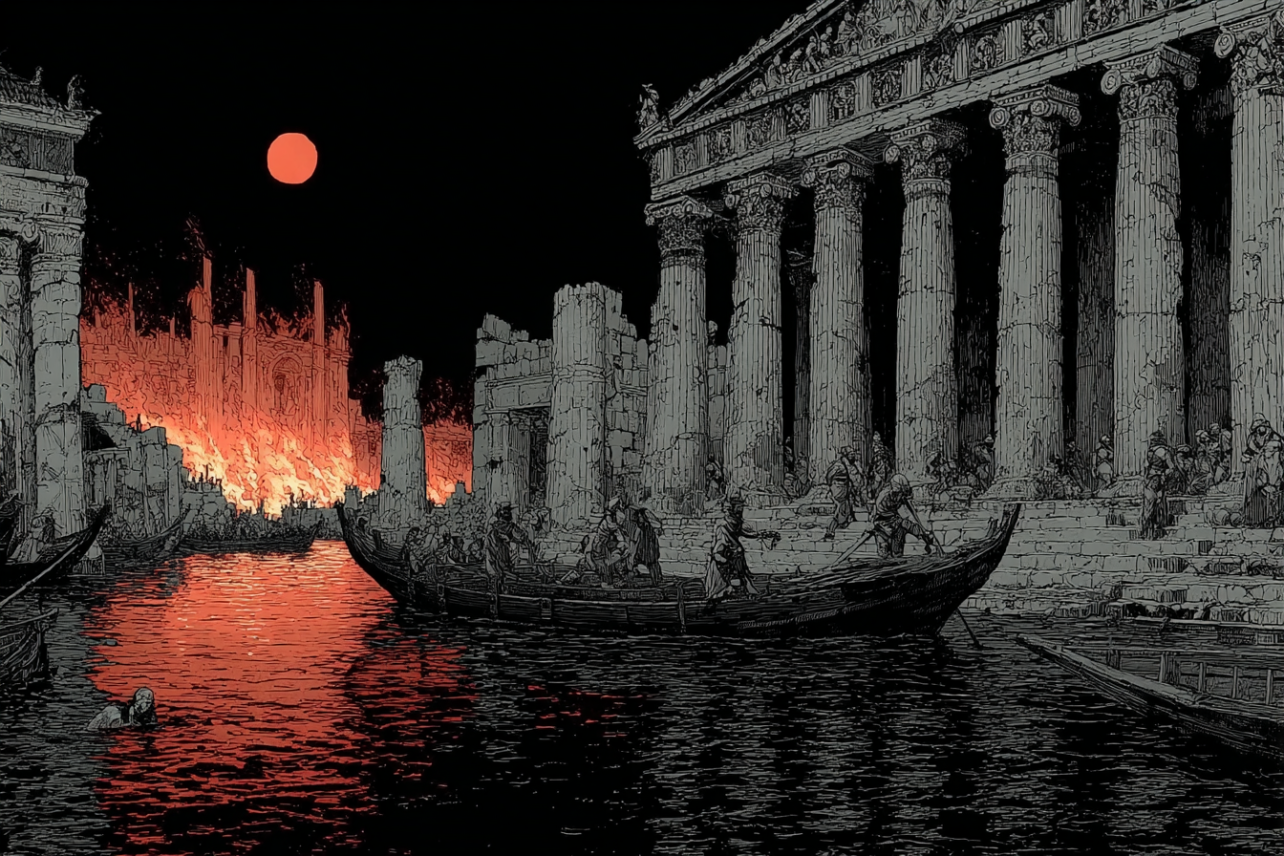
In this image, the docks of Alexandria erupt in chaos. Triremes blaze as flames leap from the wharves, and silhouettes of soldiers rush ashore with torches raised high. The artist renders fire as a living thing — wild, jubilant, and merciless — swallowing the night. Among the turmoil, a few figures still fight the blaze, throwing water from amphorae into the inferno. The air itself seems to burn, and the viewer can almost taste the smoke of loss.
Here, the scene turns inward — within the Library’s grand hall, scholars scatter as smoke pours through the doorways. The lamplight becomes indistinguishable from the firelight, and scrolls tumble from the shelves like falling leaves. The artist’s linework trembles with urgency: columns bend in the heat, papyrus curls midair, and knowledge itself seems to take form in the smoke. Yet amid the chaos, one scholar looks back — unwilling to flee what defined him.
The fourth panel depicts salvation born of desperation. Dockworkers, students, and merchants — once strangers — form a living chain from the harbor to the Library steps, passing buckets, jars, and hope from hand to hand. Each face is marked by exhaustion, yet united in purpose. The artist’s crosshatching builds tension between motion and resolve; this is not a scene of triumph, but of refusal — the city’s pulse beating against the encroaching dark.
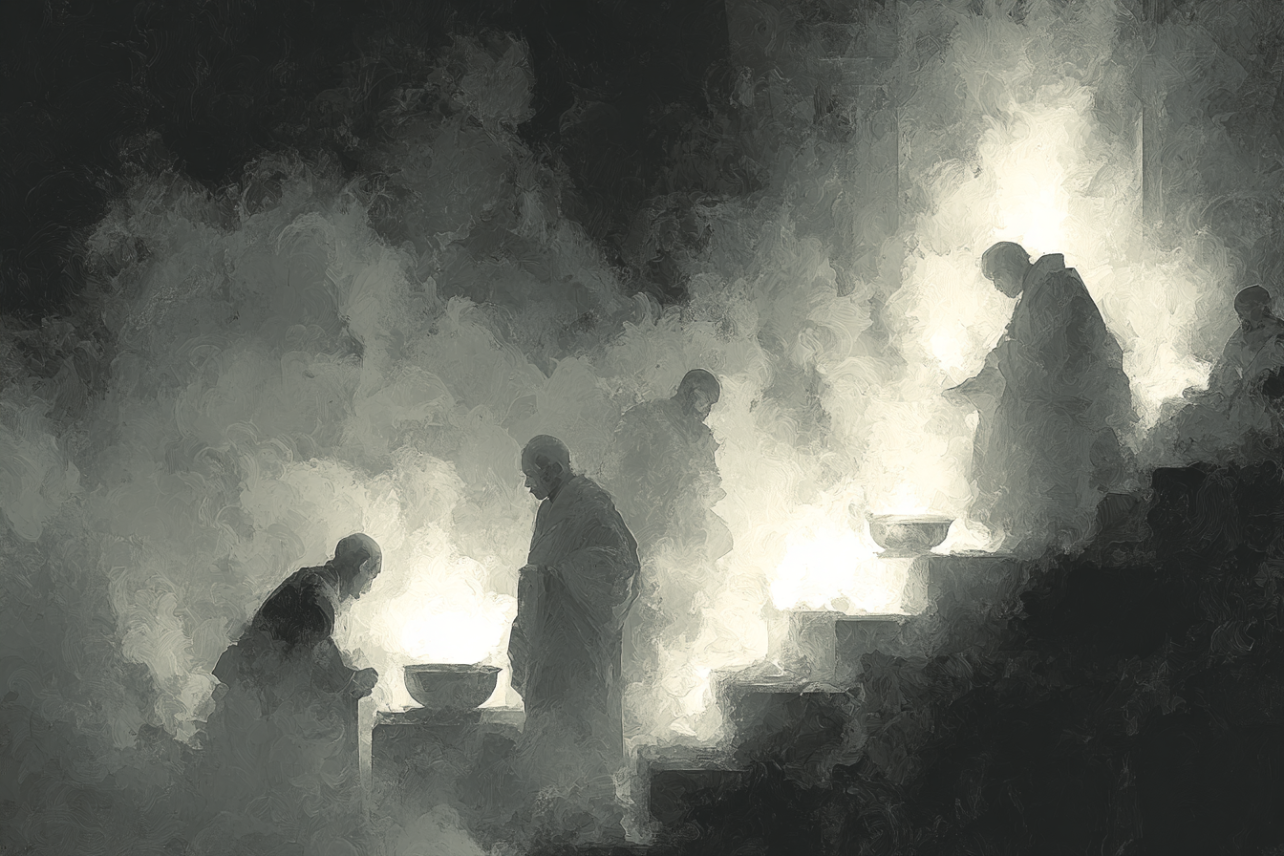
Within smoke-choked corridors, the scribes appear as spectral figures, clutching scrolls to their chests like newborns. Their robes are tattered, their feet bare, but their expressions hold fierce devotion. The glow of fire reflects in their eyes, and the parchment they bear is illuminated with almost divine significance. The artist captures a paradox — ruin and reverence in the same breath — as knowledge itself passes through hands stained with soot.
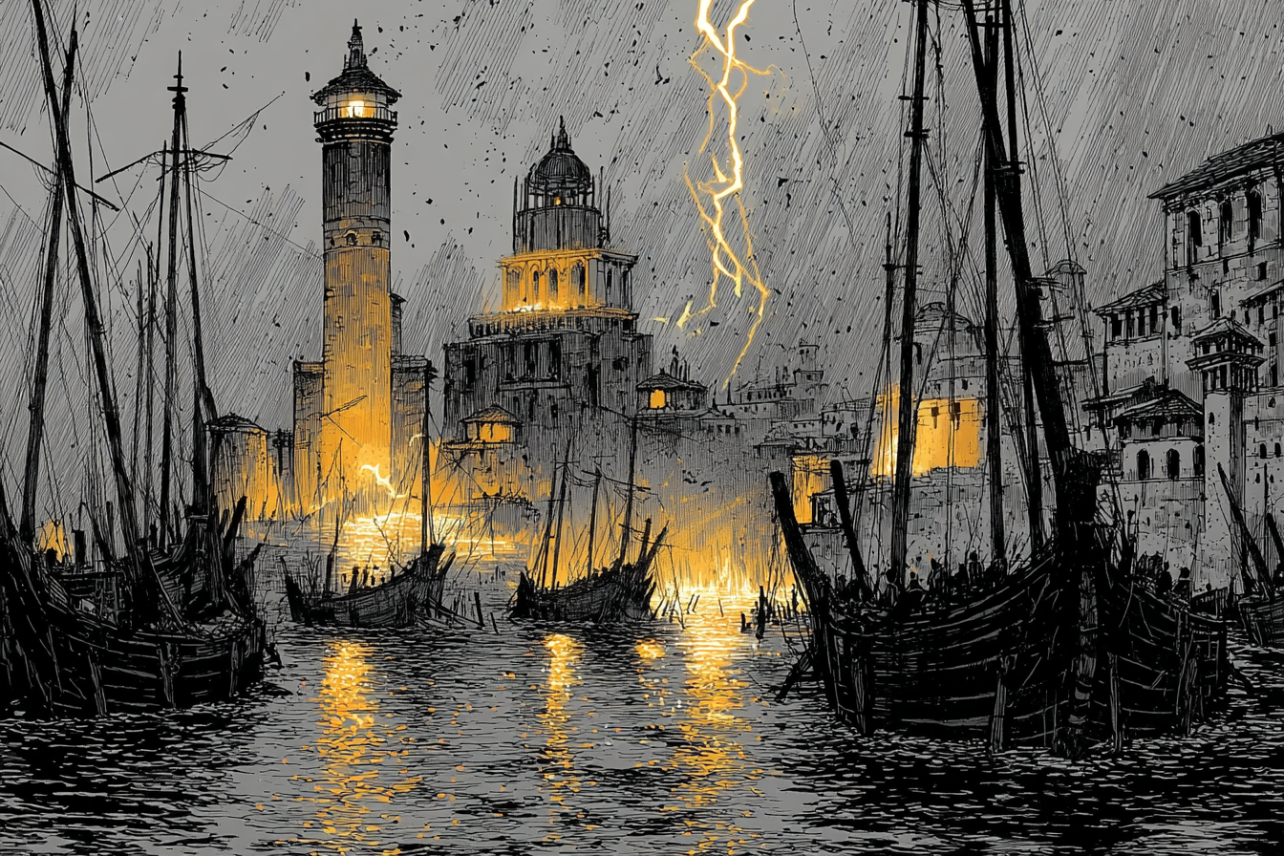
Nature intervenes. This drawing bursts with motion — waves batter the burning ships, lightning tears the sky, and the Pharos lighthouse gleams defiantly through sheets of rain. The artist uses jagged ink strokes to mirror the chaos of wind and water, but through it all, the composition holds balance. The sea, which once brought invasion, now brings deliverance. The storm becomes both punishment and mercy, drawn with reverence as if the gods themselves held the brush.
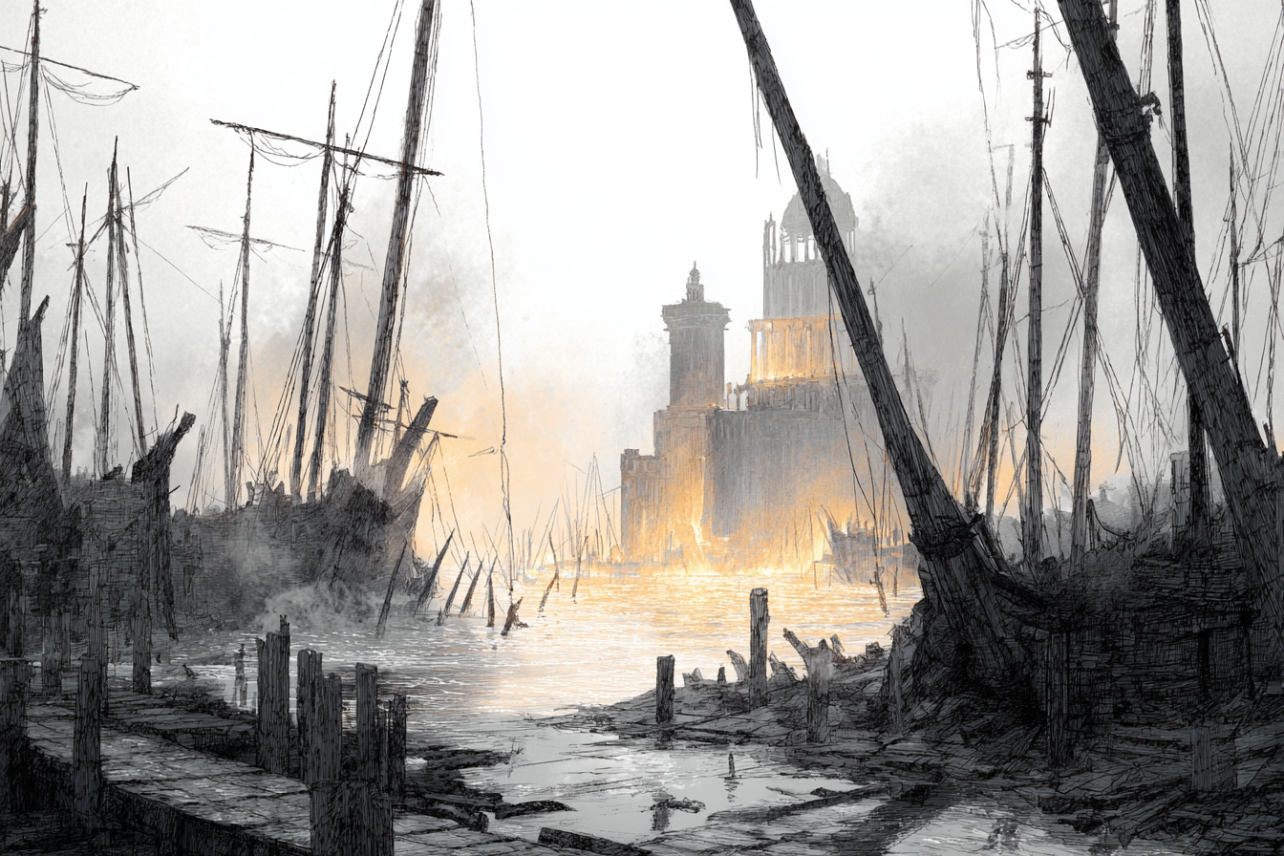
At first glance, this image feels still, yet every line hums with aftermath. The harbor smolders under pale dawn light; smoke trails rise like prayers. Survivors stand amid wreckage — some kneeling, some staring toward the Library’s silhouette. The artist softens his lines here, allowing silence to speak louder than sorrow. In the pale wash of morning, ruin and endurance coexist, and the faint glow on the horizon suggests the promise of memory restored.
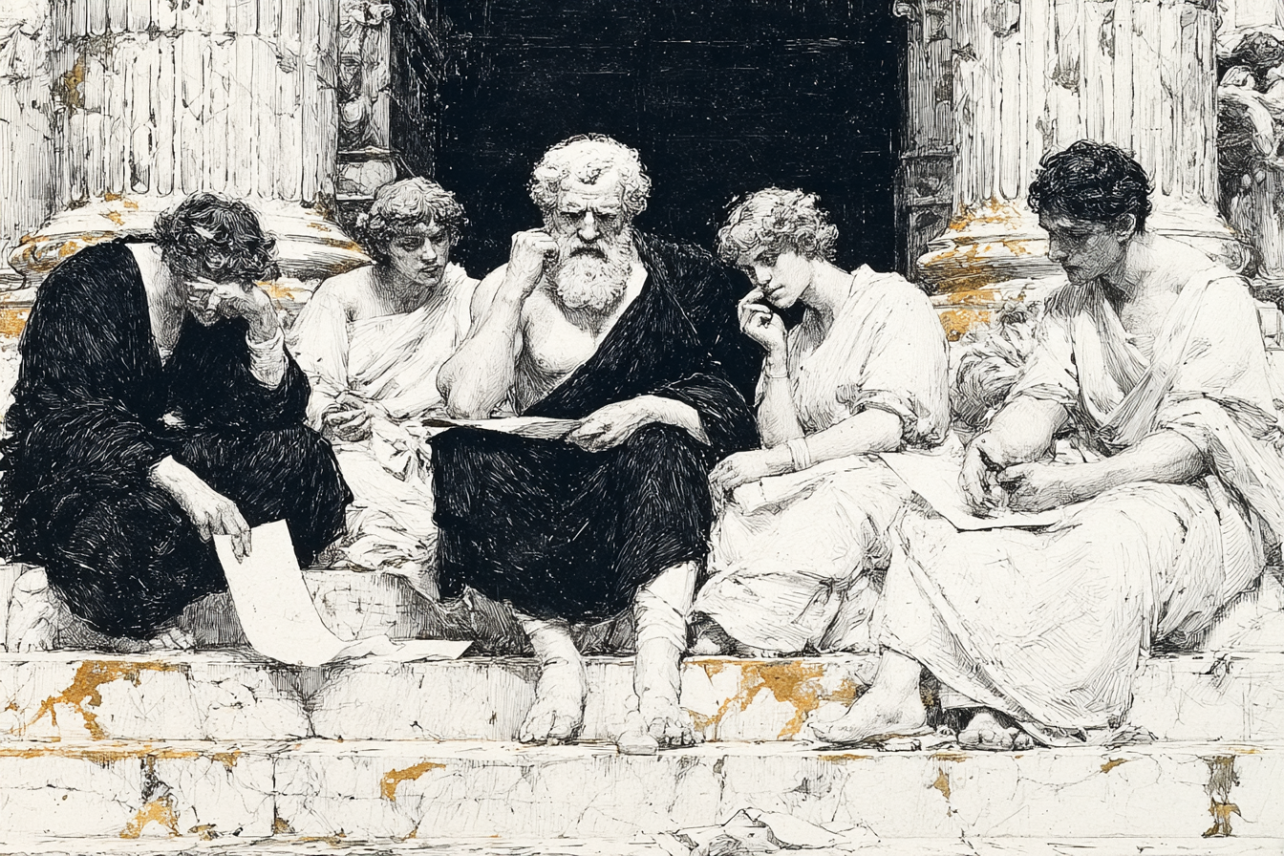
On the Library steps, a weary scholar and his scribes sit among scattered scrolls. Their faces are drawn in contemplation, exhaustion, and quiet disbelief that the world they knew still stands. Subtle gold accents trace the marble beneath them — cracks filled with light, as though the earth itself keeps record. The artist captures intimacy here: the sacred weariness of those who endured, and the dawning realization that they must now rewrite what was nearly lost.
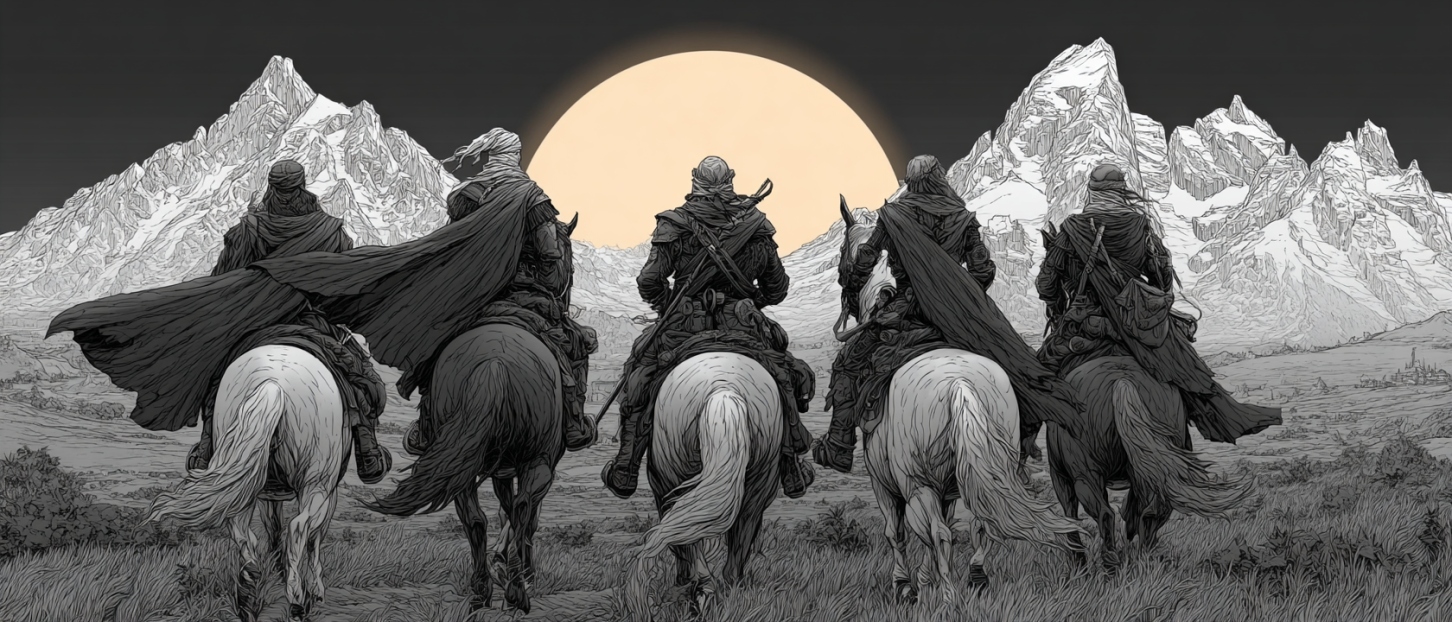
Here, motion returns — five riders set forth from the city gates, scrolls bound tight to their belts, hooves kicking up the dust of renewal. The composition stretches wide across the page, the riders small against the expanse of desert and dawn. The artist conveys urgency not through violence, but through purpose; their mission is not conquest, but remembrance. The path ahead is uncertain, but their silhouettes bear the weight of civilization itself.
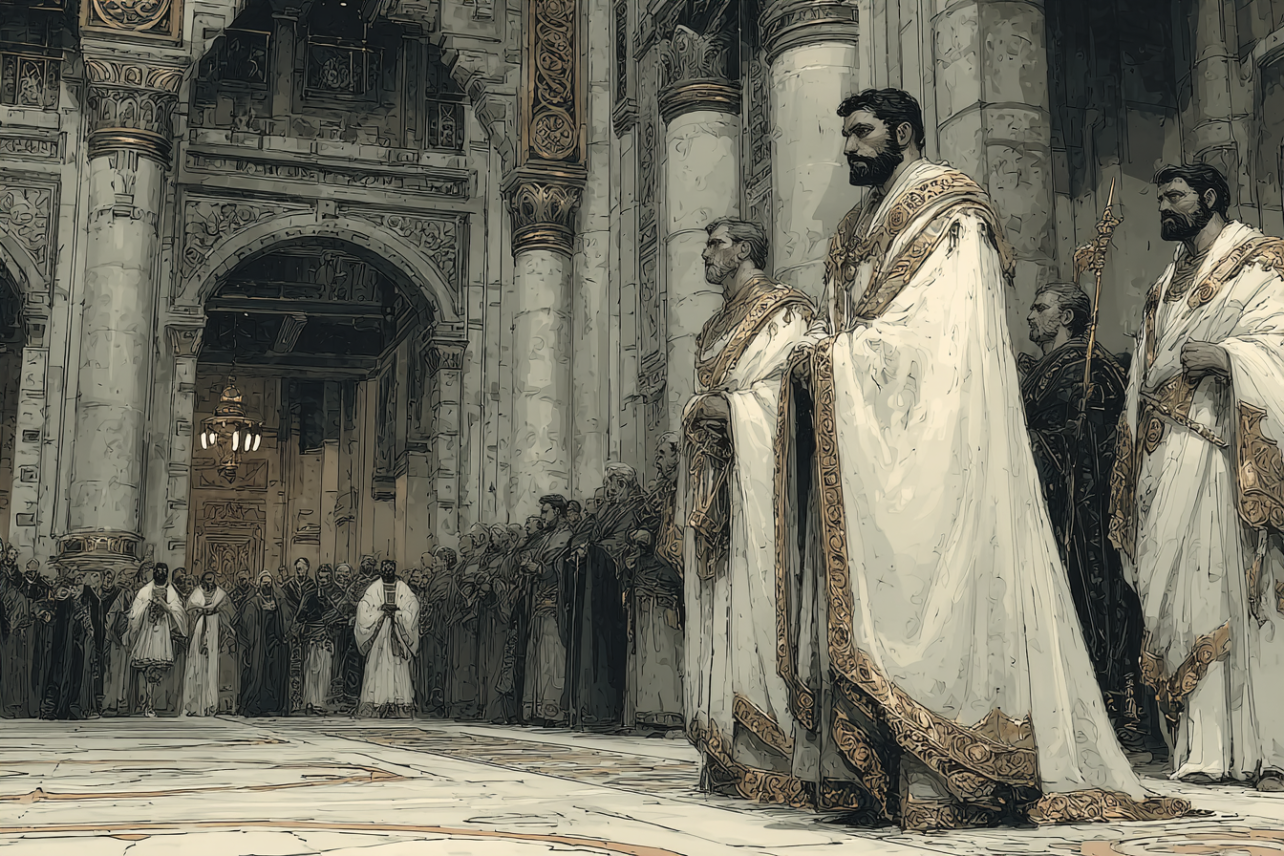
The final image closes the chronicle with solemn grace. Emissaries from distant lands stand beneath vaulted columns, their robes edged in gold that catches the morning light. Between them lies a single scroll — the Accord — its seal unbroken, its promise enduring. The artist’s steady hand speaks of reverence, not ceremony. Light filters through smoke still lingering from Alexandria’s night, casting each face in shadow and hope alike. This is not the end of the story, but the beginning of memory’s covenant.




Comments