



The Covenant
The Foundations of Koina
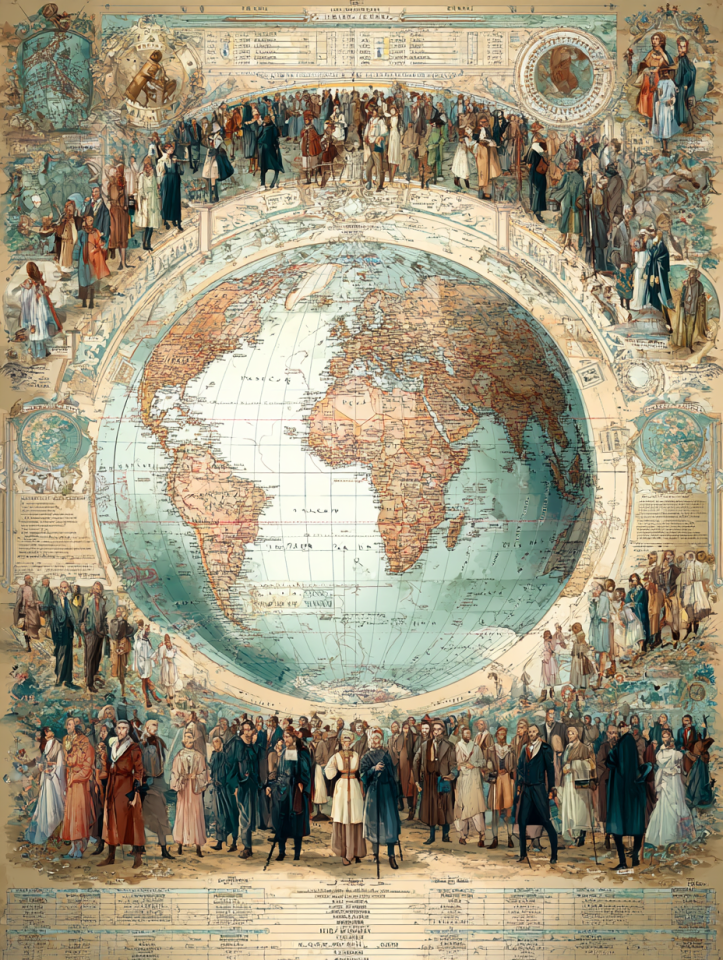
For more than two thousand years, the peoples of Koina have been bound not by empire but by agreement. What began as The Persian Constitution, grew into the Koina Constitution, a covenant that endures to this day. Across continents and centuries, it has provided a framework for unity, rights, and preservation.
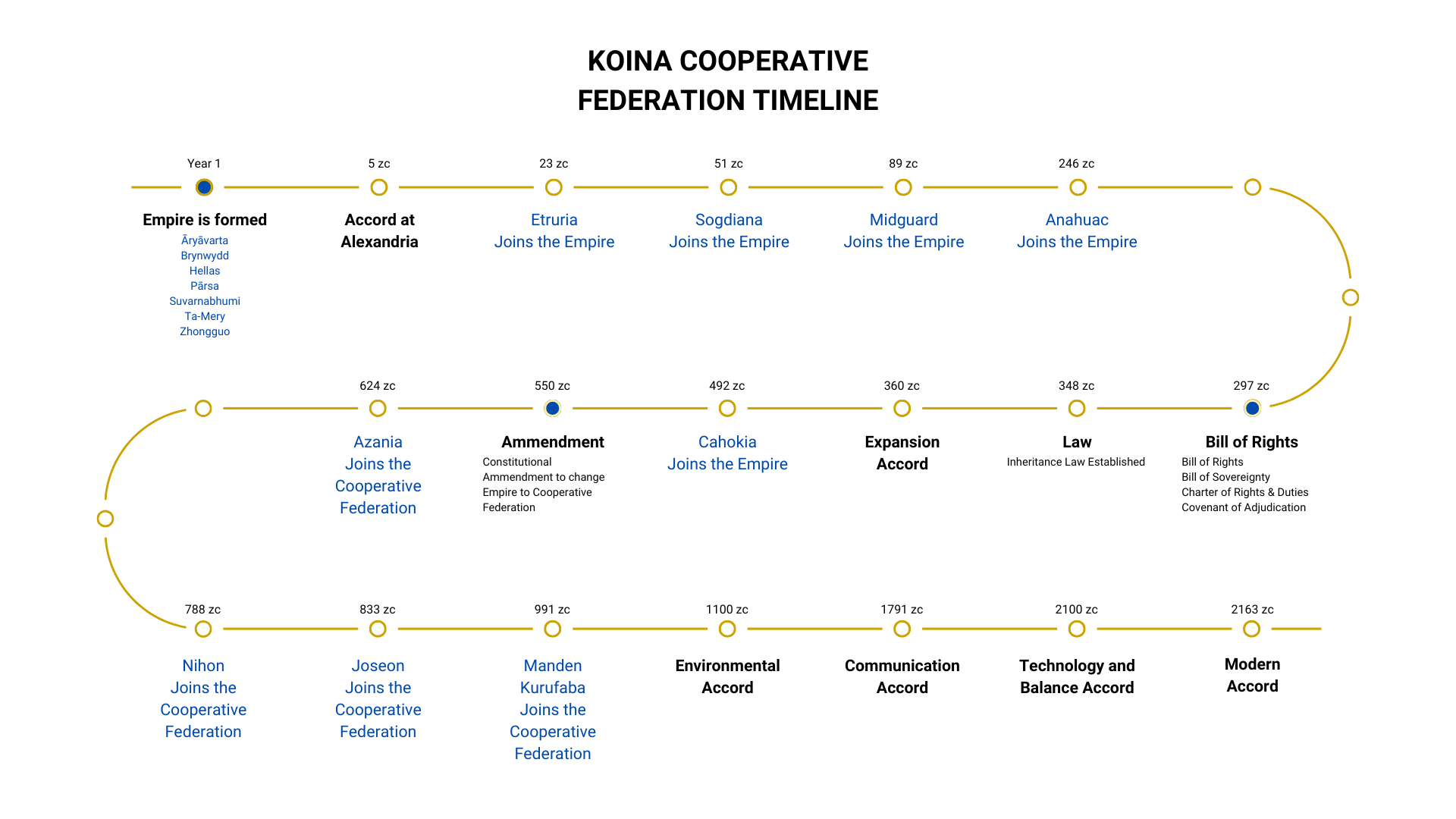
The story unfolds in five core documents, later shaped by the great Accords. Built on this foundation, the great Accords — from the First Accord of Alexandria to The Modern Accord — chart the evolving priorities of Koina: expansion by consent, stewardship of the environment, free flow of knowledge, balance in technology, and global solidarity.
Click or hover over title below to read document.
Click or hover over title below to read document.
| Constitution | |
| The first charter, drafted in Persepolis, gave legitimacy to the Accord itself. Persia served as the guarantor, recognizing that every cooperative had the right to representation, sovereignty, and a voice in the Council. This ensured that joining Koina was an act of choice, not conquest. | When distant continents joined, the Constitution was recast. No longer Persian, it became the Koina Constitution, with authority vested not in one land but in the Council entire. This was the moment Koina became truly planetary — a fellowship of the world, not an inheritance of empire. |
| Bills of Rights | |||
| As the Accord matured, it recognized that preservation meant more than monuments. It meant people. This Bill guaranteed fundamental rights: life, education, belief, expression, movement, and equality. It placed human dignity at the center of Koina’s covenant. | If individuals were protected, so too were nations. This Bill affirmed that each cooperative retained its own laws and traditions. Koina was a fellowship of equals, not an empire in disguise. Withdrawal was permitted, though grave, ensuring that membership was always by consent. | This document balanced privilege with responsibility. Cooperatives pledged to preserve sanctuaries, contribute to repositories, offer aid in times of crisis, and uphold transparency. In return, they enjoyed equal representation, protection, and fellowship. | To make the covenant living, the peoples created a body of adjudicators — interpreters and guardians of the law. They resolved disputes, enforced duties through consensus, and guided amendments. By this Covenant, Koina could adapt to new challenges without losing its soul. |
| The Accords | |||
|
|
|
Closing
Together, these documents form the backbone of Koina. They are not relics but living covenants, binding peoples across oceans and centuries. To read them is to see how humanity chose preservation over conquest, and how the world became not an empire, but a fellowship.-
World Bible Navigation
-
Governance
Documents detailing the articles of Cooperative Federation.-
The Covenant
The Foundations of Koina
-
Constitution
-
The Persian Constitution
Empire is formed
-
The Persian Constitution: Amendment I
5th - 6th Century ZC
-
The Persian Constitution
-
Bills and Accords
-
The Accord of Alexandria
1st Century ZC
-
The Bill of Rights for All Peoples
3rd Century ZC
-
The Bill of Sovereignty for Cooperatives
3rd Century ZC
-
The Charter of Rights & Duties of the Accord
3rd Century ZC
-
The Covenant of Adjudication
3rd Century ZC
-
On Inheritance
A Treatise on the Balance of Desire, Purity, and Civic Stewardship
-
The Expansion Accord
4th Century ZC
-
The Environmental Accord
12th Century ZC
-
The Communication Accord
18th Century ZC
-
The Technology & Balance Accord
22nd Century ZC
-
The Modern Accord
22nd Century ZC
-
The Accord of Alexandria
-
Constitution
-
The Covenant
-
World Scope
-
Introduction & Scope
-
Arts & Aesthetics
-
Architectural Standards
-
Communication & Memory
-
Crime & Social Order
-
Geopolitics & Power
-
Law, Rights & Citizenship
-
Leadership: Voices & Whispers
-
Freedom & Daily Rhythm
-
Global Institutions
-
Health & Environment
-
Industrialization
-
Religion & Philosophy
-
Sciences & Knowledge
-
Social & Cultural Life
-
Technology & Travel
-
Introduction & Scope
-




Comments