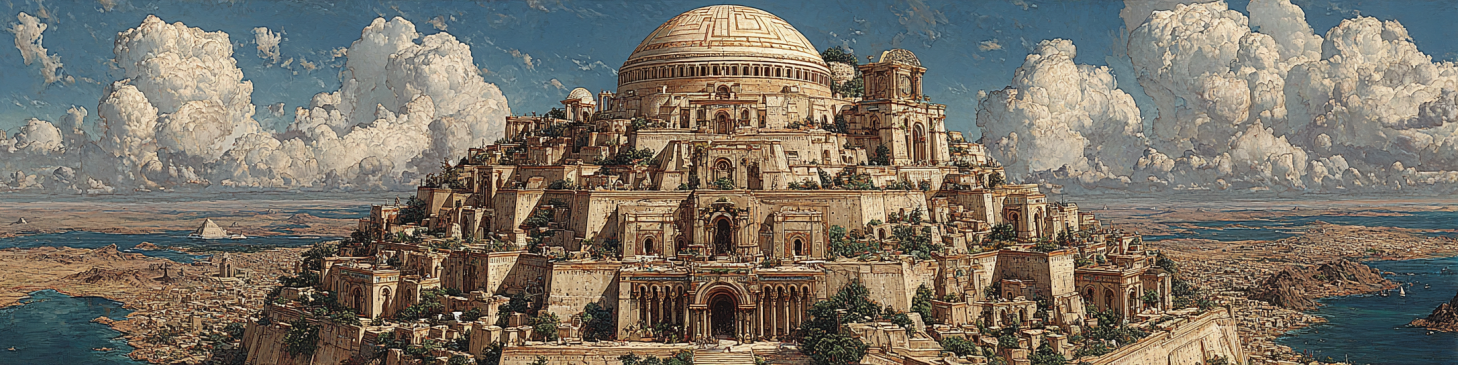
Cities of the Two Rivers
Between the Tigris and Euphrates, civilization first learned to speak, calculate, and pray. The “Cities of the Two Rivers” are the cradles of memory — where writing became ritual, and temples mirrored the cosmos in brick. Even after empires faded, the soil retained its cadence: irrigation canals tracing constellations in the dust, reeds whispering in the voice of the first accountants and astronomers. Every ruin here is a root of humanity’s shared reasoning.
Uruk / Eridu
: RELIGIOUS/PILGRIMAGE
In Uruk and Eridu, the mythic and material fused seamlessly. Here, city walls were as sacred as temples, and kingship was measured in stewardship, not dominion. The ziggurats rose as symbolic mountains in a flat world, their stairways staging mankind’s earliest negotiations with heaven. Modern excavations reveal civic granaries beside sanctuaries, proving that religion and administration were twins from the start. Even now, standing among the baked-clay tablets and broken bricks, one senses the hum of continuity — the first syllables of civilization still echoing in the wind.Ziggurat of Ur
: RELIGIOUS/PILGRIMAGE
The Ziggurat of Ur is not a ruin so much as a chord — a vast resonant shape that still holds the music of its builders. Each tier represents sky, air, and earth; each brick, stamped with the seal of kings who ruled by consensus of priests and merchants. In the modern world, it is studied as both architecture and philosophy: the geometry of aspiration. Pilgrims climb its restored steps not to worship, but to remember the earliest attempt to link heaven and reason through craft.
Type
World wonder
Owning Organization




Comments