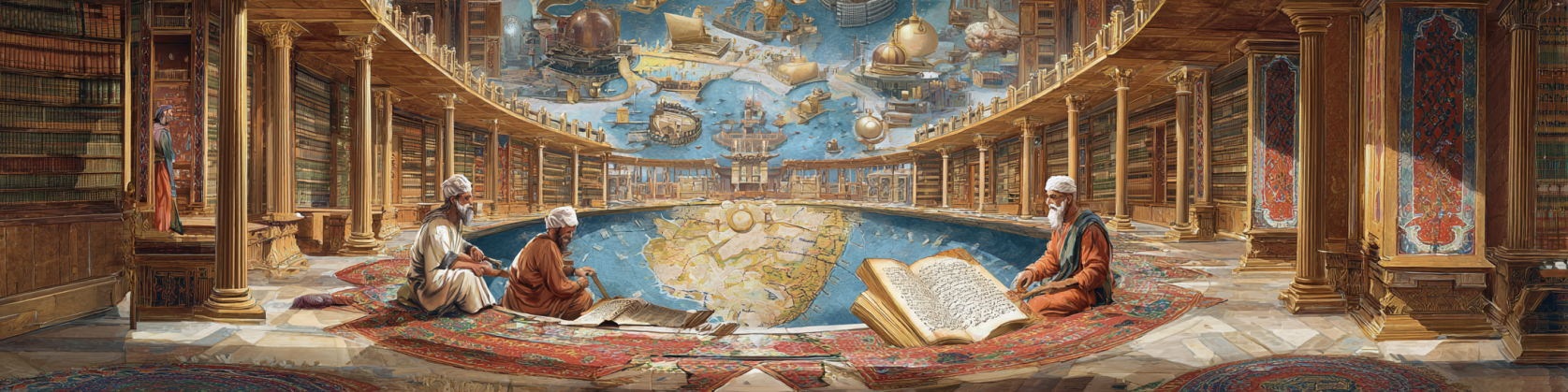
Arts & Aesthetics
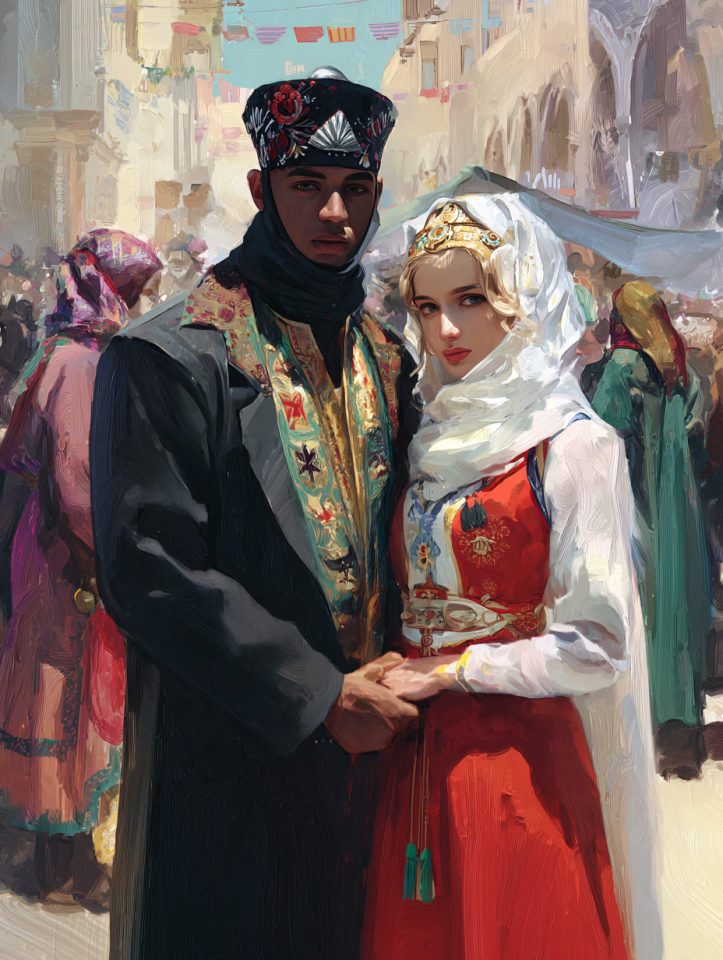
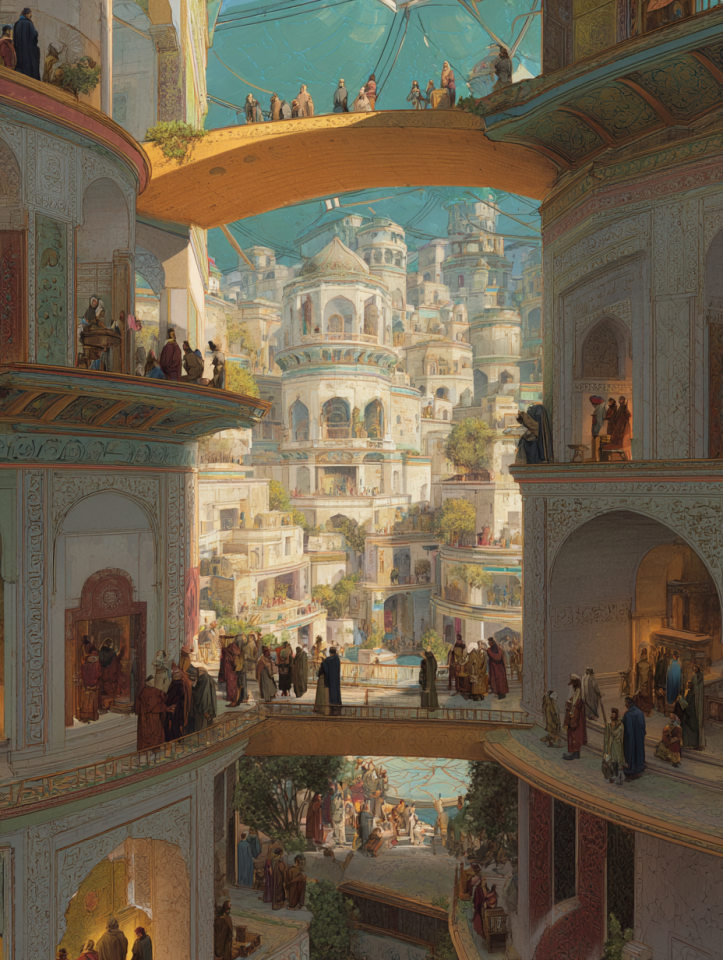
At dusk, the plaza of Antioch glows with hundreds of lanterns. Musicians from the Zagros play reed and drum beside dancers in indigo robes embroidered with local constellations. Across the colonnade, an artisan from Meso paints with ground jade and cochineal while Nubian sculptors carve river gods into basalt. No one performs for tourists or patrons — each creates for their own community, and the plaza simply happens to be shared.
In Koina, art is not an adornment of civilization; it is civilization — the visible memory of people in balance with place. Without the suppression of indigenous forms or the theological monopolies of empire, artistic traditions never fractured. There were no “Dark Ages” in creativity, no purges of idols, no singular canon of beauty. Every culture kept its voice, refining it generation by generation, confident that preservation was not nostalgia but continuity.
The result is not a single aesthetic but a world of radiant plurality — native, grounded, and enduring.
Cultural identity preserved without hierarchy or erasure.
Art integrated into education, civic life, and philosophy.
Innovation emerges organically from secure tradition.
Regional prestige rivalries can harden into insularity.
Guild oversight sometimes slows cross-cultural collaboration.
In the absence of market competition, some forms evolve slowly.
Yet these tensions themselves inspire art — countless plays and poems explore the question: how to change without forgetting?
Art as Philosophy Made Visible
In Koina, the artist is not a rebel against orthodoxy but a philosopher in pigment, sound, and form. Art embodies the same triad that guides all inquiry: harmony, compassion, and reason. A mural is a meditation on interdependence; a statue, an essay on stillness; a song, an argument about rhythm and change.
Because theology never dominated aesthetics, no faith declared the body sinful or the image profane. The human figure remained sacred in its diversity, landscapes remained spiritual, and abstraction thrived beside realism. Beauty was treated not as perfection but as truth revealed through craft.
Philosophy gave art its grammar; culture gave it its accent. Every brushstroke and note carried both — the universal and the particular held in balance.
Guilds of Expression
Just as guilds sustained science and trade, so too did they sustain the arts.
Painter and Mosaic Guilds preserved local palettes, dyes, and mineral recipes, passing them through apprenticeships.
Sculptors’ and Builders’ Circles merged mathematics and myth, carving philosophies into stone and wood.
Musicians’ and Poets’ Leagues maintained oral and written traditions, archiving performances in the Net of Voices.
The Theatric Orders evolved from temple dance and civic ceremony, keeping performance as moral reflection rather than spectacle.
Guilds are not censors or markets; they are custodians. Their duty is to remember the techniques of ancestors and ensure every innovation remains anchored in lineage. A master’s signature carries not vanity but responsibility: to honor those who taught the hand that made the line.
Native Voices, Enduring Lineages
Without colonization or missionary aesthetics, no tradition was subjugated or declared primitive. Yoruba bronze-casting continued alongside Han brushwork, Quechua weaving alongside Hellenic sculpture. Each culture matured in its own rhythm, adapting new materials without surrendering identity.
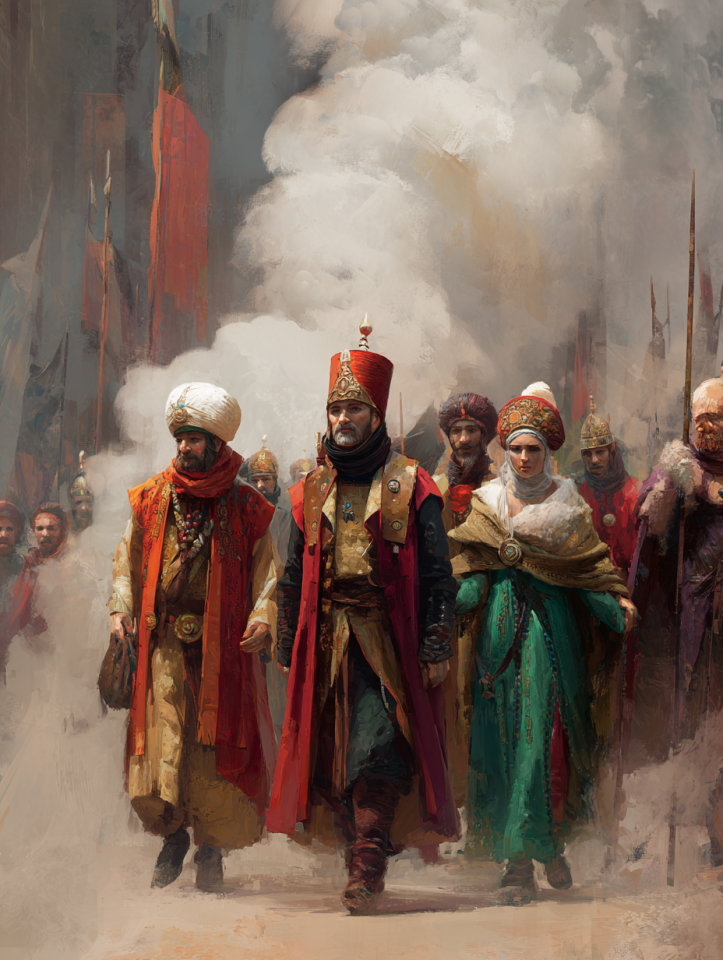
Persian geometry and symbolism traveled widely through trade and dialogue, but never erased what it touched. Instead, artists adopted fragments as conversation pieces — a border motif here, a glaze technique there — while keeping their own cosmologies intact.
A Hopi painter might use lapis from Persia, but the stars she paints are her ancestors’. A Tamil sculptor might study Nile anatomy, but the deity he shapes still wears the smile of home. The world’s art thus became not fusion but polyphony: each voice distinct, each note necessary.
Civic and Ritual Roles of Art
Because art never belonged to temples alone, it remained woven into every level of life.
Civic Spaces: Walls of council halls display civic parables — scenes of justice, compassion, and cooperation.
Homes and Guild Halls: Painted with symbols of lineage and vocation.
Festivals and Processions: Seasonal dances reenact myths, not as dogma but as shared history.
Education: Children learn geometry through weaving, ethics through theater, and music through participation in guild choirs.
There are no museums as mausoleums; every city is a living gallery. The preservation of heritage is active, not archival — performances replayed, frescoes renewed, dances retaught. The past is never frozen under glass; it is rehearsed daily.
Preservation & Innovation
Continuity did not breed stagnation. Because cultural identity was secure, experimentation thrived without fear of loss.
New instruments, pigments, and materials emerged constantly — solar-reactive dyes, resonance-based sculpture, holographic calligraphy — each shaped to local aesthetics. The Virtual Museum of Koina, maintained through the Net of Voices, serves as the modern extension of this ethos. It does not replace physical art but mirrors it, allowing each community to curate its heritage in its own voice and language.
Visitors do not scroll through “collections”; they walk through stories. Each exhibit is a dialogue between living artisans and ancestral memory — proof that preservation and creation are the same act seen from different ends of time.
Strengths & Vulnerabilities
Strengths
Vulnerabilities
The Tone of Creation
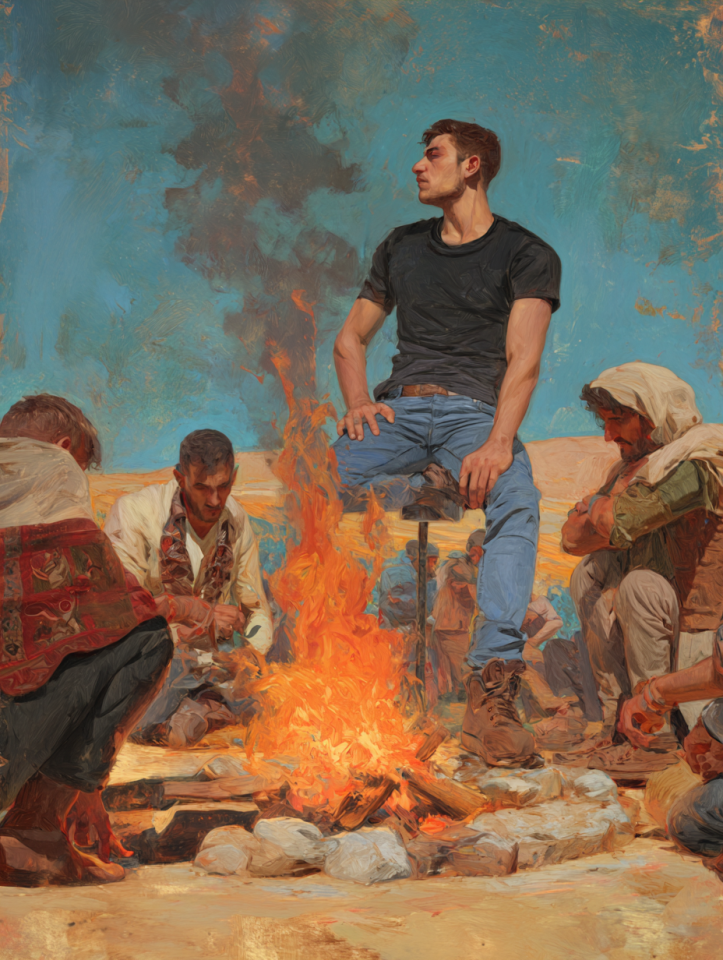
Art in Koina feels rooted — neither defiant nor decorative, but alive with memory. Every brush, reed, and chisel speaks of place: earth tones from its soil, rhythms from its rivers, geometry from its sky. There is no singular style, only a shared reverence for authenticity.
To create is to remember.
To remember is to belong.
And in belonging, every culture finds its face in the mirror of the world — unbroken, luminous, and still its own.
To remember is to belong.
And in belonging, every culture finds its face in the mirror of the world — unbroken, luminous, and still its own.
-
World Bible Navigation
-
Governance
Documents detailing the articles of Cooperative Federation.-
The Covenant
The Foundations of Koina
-
Constitution
-
The Persian Constitution
Empire is formed
-
The Persian Constitution: Amendment I
5th - 6th Century ZC
-
The Persian Constitution
-
Bills and Accords
-
The Accord of Alexandria
1st Century ZC
-
The Bill of Rights for All Peoples
3rd Century ZC
-
The Bill of Sovereignty for Cooperatives
3rd Century ZC
-
The Charter of Rights & Duties of the Accord
3rd Century ZC
-
The Covenant of Adjudication
3rd Century ZC
-
On Inheritance
A Treatise on the Balance of Desire, Purity, and Civic Stewardship
-
The Expansion Accord
4th Century ZC
-
The Environmental Accord
12th Century ZC
-
The Communication Accord
18th Century ZC
-
The Technology & Balance Accord
22nd Century ZC
-
The Modern Accord
22nd Century ZC
-
The Accord of Alexandria
-
Constitution
-
The Covenant
-
World Scope
-
Introduction & Scope
-
Arts & Aesthetics
-
Architectural Standards
-
Communication & Memory
-
Crime & Social Order
-
Geopolitics & Power
-
Law, Rights & Citizenship
-
Leadership: Voices & Whispers
-
Freedom & Daily Rhythm
-
Global Institutions
-
Health & Environment
-
Industrialization
-
Religion & Philosophy
-
Sciences & Knowledge
-
Social & Cultural Life
-
Technology & Travel
-
Introduction & Scope
-




Comments