
The Accord of Alexandria
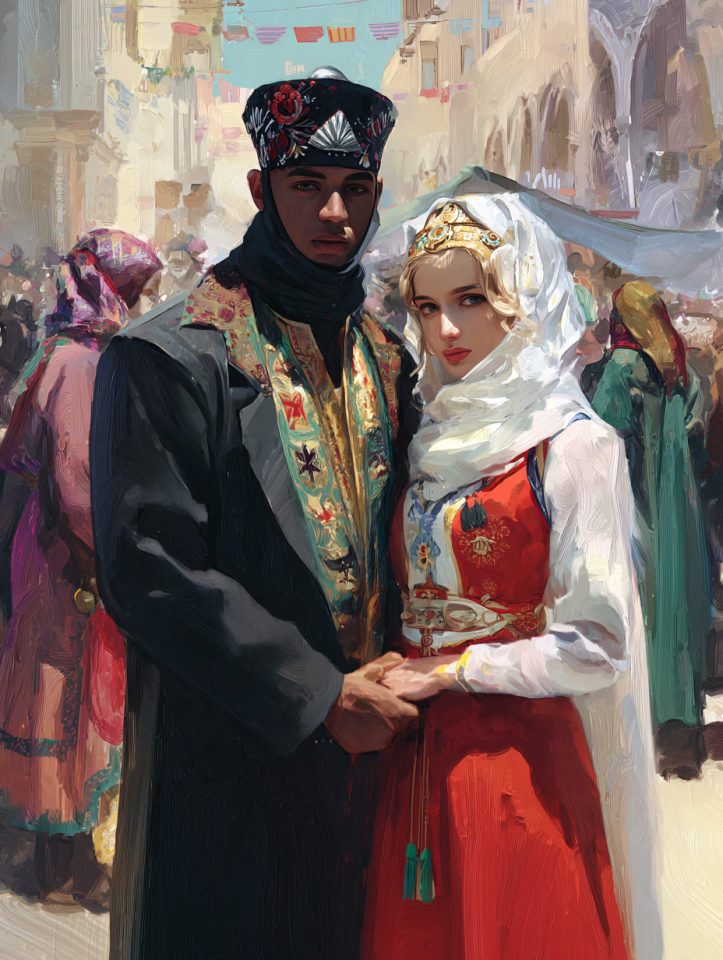
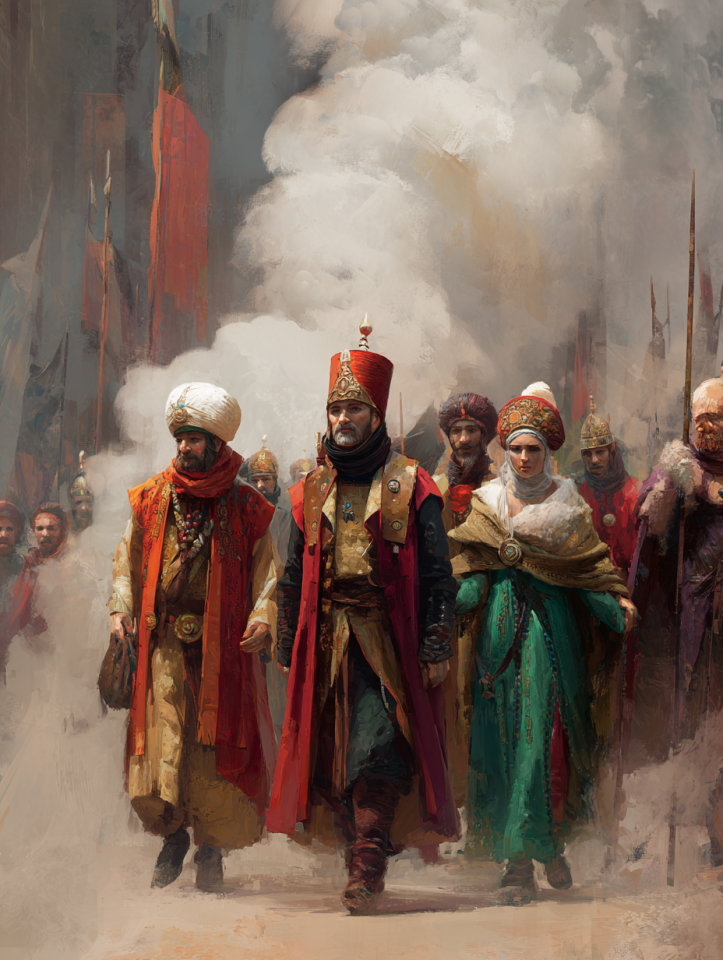
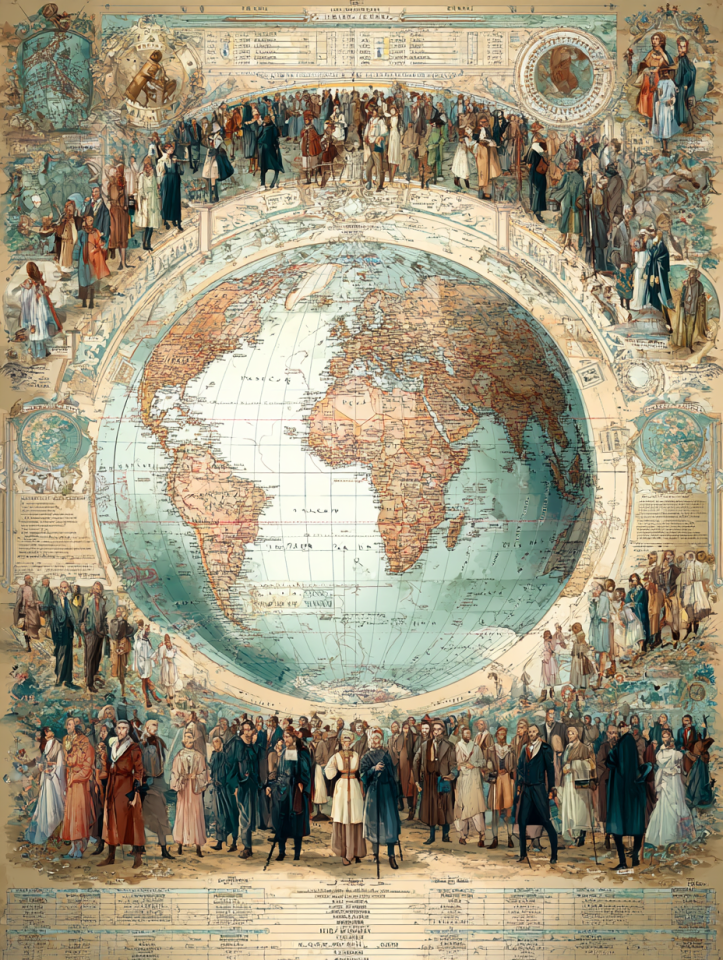
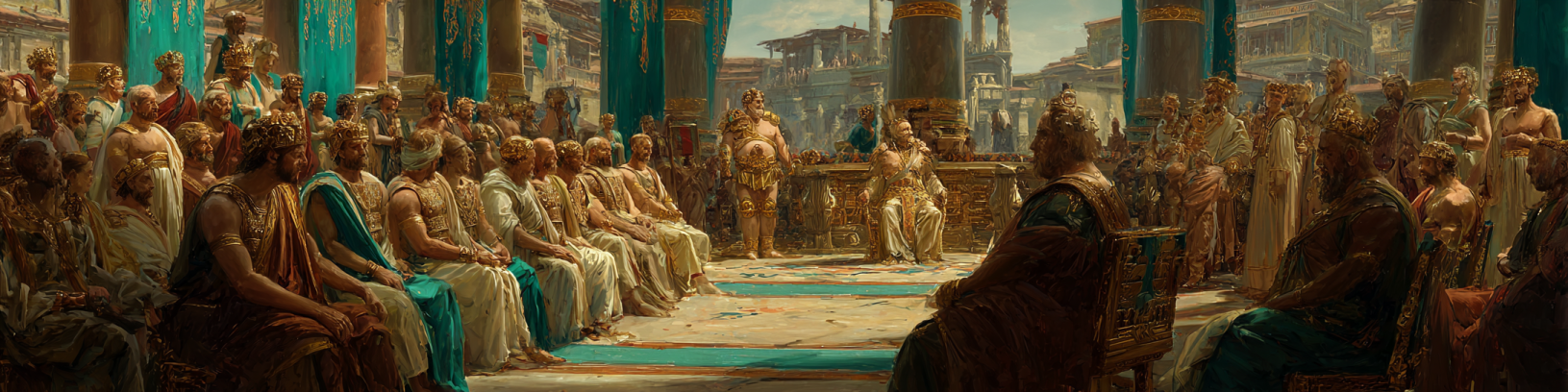
The Accord of Alexandria marked the first formal unification of philosophy and governance under a shared civic banner. Convened in the port city that bridged Africa, Asia, and the Mediterranean, it established the cooperative principles that would define the early Koina: open knowledge, mutual defense, and the exchange of learning as a form of diplomacy.
Its signatories saw that conquest could be replaced by correspondence, and that trade, scholarship, and health were the true measures of peace. The Accord became a working model of federation, transforming rival polities into participants through shared archives and rotating councils.
From its marble halls spread the culture of concord that would later mature into the Federation itself. The Accord of Alexandria stands as the first living experiment of the Koina ideal — proof that unity could be crafted through reason, not rule.
The Accord of Alexandria
Preamble
We, the assembled peoples of Koina, mindful of the frailty of human memory and the perils that threaten our shared inheritance, do unite in common cause. In fire and flood, we have seen the words of sages vanish. In conquest and neglect, we have seen monuments crumble and traditions silenced. The near-loss of Alexandria’s library, though averted, has shown us how swiftly the treasures of knowledge may stand on the edge of oblivion. We affirm that no people is so strong that it cannot fall, and no tradition so enduring that it cannot be forgotten. To prevent such loss, we pledge to preserve not only the wisdom of our ancestors but also the works of our hands and the voices of our children. This Accord shall bind us not as empire nor as creed, but as stewards, guardians, and heirs of the earth’s memory.Article I – On the Preservation of Knowledge
We agree that the written word, the spoken tradition, and the discoveries of mind and hand shall be safeguarded in perpetuity. No book, scroll, or tablet shall rest in a single house alone, but shall be copied and placed in distant halls, that calamity in one place may not erase it from the world. No tongue shall be forbidden, for to silence a language is to silence a people; translations shall be made where possible, but the original voice shall always be preserved. To this end, each cooperative shall maintain repositories of its own heritage, while also contributing to shared archives of humanity. The duty of copying, preserving, and transmitting records shall be considered as essential as the growing of grain, for without it, the people perish in spirit though they endure in body.Article II – On the Safeguarding and Renewal of Arts and Monuments
We affirm that human wisdom is written not only in words but in stone, paint, and craft. Temples, statues, palaces, gardens, and sacred sites shall be protected as common treasures. Their destruction, whether by neglect or by deliberate hand, is an offense not against one people but against all. Should damage come through age or accident, it is the duty of cooperatives to aid one another in restoration, preserving both form and spirit. Where a people chooses to rebuild in new form, the record of what came before must also be preserved, so that memory is layered and nothing wholly erased. In this way, architecture and art stand as living testaments, ever renewed but never forgotten.Article III – On Cultural Pluralism and Autonomy
We recognize that no single people holds the fullness of truth. The gods are many, and the paths of wisdom are diverse. Let no cooperative claim supremacy over another, whether by belief, law, or custom. Each people shall govern its own ways, so long as those ways do not imperil the preservation of memory or heritage. The Accord is not a yoke, but a bond. It does not dissolve the laws of a land, nor diminish the rites of a people, but strengthens them by weaving them into a wider fellowship. In exchange, each cooperative shall receive the heritage of others: scholars shall travel, artisans shall teach, healers shall share their craft. Thus, the loss of one becomes the loss of all, but the gift of one becomes the gift of all.Article IV – On the Council of Accord
To uphold these principles, a Council shall be convened, composed of representatives from each cooperative polity. The Council shall hold authority over matters of preservation, cultural stewardship, and mediation between peoples. It shall meet in appointed intervals, not to command sovereignty but to guard the common inheritance of Koina. The Council shall deliberate openly, with each voice equal in weight, regardless of the size or power of its cooperative. Where decisions touch preservation, the ruling of the Council shall be binding upon all. Where decisions touch other matters, its word shall be advisory, offered in the spirit of guidance, not coercion.Article V – On Conduct in Times of Dispute
We recognize that strife may arise even among those bound by oath. Therefore, disputes between signatories shall be brought first to the Council, where mediation and reason must be sought before the sword. War between cooperatives is forbidden, save in defense against deliberate destruction of memory, heritage, or people. Even in conflict, certain places shall remain inviolate. The following shall be sanctuaries, immune from fire and blade:Article VI – On the Duty of Generations
We bind not only ourselves but our descendants to this charge. Each generation shall inherit not only the knowledge of its ancestors but the duty to expand and protect it. Children shall be taught the principles of preservation and respect, that stewardship may become second nature. When new sciences arise, when philosophies are born, when arts flower in ways yet unseen, they too shall be safeguarded, for every age is part of the great tapestry. In this way, the Accord is not a chain binding the past to the present, but a loom that ensures the weaving of memory across all time.Closing
Let it be known that on this day, we, the assembled peoples of Koina, pledge ourselves to the guardianship of memory, the preservation of wisdom, and the honoring of culture. We do this not to forge dominion, but to ensure that civilization thrives in harmony. May this Accord endure as long as the earth endures, and may no people ever again stand at the precipice of forgetting.
Type
Decree, Governmental
Ratification Date
10 Maat 0 zc, Pārsa
-
World Bible Navigation
-
Governance
Documents detailing the articles of Cooperative Federation.-
The Covenant
The Foundations of Koina
-
Constitution
-
The Persian Constitution
Empire is formed
-
The Persian Constitution: Amendment I
5th - 6th Century ZC
-
The Persian Constitution
-
Bills and Accords
-
The Accord of Alexandria
1st Century ZC
-
The Bill of Rights for All Peoples
3rd Century ZC
-
The Bill of Sovereignty for Cooperatives
3rd Century ZC
-
The Charter of Rights & Duties of the Accord
3rd Century ZC
-
The Covenant of Adjudication
3rd Century ZC
-
On Inheritance
A Treatise on the Balance of Desire, Purity, and Civic Stewardship
-
The Expansion Accord
4th Century ZC
-
The Environmental Accord
12th Century ZC
-
The Communication Accord
18th Century ZC
-
The Technology & Balance Accord
22nd Century ZC
-
The Modern Accord
22nd Century ZC
-
The Accord of Alexandria
-
Constitution
-
The Covenant
-
World Scope
-
Introduction & Scope
-
Arts & Aesthetics
-
Architectural Standards
-
Communication & Memory
-
Crime & Social Order
-
Geopolitics & Power
-
Law, Rights & Citizenship
-
Leadership: Voices & Whispers
-
Freedom & Daily Rhythm
-
Global Institutions
-
Health & Environment
-
Industrialization
-
Religion & Philosophy
-
Sciences & Knowledge
-
Social & Cultural Life
-
Technology & Travel
-
Introduction & Scope
-




Comments