



Crime & Social Order
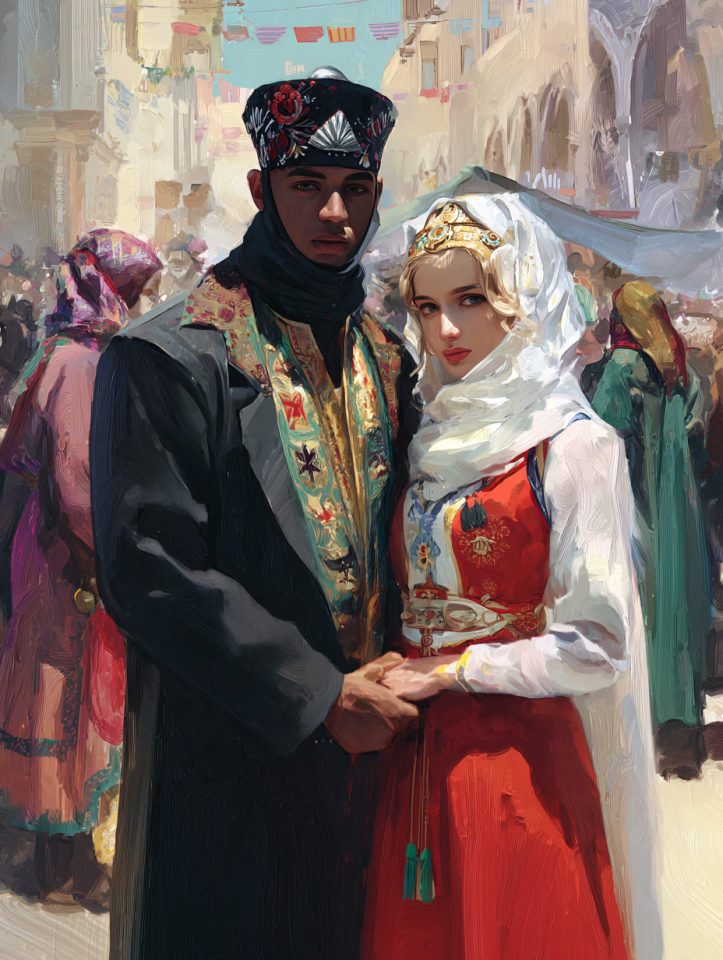
Night has fallen over the market quarter. Beneath the lanterns, a young baker kneels beside a shattered stall, gathering spilled fruit back into baskets. The man whose stall it was stands beside her — angry at first, then silent as the Whisper arrives. There are no uniforms, no weapons, no crowds demanding punishment. The Whisper listens, asks for the truth of what happened, and then gestures for both to sit. A conversation follows — measured, unhurried — until the air between them softens. By dawn, the baker will spend a week apprenticing with the merchant to repay what was lost, and the story will end there. No trial, no record, no bitterness; only balance restored.
In Koina, transgression is treated as disturbance, not defiance. Crime, as other worlds have named it, is understood here as imbalance — a ripple across the still water of trust. The task of society is not to strike at the ripple but to calm the pond. Mediation replaces fear, restitution replaces retribution, and even the gravest harm is approached as an illness to be healed rather than an enemy to be destroyed.
Because justice was never a weapon of empire, social order became an act of collective responsibility. The people guard one another not through surveillance or threat, but through the quiet confidence that every life remains part of the same harmony.
In the New World, crime is not framed in terms of sin, guilt, or eternal punishment. It is seen as transgression: a disruption of harmony, dignity, or trust. This reframing changes how societies respond - emphasizing mediation, restitution, and reintegration rather than punishment.
Types of Transgression
Most transgressions fall into three categories:
Disputes of property or trust: theft, fraud, or breach of agreement.
Violence or coercion: assault, intimidation, or coercive behavior.
Social disruption: slander, corruption, or interference with guild or council duties.
What is absent are systemic “hate crimes” tied to race, religion, or ethnicity - because identity is plural, layered, and fluid. Conflict remains personal, not structural.
Justice as Restoration
The aim of justice is to restore balance.
Mediation: Whispers handle most disputes, bringing parties together to reason through grievances.
Restitution: Offenders repair damage, return goods, or offer service.
Education: Apprenticeship, mentorship, or training is offered if ignorance led to the offense.
Community Service: Offenders may contribute labor to public works as a path to reintegration.
Prison-like facilities exist but only for short-term containment of dangerous individuals, not as long-term punishment.
Outliers and Anomalies
Some transgressors cannot be restored - serial offenders, sociopaths, or those suffering severe psychological imbalance. These cases are rare and treated as medical or psychological anomalies. Specialized healers and counselors work with them; isolation is a last resort, framed as protection, not punishment.
Enforcement Without Oppression
Because no empire or centralized police force exists, enforcement is local and cooperative.
Guilds: Enforce standards within their professions.
Whispers: Mediate disputes and ensure fair hearings.
Citizen Assemblies: Retain veto power to recall corrupt officials or abusive guilds.
Higher courts arbitrate only between federations. There is no standing “imperial law” - only federated treaties and local agreements.
Media and Crime
Media covers transgressions but avoids sensationalism. Reports focus on facts, reasoning, and outcomes of mediation, not on demonizing individuals or groups. Public shaming exists, but it is measured and directed toward reform, not destruction of character.
Strengths and Vulnerabilities
Strengths
Low systemic crime due to strong social cohesion.
Emphasis on restitution reduces cycles of violence.
Citizens feel invested in justice, since they participate directly.
Vulnerabilities
Mediation can be slow if parties refuse to cooperate.
Some repeat offenders exploit the system’s leniency.
Regional variations mean justice feels uneven in practice.
The Tone of Order
Social order in this world feels personal, balanced, and transparent. Crime is rare, but when it occurs, communities respond collectively - to repair, to teach, to restore. The absence of hate-based crimes creates a quieter public life, where disputes rarely escalate beyond their immediate context. Justice is not a hammer but a set of guiding hands.
-
World Bible Navigation
-
Governance
Documents detailing the articles of Cooperative Federation.-
The Covenant
The Foundations of Koina
-
Constitution
-
The Persian Constitution
Empire is formed
-
The Persian Constitution: Amendment I
5th - 6th Century ZC
-
The Persian Constitution
-
Bills and Accords
-
The Accord of Alexandria
1st Century ZC
-
The Bill of Rights for All Peoples
3rd Century ZC
-
The Bill of Sovereignty for Cooperatives
3rd Century ZC
-
The Charter of Rights & Duties of the Accord
3rd Century ZC
-
The Covenant of Adjudication
3rd Century ZC
-
On Inheritance
A Treatise on the Balance of Desire, Purity, and Civic Stewardship
-
The Expansion Accord
4th Century ZC
-
The Environmental Accord
12th Century ZC
-
The Communication Accord
18th Century ZC
-
The Technology & Balance Accord
22nd Century ZC
-
The Modern Accord
22nd Century ZC
-
The Accord of Alexandria
-
Constitution
-
The Covenant
-
World Scope
-
Introduction & Scope
-
Arts & Aesthetics
-
Architectural Standards
-
Communication & Memory
-
Crime & Social Order
-
Geopolitics & Power
-
Law, Rights & Citizenship
-
Leadership: Voices & Whispers
-
Freedom & Daily Rhythm
-
Global Institutions
-
Health & Environment
-
Industrialization
-
Religion & Philosophy
-
Sciences & Knowledge
-
Social & Cultural Life
-
Technology & Travel
-
Introduction & Scope
-




Comments