Prop Culture
Presentation Art
Evening settles over Antioch as softly as a turned page. Lanterns flicker along the riverwalk, throwing long gold streaks across the stones. A small crowd has gathered beneath an open awning, drawn by the rhythmic hum of a storyteller’s resonant frame. On the far side of the square, a youth scrolls through a Net-of-Voices feed; bright glyphs spill across their hands like scattered petals. Across the courtyard, two elders lean against the stone rails of the bridge, debating the merits of a newly released bluey folio - one praising its quiet depth, the other insisting it should have been left as a live performance.
Across Koina, nights like this are ordinary. Stories drift through streets, homes, workshops, and cafés in every possible form - spoken, printed, projected, sung, animated, woven into the very rhythms of city life. No medium stands above another; no boundary separates “serious work” from popular delight. All of it is expression. All of it is memory. All of it is considered Prop Culture.
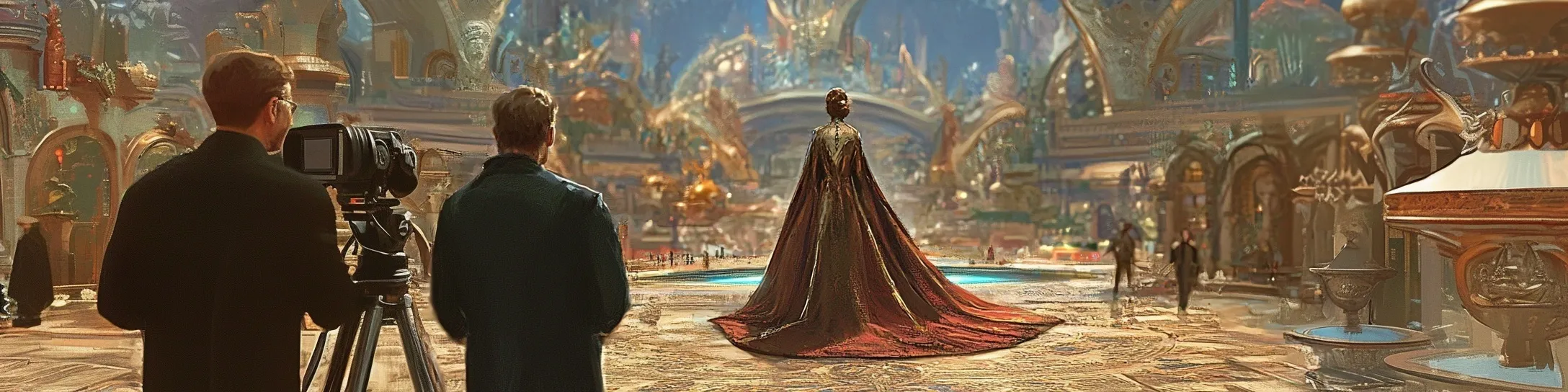
Prop Culture is the shared narrative ecosystem of Koina- the collective practices, mediums, tones, guilds, and communal traditions through which all stories are created, performed, read, watched, archived, and discussed. Unlike worlds that divide storytelling into separate industries or rigid genres, Koina treats every narrative work as part of a single cultural lineage. Any story- whether a live courtyard drama, a serialized folio, a holo-projection, or a morning Clearline short- is understood simply as a Legend. The medium is a prop, a tool for carrying the story; the tone and emotional weight matter far more than format or convention. Prop Culture represents one of Koina’s strongest communal threads. It spans federations, languages, and generations, offering a shared vocabulary that citizens use to reflect, debate, learn, and dream together.
Prop Culture is the shared narrative ecosystem of Koina- the collective practices, mediums, tones, guilds, and communal traditions through which all stories are created, performed, read, watched, archived, and discussed. Unlike worlds that divide storytelling into separate industries or rigid genres, Koina treats every narrative work as part of a single cultural lineage. Any story- whether a live courtyard drama, a serialized folio, a holo-projection, or a morning Clearline short- is understood simply as a Legend. The medium is a prop, a tool for carrying the story; the tone and emotional weight matter far more than format or convention. Prop Culture represents one of Koina’s strongest communal threads. It spans federations, languages, and generations, offering a shared vocabulary that citizens use to reflect, debate, learn, and dream together.
History
The roots of Prop Culture stretch back to early courtyard performances, shrine dramas, and caravan tales. Over centuries, guild traditions shaped narratives into folios, illustrated scrolls, and serialized cycles. Resonance technologies eventually expanded storytelling into motion and sound, while holo-stages and the Net of Voices opened creative avenues unimaginable in earlier eras.
This history is not linear but layered: oral traditions → guild refinements → print expansion → resonance theatre → holo & digital media.
Despite technological change, the emphasis on tone, audience interaction, and shared expression has remained constant. Prop Culture has always been communal, adaptive, and accessible.
The history of Prop Culture stretches across millennia, reflecting the rhythms of Koina’s intellectual and artistic life. Long before the rise of holo-stages or the Net of Voices, stories circulated through markets, shrines, libraries, and caravan routes in forms that were communal rather than hierarchical. Performance, text, and illustration were never separated into “high” or “popular” arts; they were simply the tools people used to share memory, teach values, explore emotion, and entertain one another.
As Koina’s federations matured, so did the craft of storytelling. Oral traditions blended with scribe-guild innovations, early printing expanded reach, and resonance technologies transformed performance into a portable medium. Modern Prop Culture inherits all of these layers: ancient oral epics, illustrated scrolls, serialized folios, courtyard dramas, motion folios, holo-performances, and digital serials. What remains constant is the cooperative ethos- stories evolve through many hands, many voices, and many eras.
More Details
Oral epics - recited across federations;
Lantern-shadow plays - common in the Sinosphere;
Shrine dramas - seasonal retellings of mythic cycles;
Early scrolls - hand-inked narratives circulated among scholars;
Caravan stories - flexible, ever-changing tales traded along roads.
Color-tones didn’t exist yet, but audiences still described stories by mood: “stormy,” “soft,” “bright,” “shadow-heavy.” These instinctive descriptors would eventually evolve into the modern color system.Folio serialization - stories released in parts, encouraging public speculation;
Illustrated scrolls - combining visual art with text;
Courtyard residencies - performers contracted for seasonal cycles;
Early tonal shorthand - guild scribes began marking works with simple symbols for mood or theme.
It was here that the first proto-color language appeared, though still imprecise: blue ink for sorrowful tales, red margins for romantic arcs, gold embellishments for heroic cycles. These markings were not standardized but became beloved artistic flourishes.Printed folios became widespread, affordable even to apprentices;
Resonant performances allowed subtle sound design;
Authorial voice strengthened, as named creators gained prestige;
Color-tones stabilized as shorthand, with audiences casually describing works as “blue,” “grey,” or “redy.”
By this time, Prop Culture was a recognizable social force - something people debated in cafés, referenced in political rhetoric, and used for teaching ethics or historical memory.Tech Media diversification - animations, holos, motion folios, redmation, blackline anthologies;
Global distribution - simultaneous releases across federations;
Color-tone standardization - universally understood audience language;
Content tones - Mild, Deep, Intense, PG;
Fan slang explosion - bluey, gold-core, blrama, clearline, redline;
Cooperative guild production - writers, resonance-technicians, and holo-artists share equal prestige.
In contemporary Koina, Prop Culture functions as connective tissue. People discuss Legends the way others discuss news, philosophy, or family life. The shared language of color and tone allows for subtle conversation without rigid genre walls.
More Details
Early Roots (Ancient → Inquiry Era)
Prop Culture began in open courtyards, river markets, shrine precincts, and caravan stops. Storytellers, often tied to guilds or shrines, recited epics, local histories, and fables shaped by regional philosophies. Performances were public, participatory, and rarely fixed; different communities favored different tones, and storytellers adjusted in real time. Early forms included:Color-tones didn’t exist yet, but audiences still described stories by mood: “stormy,” “soft,” “bright,” “shadow-heavy.” These instinctive descriptors would eventually evolve into the modern color system.
Guild Era (Middle Periods)
As scribes, performers, and artisans organized into formal guilds, Prop Culture began receiving structured support. Traveling troupes carried standardized versions of myths, while scribe-guilds produced beautifully illustrated folios for libraries and market stalls. Key developments of this era:It was here that the first proto-color language appeared, though still imprecise: blue ink for sorrowful tales, red margins for romantic arcs, gold embellishments for heroic cycles. These markings were not standardized but became beloved artistic flourishes.
Early Modern Period (Resonant & Print Expansion)
The refinement of resonance-frames and portable lighting changed everything. Performances no longer required daylight or large audiences; scroll-films and resonant theatre made stories more accessible and portable. Changes in this era:By this time, Prop Culture was a recognizable social force - something people debated in cafés, referenced in political rhetoric, and used for teaching ethics or historical memory.
Modern Koina (Industrial → Contemporary)
The rise of the Net of Voices, holo-stage technology, motion folios, and scroll-film projection produced the most diverse era of Prop Culture. Importantly, Koina avoided moral censorship traditions, so the culture remained tone-based rather than purity-based. Defining qualities:In contemporary Koina, Prop Culture functions as connective tissue. People discuss Legends the way others discuss news, philosophy, or family life. The shared language of color and tone allows for subtle conversation without rigid genre walls.
Media Families
Prop Culture encompasses every form through which stories travel in Koina. Although technologies and creative methods have changed across eras, the culture has always treated narrative media as variations of a shared craft rather than separate industries. A courtyard performance, an illustrated scroll, a holo-drama, and a serialized folio are all understood as different props- tools that carry the emotional, philosophical, and artistic weight of a Legend.
Over time, these tools converged into three widely recognized media families. They are not hierarchical, and they do not compete for cultural prestige. Instead, they reflect different traditions of practice, each respected for the unique sensory and interpretive experiences it offers.
More Details
Courtyard Drama: Open-air performances in squares, gardens, or communal courtyards. These remain accessible to all, blending everyday life with shared storytelling.
Resonant Theatre: Enhanced by acoustic resonance-frames that shape sound, breath, and silence. Popular in cities with strong artisan traditions.
Traveling Troupes: Performing along caravan routes and market towns, these groups maintain older styles of storytelling while introducing new works across regions.
Festival Retellings: Seasonal performances tied to cultural or philosophical events- myth cycles, historical commemorations, harvest rituals.
Doc-Room Hybrids: Part reenactment, part public dialogue, used often for civic education and council discussions.
Live Action remains the most participatory medium- audiences respond openly, and performers adapt in real time.Folios: Serialized fiction released in segments, often heavily discussed between installments. Folios are known for speculation, cliffhangers, and long-form character work.
Scroll-Novels: Beautifully inked scrolls intended for both reading and display. Common in scholarly and ceremonial contexts.
Longform Books: Bound volumes that compile entire works or cycles. Libraries and archives maintain vast collections of these across federations.
Illustrated Legends: Narratives paired with visual artistry- ancestor to scroll-films and modern holo-stories. Used for apprentices, travelers, or readers who prefer mixed media.
Textfeeds (Net of Voices): Serialized, comment-enabled stories delivered through the digital network. Interactive, fast-moving, and immensely popular with youth.
Literature remains the backbone of archival memory and personal reflection.Resonance-Animation: Motion driven by resonance techniques- soft gradients, fluid motion, emotional emphasis. Versatile across Blue, Red, and Gold tones.
Holo-Dramas: Three-dimensional projections used for immersive storytelling. Often employed for large-scale Gold or Blackline works.
Scroll-Films: Koina’s closest analogue to film: sequences of illustrated or animated panels enhanced by resonance soundscapes.
Motion Folios: Animated expansions of folio chapters, blending text, illustration, and limited motion. A hybrid between Literature and Tech Media.
Digital Serials: Short-form Net-of-Voices releases with rapid pacing and high fan engagement. Tone varies widely.
Redmation / Blackline Series / Gold-Core Holos: Tone-specific tech-media subgenres that have taken on identities of their own.
Tech Media is valued for innovation, accessibility, and the way it brings new audiences into the broader world of Prop Culture.
More Details
Live Action (Performance Media)
Live Action refers to any narrative performed by people in real space. It remains the oldest and one of the most beloved forms of Prop Culture. Common formats include:Live Action remains the most participatory medium- audiences respond openly, and performers adapt in real time.
Literature (Printed & Textual Media)
Literary media includes all narrative works created through writing, illustration, or printing. In Koina, books are not elevated above other forms; they are simply one of many ways a Legend can take shape. Major forms include:Literature remains the backbone of archival memory and personal reflection.
Tech Media (Motion, Holo, Digital & Enhanced)
Tech Media represents the most technologically dynamic family. These formats experiment with motion, light, resonance, and interactive delivery. Primary forms include:Tech Media is valued for innovation, accessibility, and the way it brings new audiences into the broader world of Prop Culture.
Color-Tone System
Koina does not divide narrative works into rigid genres. Instead, creators and audiences use color-tones to describe the emotional and thematic character of a Legend. These tones emerged gradually from guild markings, artisan traditions, marginal notes, and performance shorthand. Over centuries, they settled into a shared cultural language used across all federations and all media forms.
Color-tones do not define plot or content; they signal mood, energy, and emotional weight. A Gold Tech-Medial holo, a Blue folio, and a Blue live drama are all recognized as part of the same tonal family despite major differences in medium. This flexible system allows Prop Culture to adapt across centuries while remaining intuitive to audiences.
More Details
More Details
Below is the core palette used throughout Koina.
Live Action: “A Blue courtyard drama” or “a Gold festival retelling.”
Literature: “a Red folio,” “a Grey scroll-novel,” “a Clearline serial.”
Tech Media: “a Bluey holo,” “a Blackline animation,” “a Gold-Core scroll-film.”
Color-tones also combine naturally:“Blue with a Red undercurrent.”
“Green opening, Grey finale.”
“Clearline story stepping into Blackline moments.”
“Gold-Core with heavy Blue subplots.”
There is no fixed taxonomy; the tone system adapts to narrative needs.“That episode’s very bluey.”
“The season turned foggy grey halfway through.”
“This holo is gold-core but with Red edges.”
“Clearline opening, total Blackline twist.”
“It’s a Red story but surprisingly Mild.”
The system grew from tradition, not design - which is why it feels natural, universal, and unforced across Koina.
Core Color-Tones
| Color Tone | Meaning & Associations | Common Applications | Fan Slang |
    |
Emotional, introspective, contemplative; mysteries, personal journeys, quiet intensity | Dramas, folios, motion folios, character-driven holos | bluey, blrama, bluetone |
    | Romantic, passionate, sensual, messy, desire-forward | Romance, scandal arcs, relationship cycles, adult-leaning media | redy, redline, redmation |
    | Mythic, adventurous, heroic, large-scale, legacy-focused | Action sagas, heroic epics, major holo releases, festival performances | goldy, gold-core |
    | Nature, healing, spirit, ecology, folklore, quiet worlds | Pastoral tales, spiritual cycles, slice-of-life in nature, eco-stories | greeny, greentales |
    | Horror, void, cosmic dread, unsettling cycles, existential tension | Blackline holos, scroll-films, psychological thrillers | blackline, goth, the dark stuff |
    | Ambiguity, noir, moral tension, political complexity | Detective cycles, court dramas, political tales, thrillers | grey, foggy, midtone |
    | Philosophical, cerebral, debate-driven, ethical | Council dramas, inquiry stories, scholar-focused folios | ivory, white-room |
    | Realistic, grounded, slice-of-life, everyday emotional truth | Coming-of-age arcs, family cycles, low-stakes serialized work | clearline, clean drama |
How Color-Tones Are Used Across Media
Because color-tones represent vibe rather than medium, the same color can appear in any of the three media families:Color-tones also combine naturally:
There is no fixed taxonomy; the tone system adapts to narrative needs.
Fan Language and Cultural Usage
Color-tones are deeply embedded in everyday conversation. Fans rarely use formal terminology; instead, they adopt fast, informal blends:Content Tones (Emotional-Weight Ratings)
Koina does not classify media by moral categories, obscenity rules, or purity standards. Instead, the culture evaluates stories by emotional weight and developmental suitability. Content tones emerged from the need to help audiences gauge how demanding or intense a Legend might be- especially for younger viewers or those seeking a particular mood.
These tones exist alongside the color-tone system but describe a different dimension:
color expresses emotional flavor,
while content tones express emotional load.
More Details
Content tones are simple, widely understood, and used without judgment or stigma. They guide, rather than restrict.
“Bluey Intense - bring tissues.”
“Redy but Mild, honestly.”
“Grey Deep. You’ll feel it tomorrow.”
“Blackline PG - spooky, not sinful.”
“Clearline Mild. Easy going.”
“Too Intense for me this week.”
Content tones and color-tones interplay naturally:Color = emotional flavor
Content = emotional weight
Fans intuitively mix both when describing a Legend.
Content Tone Table
| Content Tone | Meaning | Common Indicators | Fan Usage |
| Mild (1 star) | Light material, approachable for all ages | soft Blue, gentle Clearline, upbeat Gold | “It’s Mild – easy watch.” |
| Deep (2 stars | Emotionally or philosophically weighty; requires focus | thoughtful Blue, Ivory, slow-building Grey | “Deep one – don’t watch tired.” |
| Intense (3 stars) | Strong emotional impact or heavy dramatic sequences | dark Greys, sharp Reds, Blackline moments | “It’s Intense.” |
| PG (Parental Guidance) (4 stars) | Developmentally complex; not moralistic—just potentially overwhelming for younger viewers | sensual Red, existential Black, heavy Grey, death themes | “PG – not scary, just a lot.” |
Fan Language and Natural Use
Koina audiences use content tones casually, just as they do color-tones:Content tones and color-tones interplay naturally:
Fans intuitively mix both when describing a Legend.
Prop Culture by Medium
This section lists illustrative examples of narrative formats across the three families- courtyard dramas, folios, scroll-films, redmation, motion folios, holo-dramas, festival cycles, textfeeds, doc-theatre, and mixed-media hybrids.
These examples are not exhaustive. Koina’s creatives continuously experiment with tone, structure, and mixed formats, and new forms emerge regularly.
More Details
Courtyard Legends: Performed in public squares, garden courts, or shaded colonnades. Tone varies widely- Blue courtyard dramas, Gold hero retellings, Green spirit cycles, even occasional Blackline rituals during winter gatherings.
Resonant Theatre Cycles: Enhanced with resonance-frame acoustics. Known for their immersive quality, especially in Blue, Ivory, and Grey performances.
Seasonal Festival Storyworks: Large-scale Gold or Green retellings tied to solstices, river rites, or community rituals. Often accompanied by music-guild performances and food stalls.
Traveling Troupe Rotations: Medium-weight works, frequently Grey or Clearline, performed along caravan routes by troupes mixing regional styles.
Doc-Theatre Hybrids: Used for civic education or historical storytelling. Ivory content is common, often with moments of Deep or Intense.
Serialized Folios: Multi-part narrative releases- often Blue, Grey, or Red in tone. Readers meet weekly or monthly to discuss theories and character arcs.
Novels & Illustrated Scrolls: Richly inked longform works combining text and art. Gold, Green, and Ivory tones are especially common.
Bound Books & Compiled Cycles: Collections of complete Legends. Loved by archivists and traveling scholars. Tone varies across the entire palette.
Marginalia Editions: Special folio prints including commentary traditions- notes by previous readers or scholars. Often Deep, Ivory, or Clearline.
Textfeeds on the Net of Voices: Fast-moving serialized writing consumed digitally. Particularly suited to Red, Blue, and Grey arcs, though Clearline morning cycles are extremely popular.
Films: A blend of illustrated panels, minimal motion, and resonance soundscapes. Blackline, Gold, and Blue are the most common tones.
- Animation: Emotional, fluid motion enhanced by resonance patterns. Blue and Red animations dominate, but all tones appear.
Holo-Dramas: Three-dimensional stories projected in open spaces or holo-houses. Gold-core holos are often major communal events.
Motion Folios: Animated expansions of folio chapters, mixing literature and motion. Blue and Grey are especially effective in this medium.
Digital Serials (Net-of-Voices): Short-form segments, updated frequently. Found across the tonal spectrum, from Clearline morning slices to Blackline night drops.
Redmation - adult/sensual Red animations
Blackline Anthologies - atmospheric and existential
Gold-Core Series - high-adventure holos
Ivory Docrooms - philosophical holo-debates
Folio → Motion Folio → Holo/Virtual Adaptation
Courtyard drama broadcast via resonance frames
Scroll-film with live narration
Festival retelling paired with serialized folio releases
Digital serials with illustrated scroll companions
These hybrids exemplify Koina’s cooperative creative culture- flexible, adaptive, and unconcerned with strict genre identity.
More Details
Live Action Examples
Literature Examples
Tech Media Examples
Tone-Specific Tech Forms
Mixed-Media & Hybrid Forms (Most Common in Koina)
Although divided above for clarity, Koina storytellers routinely blend mediums:These hybrids exemplify Koina’s cooperative creative culture- flexible, adaptive, and unconcerned with strict genre identity.




Comments