Joseon (JO-son)
Land of the Morning Calm
Mist drifts along river valleys as the sun rises over green mountains, casting light on villages of tiled-roof houses and cultivated rice paddies. In Wanggeom-seong, scholars gather in wooden halls, their robes plain but their voices sharp with debate. Calligraphers bend over long scrolls, each brushstroke recording not only law and history but the philosophy of harmony.
Beyond the city walls, farmers tend the land with discipline, their lives ordered by seasonal calendars and Confucian rites. Families gather around hearths where elders recite genealogies stretching back generations, their stories preserving ancestry with the same precision as ink. For the people of Joseon, preservation is a balance between family, community, and Heaven’s order.
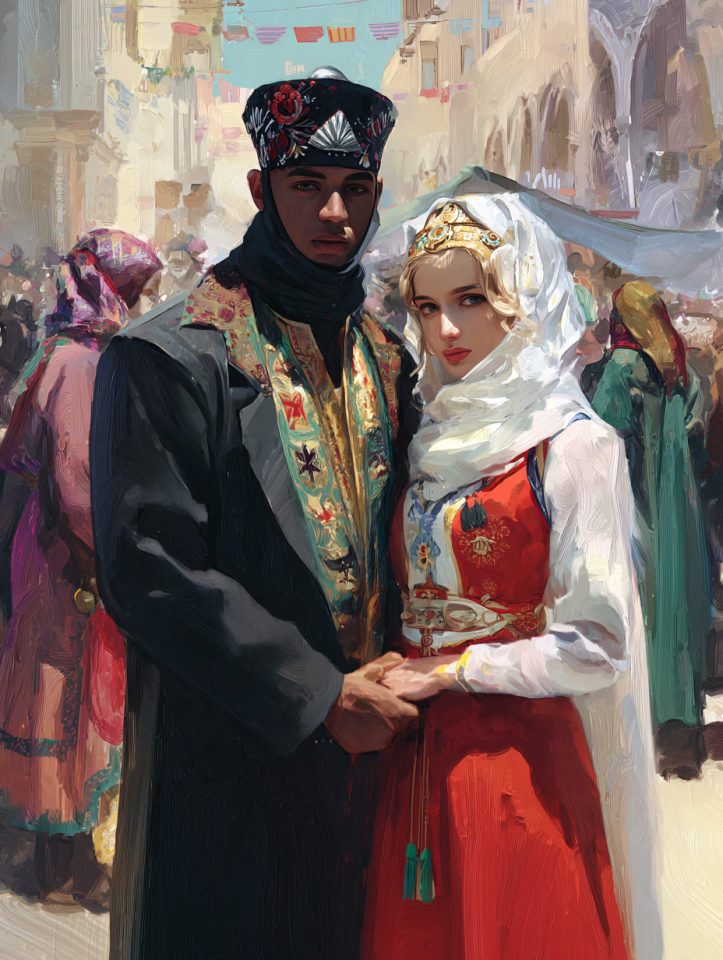
Music drifts from bamboo flutes as dancers in flowing hanbok weave stories into movement. Shrines to ancestors line the hillsides, their stones bearing the names of those who came before. To forget an ancestor is unthinkable, for memory is the root of identity, binding the living to the past. When emissaries of the Accord arrived, Joseon declared that preservation must serve not only empires and councils but the family — the smallest yet most enduring unit of civilization.
Thus, Joseon entered the Accord as the keeper of lineage, offering a vision of preservation rooted not in conquest or trade but in ancestry and ritual harmony.
Historical Origins
Joseon traced its heritage to the early Korean kingdoms of Gojoseon, founded in myth by Dangun, the son of a heavenly prince and a bear-woman. By the 1st century zc, the kingdom had established itself as a regional power, blending shamanic traditions with Confucian influence from Zhongguo.
Wanggeom-seong, situated along fertile plains and rivers, became its capital and symbol of continuity. When the Accord was conceived, Joseon’s leaders argued that preservation without family would collapse — that archives and monuments must be anchored in the lived continuity of kinship.
Philosophy & Governance
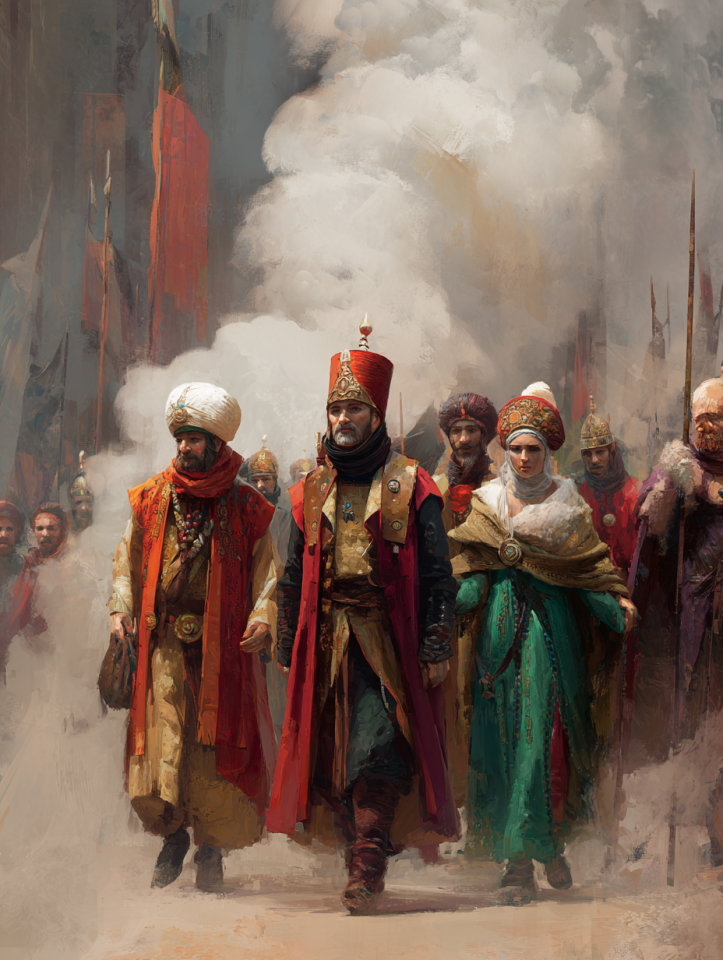
Governance in Joseon combined monarchy with councils of scholars and officials. Kings ruled as stewards of Heaven’s order, but legitimacy rested on the just application of Confucian ideals. Law was tied to ritual, ensuring that civic and family duties reinforced one another.
Within the Accord, Joseon’s philosophy emphasized filial piety and ritual harmony. They taught that preservation must begin with the smallest unit — the household — and extend outward to community, state, and world. Their vision ensured that family records, genealogies, and rituals became part of the Accord’s shared archive.
Contributions to the Accord
Joseon’s contributions strengthened the cooperative world in vital ways:
Genealogical Records: Systematic preservation of ancestry and lineage.
Confucian Philosophy: Ethics of harmony, order, and filial duty.
Calligraphy and Scholarship: Refined systems of record-keeping and teaching.
Music and Dance: Ritual performances that wove memory into sound and motion.
Cultural Identity
Joseon’s culture celebrated continuity and balance. Rituals honored ancestors at family shrines, while Confucian academies instilled discipline and learning. The hanbok embodied harmony in color and form, while court music preserved both myth and etiquette in melody.
In the Accord, Joseon became the guardian of family and ritual. Their insistence on genealogical preservation enriched the cooperative archive, ensuring that ancestry itself became recognized as a form of memory. Their mountain and tiger motifs entered Accord iconography, symbolizing endurance and strength.
Capital City
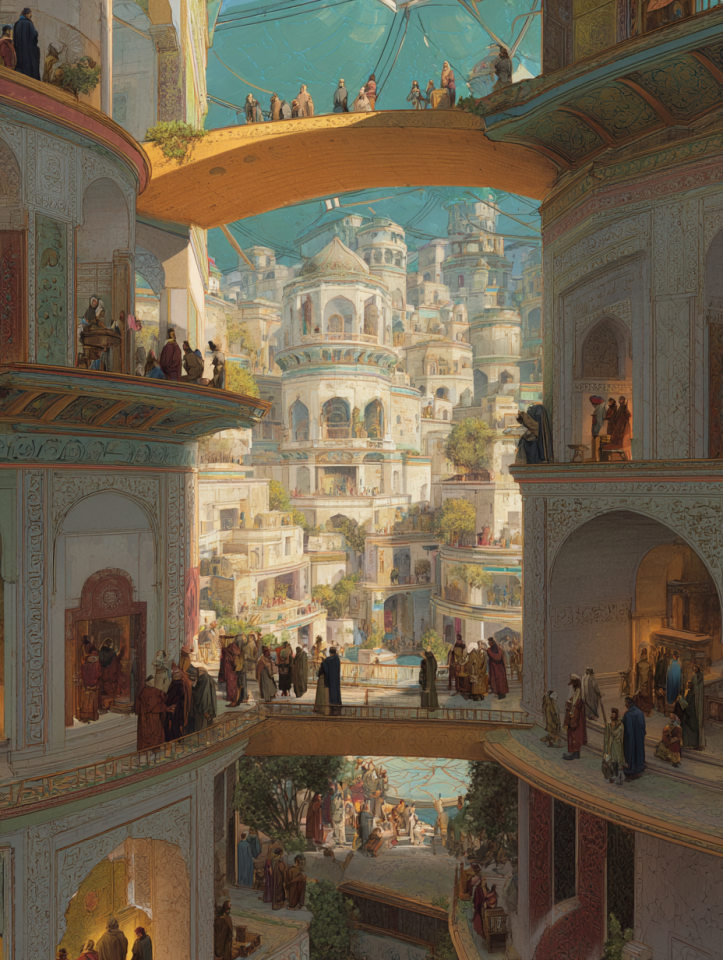
Wanggeom-seong — 39.0392°N, 125.7625°E — was chosen as Joseon’s Accord seat. Nestled between mountains and rivers, it embodied stability and balance. Accord scribes recorded genealogies here alongside philosophical treatises, creating a library where family lineages stood beside laws and histories.
Its shrines became gathering places not only for Joseon families but for emissaries from other blocs, who came to witness rituals of remembrance. The city’s quiet elegance gave it the title “Land of the Morning Calm,” reflecting Joseon’s gift of serenity within the Accord.
Legacy & Global Role
Joseon gave the Accord its families. Their vision of preservation emphasized that archives and monuments mean little if kinship and ancestry are forgotten. They taught the cooperative world that preservation begins at home — in names remembered, rituals observed, and duties fulfilled.
Centuries later, their influence persists wherever family, ancestry, and ritual remain central to identity. Joseon stands as a reminder that preservation is not only cosmic or civic, but also deeply personal, binding each household to the greater memory of the world.

Jade green for Confucian balance, bronze for ritual vessels, mountain/tiger for strength/ancestry.
Type
Geopolitical, Country
Capital
Leader
Leader Title
Related Ranks & Titles
Controlled Territories
Notable Members








Comments