
Religion & Philosophy
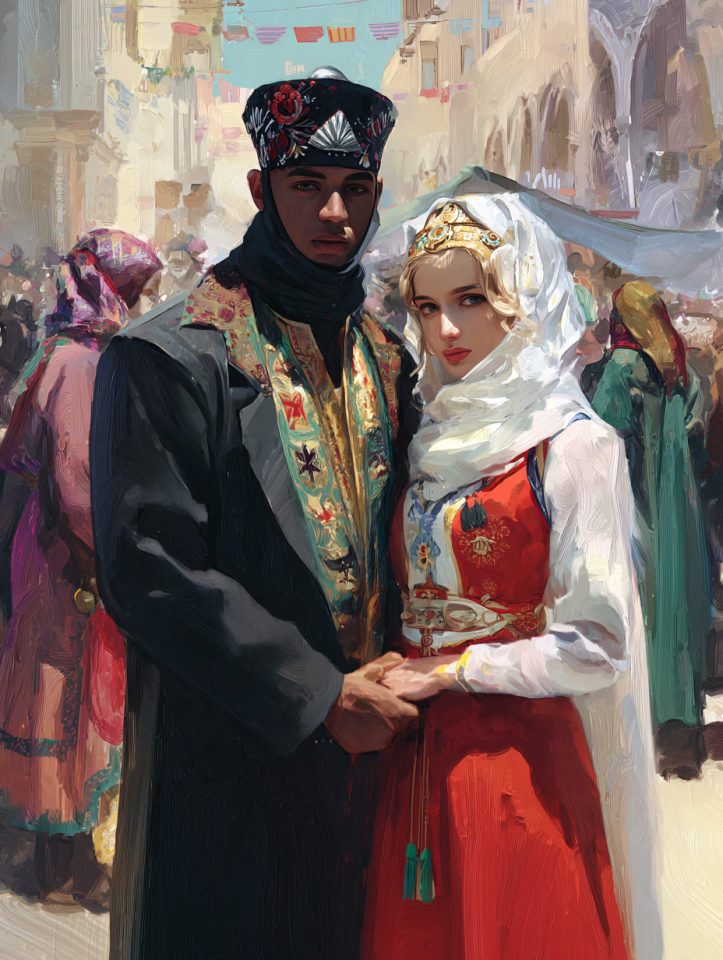
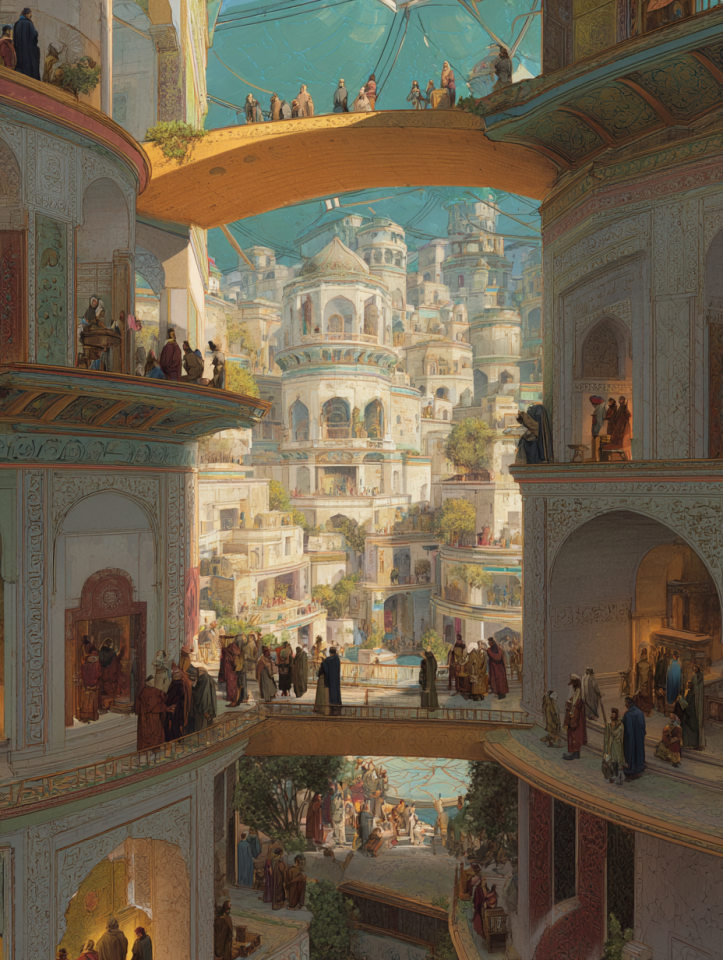
In Koina, faith and philosophy matured side by side rather than in opposition. The temples burn with ancestral ritual, but the councils and schools speak in the grammar of reason. Zoroastrian fire still glows beside Buddhist compassion and Indic dharma; yet these are not exclusive creeds, but cultural vessels for shared ethical inquiry. Philosophy provides the universal method—religion, the local rhythm.
In Koina, faith never hardened into monopoly. Without conquest or conversion, the gods remained where they began — guardians of culture, not rulers of conscience. Philosophy grew beside them like a parallel root system, giving every tradition an ethical grammar shared across the world. Belief became a matter of how one lives, not who one worships.
The scent of incense, the cadence of logic, the turning of prayer wheels and the echo of reasoned debate — these are not opposites but reflections of the same impulse: to understand and to belong. Here, religion and philosophy do not compete for authority; they complete one another.
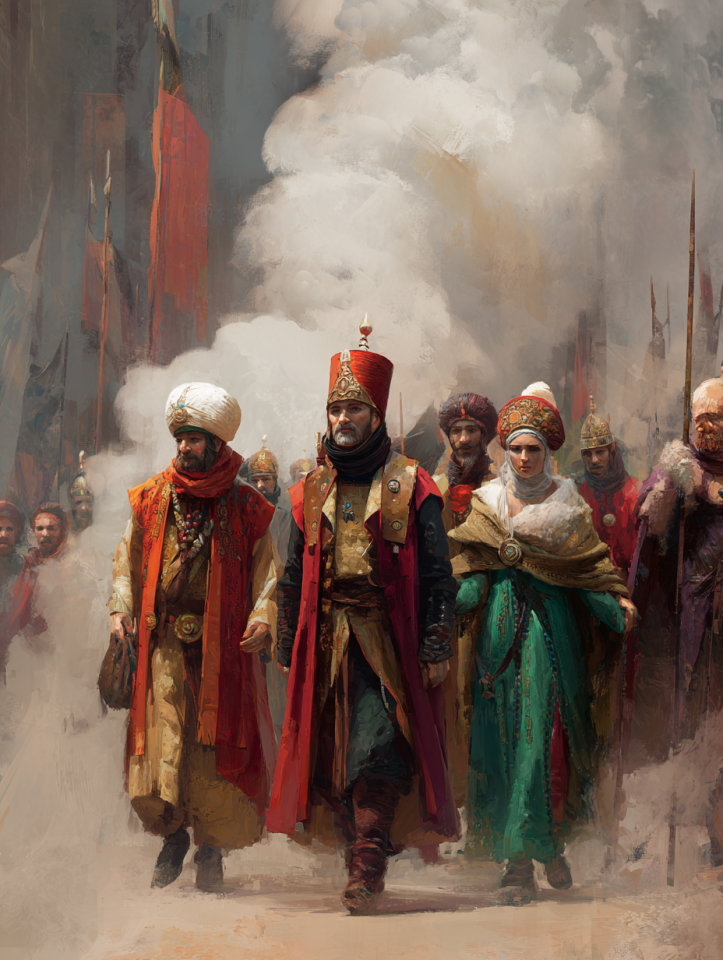
In this alternate modernity, the story of belief takes a different turn. Without Rome’s imperial monopoly and Christianity’s consolidation, religion and philosophy develop in tandem - neither displacing the other, but blending into a plural, humanistic framework. Gods and rituals remain important for culture and identity, but philosophy, not theology, becomes the universal ethical language.
| Philosophical Belief Systems |
| Religio-Cultural Systems |
| Other/non-Specific Systems |
Plural Practices
Every region sustains its own sacred traditions—Zoroastrian, Hellenic, Kemetic, Indic, Sinospheric, Meso, and more. These rituals bind communities to place, ancestry, and story. Alongside them, parallel schools of reasoning—Buddhist, Confucian, Hindu-Indic, Mohammedan, and Christian in their early, philosophical forms—provide shared moral frameworks. The two layers coexist: belief as the grammar of ethics, religion as the poetry of belonging.
Philosophical Beliefs (Ethical Frameworks)
Examples: Buddhism, Confucianism, Jainism, Mohammedan (early Justice and Equality Schools), Christianity (Compassion and Forgiveness Schools), and the later Zamīn Humanism.
They provide the shared ethical foundation across Koina, taught in every school and council.
Adelphism, once a companion philosophy to Christianity and Mohammedan, has integrated into (or already was) every belief system as to be understood as the common norm and not called out specifically in modern times.
Religio-Cultural Traditions
Parallel to these beliefs are the ancestral religions that preserve story, ritual, and locality—Hellenic, Kemetic, Norse, Shinto, Yoruba, and others. They give color and continuity to communal life but no longer claim moral monopoly. Their myths are honored as heritage, not as exclusive truth.
Schools of Belief
Belief in Koina is modular. Each philosophical family hosts multiple schools—Compassionate, Forgiving, Mindful, or Rationalist—through which individuals cultivate virtue. A Celt might follow the Christian Path of Endurance while a Persian embraces the Mohammedan School of Justice; both speak the same moral language of balance and restoration.
Cultural Overlays
These overlays correspond to the Religio-Cultural traditions represented below—living heritages such as Hellenism, Kemetic rites, Shinto, Yoruba Orisha devotion, or Meso calendar faiths. They preserve beauty and memory, while ethical life is guided by the philosophical schools above.
Faith serves as a modifier of identity, not its replacement.
In daily practice, philosophy and religion are threads of the same cloth. A person may reason as a Buddhist, celebrate as a Yoruba, and host strangers in the Adelphite spirit—all without contradiction. Belief guides conduct; religion nourishes belonging.
Faith serves as a modifier of identity, not its replacement.
In daily practice, philosophy and religion are threads of the same cloth. A person may reason as a Buddhist, celebrate as a Yoruba, and host strangers in the Adelphite spirit—all without contradiction. Belief guides conduct; religion nourishes belonging.
The Role of Religion in Civic Life
Religion still serves crucial functions:
Cultural continuity: Temples, shrines, and festivals anchor local identity.
Social bonding: Rituals reinforce community bonds, marriages, and seasonal cycles.
Symbolism: Gods embody ideals - wisdom, fertility, justice - but are not wielded to demand conformity.
What religion does not do in this world is persecute. There are no heresies, no inquisitions, no wars of doctrine. Faiths coexist because philosophy handles what religion often tried to monopolize: ethics.
Transgression, Not Sin
Because theological absolutes never dominated, the concept of sin never calcified into civic law. Wrongdoing is transgression - a breach of balance or harmony. Religious rites may help a person restore themselves spiritually, but civic justice does not invoke gods or eternal punishment. The gods remain symbolic, not judicial.
Strengths and Vulnerabilities
Strengths
Religious diversity without persecution.
Shared philosophical language bridges cultures.
Ethical life is consistent across federations, even with different gods.
Vulnerabilities
Local traditions can sometimes resist reform, defending harmful customs as sacred.
Philosophical consensus can drift into elitism if ordinary citizens feel excluded from discourse.
Tension occasionally arises between ritual conservatism and rational innovation.
The Tone of Belief
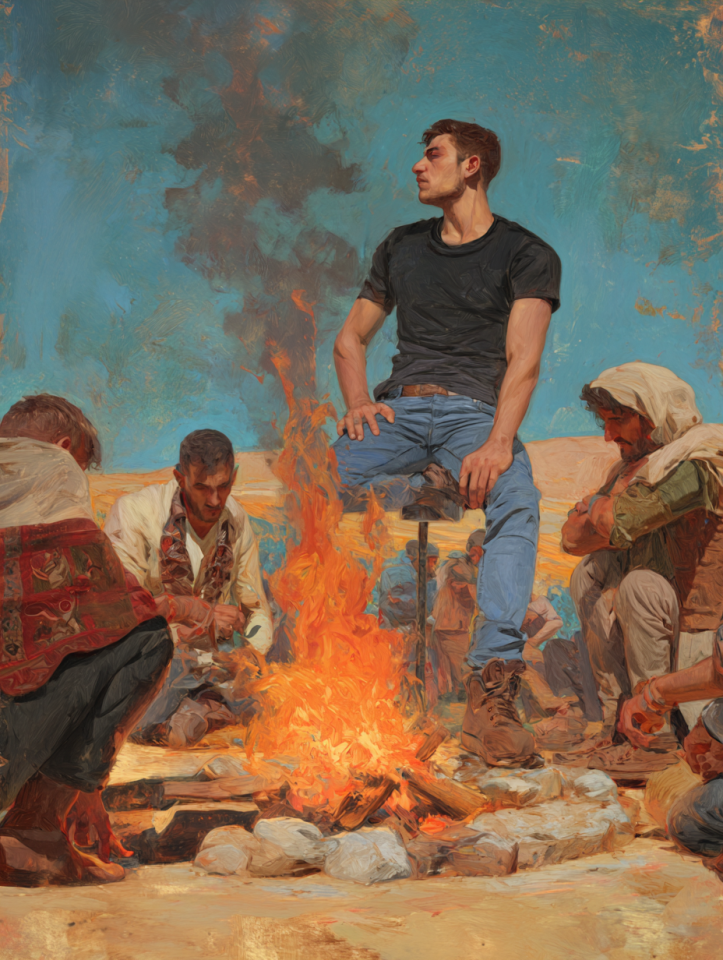
Religion in this world feels celebratory, symbolic, and plural. Festivals are vibrant, pilgrimages are common, and local gods remain beloved. Philosophy is the bedrock - taught to every child, woven into every debate, grounding law, science, and ethics. The combination produces a society where belief is open, diverse, and human-centered.
-
World Bible Navigation
-
Governance
Documents detailing the articles of Cooperative Federation.-
The Covenant
The Foundations of Koina
-
Constitution
-
The Persian Constitution
Empire is formed
-
The Persian Constitution: Amendment I
5th - 6th Century ZC
-
The Persian Constitution
-
Bills and Accords
-
The Accord of Alexandria
1st Century ZC
-
The Bill of Rights for All Peoples
3rd Century ZC
-
The Bill of Sovereignty for Cooperatives
3rd Century ZC
-
The Charter of Rights & Duties of the Accord
3rd Century ZC
-
The Covenant of Adjudication
3rd Century ZC
-
On Inheritance
A Treatise on the Balance of Desire, Purity, and Civic Stewardship
-
The Expansion Accord
4th Century ZC
-
The Environmental Accord
12th Century ZC
-
The Communication Accord
18th Century ZC
-
The Technology & Balance Accord
22nd Century ZC
-
The Modern Accord
22nd Century ZC
-
The Accord of Alexandria
-
Constitution
-
The Covenant
-
World Scope
-
Introduction & Scope
-
Arts & Aesthetics
-
Architectural Standards
-
Communication & Memory
-
Crime & Social Order
-
Geopolitics & Power
-
Law, Rights & Citizenship
-
Leadership: Voices & Whispers
-
Freedom & Daily Rhythm
-
Global Institutions
-
Health & Environment
-
Industrialization
-
Religion & Philosophy
-
Sciences & Knowledge
-
Social & Cultural Life
-
Technology & Travel
-
Introduction & Scope
-




I'm greatly enjoying the level of thought and detail in this setting!
Thanks...