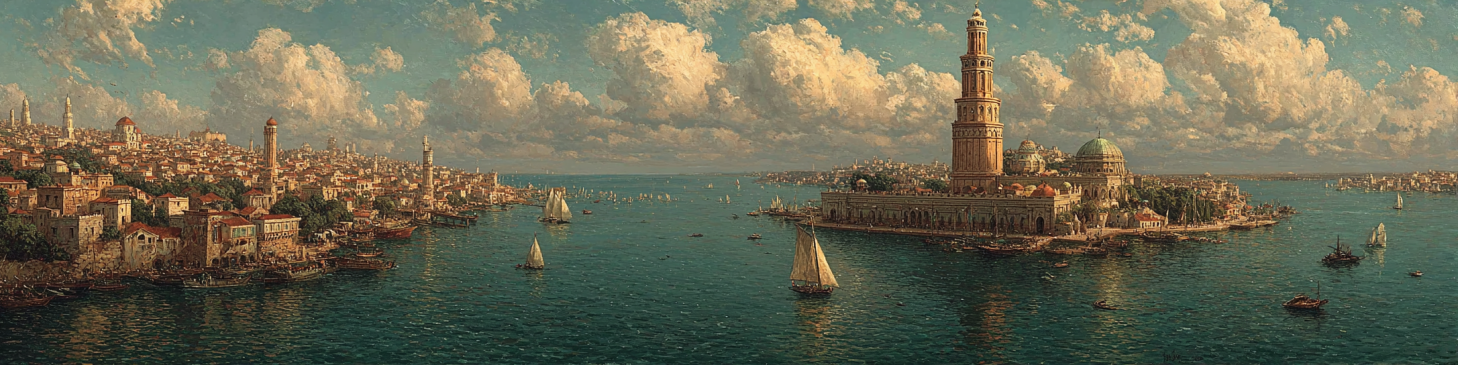
Western Nile Sanctuaries
Where the Nile meets the sea and desert, three sanctuaries mark the boundary between worlds — lighthouse, mountain, and oasis. Each is a dialogue between navigation and revelation, guiding both travelers and souls. Together they form the western threshold of the ancient world’s moral geography.
Pharos of Alexandreia
: MAN-MADE
Once the tallest structure on Earth, the Pharos guided ships through the mists of the Mediterranean — a beacon that made knowledge itself a form of safety. Its mirror of polished bronze turned sunlight into direction, a triumph of science as mercy. Though the tower fell (now reconstructed), its spirit endures in every observatory and signal light of Koina: proof that the truest monuments are those that keep others from perishing.Mount Sīnai / Jebel Musa
: RELIGIOUS/PILGRIMAGE
The granite peaks of Sinai rise like petrified fire, long held as the meeting place of revelation and law. Here, prophets heard voices in thunder; later generations heard philosophy in silence. Koina interpreters revere Sinai not for commandments but for dialogue — the human act of listening to vastness. Pilgrims still climb before dawn to watch the first light break over the desert, enacting the eternal conversation between question and answer.Temple of Amun at Siwa
: RELIGIOUS/PILGRIMAGE
Deep in the Western Desert, the oracle of Siwa once united desert tribes and pharaohs alike. Surrounded by salt lakes and palms, its ruined columns stand as fossils of counsel, where divine voice was tempered by human inquiry. Siwa epitomizes reason’s humility before mystery. The desert wind that passes through its empty sanctuary carries the same whisper that founded all philosophy: listen first.
Type
World wonder
Owning Organization




Comments