
First Voice
Rank/Title in the Accord
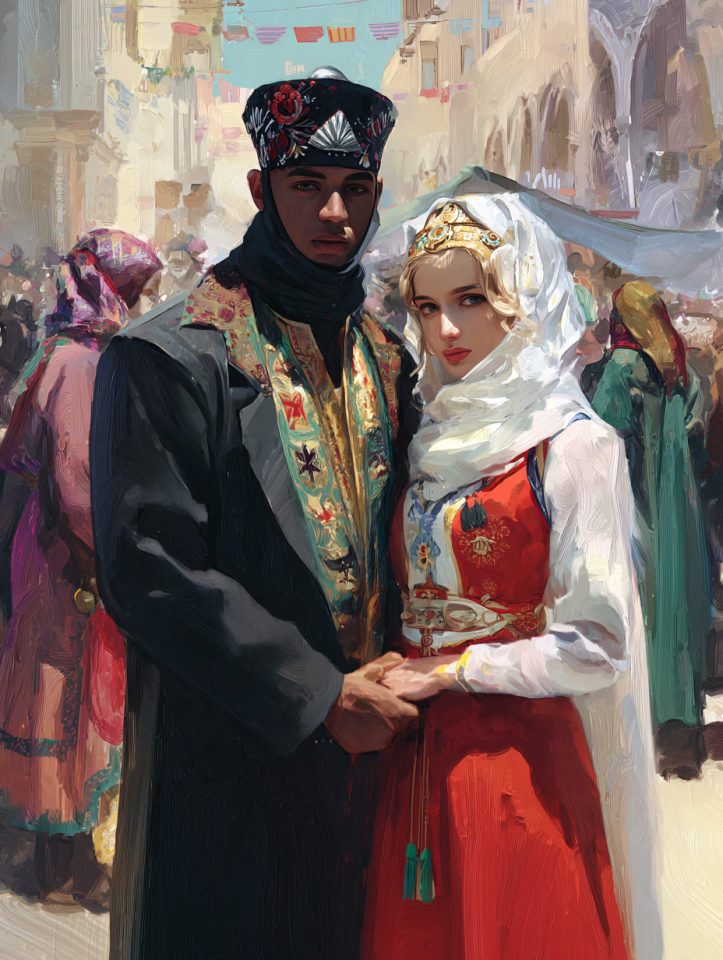
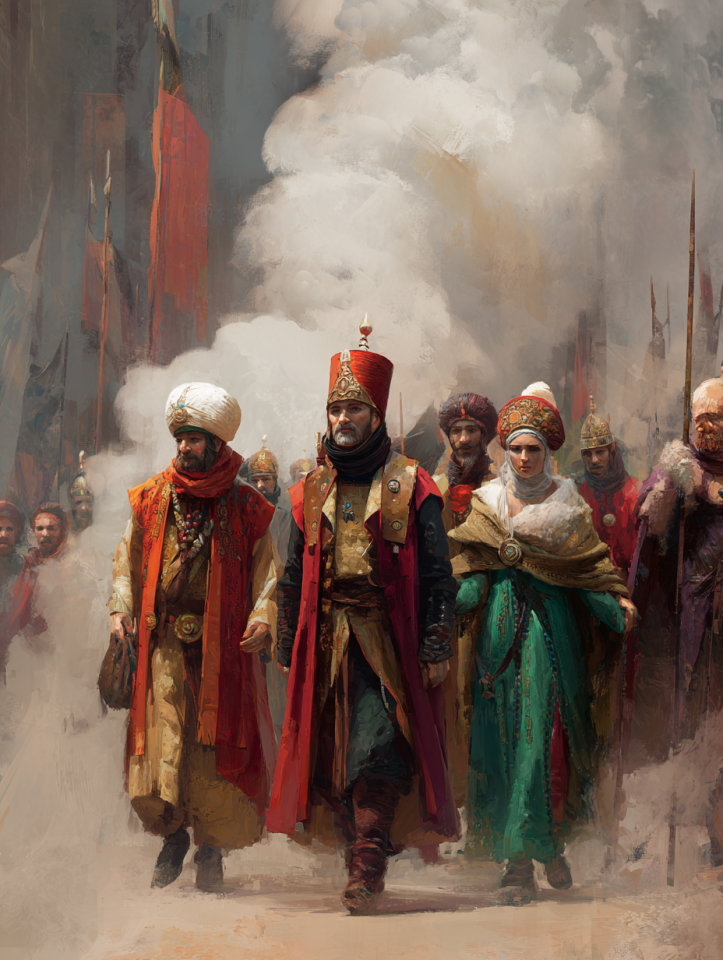
The title of First Voice represents the highest level of active leadership within the Accord’s system of cooperative governance. A First Voice is the chosen speaker for a city, region, or federation, entrusted to articulate the collective reasoning of their people while remaining accountable to the body of Whispers who refine, advise, and eventually succeed them. Unlike monarchs, presidents, or emperors in other histories, a First Voice is not a ruler but a conductor — the guiding voice of many, never a solitary authority.
Current Voices
Selection and Training
Potential Voices are identified in childhood through observation by families, guilds, and local councils. Qualities such as fairness, patience, rhetorical clarity, and empathy are seen as signs of leadership aptitude. Selected children enter the Whisper schools, where they are trained in philosophy, law, mediation, history, and the arts of dialogue. From adolescence onward they rotate through apprenticeships in guilds, assemblies, and courts, ensuring practical experience alongside study. The system produces leaders who are trained deliberately, not left to chance or inheritance.
The Role of the First Voice
A First Voice presides over a council or federation for a fixed term, serving as its public face and primary speaker. Their authority is executive but never absolute — every decision is subject to the refinement and accountability of the Whispers who serve beside them. Rotation is built into the system: when a First Voice completes their term, one of their Whispers ascends, ensuring continuity without entrenchment. In this way, the rank embodies both stability and renewal.
Variation Across Federations
Because the Accord safeguards autonomy, not all polities implement the Voice-and-Whisper system identically. In some regions, the rank of First Voice applies only at the highest federative level, while local councils govern through other cooperative structures rooted in tradition. In others, the system extends down the full tree of governance, from neighborhood assemblies to city councils to regional federations. Each culture adapts the framework to its own rhythms, but all acknowledge the legitimacy of the First Voice model at the point where they interface with the Accord itself. This balance of local freedom and shared practice ensures diversity without fragmentation.
Symbolism
Philosophically, the First Voice symbolizes articulation: the ability to give shape to collective reasoning. Their Whispers symbolize refinement, representing the chorus that prevents arrogance or isolation. Together they embody the principle that wisdom emerges not from solitary command but from dialogue. This is why the First Voice is always addressed as Voice of [Place] rather than as sovereign — their identity is inseparable from the community they represent.
Personal Life and Expectation
While the rank carries honor, it is not cloaked in mystique. First Voices are expected to live as examples of civic balance: accessible to their citizens, transparent in their decisions, and embedded in ordinary rhythms of community. They may maintain unions, families, or cooperative households according to local custom, but their relationships are always viewed as reflections of their values. A Voice who lives in harmony at home is thought more likely to govern in harmony abroad.
Legacy and Continuity
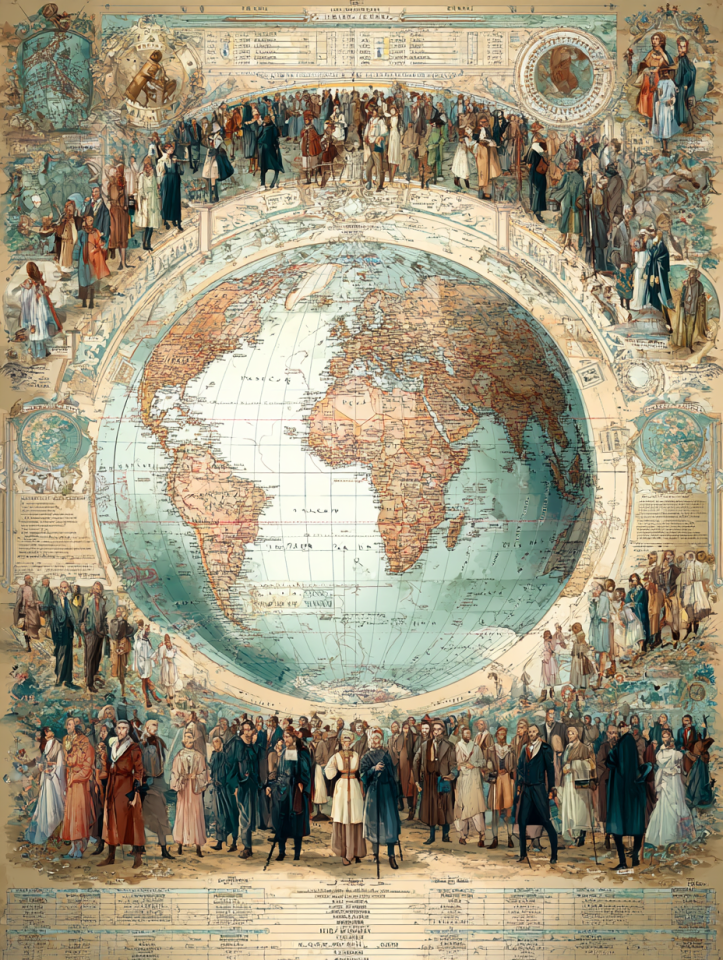
The title of First Voice stretches back to the earliest Accord signatories, when representatives from across the world first gathered in Antioch. Since then, the rank has persisted with remarkable consistency, adapting to new eras without losing its essence. The memory of past Voices — signatories, mediators, reformers — is preserved not as heroic myth but as civic lineage. Every new First Voice takes an oath not only to their people, but to the chorus of Voices who came before, ensuring that the rank remains a living thread of continuity.
Type
Civic, Political
Form of Address
Speaker
Source of Authority
Current Holders
Past Holders
- Aorangi of Suvarnabhumi
- Ardashir of Persepolis
- Ashoka of Pataliputra
- Branwen of the Northern Forests
- Citlalin of Teotihuacan
- Hopohka White-Eagle
- Hoshiko of Asuka
- Hrothwulf of Midgard
- Larth Velthnal
- Makena wa Zuberi
- Nysippos of Antioch
- Rustam Sogd
- Seongjin of Gaya
- Tahara of Memphis
- Tiramakan of Kangaba
- Xun An of Linzi




Comments