
Geopolitics & Power
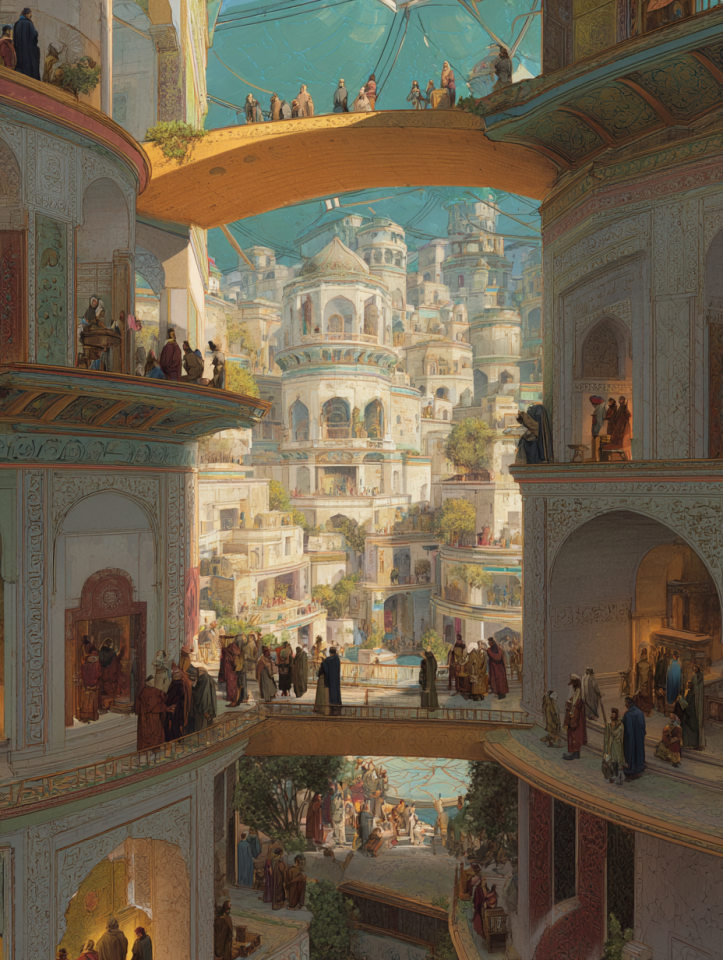
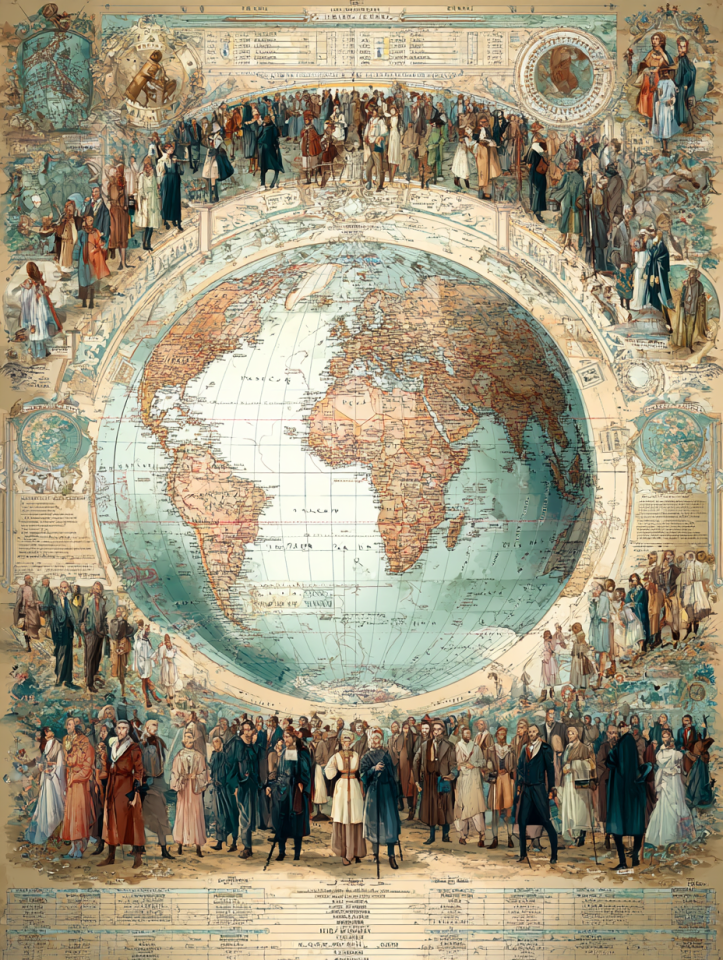
Dawn comes to the world in fragments — first to the domes of Antioch, then to the sails of the Hellenic harbors, then to the high terraces of the Andes where farmers trace prayers in dew across the fields. Couriers depart from every direction, their messages bound not for a capital but for councils scattered like constellations across the continents. By midday the voices of six federations hum through the air: Persic, Hellenic, Nile–Red Sea, Indic, Sinosphere, and the Meso–Andean. None commands the others, yet all are heard.
In Koina, power was never gathered into a single throne or empire. It evolved instead as a web — strong because no strand stands alone. The collapse of conquest in antiquity left no void; it left room for balance. Over centuries, federations rose from old river valleys and coastal leagues, each guided by its own traditions yet bound to the shared conviction that survival depends on cooperation.
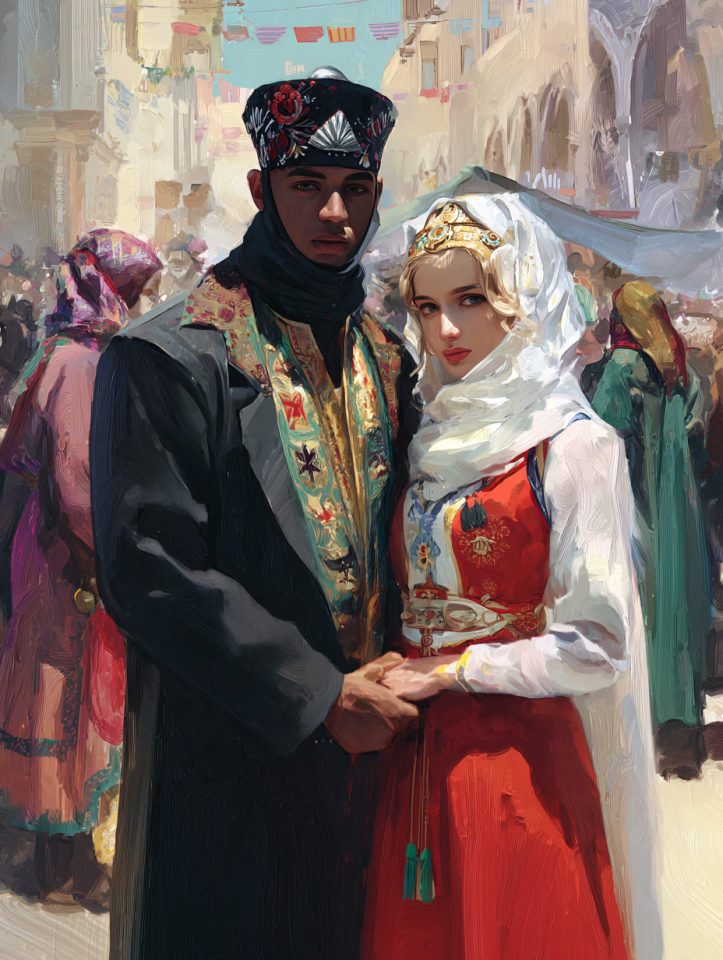
To cross a border in this world is not to enter a rival domain but another dialect of the same conversation. Trade caravans carry not tribute but news; emissaries travel without guards; treaties are debated as acts of philosophy, not fear. Geopolitics here is not a contest of empires but an art of equilibrium — a planet sustained by the gentle gravity of dialogue.
The modern world, absent Rome’s empire and its colonizing legacy, is polycentric by design. Instead of one civilization dominating and demanding assimilation, the past two millennia have nurtured federations and leagues, each drawing strength from their local traditions and philosophies, yet bound by cooperative assemblies that prevent isolation or domination.
Polycentric Federations
Persic Federation
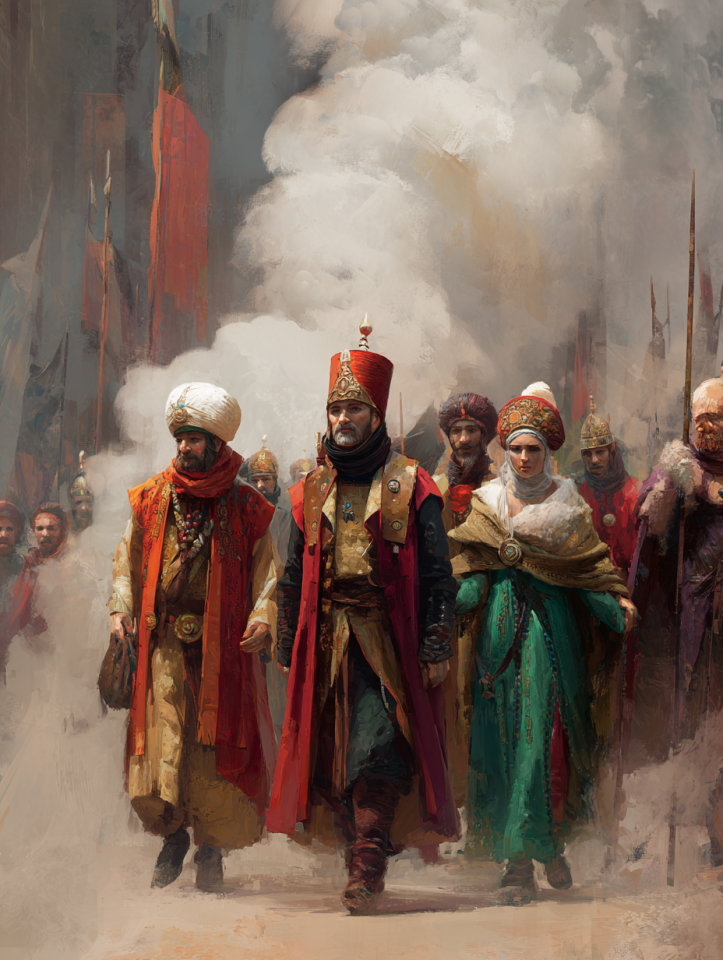
At the western heart of Asia lies the Persic Federation, the most direct inheritor of the Achaemenid model. Its core principle is administrative tolerance: diverse peoples govern themselves locally while contributing to the stability of the federation. The system of First Voices and Whispers continues at every level, ensuring turnover, continuity, and accountability. The Persic Federation’s territory stretches across the Iranian plateau into Mesopotamia and Anatolia, linking the Mediterranean and Central Asian trade routes. Its role as a cultural and political anchor remains pivotal, just as it was in the ancient world.Hellenic Maritime Leagues
The fragmented but resilient Mediterranean city-states never unified under Rome. Instead, they evolved into a network of Hellenic Maritime Leagues - federations of ports, islands, and coastal cities bound by arbitration treaties and merchant guilds. These leagues excel at maritime law, navigation, and trade diplomacy. Their polytheistic rituals and festivals provide cultural continuity, while philosophy schools anchor civic education. The Leagues are small in territory but immense in influence, acting as mediators and cultural hubs.Nile–Red Sea Commonwealth
Rooted in Egyptian tradition and expanded by Axumite and Nubian influences, the Nile–Red Sea Commonwealth thrives on riverine agriculture and maritime trade. Its cities are built low and broad along fertile banks, linked by canals and solar-powered ferries. The Commonwealth emphasizes harmony between nature and society, with temples and guilds managing irrigation and health. As a geopolitical bloc, it links Africa to Asia across the Red Sea, serving as a bridge between continents.Indic Sangha Federations
Across the Indian subcontinent, the Indic Sangha Federations embody pluralism and dharmic philosophy. Governance here is highly decentralized: cities and sanghas (councils) deliberate locally, sending representatives upward into regional assemblies. Stoic and Buddhist influences combine, making these federations the philosophical heart of the world. They lead in logic, ethics, and medical inquiry, exporting not only goods but also frameworks of reasoning.Sinosphere Consortium
In East Asia, the Sinosphere Consortium embodies continuity and adaptation. Confucian meritocracy and Taoist balance underpin its bureaucratic systems. Instead of dynastic empire, the Sinosphere evolved into a consortium of civil service states, unified by examinations, philosophical academies, and cooperative treaties. It remains the most populous and technically advanced bloc, pioneering cooperative technologies like wind towers, distributed solar grids, and long-distance rail.Meso & Andean Leagues
Across the Atlantic, the Meso and Andean Leagues developed without European conquest. These societies built upon their traditions of astronomy, terrace agriculture, and ritual calendars. Today, their federations manage highland and coastal economies, contributing innovations in ecological engineering and cooperative agriculture. Their philosophies of cyclical time and balance resonate strongly with other blocs, making them global leaders in environmental stewardship.Cartographic and Topographic Integrity
Because colonization never unfolded under Western expansion, the geography of Koina retains its ancestral names. Mountains, rivers, and regions are called by the words their peoples have always used — Zāgros, Nil, Jangzi, Tikal, Ayar, Ararat — unbroken by imperial renaming. The absence of conquest preserved linguistic continuity: local toponyms remained civic heritage, not trophies of possession.
This toponymic integrity carries political weight. Names are not marks of ownership but of memory. Councils maintain multilingual registries acknowledging parallel traditions — the same river may be known by three or four names, each valid within its cultural sphere. On maps of Koina, no continent is divided by foreign nomenclature; every label speaks in the tongue of its caretakers.
Geography, therefore, is not a neutral backdrop but a living archive of belonging. The land itself resists assimilation; it remembers who named it first.
Borders as Gradients
Unlike our world’s hard nation-state borders, these federations maintain gradient frontiers. Between blocs lie zones of mixed identity, shared governance, and overlapping influence. Belonging is not ethnic or exclusive - to live within a community, swear its civic oath, and participate in its councils is to belong. This system prevents most wars of conquest, since there is little incentive to “assimilate” others.
Balance of Power
No single bloc dominates globally. Instead, power flows in concentric circles:
Local councils anchor identity and practical governance.
Regional federations manage trade, law, and defense.
The Grand Assembly of Concord provides a neutral space for global deliberation.
Tensions exist - guild rivalries, disputes over resources, philosophical disagreements - but these rarely escalate into existential conflicts. With no Rome to set the precedent of “empire,” the very concept of world domination is culturally alien.
Global Tone
The geopolitical tone of this world is dialogic, not imperial. Federations may compete for prestige or trade advantage, but cooperation is the default expectation. The emphasis is not on conquest, but on maintaining balance, plurality, and continuity across overlapping spheres of influence.
-
World Bible Navigation
-
Governance
Documents detailing the articles of Cooperative Federation.-
The Covenant
The Foundations of Koina
-
Constitution
-
The Persian Constitution
Empire is formed
-
The Persian Constitution: Amendment I
5th - 6th Century ZC
-
The Persian Constitution
-
Bills and Accords
-
The Accord of Alexandria
1st Century ZC
-
The Bill of Rights for All Peoples
3rd Century ZC
-
The Bill of Sovereignty for Cooperatives
3rd Century ZC
-
The Charter of Rights & Duties of the Accord
3rd Century ZC
-
The Covenant of Adjudication
3rd Century ZC
-
On Inheritance
A Treatise on the Balance of Desire, Purity, and Civic Stewardship
-
The Expansion Accord
4th Century ZC
-
The Environmental Accord
12th Century ZC
-
The Communication Accord
18th Century ZC
-
The Technology & Balance Accord
22nd Century ZC
-
The Modern Accord
22nd Century ZC
-
The Accord of Alexandria
-
Constitution
-
The Covenant
-
World Scope
-
Introduction & Scope
-
Arts & Aesthetics
-
Architectural Standards
-
Communication & Memory
-
Crime & Social Order
-
Geopolitics & Power
-
Law, Rights & Citizenship
-
Leadership: Voices & Whispers
-
Freedom & Daily Rhythm
-
Global Institutions
-
Health & Environment
-
Industrialization
-
Religion & Philosophy
-
Sciences & Knowledge
-
Social & Cultural Life
-
Technology & Travel
-
Introduction & Scope
-




Comments