Brynwydd (BRIN-with)
Our Hills / Forests
Mists curl through ancient oaks and yews, the air filled with the scent of damp earth and woodsmoke. Beneath the canopy, druids chant to the rhythm of drums, their voices weaving with the wind as fires cast long shadows on standing stones. Circles of granite rise from the soil, aligned to solstices and equinoxes, as though the land itself remembers and records. For the people of Brynwydd, preservation is not only in scrolls or stone but in the living bond between earth and sky.
In scattered villages of roundhouses that dot the valleys, bards recite epics by firelight. Children learn their people’s past not from tablets or libraries, but from song, gesture, and the cadence of poetry. Oral tradition is sacred, binding each generation to the next. Blacksmiths hammer iron into tools and ornaments, etching spirals and knots into every surface, so that even metal carries memory.
Travelers from Pārsa or Hellas find themselves immersed in a culture where story and place are inseparable. A hill is not just a hill but the seat of a myth; a river is not merely water but the path of a goddess. Knowledge here is entwined with land, preserved not in archives but in the stones, trees, and songs that surround daily life.
When the Accord was called, Branwen of the Northern Forests insisted that memory could not be confined to ink and parchment alone. She argued that preservation must include song, ritual, and landscape — that to erase oral tradition would be to silence half the world. Thus Brynwydd entered the Accord as the keeper of living memory.
Historical Origins
Brynwydd’s traditions stretched back to the Bronze Age, where megaliths and barrows dotted the landscape as markers of myth and lineage. Druids and bards held authority not by decree but by memory, serving as living archives of law, lore, and ritual. Though lacking the centralized empires of Pārsa or Zhongguo, the Celtic peoples created vast networks of kinship across forests, rivers, and seas.
By 0 zc, their territories stretched across the isles and into continental Europe. Fragmented though they were, their traditions of oral preservation and astronomical observation ensured their place in the Accord. Branwen’s voice, rising in Caer Afallach, became a rallying cry that memory need not be written to endure.
Philosophy & Governance
Governance in Brynwydd was rooted in councils of chieftains, advised by druids and bards. Authority was decentralized, based on kinship ties and community consensus rather than monarchic decree. Druids served as judges, healers, and astronomers, interpreting both natural signs and inherited law.
Within the Accord, Brynwydd emphasized that preservation required pluralism: the recognition of oral, artistic, and environmental records alongside written ones. Their philosophy rejected the idea of conquest or unification, instead offering a model of preservation through diversity and interconnection.
Contributions to the Accord
Brynwydd’s gifts to the cooperative world were unique and enduring:
Oral Tradition: Epics, laws, and myths preserved through bardic performance.
Astronomy: Stone circles and alignments provided insights into celestial cycles.
Metallurgy: Mastery of ironwork, decorated with symbolic patterns.
Environmental Stewardship: A philosophy of the land as archive, preserving memory through place.
Cultural Identity
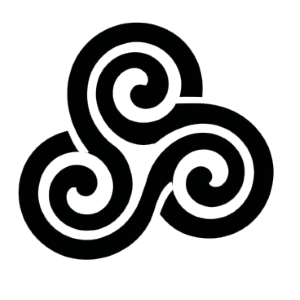
Celtic culture celebrated rhythm, cycle, and interconnection. Music was not merely entertainment but law and record, carrying memory across generations. Knotwork and spiral motifs symbolized continuity, reflecting the endless weave of life and story.
In the Accord, Brynwydd introduced the idea that preservation was not only intellectual but embodied — in festivals, in sacred groves, in the alignment of stones with the stars. Their myths of gods and heroes became part of the Accord’s shared fabric, reminding all that truth lives as much in story as in archive.
Capital City
Caer Afallach — 51.600°N, 3.000°W — was chosen as Brynwydd’s Accord seat. Nestled among hills and forests, it was less a city than a gathering place. Roundhouses clustered around sacred groves and standing stones, where councils met in open air beneath the sky.
Here, memory was enacted in ritual. Bards recited the great cycles of myth at every meeting, ensuring that decisions were taken in the presence of story and tradition. Caer Afallach symbolized Brynwydd’s belief that preservation cannot be contained within walls, but must live in the world itself.
Legacy & Global Role
Brynwydd’s role in the Accord was to ensure that memory remained human, embodied, and diverse. Their oral traditions reminded the cooperative world that archives alone cannot safeguard truth. They taught that memory must be sung, enacted, and tied to the land.
Centuries later, their influence remains in the Accord’s inclusion of oral records and environmental preservation. Festivals, storytelling, and landscape protection carry Brynwydd’s spirit, ensuring that the cooperative world never forgets the voices of the forest, the rhythm of the drum, or the power of a story told beneath the stars.

Green for sacred groves, silver for lunar/metal symbolism, knot for continuity.
Type
Geopolitical, Country
Capital
Leader
Leader Title
Related Ranks & Titles
Controlled Territories
Notable Members
Related Myths







Comments