Sogdiana (Land of the Sogdians)
Land of the Sogdians
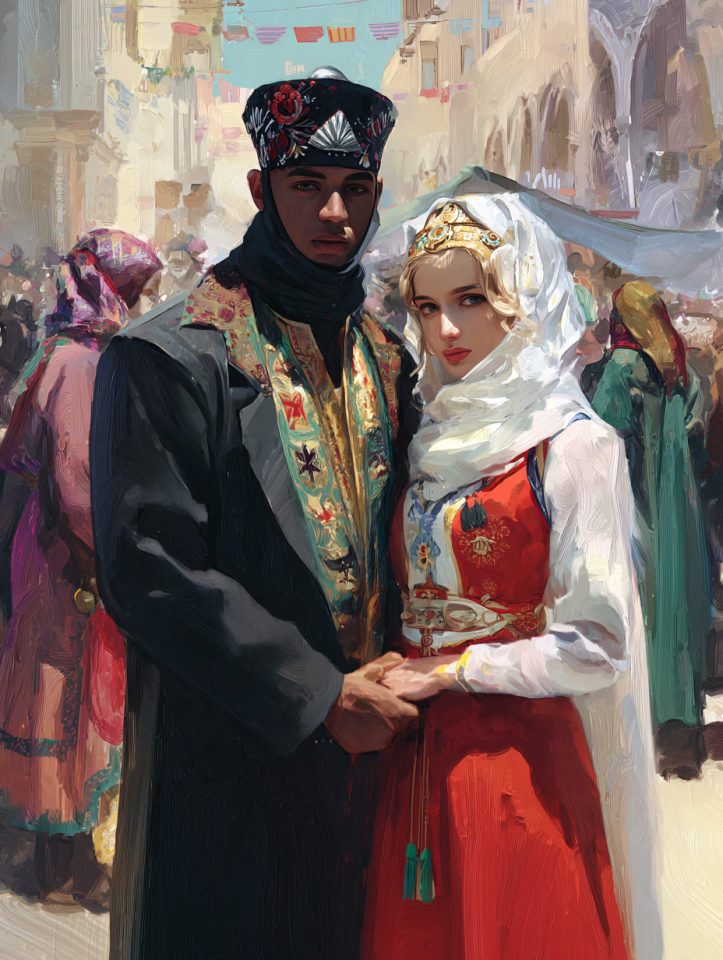
The walls of Samarkand rise from the desert like jewels, their gates painted in blues and golds that gleam beneath the sun. Beyond them lies a city alive with voices in dozens of tongues: Persian, Sanskrit, Chinese, Aramaic, and Greek, all mingling in the marketplace. The air is thick with the scent of saffron and frankincense, the clatter of camel caravans, and the music of stringed instruments played by traveling bards. Preservation here is not stillness but motion — a living current carried along the Silk Road.
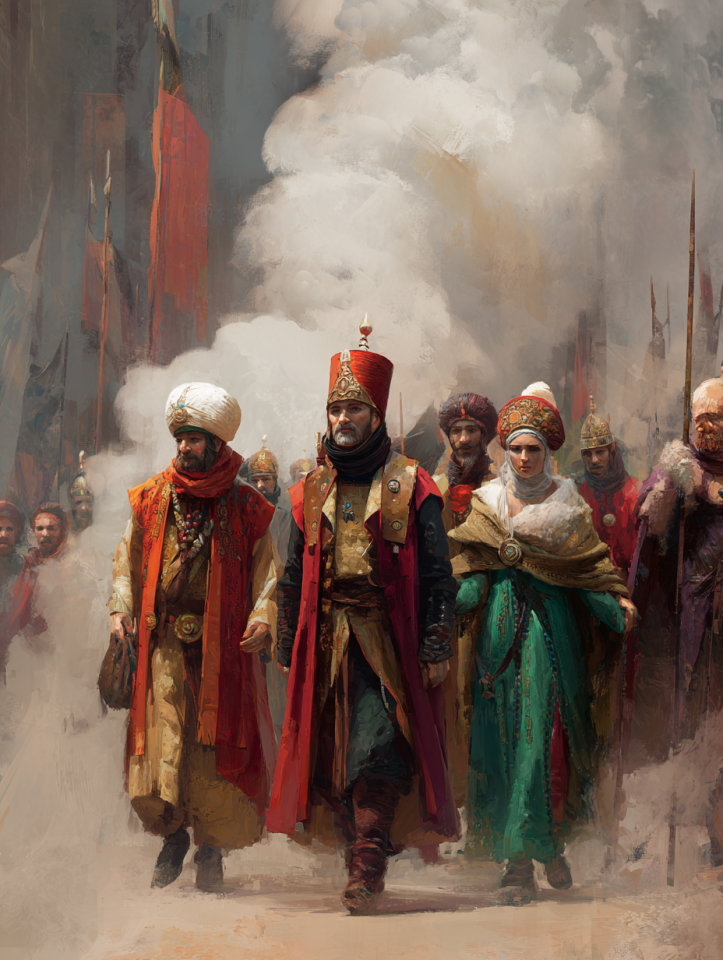
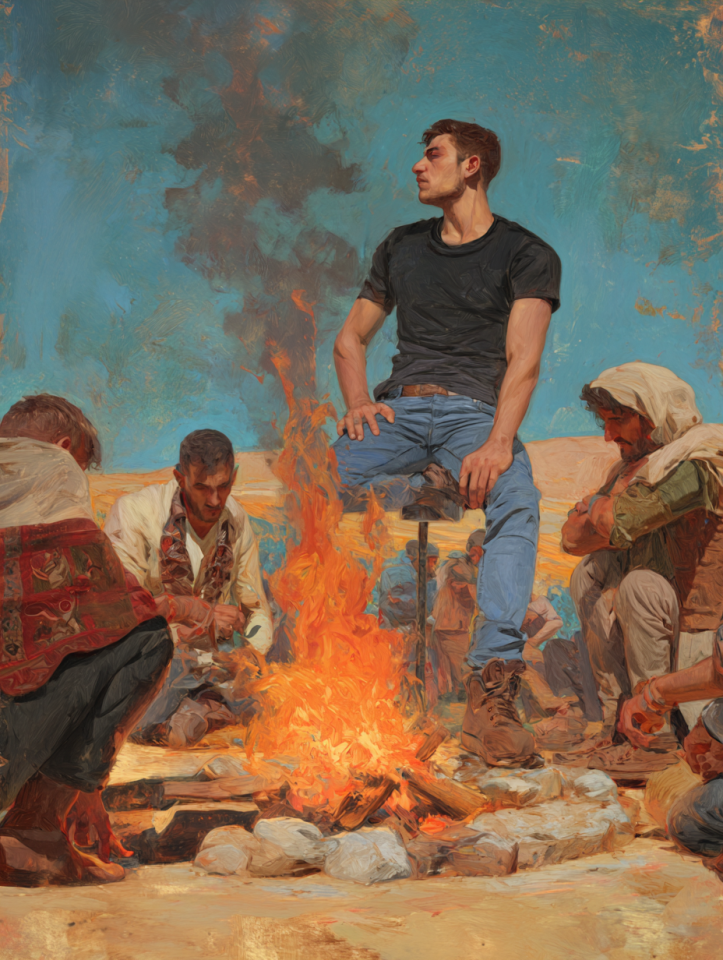
Caravans stream into the city from every horizon. From the east come silks and scrolls, from the south spices and ivory, from the west glass and wine. Merchants tally their accounts on wax tablets, but their true treasure lies in the stories they carry: the knowledge of distant lands, the philosophies of foreign sages, the songs of other peoples.
Temples of Zoroastrian fire glow alongside Buddhist monasteries, while shrines to local gods nestle in neighborhood courtyards. Each faith finds space here, woven together by the rhythm of trade. In Samarkand, preservation is not confined to any one creed or people; it is the act of weaving difference into harmony.
For Sogdiana, the Accord was an extension of their way of life. Their people had always been mediators, traders, and storytellers. To them, preservation meant more than storing memory — it meant ensuring that memory traveled, exchanged, and renewed itself along every road.
Historical Origins
Sogdiana’s legacy lay in its position as crossroads. Nestled between Persia, India, and China, its merchants became the lifeblood of the Silk Road. By the 1st century zc, Samarkand had already emerged as a key hub of commerce and culture, where caravan routes converged and civilizations mingled.
When the Accord was called, Xun An of Linzi insisted that the roads of memory could not be secured without the merchants who carried them. It was through the voice of Sogdiana’s guilds that the Accord recognized commerce as more than profit — as preservation itself. Thus, Sogdiana entered The Covenant as the guardian of exchange.
Philosophy & Governance
Governance in Sogdiana revolved around merchant councils and trade guilds. Authority was less about kingship than about reputation and trust, forged in the marketplace and the caravan trail. Contracts, oaths, and hospitality served as law, binding communities together across distances.
Within the Accord, Sogdiana championed the philosophy of connection. They argued that preservation required roads, networks, and exchanges — that memory could not survive if it remained static. Their governance model, built on guilds and councils, reinforced the Accord’s commitment to diversity, cooperation, and flow.
Contributions to the Accord
Sogdiana’s contributions were essential to the cooperative world:
Trade Diplomacy: Expertise in negotiation, mediation, and multicultural exchange.
Caravan Infrastructure: Systems of caravanserais, rest stops, and guarded routes.
Multilingualism: Preservation of texts through translation and oral storytelling.
Cultural Syncretism: Art, music, and ritual that blended east and west.
Cultural Identity
Sogdian culture celebrated diversity. Their epics spoke of journeys and heroes who crossed mountains and deserts, binding worlds together. Music and dance carried motifs from Persia and India, woven into new forms. Their art, painted on walls and textiles, depicted gods and myths drawn from many lands, reflecting their openness to influence.
In the Accord, Sogdiana became the keeper of roads — literal and symbolic. Their philosophy that knowledge must travel shaped the Accord’s archives, ensuring that preservation was never confined to one place but always accessible across networks.
Capital City
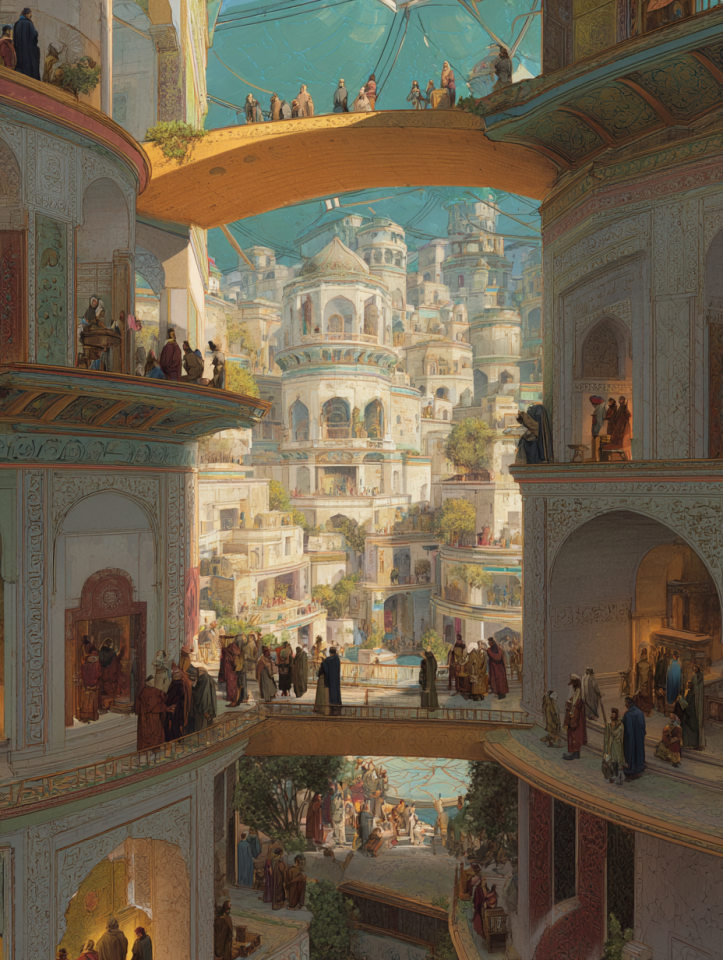
Samarkand — 39.6542°N, 66.9597°E — was chosen as Sogdiana’s Accord seat. Its bazaars and caravanserais became places where not only goods but also stories and manuscripts changed hands. Accord scribes catalogued texts in multiple languages, while musicians recorded songs carried from faraway coasts.
The city itself became a living museum of exchange. Minarets, temples, and shrines stood side by side, embodying the Accord’s ethos that preservation meant inclusion. Every caravan that entered Samarkand carried memory, and every caravan that left carried it onward.
Legacy & Global Role
Sogdiana gave the Accord its movement. They ensured that preservation was not static but dynamic, carried along routes that bound continents together. They taught the cooperative world that memory must not only endure but circulate, that exchange was as vital as archive.
Their legacy persists in every trade network, every translation, every blending of traditions. Centuries later, Samarkand remains a symbol of connection, its walls echoing with the voices of countless peoples, reminding that preservation is strongest when it travels.

Sky blue for Silk Road expanse, silver for trade, star for crossroads/direction.
Type
Geopolitical, Country
Capital
Leader
Leader Title
Related Ranks & Titles
Controlled Territories
Notable Members











Comments