
Global Institutions
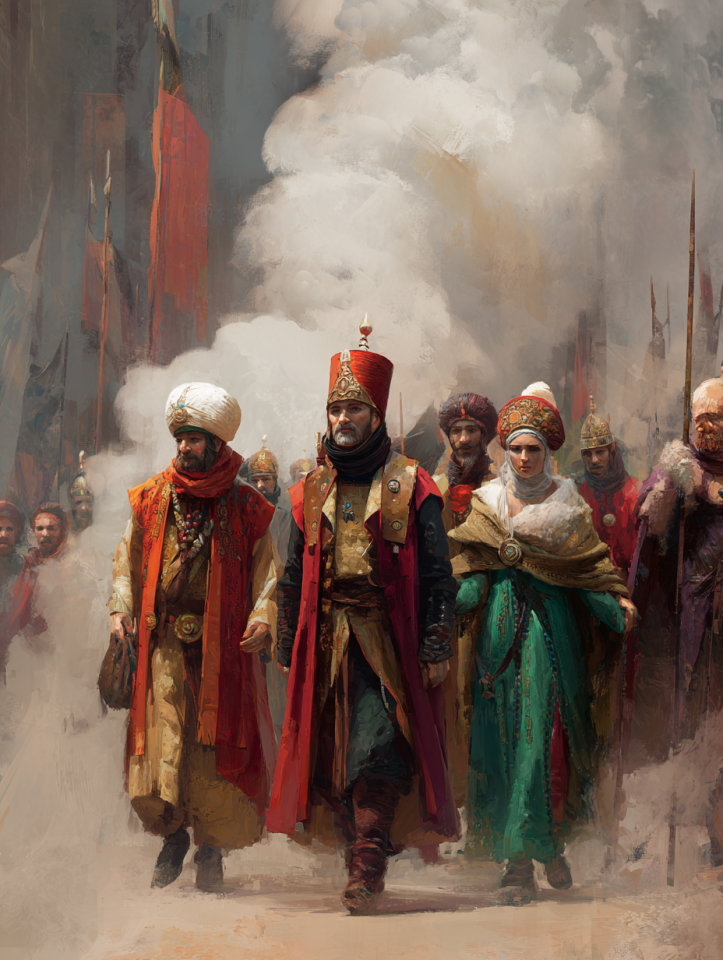
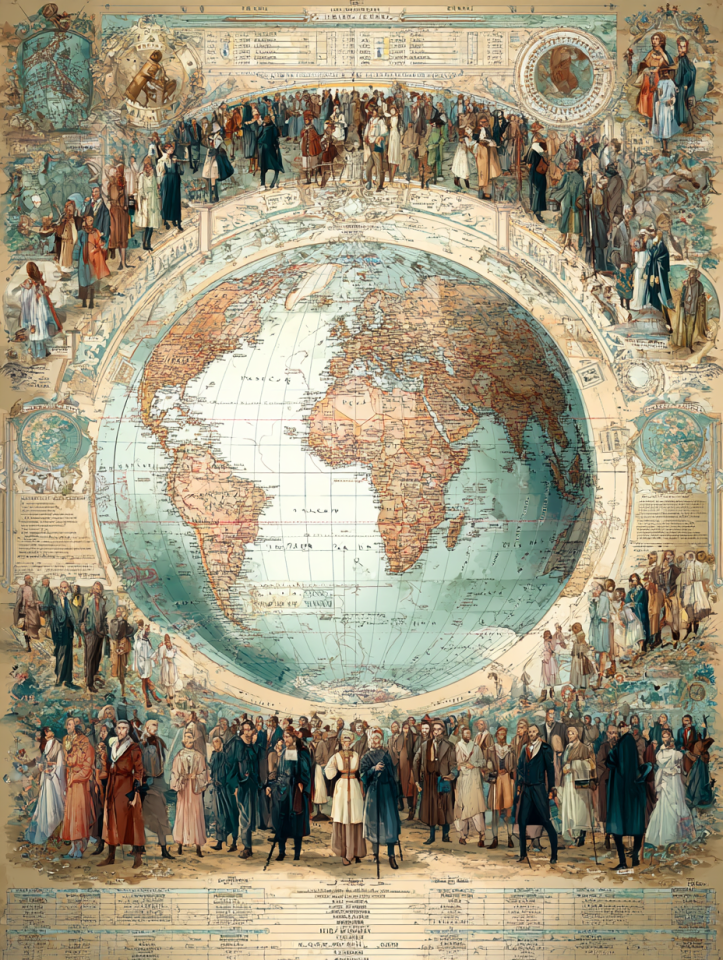
The Grand Assembly of Concord opens with silence. Delegates stand in a circle beneath a canopy of light filtered through stained glass maps of the world. No anthem plays, no flag dominates. Instead, a low hum rises from the hall — the sound of translators tuning the frequencies that will carry every voice to every ear. Around the chamber, names are spoken in dozens of tongues: healers from the Commonwealth, philosophers from the Sanghas, engineers from the Sinosphere, stewards of the forests from the Andean League. Each has come not to rule, but to listen.
In Koina, cooperation reached its highest expression not in empire but in institution. The scars of conquest never shaped diplomacy; the memory of balance did. Councils replaced colonies, assemblies replaced armies, and prestige became the only true currency of influence. The power that gathers here is moral, not martial — authority earned through clarity, compassion, and the ability to weave agreement from diversity.
When the first bell of Concord sounds, it is answered by chimes across the world — guild halls, universities, observatories, and temples striking in unison. The message is simple and ancient: no single voice can hold the harmony alone.
The New World never sees a single empire dictate international order. Instead, cooperative institutions emerge from trade, plagues, and philosophical exchange. These bodies are not supranational governments but forums of coordination, born from necessity and sustained by prestige and participation. Their authority is moral and practical, not imperial.
Main Global Institutions
The Grand Assembly of Concord
The closest parallel to a global parliament is the Grand Assembly of Concord.
Composition: Delegates from federations, guilds, and citizen assemblies.
Function: A neutral forum for diplomacy, treaty-making, and environmental agreements.
Authority: It cannot impose law but can shame violators through boycott and withdrawal of prestige.
Meetings rotate between regions, and decisions are made through reasoned debate, not majority coercion. Citizens follow these debates through cooperative broadcast systems, making transparency a civic expectation.
Congress of Caravans & Seas
Trade is the lifeblood of this world, and the Congress of Caravans & Seas oversees its fairness.
Duties: Set currency standards, regulate tariffs, enforce measures and weights.
Enforcement: Boycott and public honor, not armies or navies.
Cultural Role: Acts as a meeting ground for merchants, artisans, and guild representatives — part marketplace, part diplomatic congress.
Its existence reflects the ancient reality that caravans and ports are the arteries of civilization.
League of Healers & Watchmen
Born out of recurring pandemics, the League of Healers & Watchmen is perhaps the most respected global institution.
Duties: Monitor outbreaks, share medical knowledge, distribute vaccines, coordinate quarantines.
Tools: Relay stations, observatories, and cooperative internet networks track health trends.
Tone: Rooted in compassion and civic duty. No stigma, only care.
Its interventions are seen not as interference but as guardianship of life’s balance.
League of Translators & Observatories
Language and knowledge are the twin pillars of cooperation. The League of Translators & Observatories maintains a shared foundation:
Translators: Ensure multilingual communication across federations, maintaining dictionaries, grammars, and equivalents.
Observatories: Track astronomy, geography, and natural phenomena.
Internet Oversight: Sustain the cooperative web, ensuring open access and resisting monopolization.
This League represents the philosophical belief that understanding each other is the first step toward cooperation.
Other Federative Councils
Beyond the four main institutions, smaller councils emerge around specific concerns:
Guild Congresses: Regulate standards in crafts and sciences.
Environmental Treaties: Manage forests, rivers, and shared resources.
Cultural Exchanges: Support festivals, arts, and education across borders.
None of these are coercive. All operate through reputation, transparency, and shared interest.
Strengths and Vulnerabilities
Strengths
Global cooperation without empire.
Institutions embody transparency and accountability.
Prestige-driven compliance prevents most violations.
Vulnerabilities
Slow to act in urgent crises; deliberation takes time.
Enforcement relies on social pressure, which sometimes fails.
Overlapping institutions can create redundancy or inefficiency.
The Tone of Global Order
Global institutions feel like extended councils of councils. They are not distant bureaucracies but assemblies that citizens follow, debate, and expect to be reasoned and transparent. Their legitimacy comes not from force but from the shared belief that the world is too interwoven to be managed in isolation.
-
World Bible Navigation
-
Governance
Documents detailing the articles of Cooperative Federation.-
The Covenant
The Foundations of Koina
-
Constitution
-
The Persian Constitution
Empire is formed
-
The Persian Constitution: Amendment I
5th - 6th Century ZC
-
The Persian Constitution
-
Bills and Accords
-
The Accord of Alexandria
1st Century ZC
-
The Bill of Rights for All Peoples
3rd Century ZC
-
The Bill of Sovereignty for Cooperatives
3rd Century ZC
-
The Charter of Rights & Duties of the Accord
3rd Century ZC
-
The Covenant of Adjudication
3rd Century ZC
-
On Inheritance
A Treatise on the Balance of Desire, Purity, and Civic Stewardship
-
The Expansion Accord
4th Century ZC
-
The Environmental Accord
12th Century ZC
-
The Communication Accord
18th Century ZC
-
The Technology & Balance Accord
22nd Century ZC
-
The Modern Accord
22nd Century ZC
-
The Accord of Alexandria
-
Constitution
-
The Covenant
-
World Scope
-
Introduction & Scope
-
Arts & Aesthetics
-
Architectural Standards
-
Communication & Memory
-
Crime & Social Order
-
Geopolitics & Power
-
Law, Rights & Citizenship
-
Leadership: Voices & Whispers
-
Freedom & Daily Rhythm
-
Global Institutions
-
Health & Environment
-
Industrialization
-
Religion & Philosophy
-
Sciences & Knowledge
-
Social & Cultural Life
-
Technology & Travel
-
Introduction & Scope
-




Comments