





Linzi
Capital City of Zhongguo
History
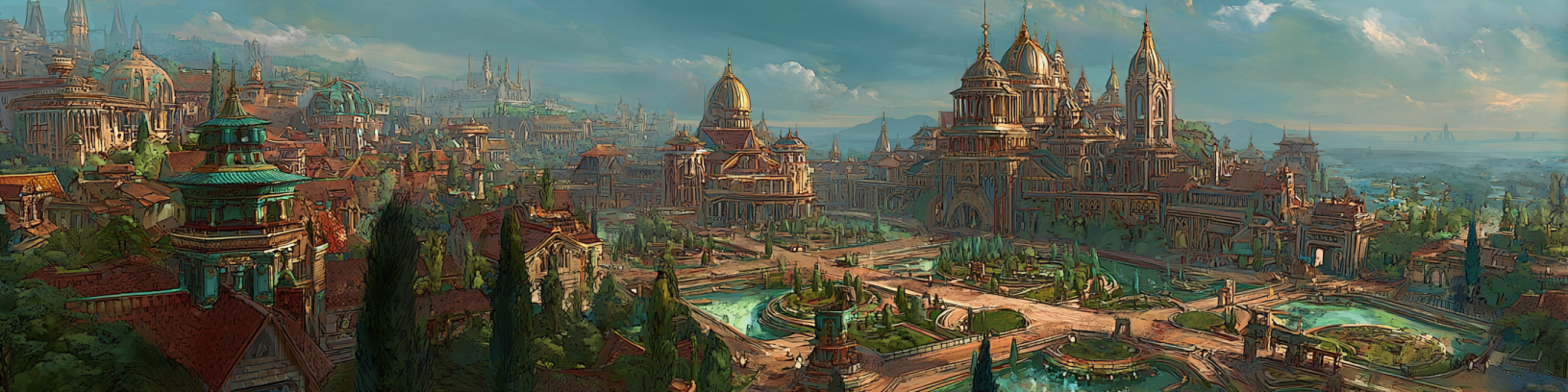
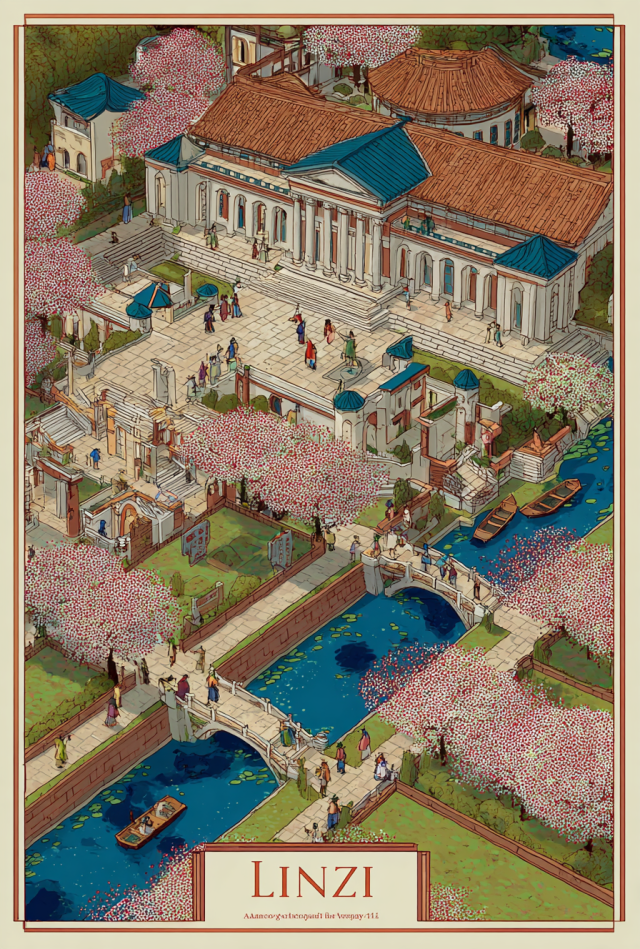
Founded during the Western Zhou period, Linzi became the capital of the state of Qi and one of the most prominent cities of early China. By the Warring States period, it was known as a center of learning and debate, hosting the famous Jixia Academy, where scholars from across traditions gathered. Its intellectual legacy anchored Linzi not only as a political capital but as a philosophical heart.
While many ancient cities waned under imperial consolidation, Linzi endured through federative continuity. Instead of being absorbed into dynastic autocracy, it preserved its academies and guilds, which gave it a voice in regional assemblies. Confucian, Daoist, and Mohist schools remained active, and their debates shaped civic law and philosophy far beyond the city’s walls.
Through the medieval centuries, Linzi adapted to technological and cultural changes while retaining its scholarly identity. Its artisans excelled in metallurgy and ceramics, exporting wares along overland and maritime routes. In the modern era, Linzi serves as a capital within the Sinosphere Consortium, celebrated less for sheer size than for its intellectual lineage and its role as steward of one of the longest unbroken civic traditions.
Sights / Destinations
Religion / Cults / Sects
Linzi is defined by its schools of thought as much as its shrines. Confucian rites structure civic life, Daoist practices of balance and longevity weave into daily rituals, and Mohist ideals of equity remain influential in law and guild oversight. Buddhism, arriving centuries later, found a home in monasteries that balance meditation with scholarship. Ancestral cults remain central to family and civic identity. Religion here is inseparable from philosophy; devotion is practiced as a form of ethical cultivation.
Founding Date
766 bz
Alternative Name(s)
Lin-tzu, Capital of Qi
Type
Capital
Owning Organization
Characters in Location




Comments