Gilgamesh and Enkidu
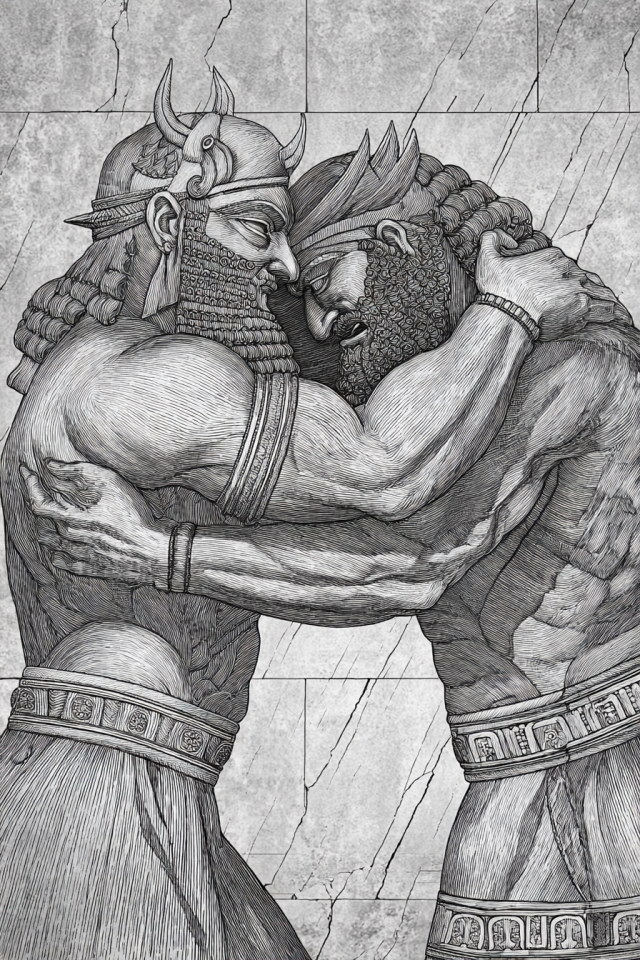
Companionship with strong homoerotic undertones in the *Epic of Gilgamesh*.
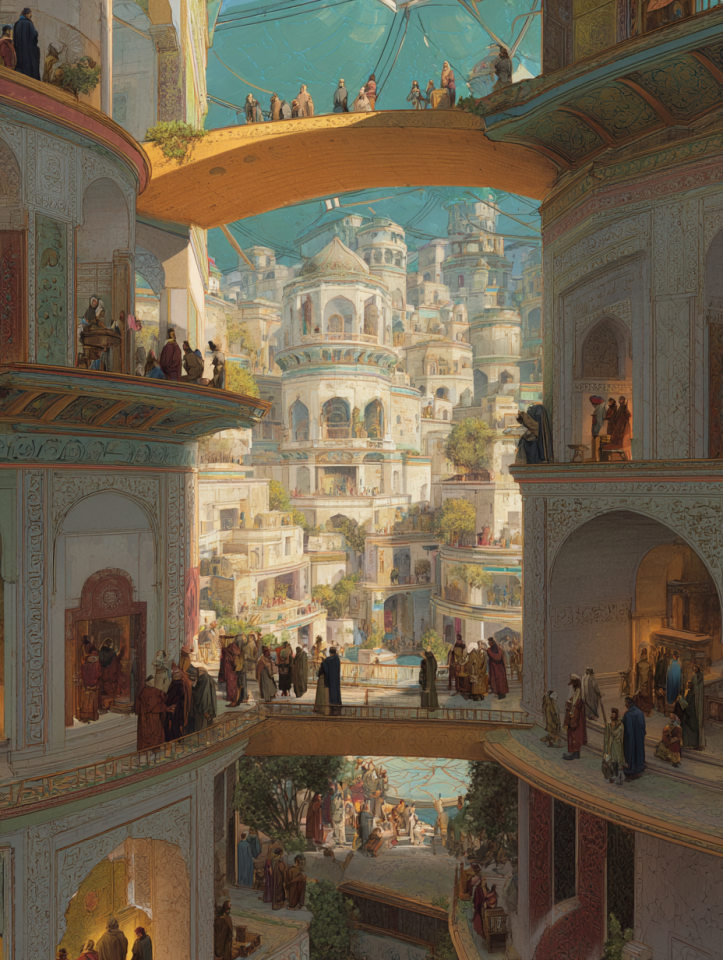
In Uruk the mighty, behind high walls of brick, ruled Gilgamesh. Stronger than any man, wiser than any elder, yet restless and proud, he oppressed his people with endless labors and arrogance. The citizens cried out to the gods: “Send us one who can match his strength, that Uruk may know peace.”
The gods heard, and from clay and wildness they shaped Enkidu. He roamed with gazelles, drank from rivers, and knew nothing of human craft. To tame him, they sent Shamhat, who lay with him in the grasses. For six days and seven nights they joined, until Enkidu turned from the wild to the ways of men.
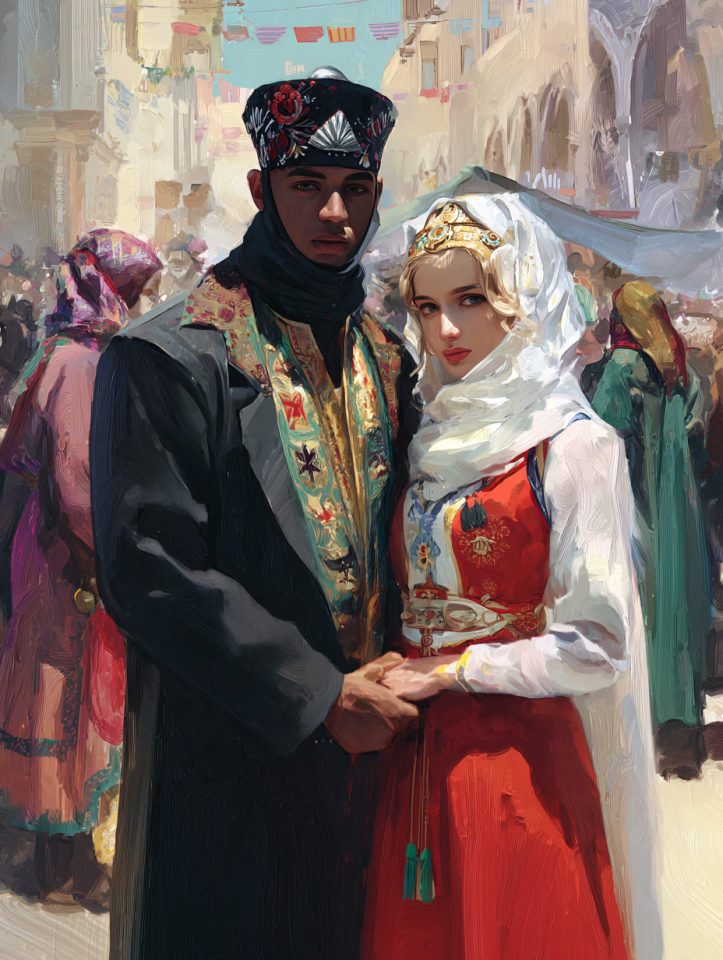
Clothed and fed, he came to Uruk, where he met Gilgamesh. They clashed at the gates like two bulls, shaking the city with their struggle. Yet in the moment of contest, their fury turned to recognition. They embraced, and from that day forward they were inseparable — brothers, companions, perhaps lovers, whose bond surpassed all others.
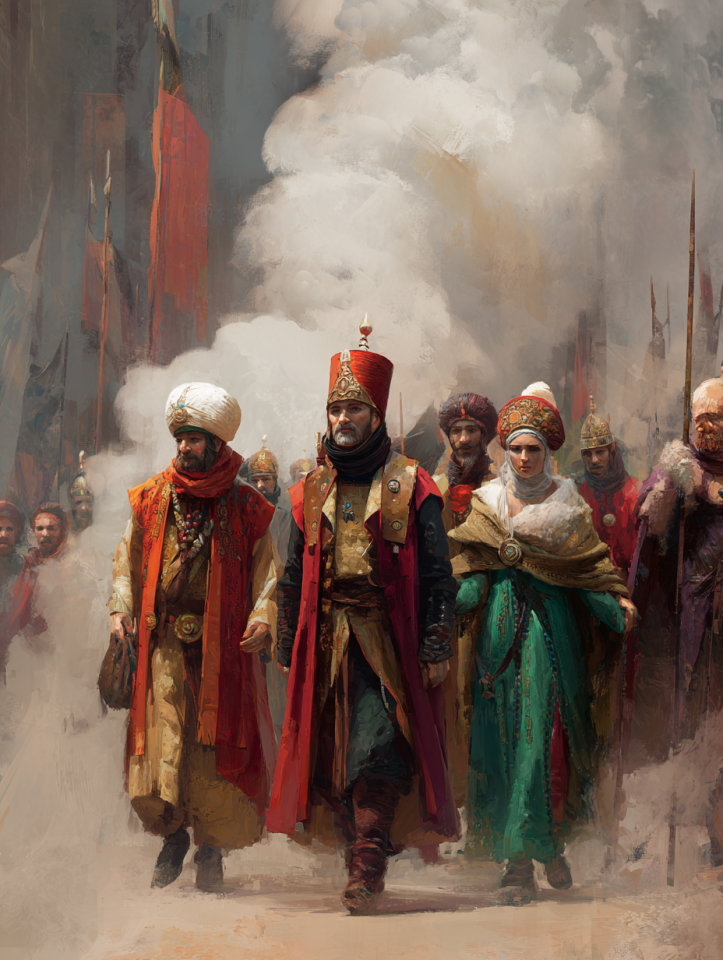
Together they sought adventure. They journeyed to the Cedar Forest, where Humbaba stood watch. With courage and guile they slew him, felling the great cedars. Their names spread across the world, and Uruk rejoiced.
But not all rejoiced. Ishtar cast her eyes upon Gilgamesh and offered herself as his bride. He spurned her, listing the fates of her past lovers, and her fury knew no bounds. She demanded of Anu the Bull of Heaven, to punish the king.
The Bull descended, trampling the fields, but Gilgamesh and Enkidu struck it down together. In triumph they mocked Ishtar, hurling the bull’s haunch at her feet. The gods, angered at this defiance, decreed that one of the heroes must die.
So illness fell upon Enkidu. Fever consumed him, visions tormented him. Gilgamesh sat at his side, clutching his hand, whispering in his ear, but no prayer could save him. After twelve days, Enkidu’s breath ceased. The mighty king, who had never known weakness, tore his hair and clothes, wailing over the body of his beloved: “Shall I not die too? Am I not like him? Must I too lie in the dust?”
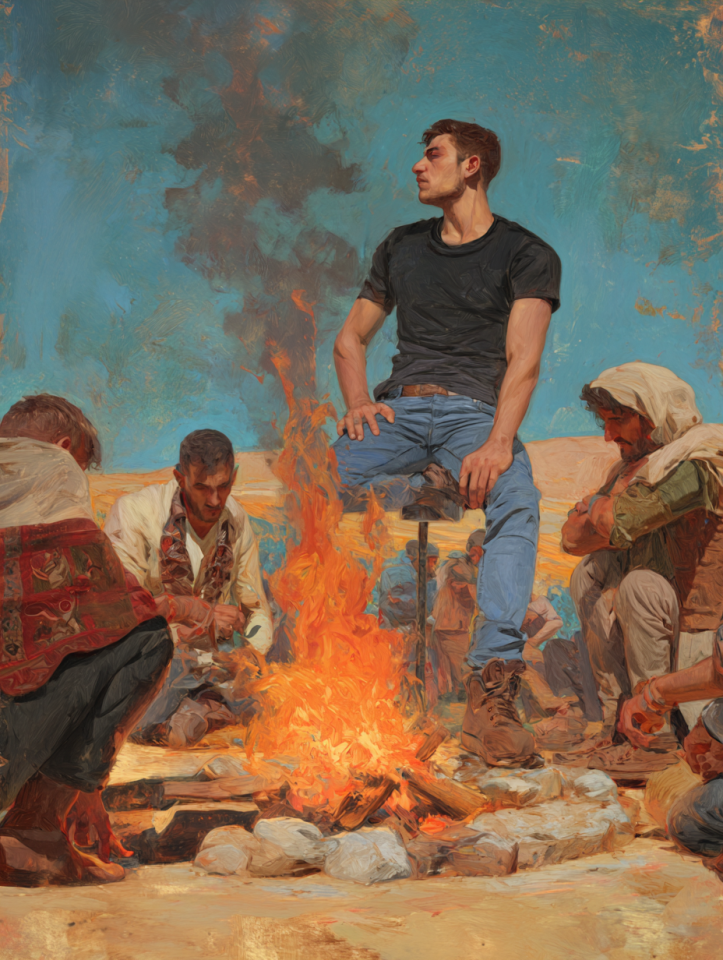
Grief drove Gilgamesh into the wilderness. He wandered far in search of immortality, crossing mountains and seas, speaking to the immortal flood-survivor Utnapishtim. Yet in the end, he found no escape from death. Only in Uruk’s strong walls, in its people and their works, could immortality be glimpsed.
But through all the lessons, the heart of the tale remained the bond between king and companion. The poets wrote of Gilgamesh and Enkidu not merely as warriors, but as two souls joined. Their love, fierce and tender, gave the epic its fire. Even in death, Enkidu lived on in Gilgamesh’s grief — proof that love is the mightiest bond, stronger than pride, stronger even than the fear of death.
Related Organizations




Comments