





Ineb Hedj
Capital City of Ta-Mery
History
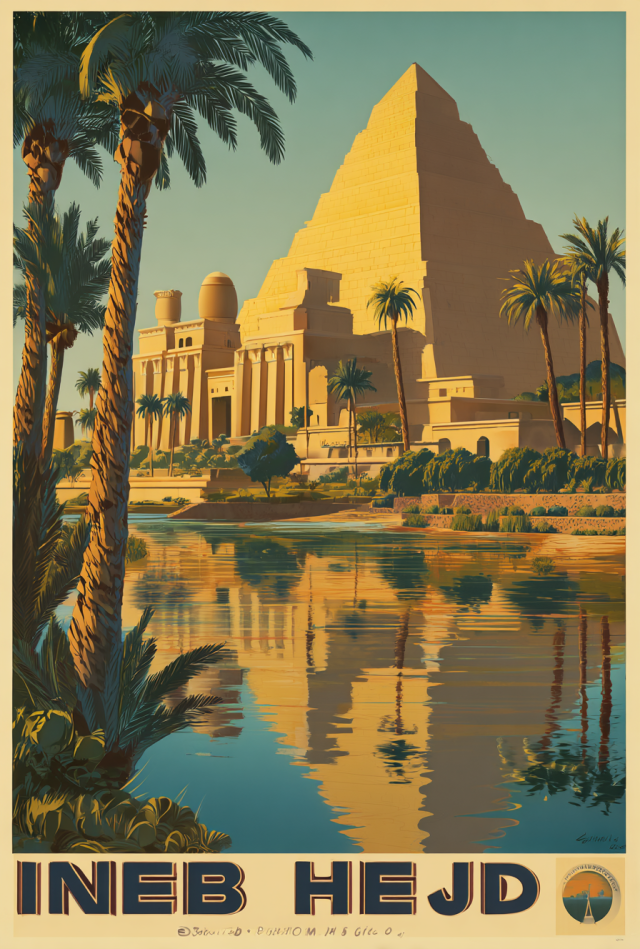
Founded by Narmer as the capital of unified Kemet, Ineb Hedj (“White Walls”) quickly became the heart of Ta-Mery. Positioned at the head of the Nile Delta, it commanded both trade and ritual authority. The city thrived as the seat of kingship for centuries, its temples and palaces symbols of cosmic order.
Where in other histories Memphis would fade before Thebes or Alexandria, here it endured. Accord governance ensured its continuity, preserving both its sacred and civic role. Temples to Ptah, creator and patron of craftsmen, became centers not only of worship but of guild activity. Priests, artisans, and philosophers together maintained Memphis as both a spiritual and administrative anchor.
During the Middle and Late Kingdoms, Memphis remained a city of innovation. Its healers advanced medical practice, its scribes codified civic law, and its engineers perfected irrigation canals. When Alexandria later flourished as a Hellenic port, Memphis did not decline; instead, the two cities became complementary, one the guardian of ancient continuity, the other a hub of maritime exchange. In the modern day, Memphis stands as the capital of the Nile–Red Sea Commonwealth, a city where antiquity and present life remain inseparable.
Sights / Destinations
Religion / Cults / Sects
Memphis remains a seat of ancient devotion. The cult of Ptah dominates civic life, honored as patron of both creation and craftsmanship. Shrines to Hathor and Sekhmet stand nearby, reflecting the city’s balance of fertility and protection. Zoroastrian fire rituals, introduced through Persian contact, have blended with Nile traditions, while small Buddhist schools maintain meditation halls along the river. Christian schools of devotion also exist, focused on service and healing. The city’s plural faiths reinforce rather than displace one another, continuing Memphis’s ancient role as bridge between divine and civic order.
Founding Date
2820 bz
Alternative Name(s)
Memphis, Men-nefer, “White Walls”
Type
Capital
Owning Organization
Characters in Location




Comments