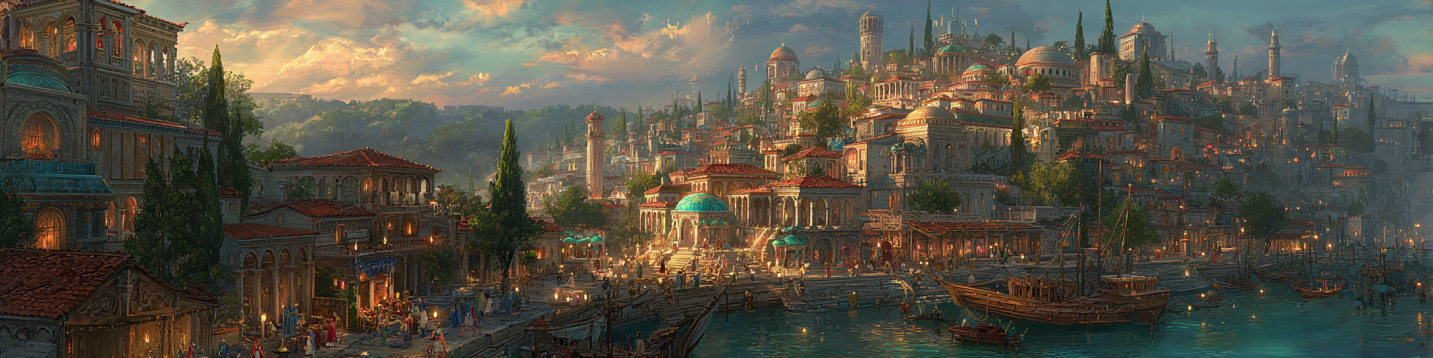
Antioch
Capital City of Hellas
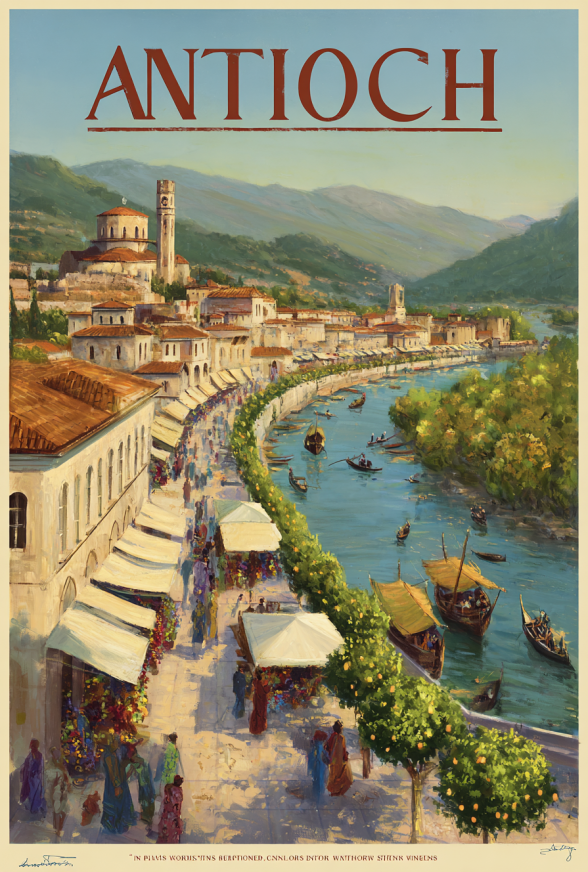
History
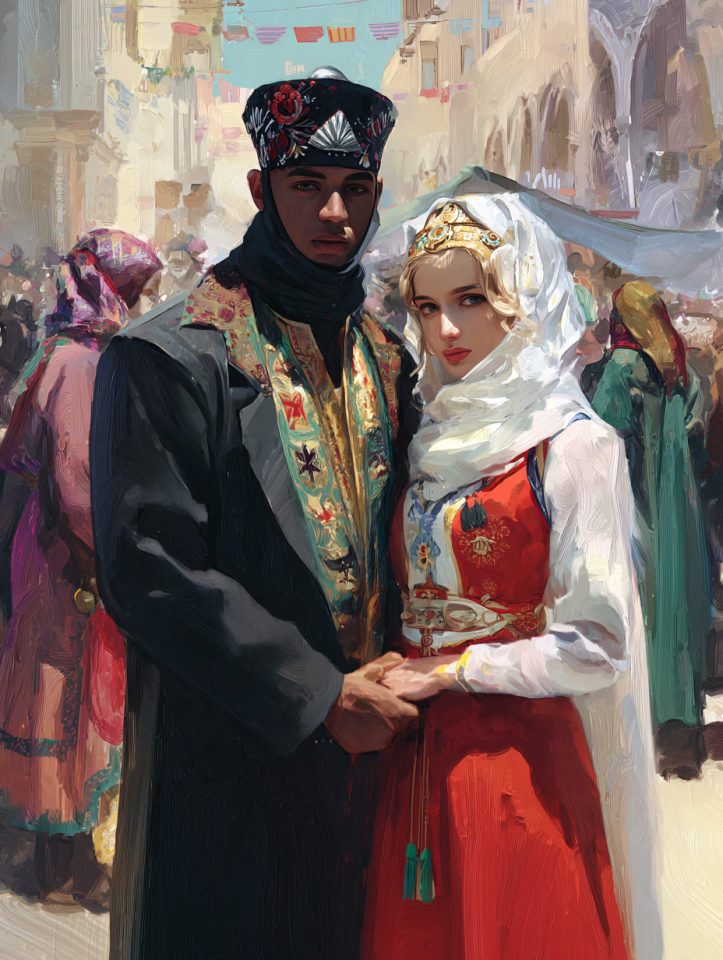
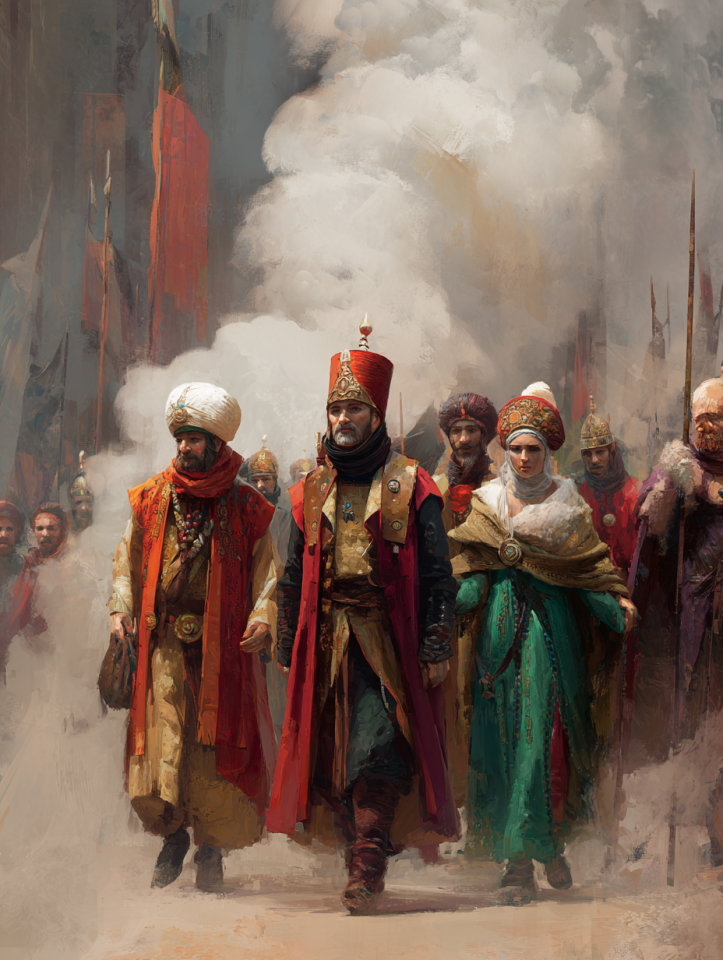
Founded by Seleucus I Nicator, Antioch rose quickly as the anchor of the Seleucid realm. Its placement along the Orontes made it a hinge between Anatolia, Mesopotamia, and the Mediterranean. Unlike many cities of its age, Antioch was never absorbed into a single empire that sought to flatten its identity. Instead, it became a meeting ground for Persic administrators, Hellenic philosophers, Egyptian healers, and Indian traders.
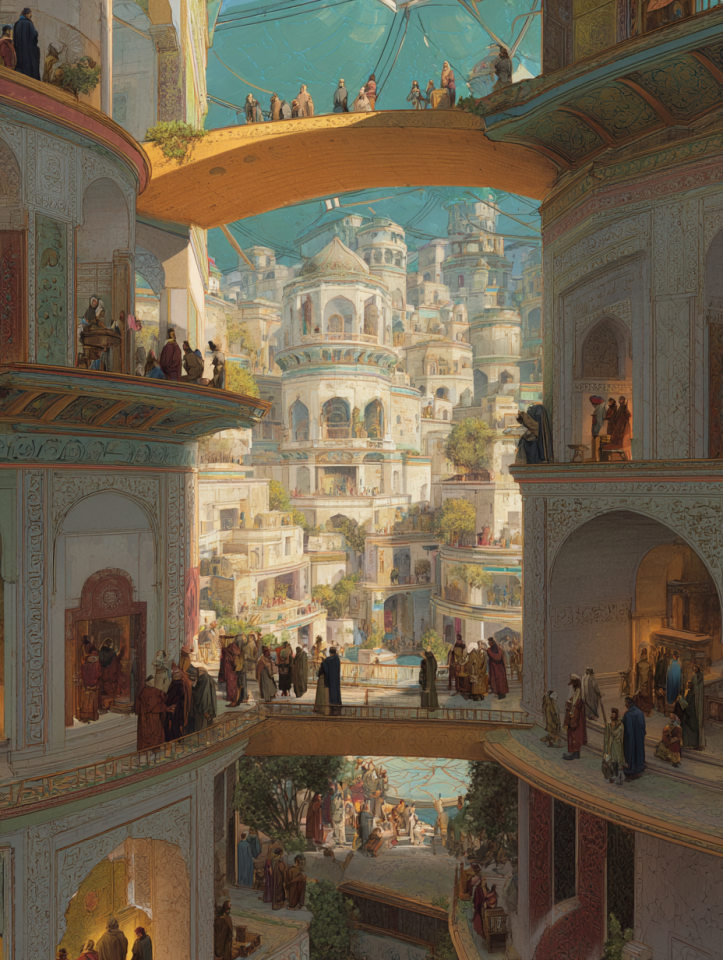
Over the centuries, Antioch earned its title as the “marketplace of the world.” Caravans from the east, galleys from the Mediterranean, and pilgrim bands from the south all converged here. It became both a trade emporium and a philosophical beacon, rivaling Athens in logic and Alexandria in medicine. Local schools drew deeply from Stoicism, Aristotelian thought, and Buddhist compassion, giving Antioch a reputation as a city where debate was both civic duty and cultural art.
Through medieval centuries, Antioch’s guilds flourished—stonecutters, mosaicists, and musicians shaping both its skyline and its soundscape. Though earthquakes toppled walls and fires scarred neighborhoods, the people rebuilt with the same plural spirit that defined their history. In the modern age, Antioch continues as a federative capital, its significance less in empire and more in its continuity as a plural, living crossroads.
Sights / Destinations
Religion / Cults / Sects
Antioch has never belonged to one faith. Greek gods still find their shrines in neighborhood squares, honored with theater and festival rather than dogma. Persian fire temples burn steadily, their flames fed by guilds. Buddhist loggias on the hillside offer meditation and study, attracting both citizens and travelers. Small Christian schools, following paths of compassion or forgiveness, maintain a modest but respected presence. Older river cults persist in seasonal rites, tying the city’s spirit to its waters. Antioch’s truest religion has always been plurality itself.
Founding Date
20 bz
Alternative Name(s)
Antiocheia, Antakya
Type
Capital
Owning Organization
Characters in Location




Comments