Social & Cultural Life
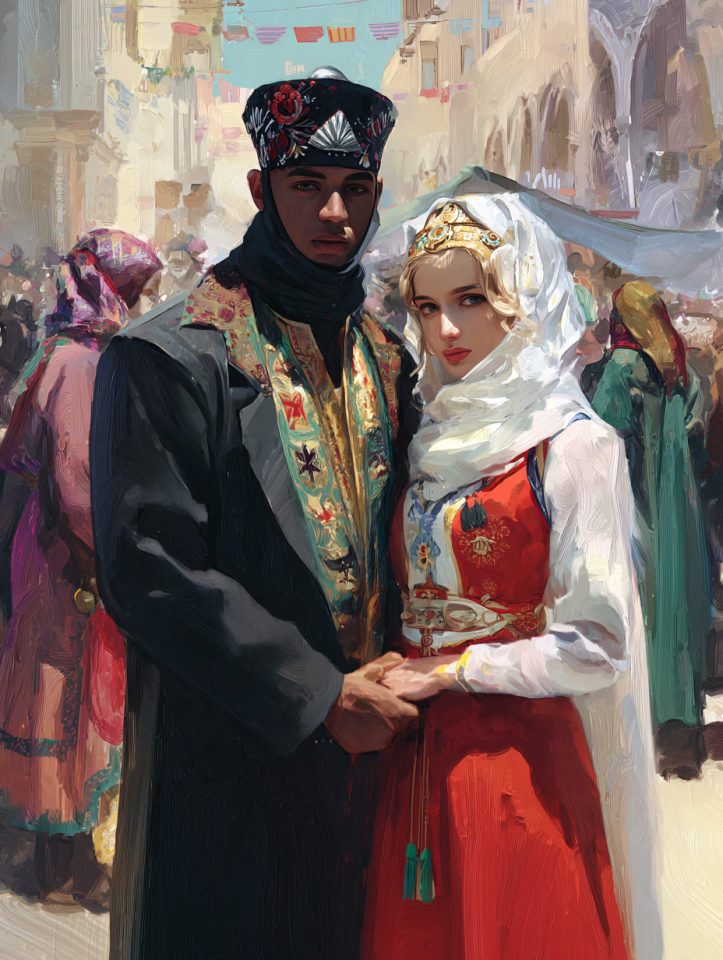
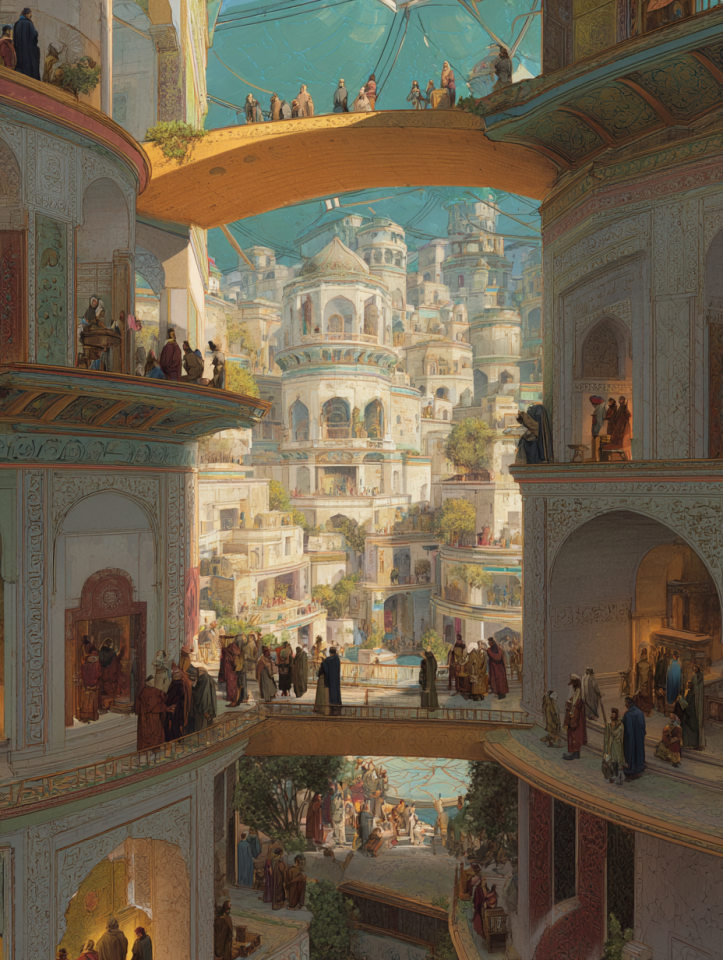
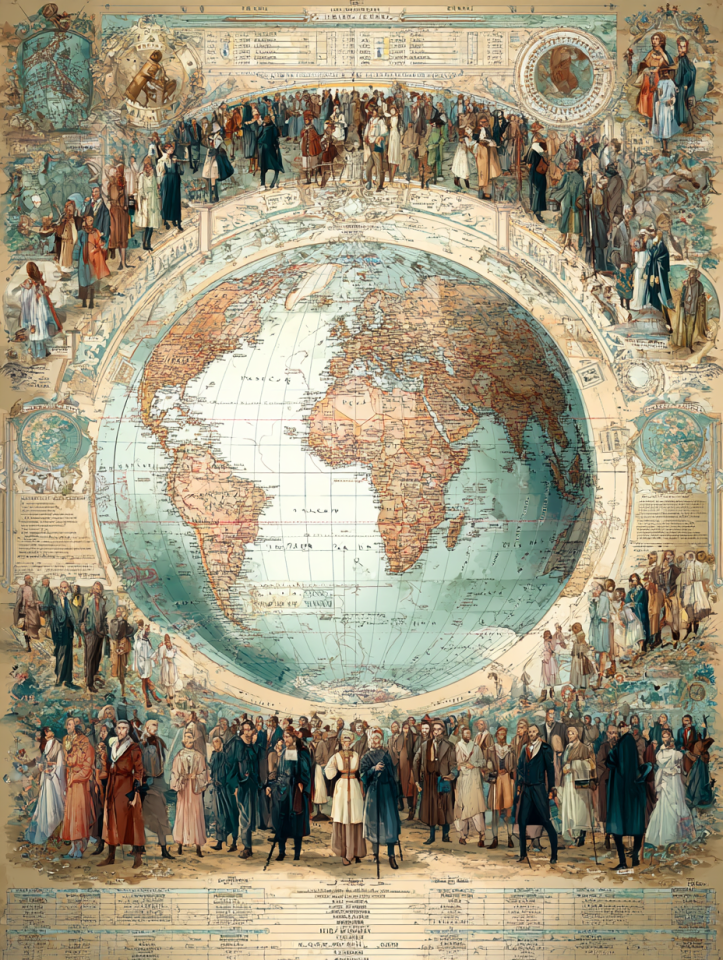
Evening descends with music instead of silence. In the streets of Myra, children chase floating lanterns through courtyards scented with spice and clay. Neighbors gather on terraces, sharing bread and stories beneath hanging gardens of jasmine. In one corner a debate continues — half laughter, half philosophy — while in another, a troupe rehearses a play retelling an ancient parable of balance. There are no invitations, no audience, no divide between performer and spectator; life itself is the festival.
Social life in Koina has always been woven from moments like these — ordinary acts shaped by cooperation, ritual, and affection. Because no empire fractured communities and no creed divided body from joy, daily rhythm remained whole. Families grew as cooperatives, not contracts; unions formed as partnerships of balance rather than obedience. The result is a society where identity is lived in relationship, not regulation, and where belonging is measured by participation in one another’s wellbeing.
To walk through a Koinan city at dusk is to understand what freedom feels like when it is shared — conversation in a dozen tongues, music rising from every courtyard, and the quiet certainty that every life, however small, contributes to the harmony of the whole.
The New World is shaped less by rigid institutions and more by the fluid fabric of social life. Families, unions, households, and guilds provide the scaffolding of belonging. Diversity of expression is normalized, and freedom is lived in relationships, rituals, and daily rhythms rather than written into distant constitutions.
Families as Cooperatives
Families here are not rigid nuclear units. They are cooperative households that may include:
Blood relatives, spouses, and children.
Guild apprentices or traveling friends who join the household.
Elders who move between families as mentors and caregivers.
These households pool labor, resources, and knowledge. Some last for generations, others shift as members enter and leave. The emphasis is not permanence but mutual flourishing.
Unions Instead of Contracts
Marriage never becomes the rigid contract it is in our world. Instead, unions are treated as partnerships of harmony.
Same-sex unions are as common as opposite-sex.
Poly-unions are accepted when balance is maintained.
Partnerships can dissolve without stigma if harmony falters.
Guilds and councils recognize unions as cooperative units, but no theological or legal monopoly dictates their structure.
Sexuality and Gender
Because law and philosophy are rooted in humanism, sexuality and gender are treated as expressions of balance, not deviations.
Gender is fluid; identities beyond binary are acknowledged and respected.
Sexuality is diverse; communities expect individuals to form bonds that bring them fulfillment and harmony.
There is no stigma attached, since philosophy provides the ethical frame rather than theology.
Rituals and Festivals
Social life is punctuated by rituals that are local, plural, and celebratory.
Temples, shrines, and guild halls host seasonal festivals.
Theatrical performances retell myths and explore philosophical questions.
Music and dance are woven into civic and private life alike.
Festivals are not exclusionary - citizens often join celebrations outside their own tradition, reinforcing the plural ethos.
Daily Life and Belonging
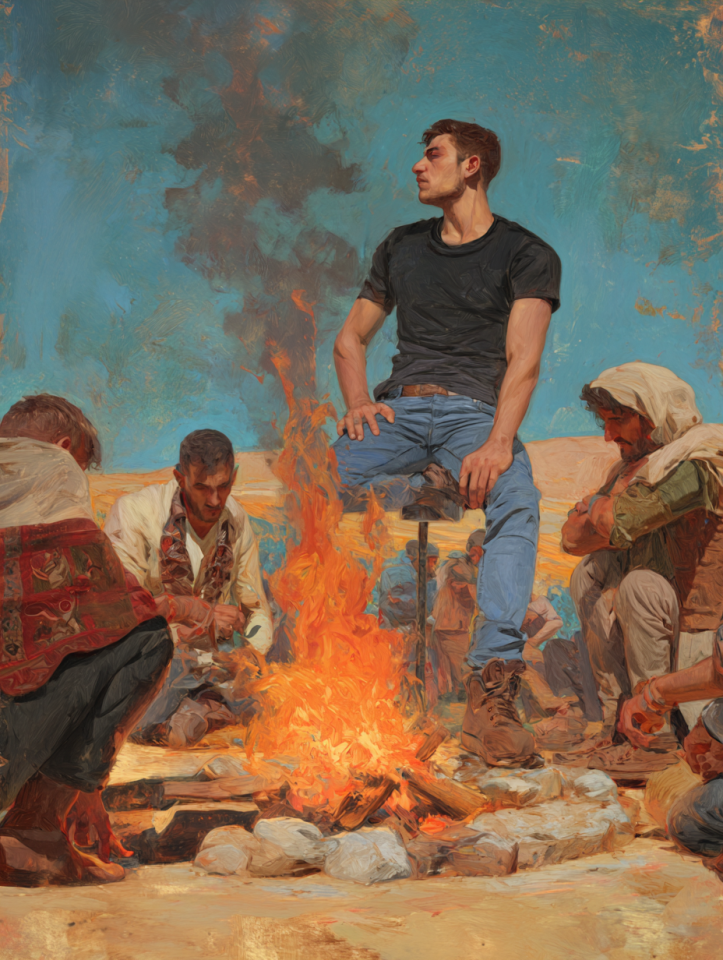
The rhythm of daily life is communal:
Citizens attend councils or listen to debates.
Guild halls are both workplaces and centers of social gathering.
Markets are as much about conversation as exchange.
Photography, journals, and shared archives document memory, keeping collective history alive.
Social prestige accrues to those who contribute visibly - hosting debates, healing neighbors, composing songs - not to those who hoard wealth.
Strengths and Vulnerabilities
Strengths
Families and unions are flexible and resilient.
Diversity of identity is normalized and celebrated.
Festivals and rituals provide continuity without persecution.
Vulnerabilities
The fluidity of households sometimes creates uncertainty in inheritance or child-rearing responsibilities.
Communities vary in how fully they embrace nontraditional unions, leading to occasional local friction.
The Tone of Life
Social life in this world feels inclusive, celebratory, and cooperative. Families adapt, unions flex, rituals weave communities together. Identity is not policed but expressed. Where our world often fractures into suspicion and exclusion, theirs coheres through plurality and the belief that balance is best achieved by letting people live fully and openly.
-
World Bible Navigation
-
Governance
Documents detailing the articles of Cooperative Federation.-
The Covenant
The Foundations of Koina
-
Constitution
-
The Persian Constitution
Empire is formed
-
The Persian Constitution: Amendment I
5th - 6th Century ZC
-
The Persian Constitution
-
Bills and Accords
-
The Accord of Alexandria
1st Century ZC
-
The Bill of Rights for All Peoples
3rd Century ZC
-
The Bill of Sovereignty for Cooperatives
3rd Century ZC
-
The Charter of Rights & Duties of the Accord
3rd Century ZC
-
The Covenant of Adjudication
3rd Century ZC
-
On Inheritance
A Treatise on the Balance of Desire, Purity, and Civic Stewardship
-
The Expansion Accord
4th Century ZC
-
The Environmental Accord
12th Century ZC
-
The Communication Accord
18th Century ZC
-
The Technology & Balance Accord
22nd Century ZC
-
The Modern Accord
22nd Century ZC
-
The Accord of Alexandria
-
Constitution
-
The Covenant
-
World Scope
-
Introduction & Scope
-
Arts & Aesthetics
-
Architectural Standards
-
Communication & Memory
-
Crime & Social Order
-
Geopolitics & Power
-
Law, Rights & Citizenship
-
Leadership: Voices & Whispers
-
Freedom & Daily Rhythm
-
Global Institutions
-
Health & Environment
-
Industrialization
-
Religion & Philosophy
-
Sciences & Knowledge
-
Social & Cultural Life
-
Technology & Travel
-
Introduction & Scope
-




Comments