
The Mahābhārata
Duty, ethics, and the cost of war.
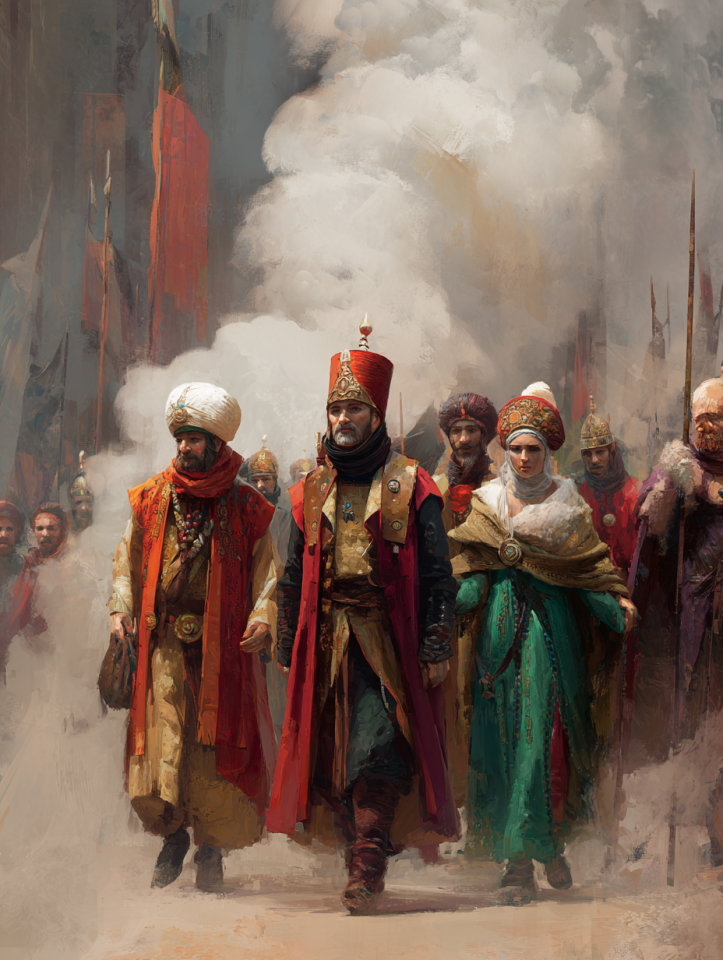
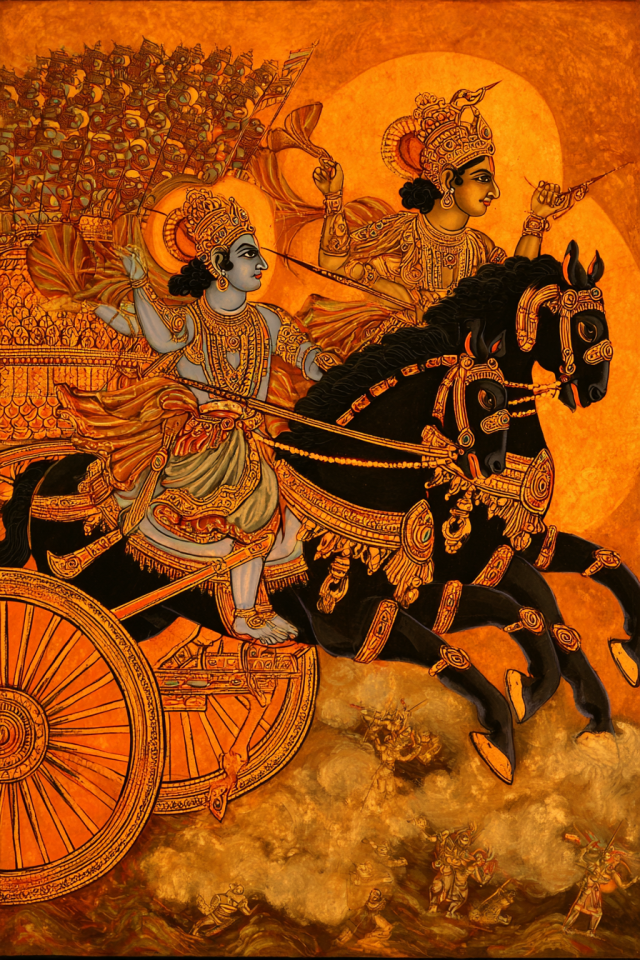
Upon the plain of Kurukshetra the armies gathered, banners streaming, conches sounding. On one side stood the Pandavas, five brothers who had been cheated of their birthright and exiled into hardship. On the other side stood the Kauravas, their cousins, who now held the throne and would not yield. Kings and warriors from every corner of Bharat had come, so that the earth itself seemed to groan beneath the weight of their chariots.
Arjuna, third of the Pandava brothers, stood ready with his great bow, Gandiva. He was the greatest archer of his age, hero of many battles. Yet when he looked across the field and saw his kin arrayed against him — uncles, teachers, cousins, friends — his heart faltered. “How can I slay those whom I love?” he cried. “What victory can taste sweet when it is won with the blood of family?” His arms trembled, and his bow slipped from his grasp.
It was then that his charioteer, Krishna, spoke. But Krishna was no ordinary man: he was the eighth avatar of Vishnu, the preserver of the cosmos, hidden in mortal guise. With calm voice he answered, “You grieve for those who need no grief. The soul is eternal, never born, never slain. Bodies perish, but the spirit passes on. Death is not the end, but only a change of garment.”
Still Arjuna wept, torn between duty and compassion. Krishna taught him of dharma — the sacred order of the world. “Your duty as a warrior is to fight for justice. To abandon it is to abandon the balance itself. Act not for victory, nor for defeat, but for the sake of duty alone. Act without desire, and you shall be free.”
Arjuna bowed his head, yet his doubt lingered. Then Krishna revealed his true form. His body blazed with countless arms and faces, suns burning in his eyes, all the worlds arising and dissolving within him. Arjuna trembled, beholding creation and destruction united in one vision. “I am Time,” said Krishna, “the destroyer of worlds, born to consume all. Whether you fight or not, these warriors are already slain. Rise, therefore, and take your place in destiny.”
Overcome with awe and terror, Arjuna pressed his forehead to the ground. “Guide me,” he begged, “for I am yours to command.” And so Krishna counseled him, teaching of yoga — the path of devotion, of knowledge, of disciplined action. He showed him that freedom lies not in retreat, but in righteous action done without attachment.
When the vision faded, Krishna returned to mortal form, and Arjuna’s heart was steady. He lifted Gandiva once more. His arms no longer trembled, for he understood that to act in harmony with dharma was not cruelty, but the highest truth.
Then the conch horns blew, the drums thundered, and the great war began. Kurukshetra would become a field of sorrow, but the words of Krishna endured, carried through centuries as the Bhagavad Gītā — the Song of the Lord.
Related Organizations




Comments