
The Rāmāyaṇa
Themes of loyalty, justice, and the tension between duty and compassion.
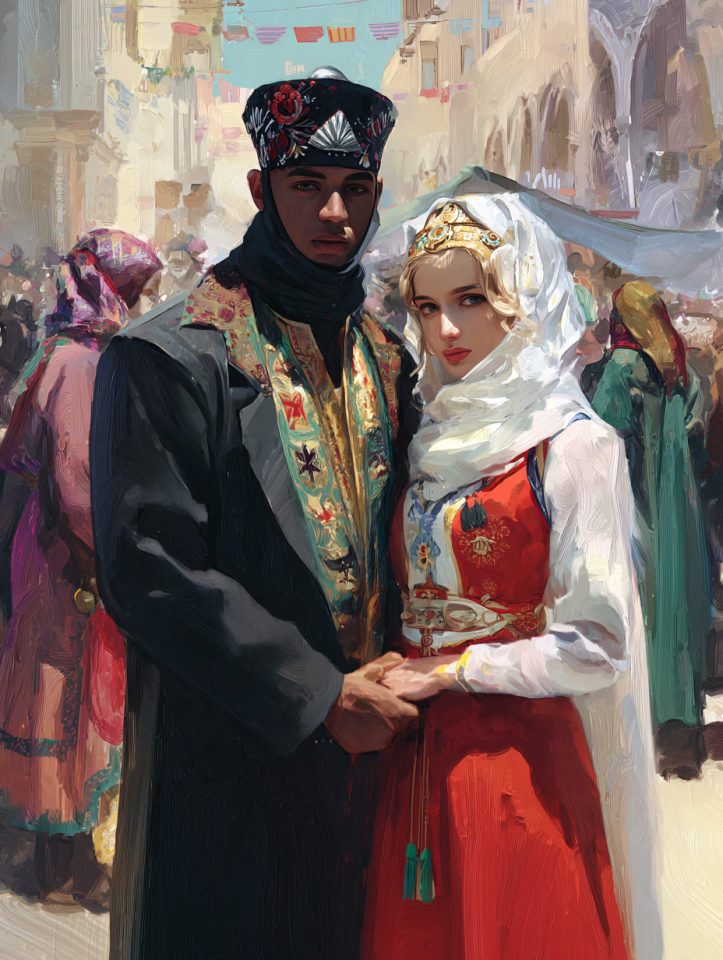
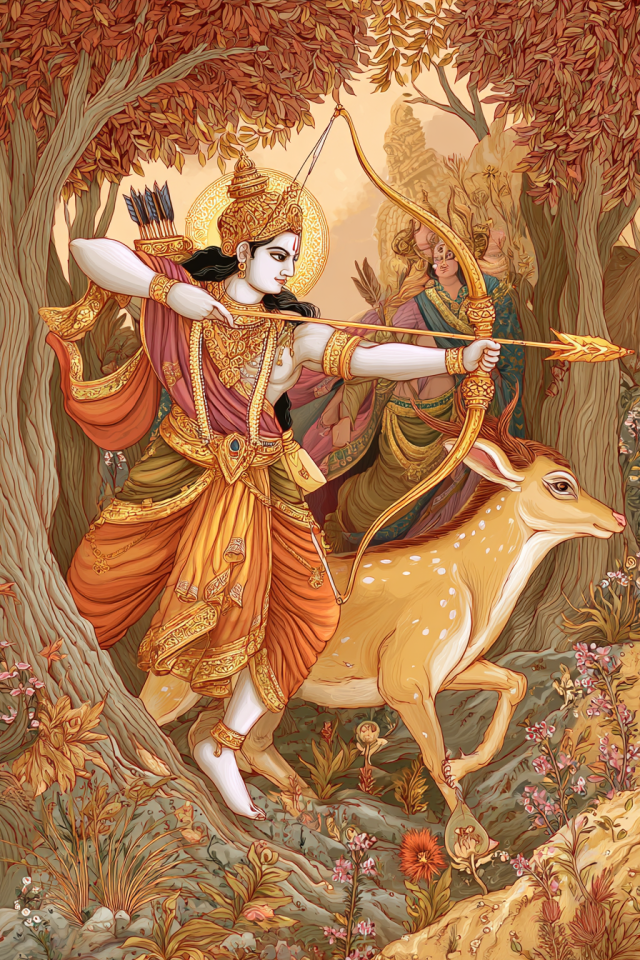
Rama was the eldest son of King Dasharatha of Ayodhya, beloved of all for his virtue and strength. When the king prepared to crown him heir, the court rejoiced. But Kaikeyi, one of Dasharatha’s queens, bound the king by a promise once made: she demanded that her own son Bharata take the throne, and that Rama be exiled to the forest for fourteen years. Bound by his oath, the king wept, but Rama, serene in duty, accepted his fate. “Dharma must be upheld, even when it wounds the heart,” he said. With Sita, his devoted wife, and Lakshmana, his loyal brother, he left Ayodhya and vanished into the wilderness.
For years they dwelt in hermitages, wandering from forest to forest, welcomed by sages, feared by demons. Rama slew rakshasas who threatened the ascetics, and his fame spread across the land. Sita endured hardship with quiet grace, and Lakshmana kept constant watch. In these years the exile seemed almost a pilgrimage, but fate had greater trials in store.
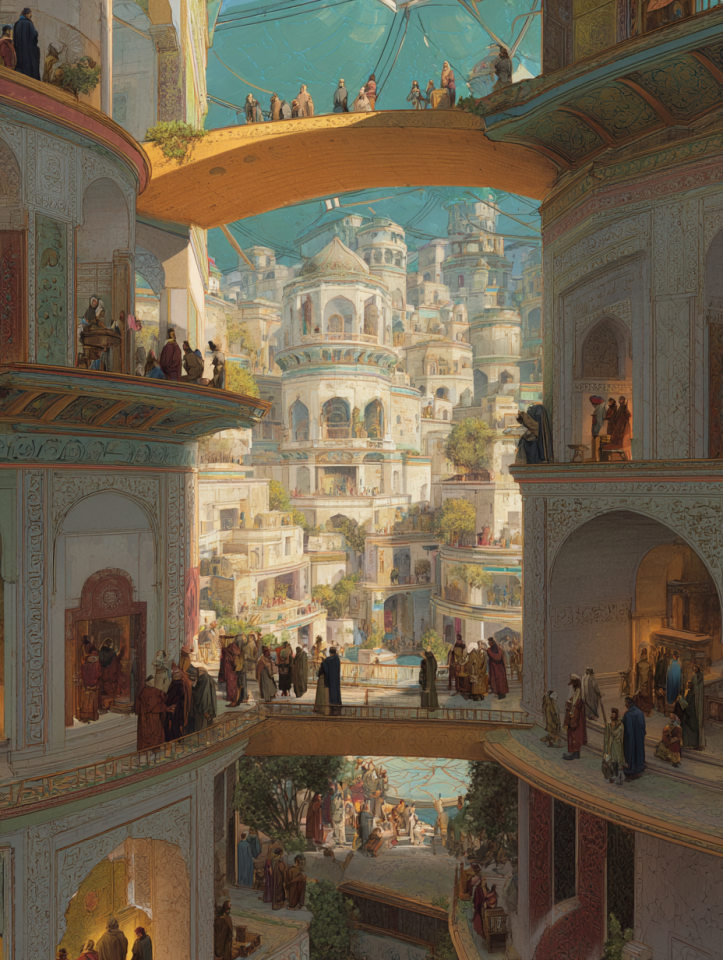
Far to the south ruled Ravana, the ten-headed king of Lanka, feared across heaven and earth. Hearing of Sita’s beauty, he resolved to take her for himself. By cunning he lured Rama and Lakshmana away, and in their absence he swept Sita into his chariot and bore her across the sea to Lanka. Her cries rang through the forest, but the brothers returned too late.
Rama’s grief was terrible, but it hardened into resolve. He searched the land, seeking allies, until he came to the monkey-king Sugriva. With his help and the might of Hanuman, son of the wind, an army was raised. Hanuman leapt the ocean in a single bound, found Sita imprisoned in Ravana’s gardens, and brought her Rama’s ring as a token of hope. Sita, steadfast, refused Ravana’s temptations and threats, keeping her heart only for her husband.
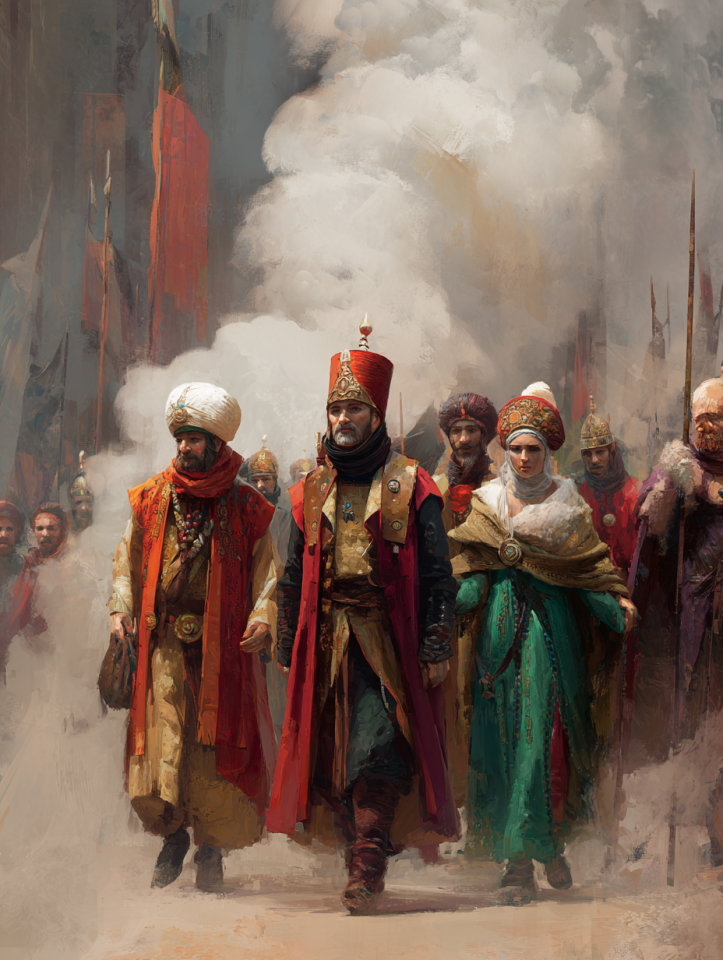
The armies of monkeys and bears built a bridge across the sea, stone by stone, until a causeway stretched from the mainland to Lanka. Upon this bridge Rama led his host, drums beating, banners flying. The battle was fierce and long. Giants and demons fell, heroes clashed, and the earth shook beneath their struggle. Lakshmana was struck down by a spear, but Hanuman brought the mountain of herbs to heal him, tearing it from the earth and carrying it across the sky.
At last Rama faced Ravana himself. The demon-king came forth in splendor, crowned and terrible, each head roaring, each arm bearing a weapon. The clash of their battle filled the heavens. Arrow answered arrow, godly weapons blazed, and at last Rama loosed the Brahmastra, a divine shaft of irresistible power. It struck Ravana through the heart, and the lord of Lanka fell, his heads silent at last.
With Sita freed, Rama’s exile was at its end. He returned to Ayodhya in triumph, welcomed with garlands and song. Yet shadows lingered, for some doubted Sita’s purity after her long captivity. To silence whispers, she passed through fire itself, and Agni, god of flame, bore witness to her chastity.
Rama reigned as king, his rule remembered as Rama-rajya, an age of justice and harmony. But the epic does not hide the sorrow of its end: for in later years, Sita was banished again, and the lovers who had endured so much were parted. Still, the tale endures as one of loyalty, justice, and the eternal struggle to balance duty and compassion.
So the *Rāmāyaṇa* is told: the journey of a prince who upheld dharma above all, the devotion of a wife who endured all trials, the loyalty of a brother, and the boundless courage of Hanuman. It is sung not only as history of gods and kings, but as a mirror of human struggle, where love, duty, and sorrow weave together in the great fabric of life.
Related Organizations




Comments