
Hopohka White-Eagle (ho-POH-kah WHITE-EE-guhl)
First Voice of Cahokia
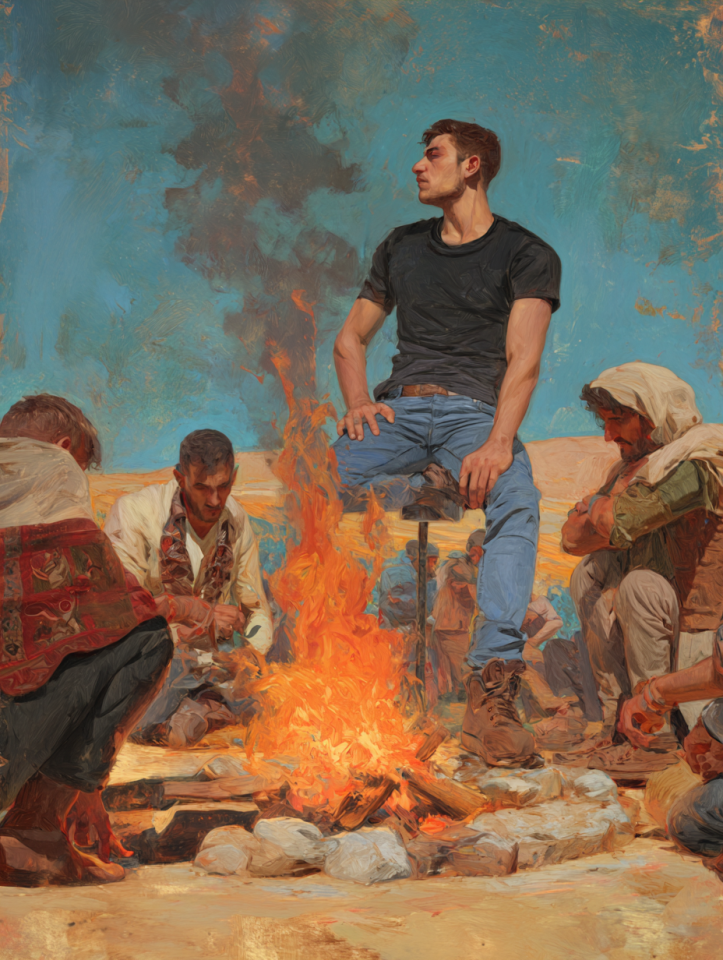
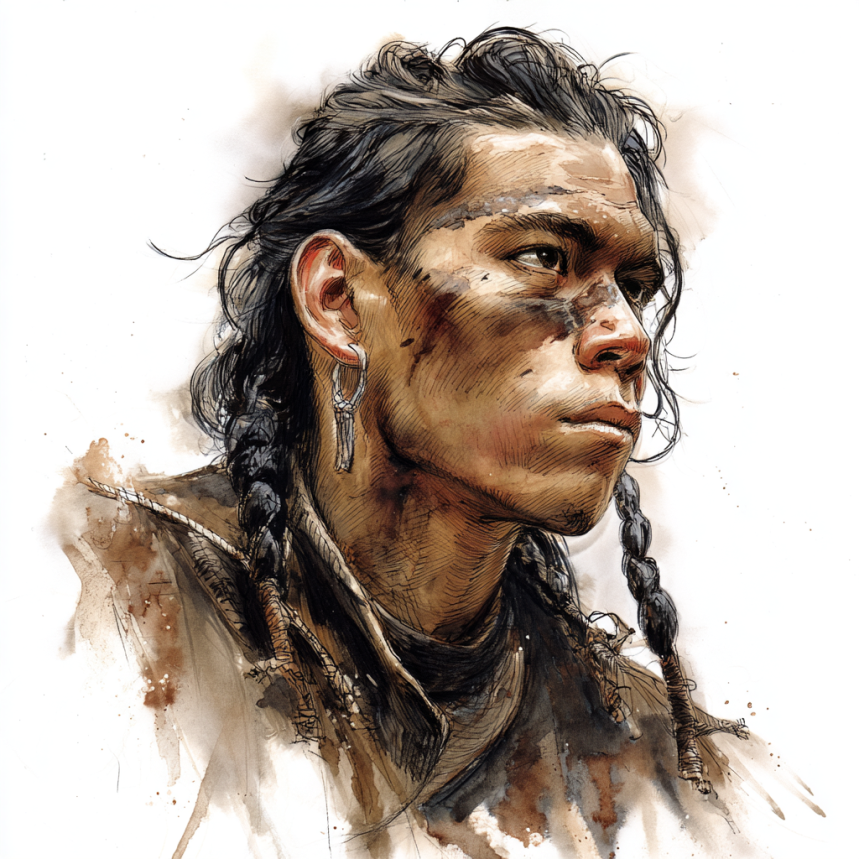
Hopohka White-Eagle was born on the rich floodplains of the Mississippi, near the site that would later become Cahokia’s great mound city. His people lived in balance with river and soil, their villages bound by ceremonies that honored corn, bison, and the eagle that soared above as messenger between earth and sky. From childhood, Hopohka was marked by vision: as a boy, he was said to have climbed a tree at dawn and seen an eagle alight on a nearby branch, meeting his eyes in silence. The elders named him White-Eagle, believing the bird had chosen him as a guide between realms.
As he grew, Hopohka proved not only a skilled hunter and farmer but also a gifted orator. He carried stories like seeds, planting them in the minds of his listeners so that wisdom would grow long after the fire died down. His voice was calm, his gestures spare, yet he could still a crowd of feuding chiefs with a glance and a few measured words. By his twenties, he had been called to serve as a mediator between clans, known for his ability to turn anger aside with images of rivers, winds, and stars. His people chose him as their envoy to Antioch because he embodied the principle that peace must flow like water, shaping without breaking.
At the Accord, Hopohka spoke of the river as covenant. He reminded the assembly that the Mississippi carried waters from countless streams, yet never demanded they become one. Each retained its origin, yet all together nourished the land. His imagery struck the council deeply, for it captured the essence of plurality without conquest. “We are rivers,” he said, “meeting in one great waterway, stronger together, yet each with our own source.” Delegates recalled his presence as dignified and unyielding, a young man of twenty-seven who carried the weight of an ancient people.
Upon his return, Hopohka oversaw the construction of ceremonial mounds aligned to the stars and seasons, ensuring that memory was written into earth itself. He trained generations of storytellers and mediators, insisting that the Accord’s lessons be spoken in every lodge and carried in every song. He lived into his fifties before illness claimed him, but by then his voice had already taken root in the traditions of his people. Remembered as “the Eagle Voice,” he became a symbol of vision and balance — one whose words continue to echo whenever rivers meet.
Previously Held Ranks & Titles
Date of Birth
06 Tlalli 465 zc (Ohana)
Date of Death
29 Sophia 519 zc (Bauen)
Life
465 zc
519 zc
54 years old
Birthplace
Mississippi River Valley, Cahokia
Place of Death
Mississippi River Valley, Cahokia
Children
Belief/Deity
North American Animist + Taíno + Minor Faiths & Syncretic Traditions

 Represents Indigenous continental unity; animist ethics of balance and kinship.
Other Affiliations




Comments