Rustam Sogd (ROOS-tahm SOG-d)
First Voice of Sogdiana
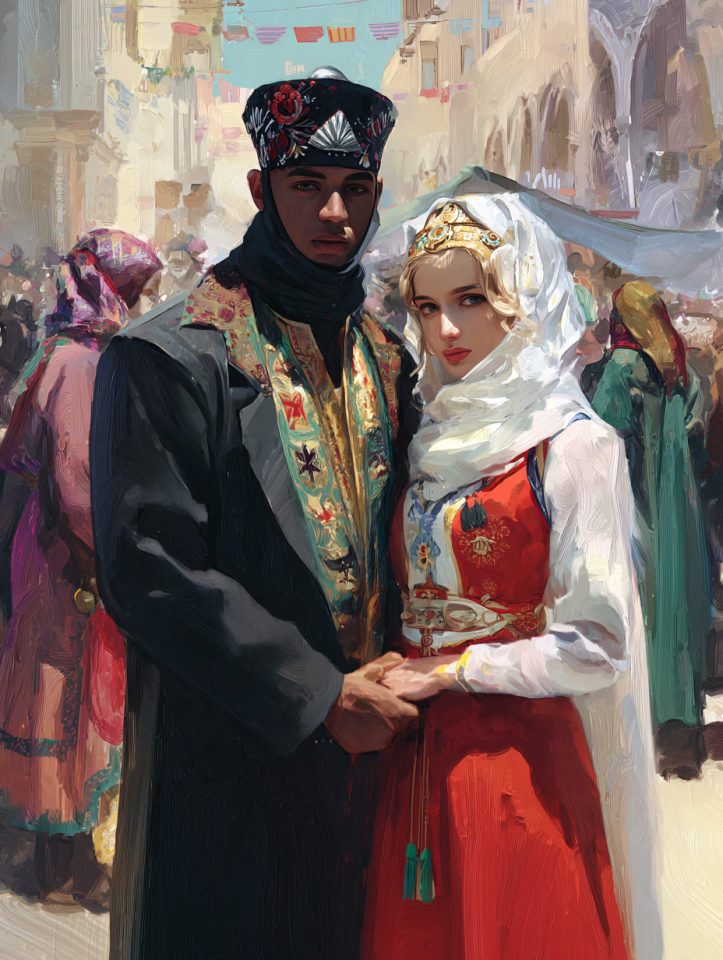
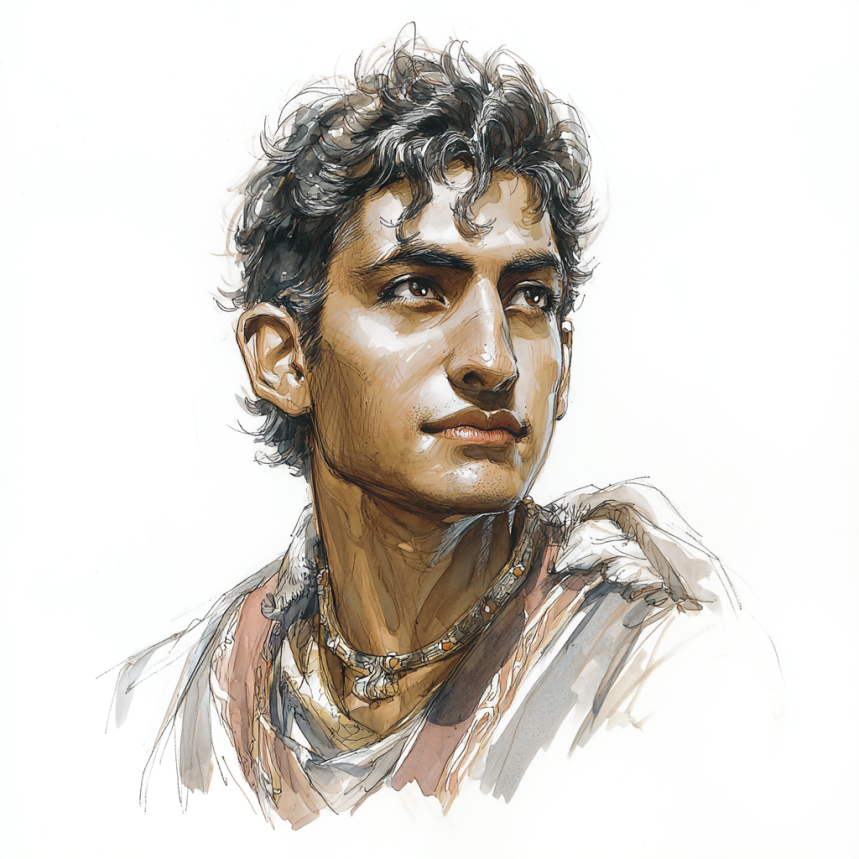
Rustam Sogd was born in the fertile Zeravshan valley, where orchards and caravan roads wove together the lifeblood of Sogdiana. His childhood was shaped by the constant rhythm of caravans arriving from far-off lands — India, Persia, and China — their wagons heavy with silk, spices, and ideas. His father was a merchant of modest means, his mother a keeper of stories; together they taught him that wealth was not only in goods but in the knowledge and trust that bound traders across deserts. By the time he was ten, Rustam could converse in three languages, and by fifteen he had ridden the length of the Oxus River, memorizing the routes that joined mountains to plains.
Unlike many young men of his age, Rustam was drawn less to the accumulation of wealth than to the art of negotiation. He saw that a trader’s true skill was not barter but balance — the capacity to find fairness where suspicion might otherwise prevail. His reputation grew as one who could resolve disputes between caravans without raising a sword. In Samarkand he became known as a mediator, the young man whose presence cooled tempers and opened purses. His charisma was quiet, carried in careful words and deliberate silences, but it earned him the respect of older guild leaders who saw in him both prudence and vision.
When called to Antioch at twenty-six, Rustam embodied the Silk Road itself: a living bridge between East and West. He spoke of the Accord as a caravan in which each culture carried its share, and where safety came not from strength of arms but from the reliability of companions. His imagery — sand, horse, and horizon — impressed even those far removed from desert life. Rustam argued passionately that the Accord must protect the routes of exchange, for ideas and memory traveled no less than goods. His youthful energy and cosmopolitan fluency made him one of the rising stars of the council, a reminder that the vitality of a federation lay in its openness to movement.
After the signing, Rustam returned to Sogdiana, where he organized a guild of translators and wayfinders who ensured that caravans moved not only with goods but with mutual comprehension. Though his life was cut short in his mid-thirties by an illness contracted on the road, his legacy endured. His name became synonymous with the principle that trust was the truest currency. Later chroniclers remembered him as “the Caravan Voice,” the one who reminded the Accord that the road itself was sacred, for it carried both body and spirit of the shared world.
Previously Held Ranks & Titles
Date of Birth
28 Soma 25 zc (Dao)
Date of Death
13 Soma 60 zc (Vidya)
Life
25 zc
60 zc
35 years old
Birthplace
Near Samarkand, Sogdiana
Place of Death
Samarkand, Sogdiana
Children
Belief/Deity
Buddhism + Mohammedan + Taoism

 Silk-Road rationalist blend typical of Sogdiana.
Other Affiliations




Comments