


Hoshiko of Asuka (HO-shee-koh)
First Voice of Nihon
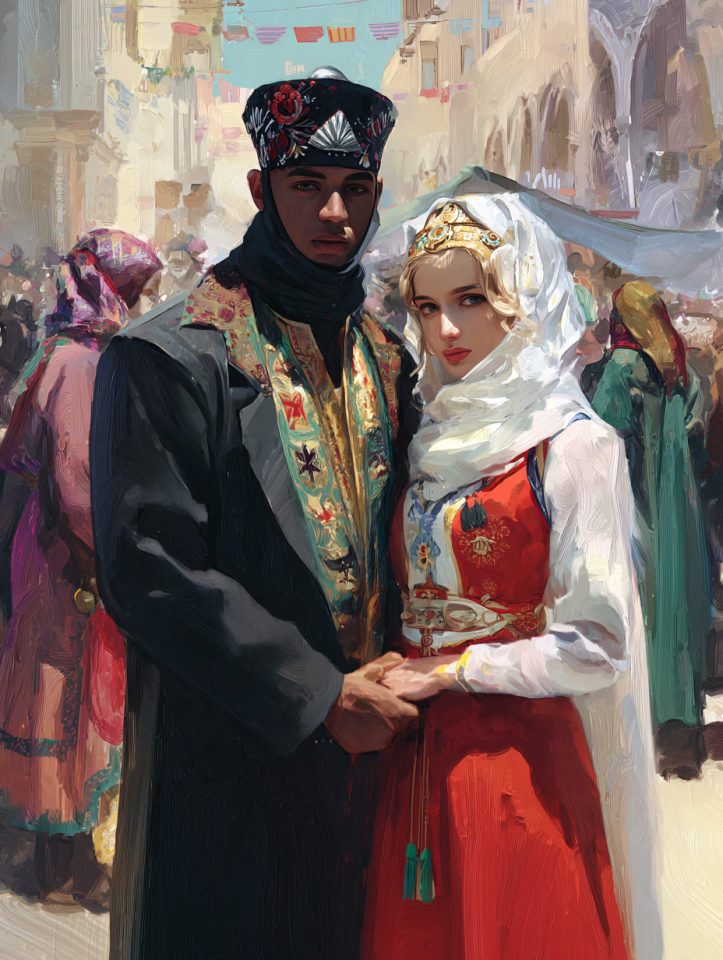
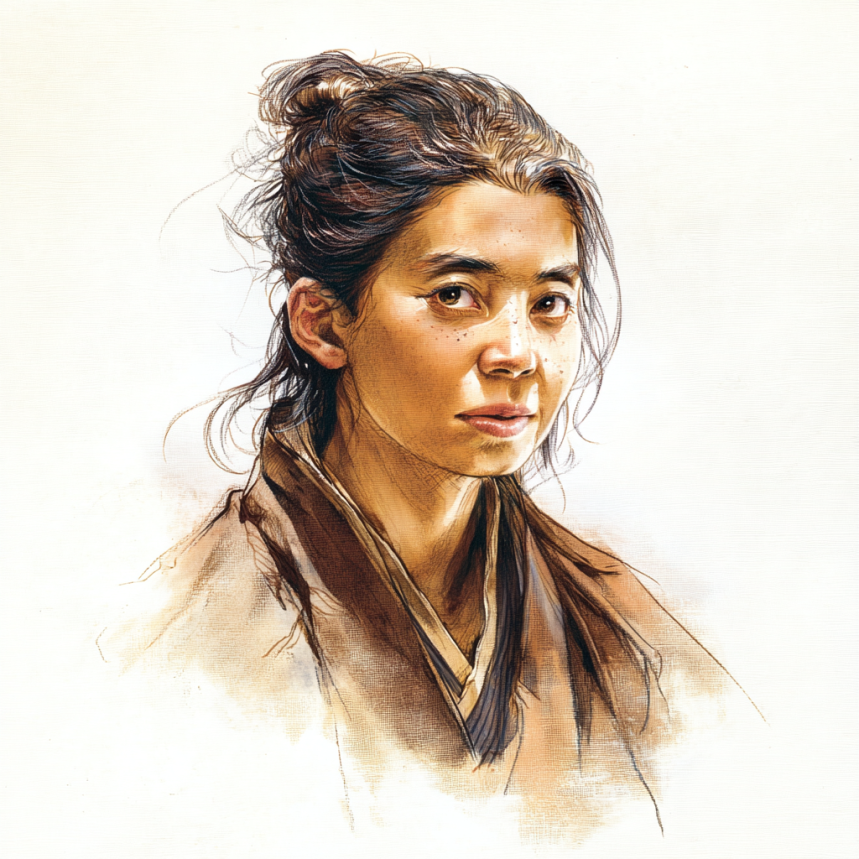
Hoshiko was born in the Asuka plain, a valley surrounded by gentle hills and sacred groves where Shintō shrines and Buddhist temples rose side by side. Her name, meaning “child of the star,” reflected her family’s devotion to the heavens, for her father was a stargazer who traced the motions of constellations on wooden tablets, and her mother tended ancestral shrines where each offering was aligned with seasonal rhythms. From infancy, she was immersed in rituals of purity and renewal: the washing of hands in clear springs, the lighting of lanterns at dusk, the recitation of sutras that wove together earth and sky.
Though only nineteen at the signing, Hoshiko had already distinguished herself as a poet and a contemplative. She studied under monks at Asuka-dera, where she learned Chinese classics alongside Buddhist scriptures, and her verses blended images of cherry blossoms with reflections on impermanence. Her poems were sung in courts and villages alike, admired for their clarity and serenity. When famine struck her region, she helped organize relief, convincing both monks and nobles that compassion was as necessary as rice. Her wisdom, though tender in years, carried the weight of one far older, and the elders chose her as their envoy to Antioch.
At the Council, Hoshiko spoke with a soft voice that nonetheless commanded attention. She compared the Accord to a garden, where each plant grew in harmony without the gardener’s domination. She urged the delegates to honor diversity as beauty, not as threat, and her metaphors of lotus, pine, and plum stirred the assembly. Chroniclers recall that when she spoke of balance, even the most hardened among the council fell silent, hearing in her words the calm strength of water. Though among the youngest present, she left an indelible mark, her vision of gentleness woven into the Accord’s spirit.
After returning to Nihon, Hoshiko continued her life as poet and teacher, nurturing circles of students who preserved her verses for centuries. She died young, in her early thirties, during an epidemic that swept the Asuka region, but her poetry was inscribed on temple walls and remembered in oral recitation. Later generations revered her as “the Star Voice,” a luminous figure whose quiet radiance guided Nihon’s place in the cooperative world.
Previously Held Ranks & Titles
Date of Birth
12 Sophia 769 zc (Ergon)
Date of Death
01 Āsha 801 zc (Mila)
Life
769 zc
801 zc
32 years old
Birthplace
Asuka Plain, Nihon
Place of Death
Asuka, Nihon
Children
Belief/Deity
Confucianism + Taoism + Shinto

 Nihon’s classical triad; moral duty, cosmic flow, and natural reverence.
Other Affiliations




Comments