


Tahara of Memphis (ta-HA-ra)
First Voice of Ta-Mery
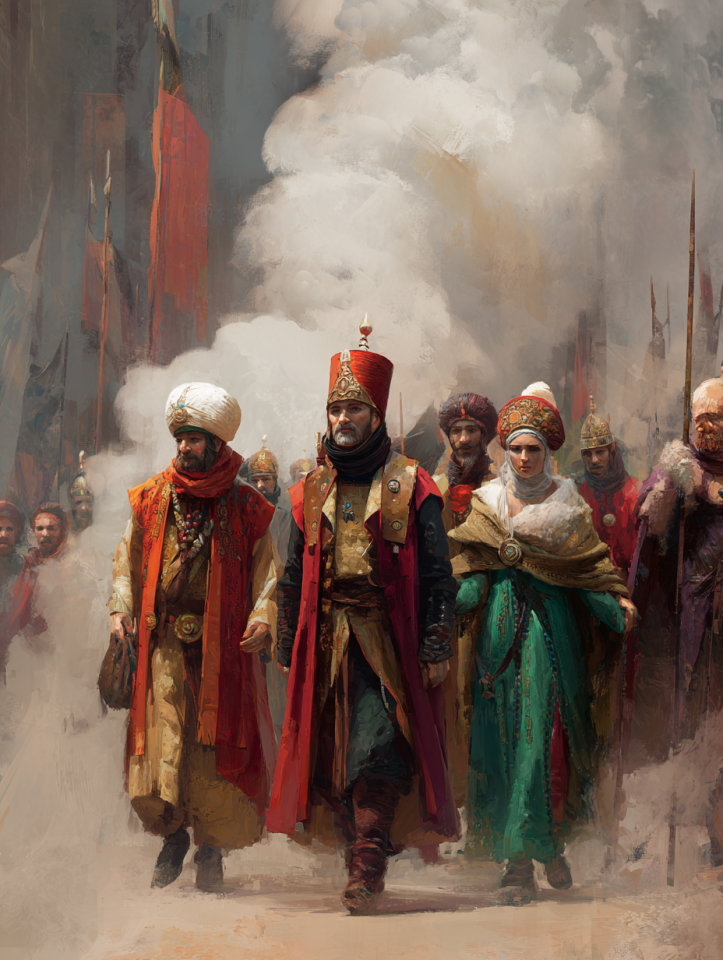
Tahara was born on the banks of the Nile near Memphis, in a time when the city still echoed with the grandeur of Egypt’s ancient dynasties. Her family traced its lineage to Kushite nobles who had once ruled as pharaohs, though by her birth they lived more modestly as land stewards and keepers of temple estates. From an early age, Tahara displayed a natural command over others, her poise and bearing earning her the nickname “the lioness” among those in her household. Unlike many of her contemporaries, she pursued not only domestic skills but also training in mathematics, astronomy, and medicine, fields preserved by Egypt’s priestly classes.
Her education was unusual for a woman of her time, but her mother ensured she was taught by scribes and scholars who saw in Tahara a rare hunger for understanding. She became particularly devoted to the study of medicine, tending to workers and farmers who labored in the fields. Her compassion, matched by a sharp intellect, gained her wide respect and the trust of priests who usually withheld sacred knowledge. Tahara’s voice soon carried weight in Memphis not merely as a healer, but as someone who advocated for balance between tradition and innovation.
When the near-destruction of the Library of Alexandria prompted discussions of a preservation accord, Tahara was chosen to represent the Egyptian and Kushite perspective. At only twenty-eight, she was the youngest female delegate but quickly distinguished herself with her eloquence. She argued that the Nile’s cycles taught that continuity depended upon careful stewardship — just as the river nourished, so too must human beings nourish memory and wisdom. It was Tahara who pressed hardest for the Accord to protect not only texts and monuments, but also oral traditions, ensuring that the voices of the common people would not be forgotten.
In later years, Tahara remained a respected figure in Memphis, balancing roles as healer, advisor, and cultural guardian. She never sought royal titles, preferring instead to serve as an intermediary between rulers, priests, and ordinary citizens. Her death at a relatively young age was mourned widely, with later generations remembering her as “the Keeper of the Two Lands’ Breath,” a phrase that signified both her medical skill and her defense of cultural life.








Comments