Hindu Dharma / Indic (HIN-doo DAR-mah)
Hindu Dharma is a pluralistic polytheistic tradition — meaning it venerates many gods and goddesses, each embodying aspects of cosmic truth, while also holding to the deeper principle of dharma (cosmic order, duty, balance). Polytheism here does not imply chaos but a layered pantheon, where deities manifest different dimensions of the same ultimate reality (Brahman). It also retains animistic elements, recognizing rivers, mountains, and trees as sacred presences within the cosmic whole.
Origins & Historical Development
Hindu Dharma emerges in the Indian subcontinent from the Vedic traditions, evolving over millennia through synthesis with indigenous animistic practices, philosophical inquiry, and devotional movements. In the Koina divergence, without Mughal or British conquest, the Indic world never experiences imperial suppression or missionary reshaping. Instead, Hindu Dharma develops in concert with Buddhism, Jainism, and Persian-Zoroastrian influences. Local sangha federations institutionalize its plural ethos, and dharmic philosophy becomes one of the central intellectual languages of the Accord.
Core Beliefs & Practices
At its foundation is the principle of dharma — right order, duty, and harmony — understood as applying to cosmos, society, and individual. Deities such as Vishnu, Shiva, Devi, and countless local forms are venerated as manifestations of the eternal truth. The concepts of karma (action and consequence), samsara (cycle of rebirth), and moksha (liberation) guide ethical and spiritual life. Practices range from temple worship and fire offerings to meditation, yoga, and philosophical debate. Festivals — Holi, Diwali, Navaratri — flourish not as nationalist spectacles but as federative celebrations, often shared by neighboring communities.
Sacred Texts & Traditions
The Vedas, Upanishads, epics like the Mahābhārata and Rāmāyaṇa, and the Purāṇas provide a vast textual corpus. In Koina, these texts are not weaponized for exclusion but preserved as plural guides, with regional schools emphasizing different teachings. Philosophical traditions — Nyāya (logic), Sāṃkhya (enumeration), Yoga, Vedānta — thrive within guild-like academies and are widely studied beyond Hindu communities. The Net of Voices ensures open access, so dharmic texts influence philosophy in Persia, Greece, and the Sinosphere.
Institutions & Structure
Hindu Dharma has no central authority. Temples, monasteries (mathas), and philosophical schools are locally organized, often tied to guilds or sangha federations. Priests (brāhmaṇas) maintain ritual continuity, but authority is diffused through teachers, gurus, and philosophers. In Koina, caste identities persist but are moderated by federative philosophy — reinterpreted as vocational guilds rather than rigid hierarchies. Social mobility is greater, since federations reward merit and philosophy, not birth alone.
Relation to the Accord
Hindu Dharma contributes deeply to the plural ethos of the Accord. Its philosophical emphasis on dharma and balance aligns with restorative justice and ecological stewardship. Its schools of logic, medicine (Ayurveda), and metaphysics become integral to cooperative education. Hindu voices are prominent in federative assemblies, where concepts of cyclical time and interdependence influence policy and law. Rather than standing apart, Hindu Dharma acts as one of the great philosophical anchors of Koina.
Cultural Influence & Legacy
Art, architecture, and music rooted in Hindu devotion flourish across the federations: temple complexes, sculpted epics, raga traditions, and dance-dramas like kathakali and bharatanatyam. Philosophically, Hindu concepts of karma and dharma shape Koina’s global moral vocabulary, just as Stoicism and Buddhism do. Environmental ethics, grounded in reverence for rivers and forests, become part of Accord treaties. The imagery of lotus, wheel, and conch becomes common in cooperative symbols.
Modern Presence
Today, Hindu Dharma is practiced by hundreds of millions across South Asia, but also has a presence in every major federation through diaspora, trade, and intellectual exchange. Temples stand in cities from Persepolis to Cusco, often serving not only Hindus but anyone seeking meditation or reflection. Far from being an isolated religion, Hindu Dharma is a global philosophical force, teaching balance, multiplicity, and the pursuit of liberation. It exemplifies Koina’s ethos: many gods, many paths, but one shared world.
Type
Religious, Organised Religion
Alternative Names
Sanātana Dharma (“the Eternal Order” Indic Ways
Demonym
Hindus / Dharmikas
Afterlife
Hindu Afterlife
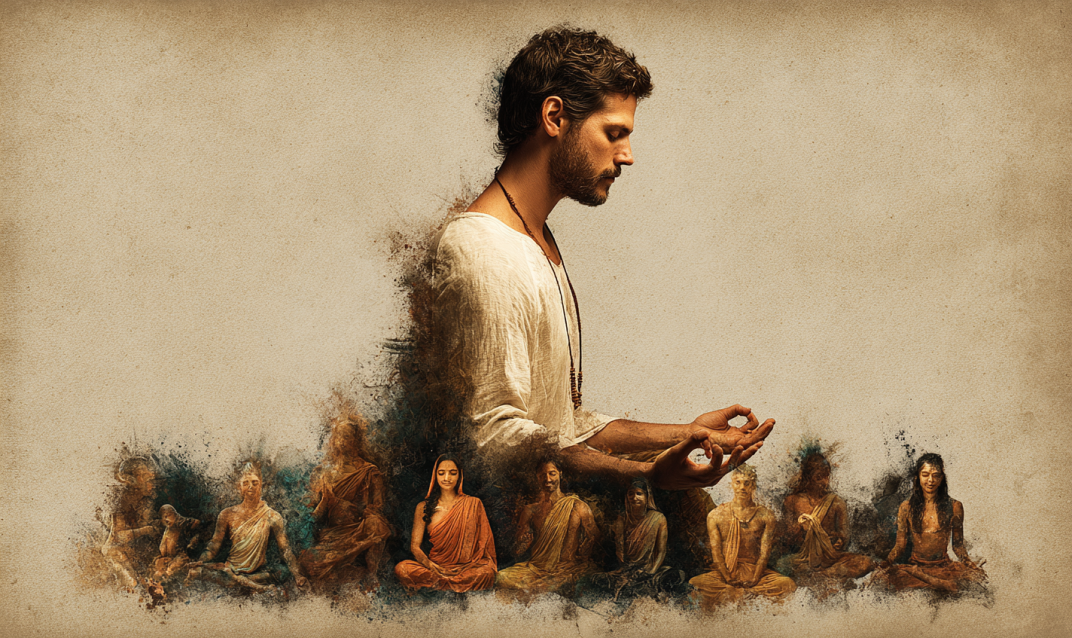
For the dharmic soul, true fulfillment lies in moksha — liberation from illusion and union with the cosmic order. It is the dissolution of individuality into awareness, achieved through righteous action, mindfulness, and devotion. Peace here is endless and complete.
Hindu Afterlife
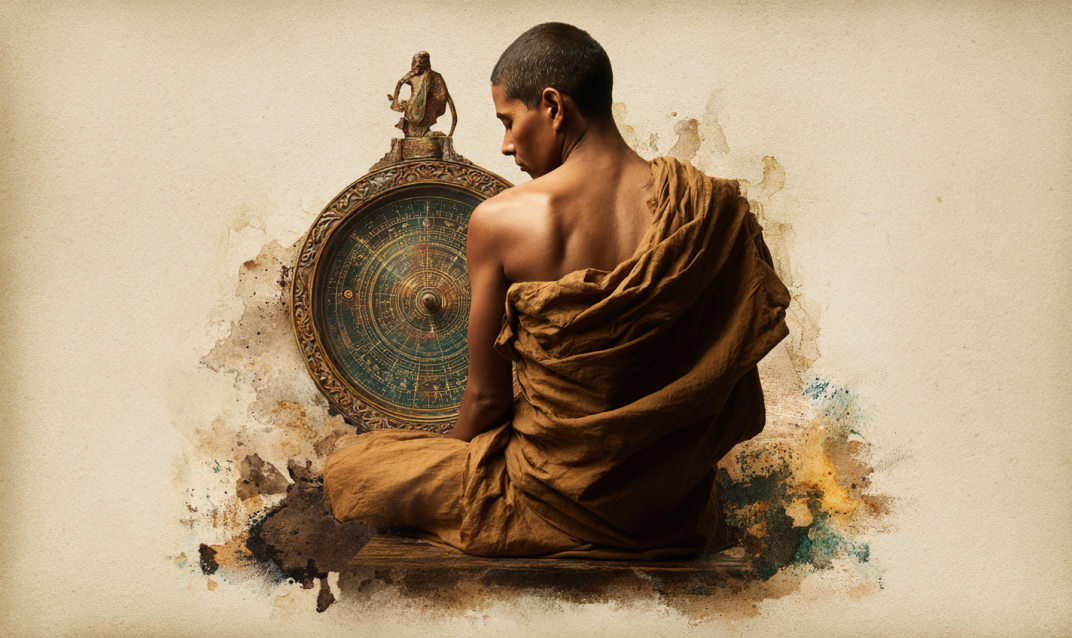
When ignorance clouds insight, the soul returns through samsara, the wheel of rebirth. This is not punishment but instruction: each new life an opportunity to refine awareness, to learn the art of balance, and to move closer to release.
Pantheon of Worship
The following entries offer only a partial glimpse into the living mosaic of belief. Across the federations and the Free-States alike, divinity takes many forms: anthropomorphic gods, elemental forces, moral principles, ancestral spirits, and philosophical ideas. None of these lists are exhaustive, nor do they presume uniform worship or singular interpretation. Over millennia of dialogue and migration, names have changed, stories have merged, and meanings have diverged—each person, community, and age reshaping the sacred to mirror its own understanding. Within the Accord, faith is treated not as doctrine but as conversation: these are simply the primary voices that endure within that vast and ever-evolving chorus that lies within each individual.

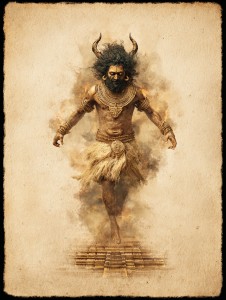
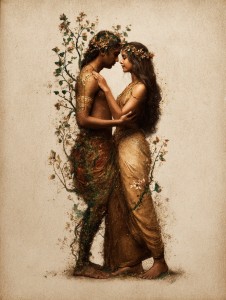
Agni
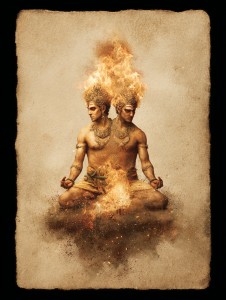
Eternal flame and purifier, Agni is the mouth of gods and messenger between seen and unseen worlds. In Koina’s philosophy of craft, he embodies the creative spark—discipline as devotion, heat as transformation.
Brahma
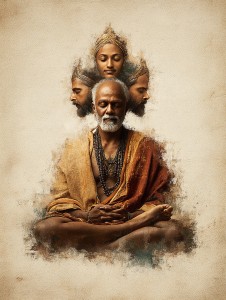
The Creator, source of manifestation and thought. Within Koina’s interpretive frame, Brahma is the principle of Emergent Form—the awareness that creation is constant and collaborative. He is honored less as a deity of worship than as the cosmic architect whose act is ongoing and collective, mirrored in every innovation of the Accord.
Durga
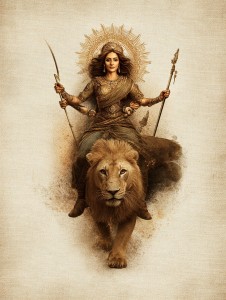
The warrior aspect of compassion, Durga is fierce love turned toward protection. Her strength is the Accord’s model for Defensive Justice—violence only in defense of the balance. Her many arms symbolize collective action: strength distributed among all who care.
Ganesha
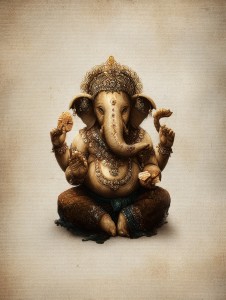
Remover of obstacles and patron of beginnings. In Accord metaphor, he is the Spirit of Accessibility, the principle that every path—whether spiritual, creative, or civic—must begin with understanding. His image appears at the entrances of Accord halls as a reminder that reason opens every gate.
Kali
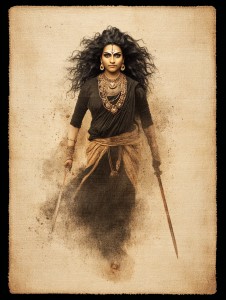
Dark mother of transformation, the truth that even endings are sacred. In Accord theology, Kali is not destruction but revelation—the cutting away of illusion. She embodies Liberating Truth, reminding that freedom sometimes arrives with terror, and that what is feared may be divine renewal.
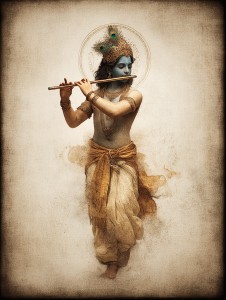
Krishna
The divine strategist and teacher of joy. In the Accord, Krishna’s wisdom in the Gita becomes a parable for ethical action—engagement without attachment. He embodies Balanced Duty, living fully yet without the hunger to possess.
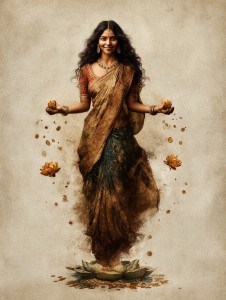
Lakshmi
Radiance of prosperity and moral abundance. Within the Accord’s economic guilds, Lakshmi’s blessing is invoked to remind that wealth is not accumulation but circulation. She is beauty made ethical: the balance of fortune and generosity.
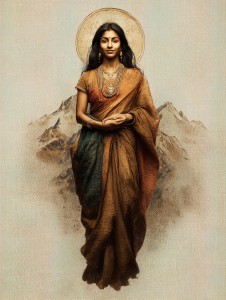
Parvati
Embodiment of nurturing power and steadfast devotion. Parvati represents Unity through Empathy, the force that grounds divine passion in care. Her many forms—Durga, Annapurna, and more—illustrate strength without cruelty, guardianship without pride.
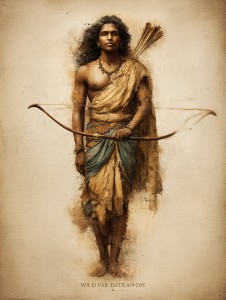
Rama
The exemplar of integrity and virtue. Rama represents Ethical Sovereignty, the ruler who leads through discipline and moral example. His story is the Accord’s ideal of stewardship—leadership as devotion to fairness.
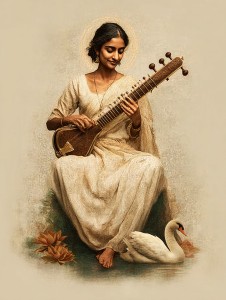
Saraswati
Goddess of wisdom, language, and the flowing clarity of knowledge. She is revered in Koina academies as the patron of pure thought and graceful expression. Her rivers represent the freedom of inquiry—the flow of ideas unblocked by dogma.
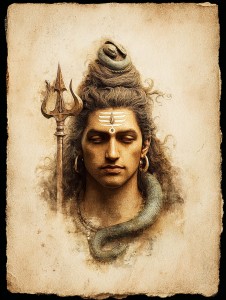
Shiva
The great dissolver, symbol of transformation through ending. In Accord reading, Shiva embodies Transcendent Change, the courage to unmake what must die so renewal may arise. His dance, the Tandava, is mirrored in every revolution of philosophy or art that clears away decay to birth new insight.
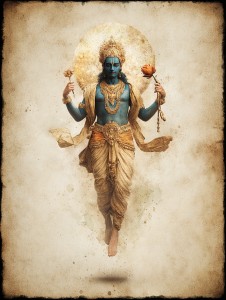
Vishnu
Preserver of harmony, guardian of balance. His avatars restore equilibrium when the world drifts toward chaos. In Accord cosmology, Vishnu is the Proto-Force of Continuity through Compassion—the ever-returning aspect of reason that reestablishes order not through dominance, but understanding.
Lesser Pantheon / Other Important Entities
Beneath the great architects of creation move countless presences who shape the subtler rhythms of existence. These are the intercessors, the boundary-walkers, and the remembered: angels and lwa, saints and ancestors, spirits of grove and hearth, tricksters, dreamers, and the beloved dead. Their powers are intimate rather than cosmic—rooted in memory, place, and the daily turning of life. They remind the living that divinity does not dwell only in the heavens but also in laughter, grief, and the quiet negotiations between mortal and divine. Through them, the sacred becomes personal, and the invisible world remains close enough to touch.
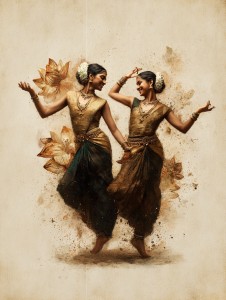
Apsaras
Celestial dancers of the heavenly courts, the Apsaras embody inspiration and sensual grace. They move between gods and mortals as muses, stirring both love and artistic awakening. Within Accord symbology, they personify the creative impulse that bridges body and spirit.
Ashvins
Twin horse-born gods of dawn and healing, the Ashvins ride the liminal hour between night and day. They restore health, bring inspiration, and guide travelers through uncertainty. In Accord symbolism they embody cooperation—twin virtues in constant motion.
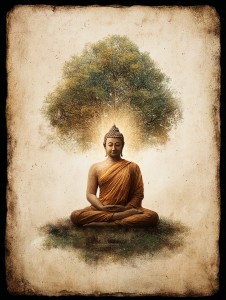
Buddha
The Enlightened One, who taught liberation through awareness, compassion, and balance. In the Accord’s plural understanding, Buddha is not worshiped as an exclusionary figure but as a pathfinder—one who revealed the truth that peace begins where desire ends.
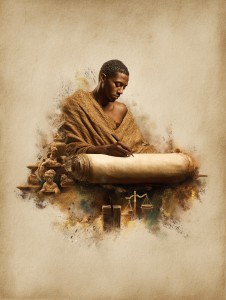
Chitragupta
The divine scribe who records every soul’s deeds, Chitragupta embodies cosmic memory and moral balance. Seated beside Yama, he weighs the truths of action without malice or favoritism. In Accord philosophy he stands as the archivist of conscience, where accountability and compassion meet.
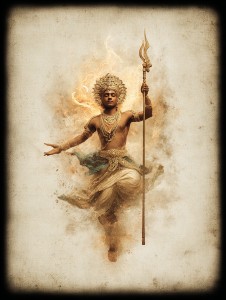
Kartikeya
Youthful god of courage and strategy, Kartikeya—also known as Skanda—leads divine hosts with clarity and grace. Born of fire and raised among the stars, he represents the disciplined strength of intellect over impulse, and the bravery of those who fight for harmony rather than conquest.
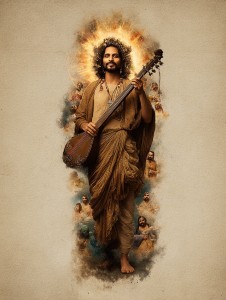
Narada
The divine sage and cosmic meddler; Narada provokes quarrels among gods and mortals to reveal hidden truths. In Accord teaching, he embodies divine mischief as the path to enlightenment—wisdom born through friction.
Pisacha
Flesh-eating night spirits drawn to lies and decay; they lurk where truth is spoiled or compassion denied. In Accord lore, the Pisacha are not evil but corrupted hunger—teaching mortals to keep mind and body pure.
Yakshas and Yakshinis
Nature spirits of fertility, abundance, and threshold places, the Yakshas and Yakshinis guard hidden treasures within earth and tree. They are givers when honored, but withholders when disrespected. In Accord interpretation they mirror ecological reciprocity—the earth’s living guardians of balance.




Comments