Taoism (TOW-izm)
Taoism is a philosophical and religious tradition — blending naturalistic philosophy with ritual practices. Unlike monotheism (one god) or polytheism (many gods), Taoism is cosmological, centered on the Dao (“the Way”) as the underlying flow of the universe. It is both animistic — revering mountains, rivers, and stars as embodiments of the Dao — and polytheistic, honoring a celestial bureaucracy of deities and immortals.
Origins & Historical Development
Taoism emerges in China during the late Zhou dynasty, with foundational texts like the Dao De Jing (Laozi) and Zhuangzi shaping its outlook. In our history, it alternated between imperial support and suppression. In Koina’s divergence, with no rigid state monopolies, Taoism thrives continuously as a civic and spiritual practice across the Sinosphere Consortium. Taoist guilds of alchemists, herbalists, and ritualists integrate into federative assemblies, ensuring its principles of harmony, balance, and non-interference shape both local and global culture.
Core Beliefs & Practices
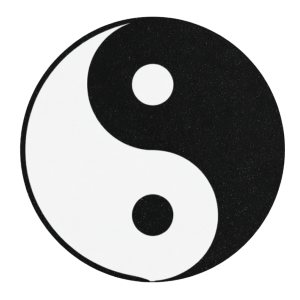
The central belief is alignment with the Dao, the natural flow of the cosmos. Taoists value wu wei (effortless action), ziran (naturalness), and balance of yin and yang. Deities and immortals represent cosmic principles but are not exclusive objects of devotion. Practices include meditation, breathing exercises, qigong, ritual offerings, and seasonal festivals. Taoist alchemy (inner and outer) emphasizes longevity and harmony of body and spirit. In Koina, Taoist rites are woven into daily civic life — seasonal ceremonies at rivers, mountain pilgrimages, and healing guild practices.
Sacred Texts & Traditions
The Dao De Jing and Zhuangzi remain central philosophical texts, while the Daozang (Taoist Canon) preserves thousands of ritual, alchemical, and cosmological writings. In Koina, Taoist texts are preserved alongside Confucian, Buddhist, and Stoic works in the Net of Voices, accessible to all. Taoist poetry and parables influence civic discourse, often quoted in federative debates to remind councils of humility and natural balance.
Institutions & Structure
Taoism is decentralized, with priestly lineages and local temples maintaining authority. Priests conduct rituals for health, fortune, and harmony, while hermits and sages embody Taoist withdrawal into nature. In Koina, Taoist guilds of healers, astronomers, and alchemists are formally recognized within the Sinosphere Consortium. Temples serve as centers of ecological stewardship, preserving forests, rivers, and sacred mountains.
Relation to the Accord
Taoism contributes to the Accord through its emphasis on ecological balance and non-coercive governance. Its principle of wu wei informs federative debates, urging minimal interference and respect for natural processes. Taoist healing guilds play vital roles in the League of Healers & Watchmen, while Taoist astronomy and geomancy influence architecture and city planning across federations.
Cultural Influence & Legacy
Taoist art — landscape painting, calligraphy, and mountain temples — shapes global aesthetics. Philosophically, Taoism offers counterbalance to Confucian duty and Buddhist compassion, reminding federations that harmony arises from flow, not force. Festivals such as the Lantern Festival and Double Ninth remain civic holidays across East Asia. Taoist martial arts, meditation, and herbal medicine spread worldwide through cooperative exchanges.
Modern Presence
Today, Taoism thrives across China, Taiwan, and diasporic communities, integrated into the Sinosphere Consortium and beyond. Temples stand in urban centers, but hermitages and mountain retreats remain equally respected. Taoist philosophy permeates daily life — from ecological law to art, from medicine to urban design. Within the Cooperative Federation, Taoism endures as both philosophy and faith, guiding citizens toward balance, humility, and alignment with the Way.
Type
Religious, Other
Alternative Names
Daoism; The Way of the Dao
Demonym
Taoists




Comments