Yoruba / Orisha (YOHR-oo-bah reh-LIH-jun / oh-REE-shah veh-neh-RAY-shun)
The Yoruba religion is a polytheistic and animistic tradition — venerating many deities known as Orisha, each embodying forces of nature, morality, and human life. Polytheism means honoring multiple divine figures such as Shango (thunder), Oshun (love and rivers), Ogun (iron and war), and Yemoja (motherhood and the sea). Animism recognizes that rivers, trees, mountains, and ancestors all possess spirit and agency. At its heart is Ifá divination, a system of wisdom and balance that guides both personal and communal life.
Origins & Historical Development
The Yoruba faith arises in West Africa, centered in what is now Nigeria, Benin, and Togo. In our history, colonialism and Christianity fragmented it, but in Koina’s divergence, without conquest or suppression, Orisha veneration thrives as one of the major federative traditions of Africa. Yoruba city-states and federations develop strong priestly guilds of Ifá diviners, ensuring continuity of ritual and philosophy. Over centuries, Yoruba religion expands across trade networks into the western continents, not through forced diaspora but through voluntary exchange, becoming a global tradition.
Core Beliefs & Practices
Yoruba cosmology begins with Olodumare, the supreme creative source, who delegates authority to the Orisha. These deities are both cosmic and personal, guiding human destiny. Each person is believed to choose their Ori (inner head, spiritual destiny) before birth, and life’s purpose is to live in alignment with it. Rituals include offerings, drumming, dance, possession ceremonies, and divination sessions. Festivals dedicated to Orisha — such as Shango’s thunder rites or Oshun’s river festival — are major civic events, open to all.
Sacred Texts & Traditions
Ifá divination preserves a vast oral corpus of wisdom, the Odu Ifá, containing thousands of poetic verses (ese) that address every aspect of life. In Koina, these verses are continuously transcribed and shared in the Net of Voices, giving Orisha philosophy global influence. Oral traditions — proverbs, chants, drumming patterns — remain vital, but written archives ensure their endurance. The interplay of oral and textual wisdom becomes a hallmark of Yoruba contribution to federative knowledge.
Institutions & Structure
Priests and priestesses (babalawo and iyanifa) conduct Ifá divination and lead rituals. Temples and shrines to Orisha are maintained in cities and villages alike. In Koina, Yoruba federations integrate priestly guilds into civic assemblies, where diviners serve as advisors and ritual leaders. Communities recognize the authority of both hereditary rulers and spiritual leaders, ensuring balance between political and religious life.
Relation to the Accord
Yoruba religion contributes to the Accord through its emphasis on destiny, balance, and community care. Ifá diviners often serve as mediators, their role paralleling the Whispers of other federations. Orisha cosmology influences federative views on ecology, with rivers, forests, and oceans treated as sacred commons. Yoruba festivals, with their music, color, and public rituals, become some of the most widely shared celebrations across the Cooperative Federation.
Cultural Influence & Legacy
Yoruba art, drumming, and dance permeate global culture. The talking drum, masquerade traditions (egungun), and Orisha myths shape theater, music, and visual arts across Koina. Philosophically, the concept of Ori influences federative ethics, teaching that each person’s destiny is sacred and must be honored. Spirit possession rites, once seen as exotic, become recognized as civic celebrations of belonging and continuity with ancestors.
Modern Presence
Today, Orisha veneration thrives not only in West Africa but across the western continents, Europe, and Asia, carried by trade, migration, and cultural exchange. Major cities host Oshun festivals by rivers, Shango rites during storms, and community-wide drumming ceremonies that draw participants of all backgrounds. Yoruba religion is thus not a regional curiosity but a global path, embodying the Cooperative Federation’s ethos of plurality and balance.
Type
Religious, Organised Religion
Alternative Names
Ifá Tradition; Orisha Faith
Demonym
Yoruba / Orisha Devotees
Related Myths
Afterlife
Yoruba Afterlife
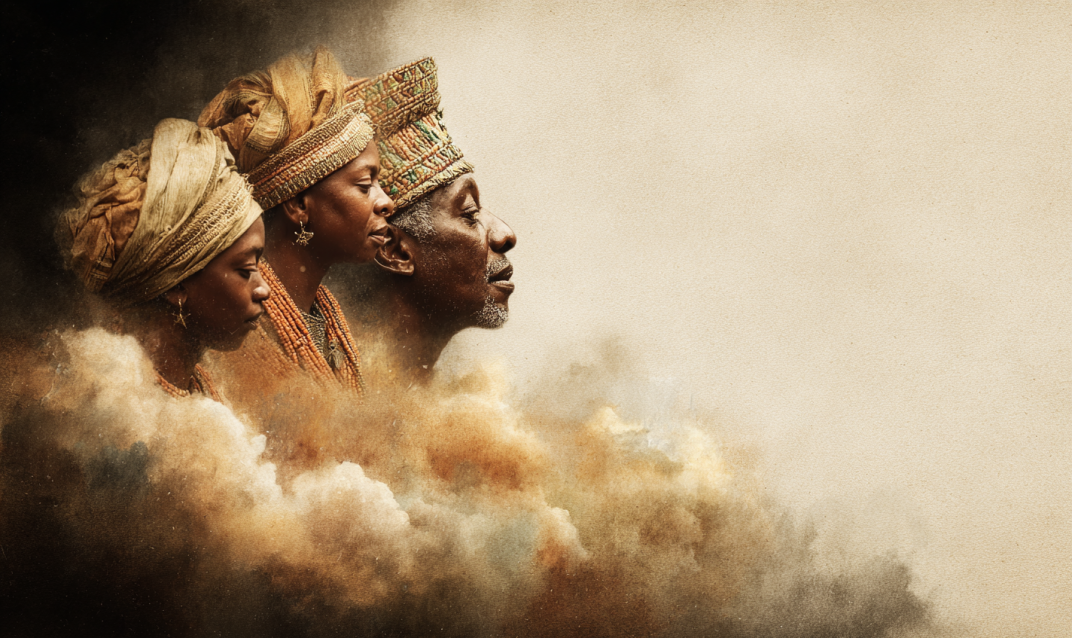
Those who live rightly ascend to Orun Rere, the shining sky-world of peace where ancestors dwell beside the orishas. It is a realm of clarity and fulfilled destiny, where harmony endures beyond time.
Yoruba Afterlife
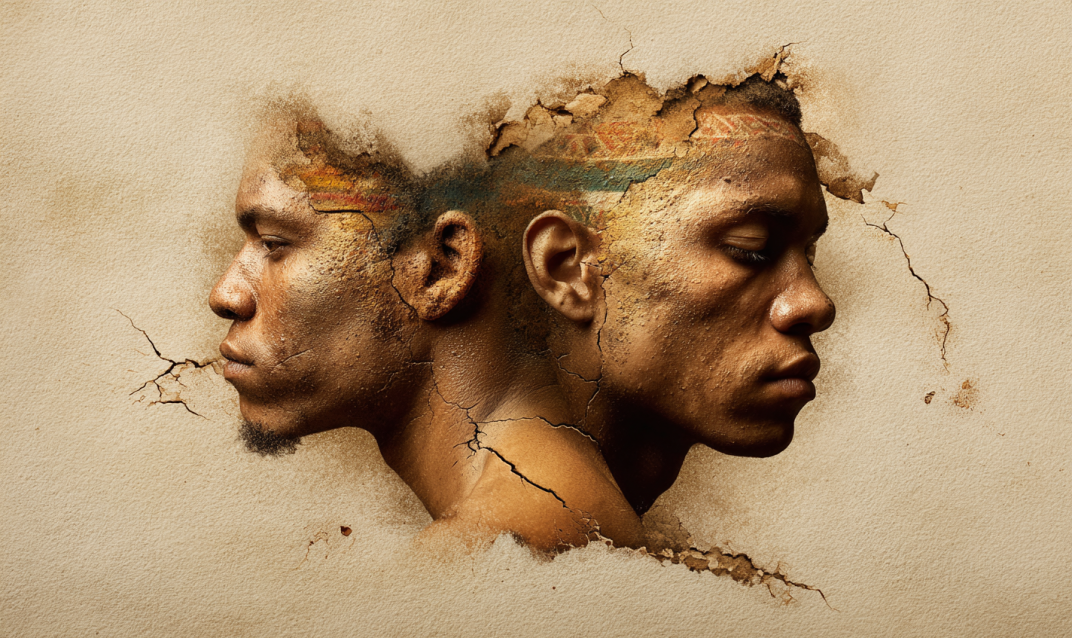
Orun Apadi is the place of fragments — broken souls mended by patience and divine care. It is no inferno, but a workshop of renewal, where the spirit’s pieces are made whole through memory and compassion.
Pantheon of Worship
The following entries offer only a partial glimpse into the living mosaic of belief. Across the federations and the Free-States alike, divinity takes many forms: anthropomorphic gods, elemental forces, moral principles, ancestral spirits, and philosophical ideas. None of these lists are exhaustive, nor do they presume uniform worship or singular interpretation. Over millennia of dialogue and migration, names have changed, stories have merged, and meanings have diverged—each person, community, and age reshaping the sacred to mirror its own understanding. Within the Accord, faith is treated not as doctrine but as conversation: these are simply the primary voices that endure within that vast and ever-evolving chorus that lies within each individual.
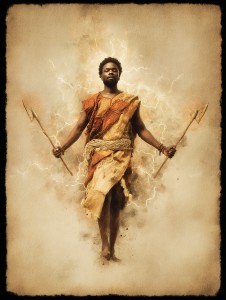
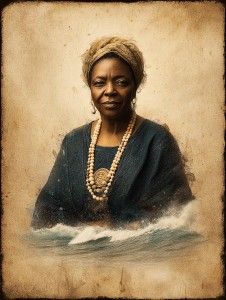
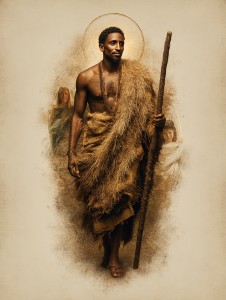
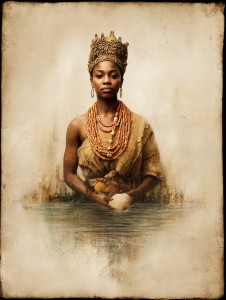

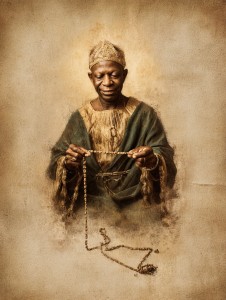
Eshu
Messenger, trickster, and guardian of crossroads. Eshu represents Chaos as Communication, the necessary unpredictability that prevents stagnation. The Accord honors him as spirit of dialogue unafraid of paradox; without him, understanding cannot move.
Obatala
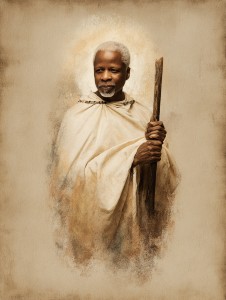
Orisha of wisdom, purity, and form. Obatala represents Discipline of Creation—thoughtful craftsmanship and moral clarity. In Accord art and law alike, he is patron of reasoned design and impartial justice: creation as conscious act.
Olodumare
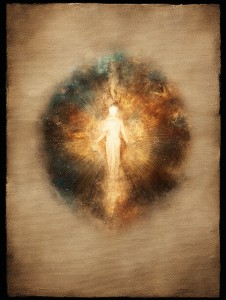
Supreme source and sustainer of existence. In Accord philosophy, Olodumare is Unity without Dominion—a divinity that pervades all yet commands none. His breath animates every Orisha, much as the Accord’s ideal animates its federations: the whole expressed through the independent strength of each part.
Oshun
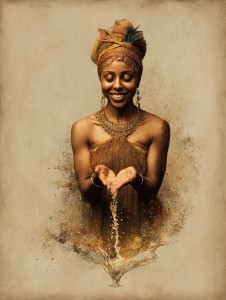
Goddess of sweetness, beauty, and harmony. In Accord interpretation, Oshun is Charm as Moral Force—the allure that heals divisions. She teaches that grace can succeed where judgment fails, and that joy is a form of wisdom. Her golden rivers remain symbols of affection as diplomacy.
Oya
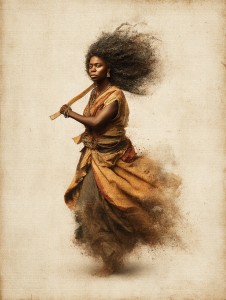
Mistress of wind, change, and gateways. Oya represents Transformation as Freedom, the willingness to release so that new paths may open. She governs the moral storm—the upheaval that precedes renewal. Accord reformers invoke her name before every act of brave uncertainty.
Shango
Thunderous lord of justice and charisma. Shango is Righteous Energy, passion guided by principle. Accord speakers and orators honor him as the voice of conviction—reminding that power’s beauty lies in its rhythm, not its volume.
Yemaya
Mother of oceans and protector of the vulnerable. Yemaya embodies Nurture through Vastness, compassion scaled to infinity. Her waters cleanse both body and memory, teaching that love expands outward, never inwards to possession. Her tides mark the Accord’s rhythm of empathy and rest.
Lesser Pantheon / Other Important Entities
Beneath the great architects of creation move countless presences who shape the subtler rhythms of existence. These are the intercessors, the boundary-walkers, and the remembered: angels and lwa, saints and ancestors, spirits of grove and hearth, tricksters, dreamers, and the beloved dead. Their powers are intimate rather than cosmic—rooted in memory, place, and the daily turning of life. They remind the living that divinity does not dwell only in the heavens but also in laughter, grief, and the quiet negotiations between mortal and divine. Through them, the sacred becomes personal, and the invisible world remains close enough to touch.
Babalu-Aye
Orisha of healing, disease, and renewal, Babalu-Aye transforms suffering into compassion. Covered in sacred scars and wrapped in raffia, he reminds that pain can be made holy through empathy.
Oba
Spirit of fidelity, sacrifice, and perseverance, Oba is the quiet strength within partnership. She teaches that devotion, when chosen freely, becomes its own form of power.
Ogun
Spirit of iron, forge, and progress. Ogun embodies Courage through Innovation, the drive to cut paths and clear obstacles without surrendering to destruction. His blade divides ignorance from possibility; his presence sanctifies work and transformation.
Orunmila
Orisha of wisdom, divination, and foresight. Orunmila embodies Knowledge in Context—understanding not as fact but as pattern. Accord philosophers consider him patron of reasoning through uncertainty: the disciplined intuition that guides moral balance.




Comments