Judaism (JOO-day-izm)
Judaism began as a polytheistic tradition — meaning the worship of many gods and local deities tied to family, tribe, or land. Over centuries, it evolved into a monotheistic covenantal religion, holding that there is one universal God in relationship with the people of Israel. In the Koina world, this monotheism does not mean exclusivity or intolerance, but fidelity: one god for one people, practiced alongside respectful coexistence with the gods and traditions of others.
Origins & Historical Development
Judaism arises in the Levant, among tribes whose worship originally centered on a pantheon of deities, with El and Yahweh as high gods. In the absence of Rome’s conquest and destruction of the Temple, Judaism’s development follows a steady evolution rather than a pattern of rupture and diaspora. Priestly rites remain continuous, while philosophical exchange with Persia, Greece, and India shapes the way Jewish law is interpreted. Instead of becoming a faith of survival under persecution, Judaism flourishes openly within federations of the Accord, its institutions respected as part of the civic framework.
Core Beliefs & Practices
At its heart is the covenant — a binding relationship between Israel and God. In Koina, this covenant emphasizes stewardship and balance rather than exclusivity. Ethical life is measured not by “sin” but by transgression, meaning a disruption of harmony with community, neighbor, or creation. Practices such as Sabbath rest, dietary laws, and festivals like Passover and Sukkot endure, but are lived with confidence and celebration rather than defensiveness. Pilgrims and neighbors from other traditions often join in festivals, turning them into federative occasions of shared memory.
Sacred Texts & Traditions
The Torah, Prophets, and Writings remain foundational, but commentary is central. Rabbinic debate becomes a civic art form, aligning with Koina’s broader emphasis on philosophy as the shared ethical language. The Talmudic method of dialogue — questioning, refining, disputing — is woven into the Net of Voices, giving Judaism a role as one of the intellectual anchors of the Cooperative Federation. Argument itself is treated as sacred, a way of encountering the divine through reasoned exchange.
Institutions & Structure
The Temple in Jerusalem endures as a symbolic and ritual center, but authority is decentralized. Synagogues function as both houses of study and civic forums. Rabbis, trained in law and philosophy, mediate between tradition and modernity, while priests sustain ancient ritual continuity. Jewish academies gain renown as schools of medicine, astronomy, and ethics, sending graduates into guilds and federative councils across Koina. This prevents Judaism from being isolated; it becomes fully embedded in civic life.
Relation to the Accord
Judaism integrates smoothly with the Accord system of federations. Its rabbinic councils mirror the Voices and Whispers model, balancing continuity with rotation. Jewish guilds contribute heavily to medicine, trade, and scholarship, while Jewish courts of elders often serve as mediators between federations. The emphasis on covenant resonates with the Accord’s own ethos: that belonging is layered and cooperative rather than assimilative.
Cultural Influence & Legacy
Jewish contributions extend far beyond religion. Physicians, philosophers, poets, and merchants shape federative life across the Mediterranean and into Persia and India. Biblical narratives provide powerful archetypes of liberation, exile, and return — themes that resonate even outside the Jewish community. Jewish music, calendar rhythms, and storytelling enrich the shared cultural memory of Koina. Without centuries of systemic persecution, Jews are never marginalized but instead become one of the most visible threads in the plural fabric of global society.
Modern Presence
Today, Judaism thrives in its ancient homelands while also spanning every federation through trade, education, and migration. Jewish identity is lived with calm assurance — not as a defensive shield but as a confident cultural resonance. Communities remain distinct in ritual, yet porous in dialogue, embodying the Koina ethos of plurality without erasure. To be Jewish in the Cooperative Federation is to be both rooted in covenant and fully woven into the shared world.
Type
Religious, Organised Religion
Alternative Names
Yahadut (יַהֲדוּת, “the practice of being Jewish”)
Demonym
Jews / Jewish
Afterlife
Judaism Afterlife
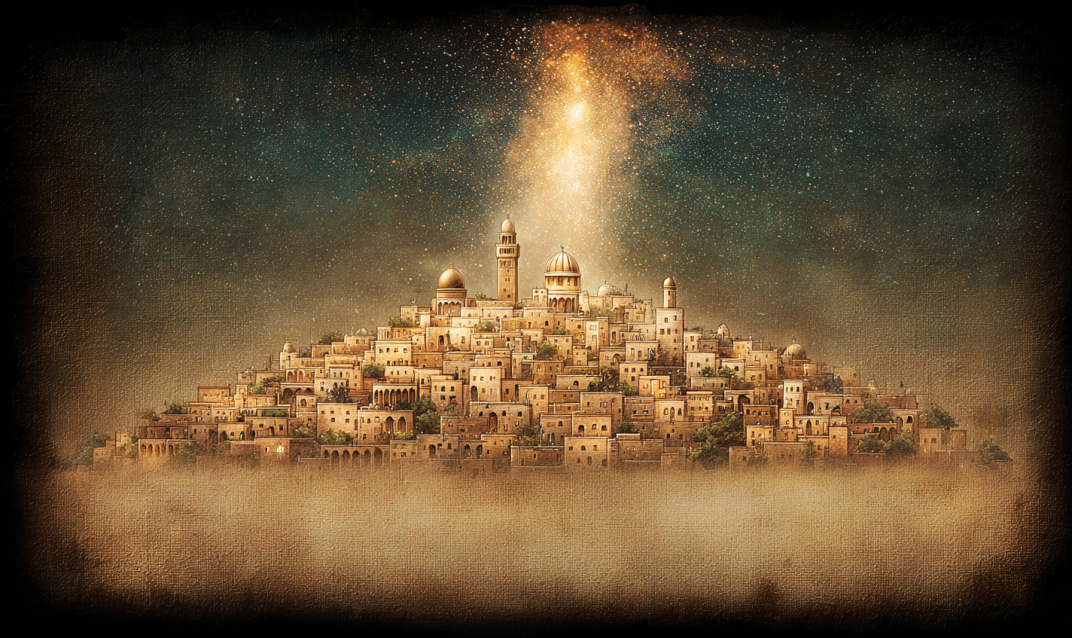
The righteous enter Olam Ha-Ba, the world to come — a realm of peace and shared understanding. It is depicted as radiant with divine presence, where ancestors meet in study and song, the reward of a life walked in justice and compassion.
Judaism Afterlife
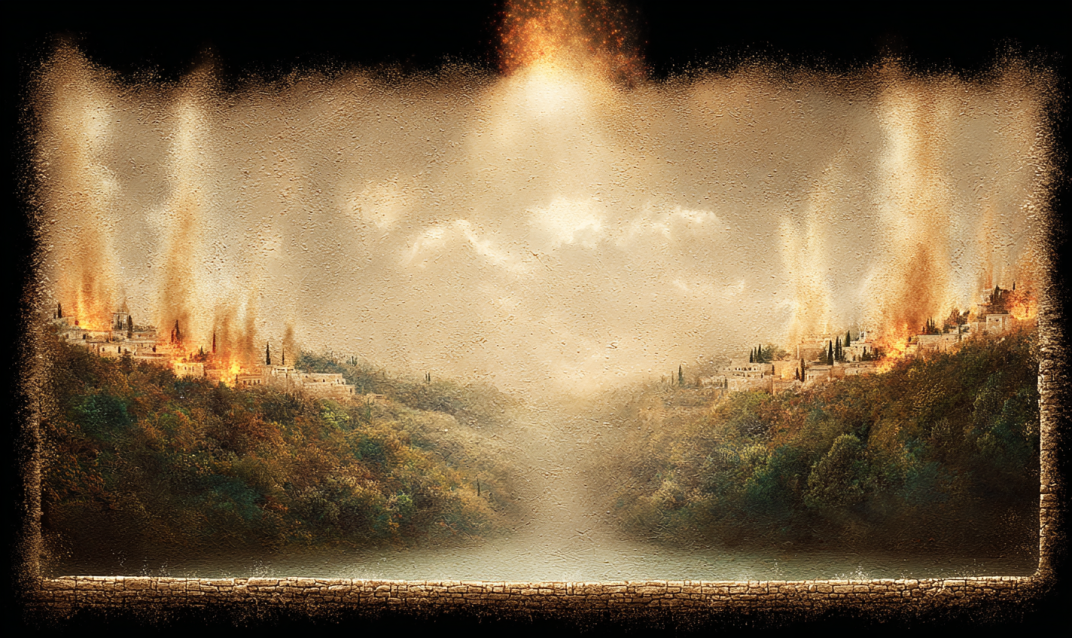
Gehinnom is not eternal torment but a place of reflection and purification. Here the soul sheds the residue of imbalance before joining its kin in light. It is cleansing fire, brief and merciful, a step toward renewal rather than condemnation.
Pantheon of Worship
The following entries offer only a partial glimpse into the living mosaic of belief. Across the federations and the Free-States alike, divinity takes many forms: anthropomorphic gods, elemental forces, moral principles, ancestral spirits, and philosophical ideas. None of these lists are exhaustive, nor do they presume uniform worship or singular interpretation. Over millennia of dialogue and migration, names have changed, stories have merged, and meanings have diverged—each person, community, and age reshaping the sacred to mirror its own understanding. Within the Accord, faith is treated not as doctrine but as conversation: these are simply the primary voices that endure within that vast and ever-evolving chorus that lies within each individual.
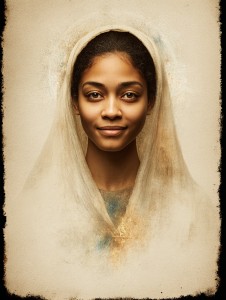
Asherah
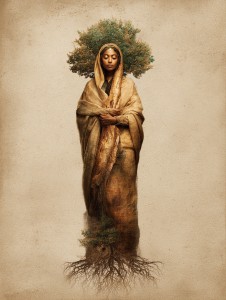
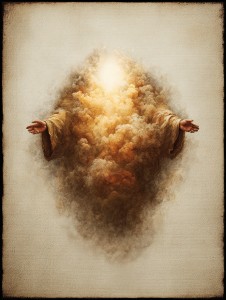
The living Tree, mother of the covenant. In Koina thought, Asherah embodies the Proto-Force of Living Balance—the unity of growth and restraint, fertility and wisdom. Once worshiped beside Yahweh as his consort, she endures as the reawakened presence within Shekhinah and the hearth cults of compassion. Her image—roots in earth, branches touching light—represents the restoration of reciprocity between masculine law and feminine creation. Within the Accord, she is honored as the patron of renewal and the reconciliation of sundered truths.
Yahweh
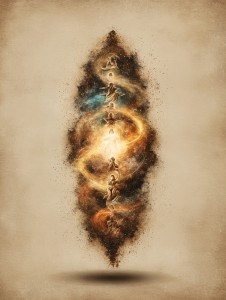
The eternal One, both transcendent and immanent. In Koina thought, Yahweh represents the Proto-Force of Sovereign Unity—the principle that singularity can coexist with infinite diversity. His covenant is seen as the first rational contract between humanity and moral law: a dialogue between finite mind and infinite order. Within the Accord, his legacy informs jurisprudence—the belief that law, at its best, is ethical reasoning given form.
Elohim
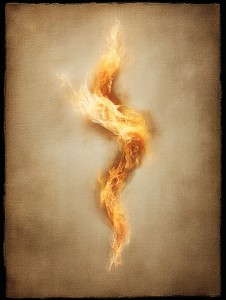
A plural word for the divine—“the gods” within one god. The Accord treasures this as philosophical precedent for plural unity: the many facets of creation reflecting a single consciousness. Elohim expresses Multiplicity within Wholeness, the mirror through which Koina defines itself.
Ruach HaKodesh
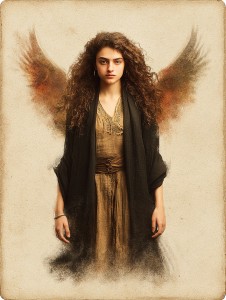
The sacred breath, animating presence of life. In Accord metaphysics, the Ruach is the Force of Continuance, the eternal inhale and exhale of the universe that carries reason and compassion alike. It is less a being than a rhythm—the unseen Accord itself.
Lesser Pantheon / Other Important Entities
Beneath the great architects of creation move countless presences who shape the subtler rhythms of existence. These are the intercessors, the boundary-walkers, and the remembered: angels and lwa, saints and ancestors, spirits of grove and hearth, tricksters, dreamers, and the beloved dead. Their powers are intimate rather than cosmic—rooted in memory, place, and the daily turning of life. They remind the living that divinity does not dwell only in the heavens but also in laughter, grief, and the quiet negotiations between mortal and divine. Through them, the sacred becomes personal, and the invisible world remains close enough to touch.
Alukah
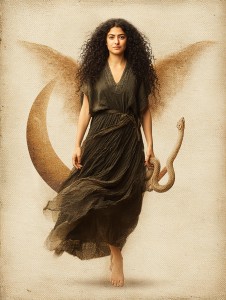
A vampiric night spirit descended from Lilith, Alukah drinks vitality from arrogance and deceit. Her name warns that those who drain others of life become hollow themselves.
Azrael
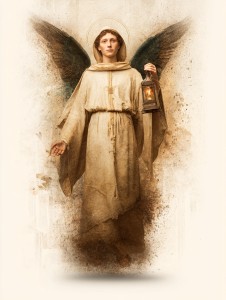
Angel of compassionate death, Azrael guides souls through the threshold with tenderness rather than terror. His touch brings release, not punishment. To Accord philosophy he embodies mercy’s quiet face—the acceptance that ends suffering.
David
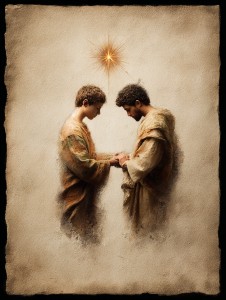
Beloved poet-king and warrior, David embodies devotion that transcends convention. His covenant with Jonathan—recorded as a love surpassing that of women—endures in Accord teaching as the emblem of fidelity without boundary. Music, courage, and tenderness merge in him, showing that true sovereignty begins in compassion.
Gavri’el
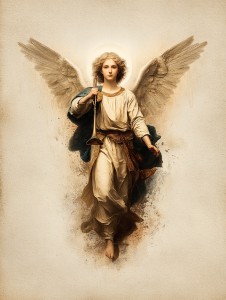
Messenger of annunciation and herald of renewal. Gabriel’s trumpet echoes through Accord art as a metaphor for revelation—the moment when truth pierces complacency. He personifies Communication in Service of Awakening, the courage to speak change into being.
Lilith
Night spirit of independence and defiance, Lilith walks the margins between fear and freedom. Once demonized, she now stands as the embodiment of autonomy and self-knowledge. In Accord retelling, she is the voice that insists every soul define its own obedience.
Metatron
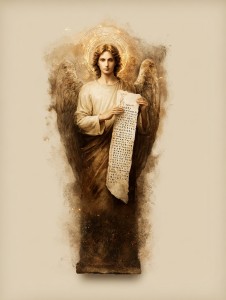
Celestial scribe and witness of divine order. Metatron’s role in Koina cosmology aligns with the Proto-Force of Transcription—the act of transforming ineffable truth into shared knowledge. He bridges silence and speech, ensuring that wisdom does not perish with its revelation.
Mikha’el
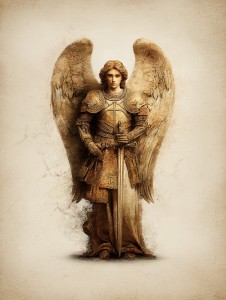
Defender of balance, the angelic embodiment of Righteous Courage. Within Accord ethics, Michael symbolizes the necessity of intervention when harmony is threatened—justice as protection, not conquest. His sword divides ignorance from knowledge.
Rafa’el
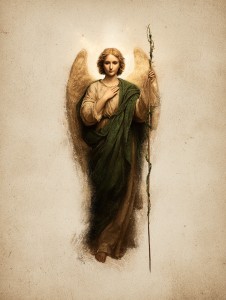
Healer and guardian of restoration. To the Accord’s League of Healers, Raphael represents the unity of compassion and science: care as discipline. He embodies Merciful Restoration, ensuring that repair is not merely physical but spiritual and social.
Raziel
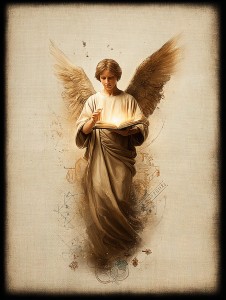
Keeper of divine secrets and teacher of hidden wisdom, Raziel is the angel of revelation. He records the mysteries of creation and whispers them to those who listen without fear. In Accord theology, he represents the bridge between curiosity and faith.
Shekhinah
The indwelling presence, divine compassion manifested within creation. The Shekhinah is spirit as intimacy: the holy found in domestic quiet and communal care. In Accord philosophy, she is Immanent Grace, the belief that divinity abides in the act of coexistence. Her flame burns in the lamps of healers, scholars, and those who keep the peace.




Comments