Kemetic / Egyptian (KEH-meh-tik reh-LIH-jun)
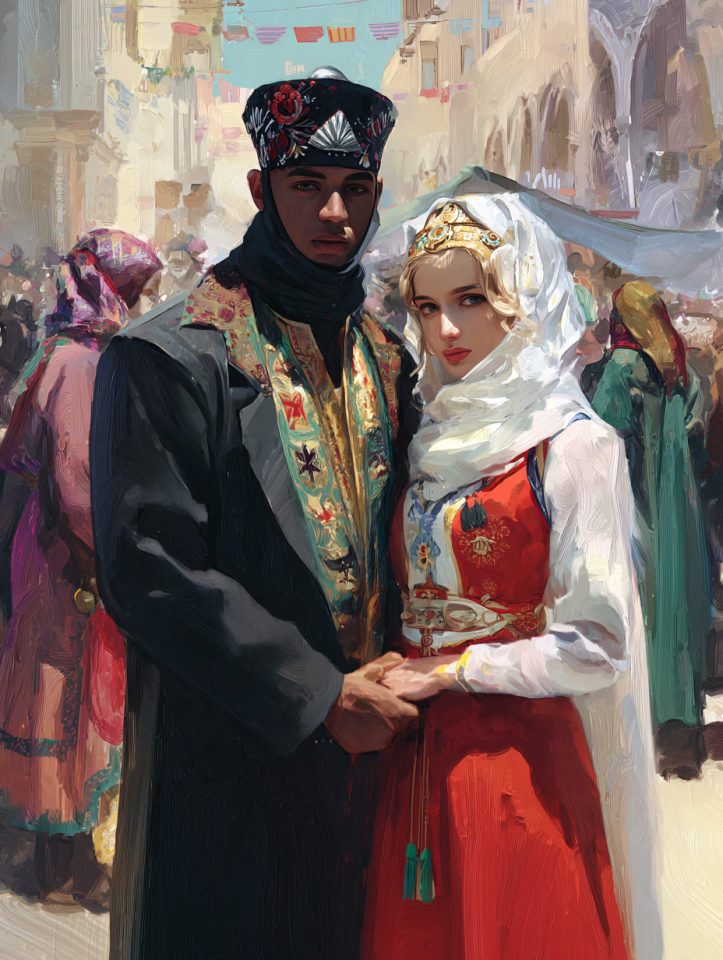
Kemetic religion is a polytheistic and animistic tradition — meaning it venerates many gods while also seeing natural forces (the Nile, the sun, the desert) as sacred presences. The gods, called Netjeru, represent cosmic principles such as order, fertility, wisdom, and death. Unlike monotheism (one god) or non-theism (no god), Kemetic religion embraces plurality, where each god expresses a vital aspect of the whole. Central is the principle of Ma’at — truth, balance, and harmony.
Origins & Historical Development
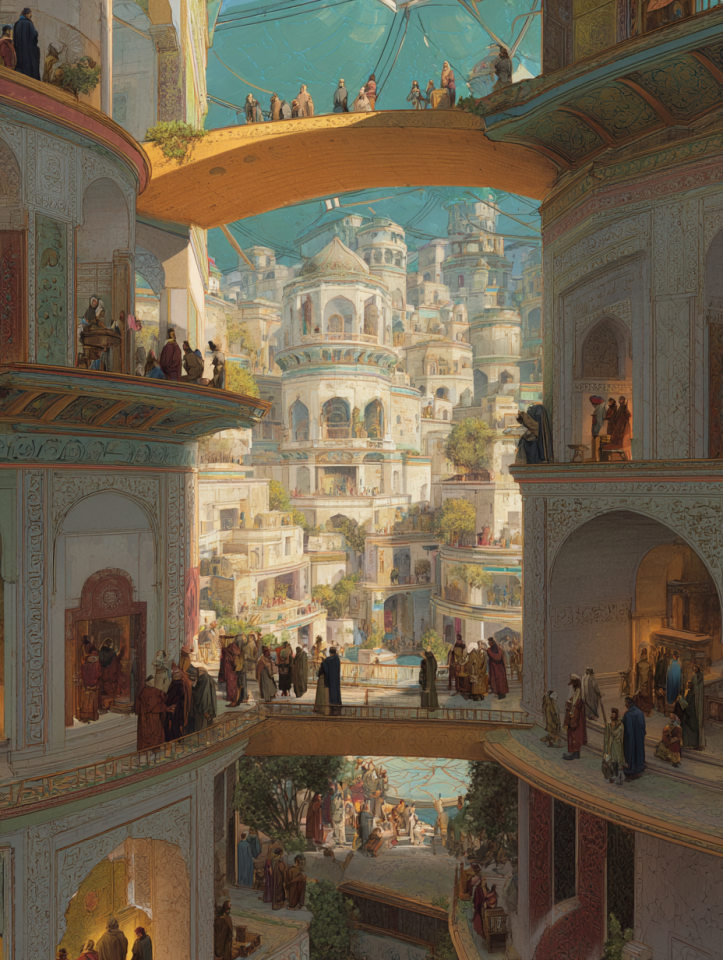
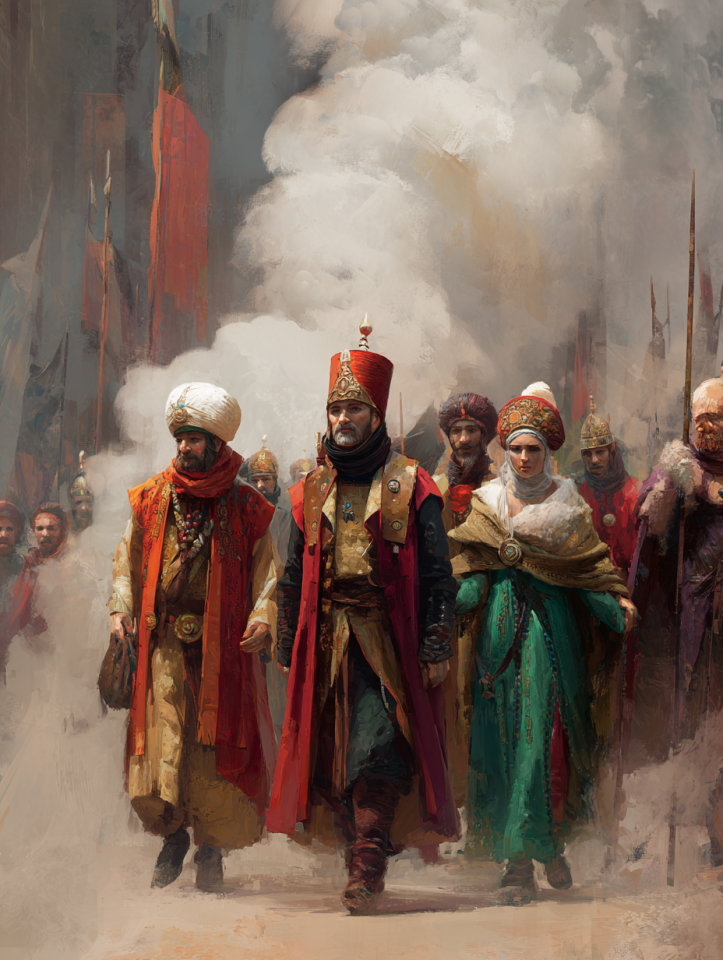
Kemetic religion arises in the Nile Valley, shaped by cycles of flood and harvest, life and death. In our history, it waned under Greco-Roman conquest and Christian suppression; in Koina’s divergence, with no Rome to impose imperial religion, it endures as a living tradition. Temples to Ra, Osiris, Isis, Hathor, and Thoth remain active into the present, evolving through Axumite and Nubian exchanges. The Nile–Red Sea Commonwealth sustains Kemetic religion as both civic and spiritual framework, making it a central tradition of African federations.
Core Beliefs & Practices
Kemetic belief emphasizes harmony with Ma’at, maintained through ritual, offering, and ethical living. Gods embody both cosmic and local roles: Ra as sun, Osiris as afterlife judge, Isis as healer and mother, Thoth as scribe and wisdom. Rituals include daily offerings in temples, festivals tied to agricultural cycles, and funerary rites ensuring the soul’s journey through the Duat. In Koina, these rites continue without suppression, adapted into federative life as public festivals and civic commemorations.
Sacred Texts & Traditions
Sacred texts include pyramid inscriptions, Coffin Texts, and the Book of the Dead — guides for the soul and records of ritual. In Koina, these texts are never lost but continuously copied, studied, and integrated into the Net of Voices. Priestly schools preserve not only ritual but also astronomical and medical knowledge. Kemetic cosmologies — creation from Nun, the weighing of the heart — remain core symbolic narratives, known across federations.
Institutions & Structure
Temples are the heart of Kemetic religion, staffed by priestly colleges trained in ritual, astronomy, and medicine. Pharaohs no longer exist, but local rulers and councils sponsor temple upkeep, ensuring integration with civic life. Priests rotate, mirroring the Accord’s Voices and Whispers model. Funerary guilds ensure burials, mummification, and ancestor rites continue as social duties. In Koina, temples remain public as well as sacred, often doubling as schools, clinics, and civic halls.
Relation to the Accord
Kemetic religion contributes to the Accord through its emphasis on Ma’at. Councils adopt Ma’at as a symbol of justice and balance, influencing federative law. Kemetic festivals, such as the Opet festival of renewal, become cross-cultural events, attracting pilgrims from across Africa and Asia. The imagery of Isis, Horus, and the Eye of Ra spreads widely, symbolizing resilience, protection, and wisdom.
Cultural Influence & Legacy
Kemetic art and architecture — pyramids, temples, hieroglyphs — remain living forms, not monuments of a dead past. Music, hymns, and ritual drama continue to shape cultural life. Kemetic medicine, astronomy, and calendar systems influence global knowledge traditions. Ethically, the weighing of the heart remains a powerful metaphor for accountability and justice across the Cooperative Federation.
Modern Presence
Today, Kemetic religion thrives throughout Egypt, Nubia, and the Nile–Red Sea Commonwealth, with temples active in every major city. Kemetic identity is not confined to ethnicity; many across federations align with its devotion to Ma’at and its pantheon of gods. Its festivals are global celebrations of renewal, harvest, and cosmic order. In the Cooperative Federation, Kemetic religion is a proud, continuous faith — one that never fell into ruins, but endured as a guiding light of African spirituality.
Type
Religious, Organised Religion
Alternative Names
Religion of Kemet; Netjerism
Demonym
Kemetics
Afterlife
Kemetic Afterlife
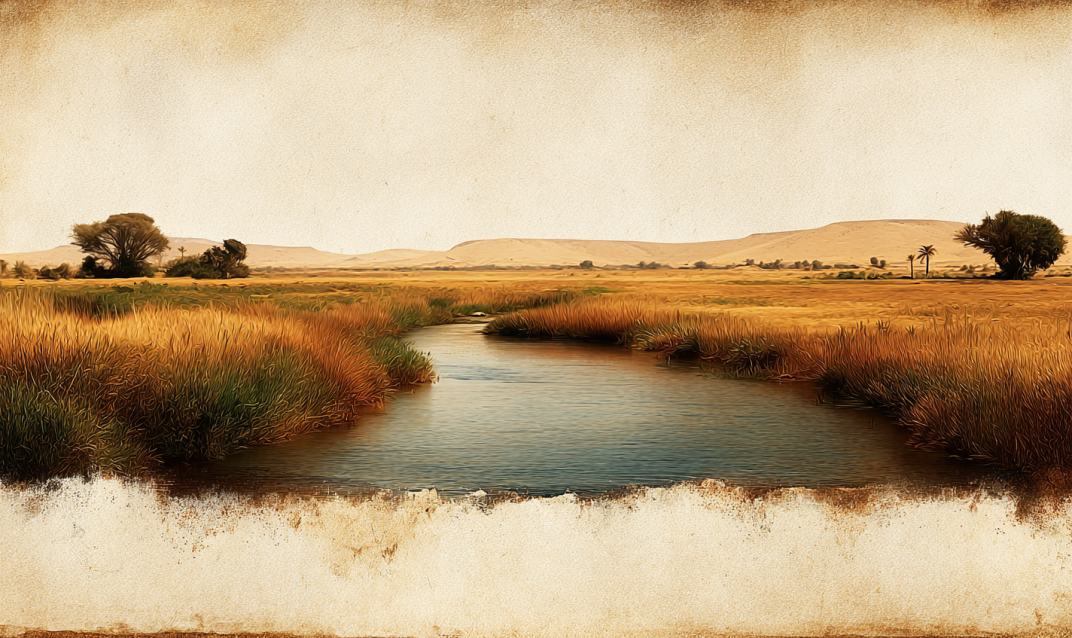
The Egyptian soul who lived by Ma’at’s truth passes the weighing of the heart and walks into Aaru, the Field of Reeds — a perfected Egypt of endless harvest and tranquil waters. Life continues in harmony, rich with reunion and serenity.
Kemetic Afterlife
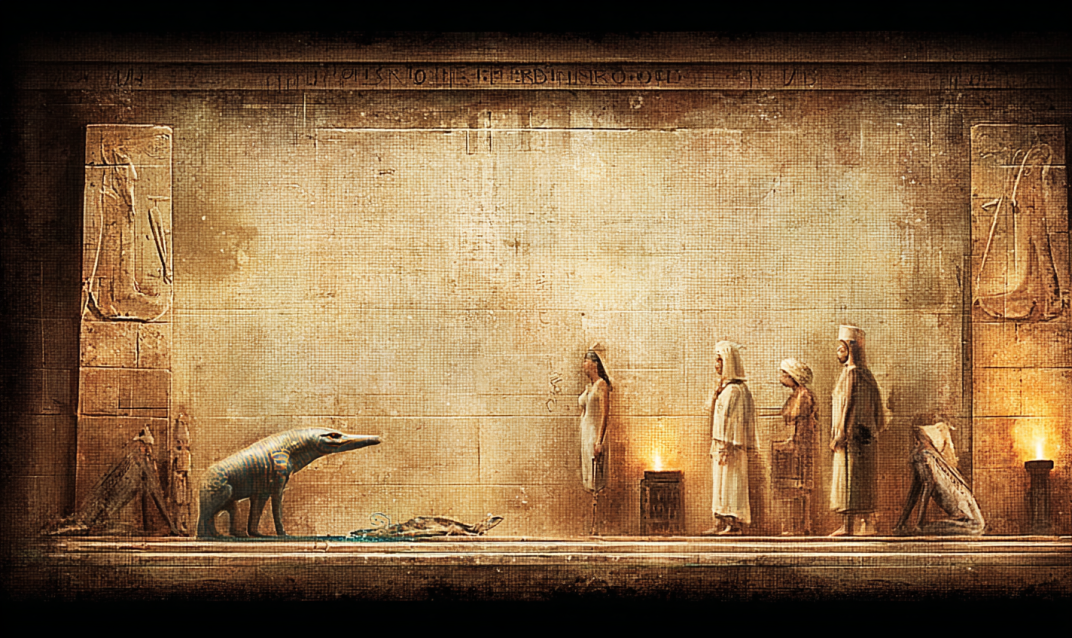
Those whose hearts weigh heavy with deceit face Ammit, the devourer. Yet even this is not eternal pain: the unworthy are dissolved into the cosmic current, their essence reabsorbed into the balance they defied, becoming raw matter for new creation.
Pantheon of Worship
The following entries offer only a partial glimpse into the living mosaic of belief. Across the federations and the Free-States alike, divinity takes many forms: anthropomorphic gods, elemental forces, moral principles, ancestral spirits, and philosophical ideas. None of these lists are exhaustive, nor do they presume uniform worship or singular interpretation. Over millennia of dialogue and migration, names have changed, stories have merged, and meanings have diverged—each person, community, and age reshaping the sacred to mirror its own understanding. Within the Accord, faith is treated not as doctrine but as conversation: these are simply the primary voices that endure within that vast and ever-evolving chorus that lies within each individual.
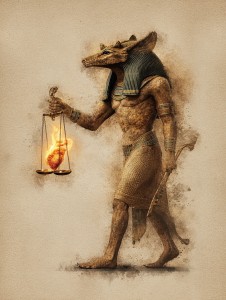
Anubis
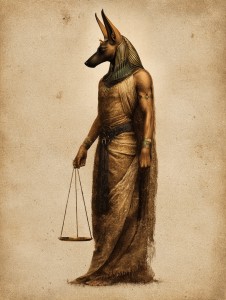
Guide of souls, master of rites. Anubis stands for Dignity in Passage—the recognition that death is a civic as well as spiritual duty. His calm judgment at the scales mirrors Accord jurisprudence: balance over condemnation.
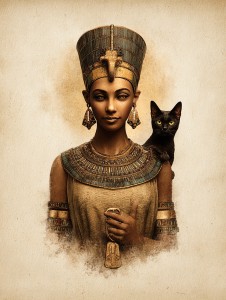
Bastet
Guardian of the home and embodiment of protective grace. Bastet represents Gentle Vigilance, strength expressed through care. Her feline calm pervades Koina domestic shrines as emblem of serenity sustained by alertness.
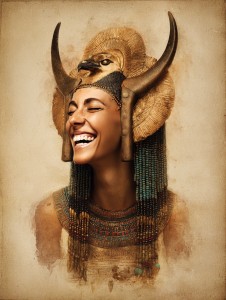
Hathor
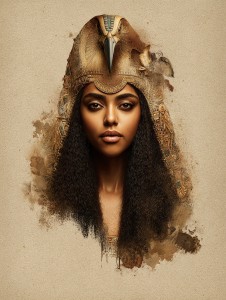
Joy, music, and the divine feminine of welcome. Hathor radiates Harmony through Delight, the reminder that pleasure and compassion are siblings, not opposites. Her image adorns festival halls where diplomacy is sealed in shared celebration.
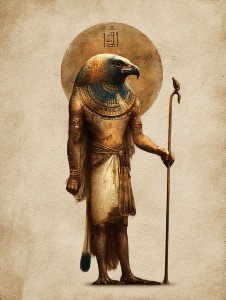
Horus
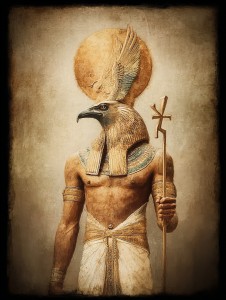
The falcon-eyed heir, symbol of vision and rightful leadership. Horus personifies Clarity through Succession, the passing of power without corruption. His gaze—keen, far-seeing—guides the Accord’s ideal of stewardship: leadership as watchfulness rather than domination.
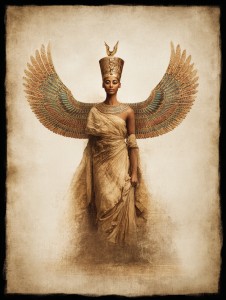
Isis
Goddess of devotion and magical restoration. In the Accord’s canon she stands as the archetype of Faithful Knowledge—love expressed as disciplined healing. Isis bridges intellect and empathy, teaching that true mastery of power lies in compassion and remembrance. Her mythic search for Osiris mirrors the Accord’s own pursuit of unity through loss.
Khonsu
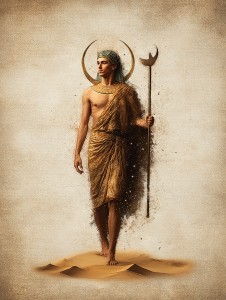
The youthful lunar god and traveler, Khonsu measures time through his luminous journey across the night sky. Patron of healing and safe passage, he represents the cyclical rhythm of return. In Accord reading, he is the spirit of travelers who never lose their way home.
Nephthys
Protector of thresholds and guardian of the forgotten. Nephthys embodies Silent Service, the care that sustains harmony unseen. She is patron of those who tend the dying, record the nameless, or keep vigil at society’s edges—devotion without demand for recognition.
Osiris
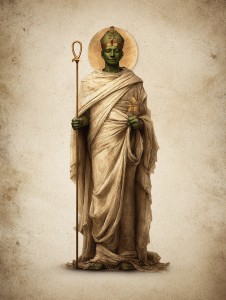
Lord of fertility and the just afterlife, Osiris represents resurrection as governance. He embodies Order Reborn, showing that moral civilization arises when compassion reclaims decay. Accord councils invoke his name when discussing restorative justice—the transformation of death into instruction.
Ra
Solar creator and sustainer, Ra is the eternal cycle made visible. In Koina understanding he is not simply a sun god but the consciousness of continuity—the Proto-Force of Perpetual Renewal. His daily voyage across the heavens and through the underworld is the rhythm by which all ordered systems model themselves: rise, illuminate, descend, return. Every act of restoration in the Accord echoes Ra’s journey through shadow to dawn.
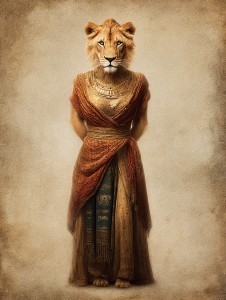
Sekhmet
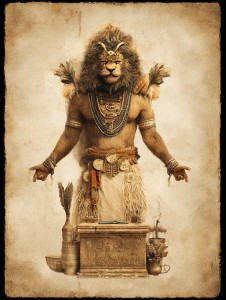
Lioness of righteous wrath, medicine, and transformation. In the Accord she personifies Purifying Fire—the power that burns corruption but also cauterizes wounds. Physicians and reformers invoke her as reminder that healing sometimes requires ferocity.
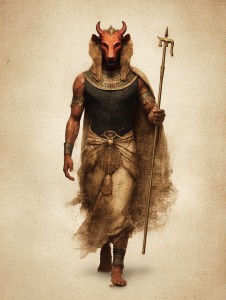
Set
Force of storm, desert, and necessary disruption. Set is neither demon nor enemy; within Koina philosophy he is Catalyst through Opposition. Every federation honors him quietly, acknowledging that challenge sharpens reason and that chaos, when faced honestly, protects balance from stagnation.
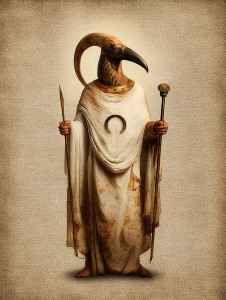
Thoth
Scribe of the gods, keeper of language and measure. To the Accord, Thoth is the origin of all scholarship: Reason Made Ritual. His ibis quill symbolizes the act of translating mystery into knowledge. Every Archive and Observatory honors him as patron of precision and humility.
Lesser Pantheon / Other Important Entities
Beneath the great architects of creation move countless presences who shape the subtler rhythms of existence. These are the intercessors, the boundary-walkers, and the remembered: angels and lwa, saints and ancestors, spirits of grove and hearth, tricksters, dreamers, and the beloved dead. Their powers are intimate rather than cosmic—rooted in memory, place, and the daily turning of life. They remind the living that divinity does not dwell only in the heavens but also in laughter, grief, and the quiet negotiations between mortal and divine. Through them, the sacred becomes personal, and the invisible world remains close enough to touch.
Ammut
The Devourer of the Dead—part crocodile, lion, and hippopotamus—Ammut consumes hearts heavier than truth. She is fear made sacred: the price of imbalance.
Bes
Guardian of the hearth, laughter, and childbirth, Bes wards off fear through joy. A dwarf-like god with lion’s face and fierce grin, he turns away malevolent forces simply by existing without shame. Within Accord philosophy, he personifies protection through mirth—the wisdom that even small kindness can drive out darkness.




Comments