

Christianity (KRIS-chən-ity)
The Christian Schools began in the fourth century with the household of Yeshua ben Yosef (Jesus) of Nazareth, remembered as the Voice of Compassion. Born into a Judean artisan family, he traveled the caravan routes of Koina, learning from Jewish tradition while engaging with Stoic, Persian, and Buddhist teachers. His teachings called for forgiveness, harmony, and compassion lived through family and community.
With his wife Mary of Magdala, the Whisper of Endurance, and a circle of siblings, companions, and students, Yeshua’s household became the first Christian School. Their voices carried his parables and practices into guilds, assemblies, and councils. Rather than forming an empire of doctrine, the Christian Schools emerged as paths of compassion, justice, humility, and service — strands woven into Koina’s federations, enduring not through conquest but through the lived balance of covenant.
Origins & Historical Development
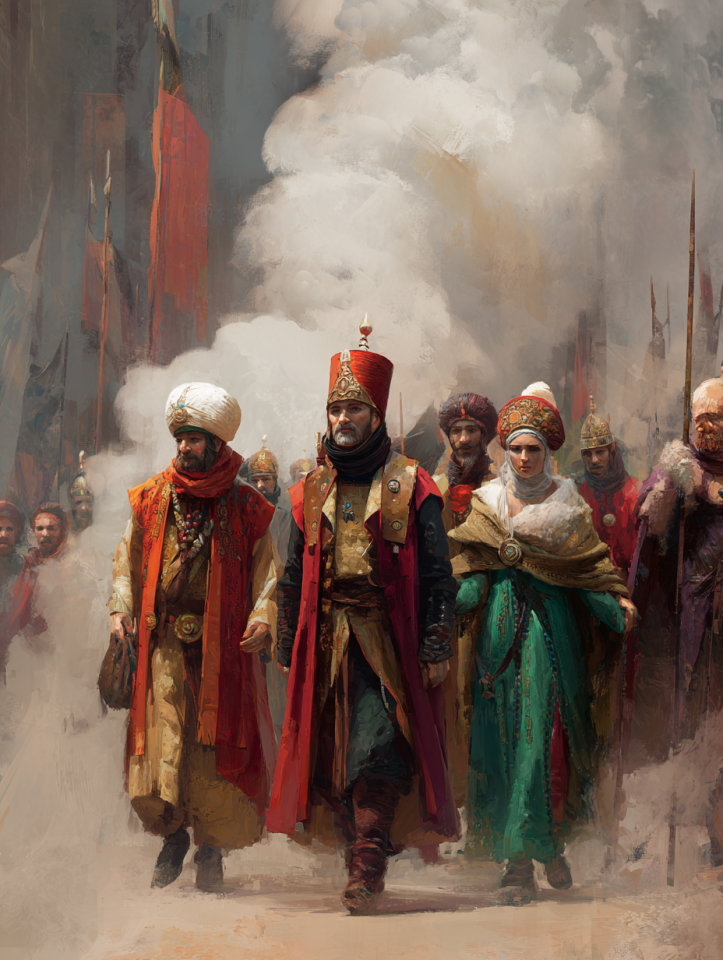
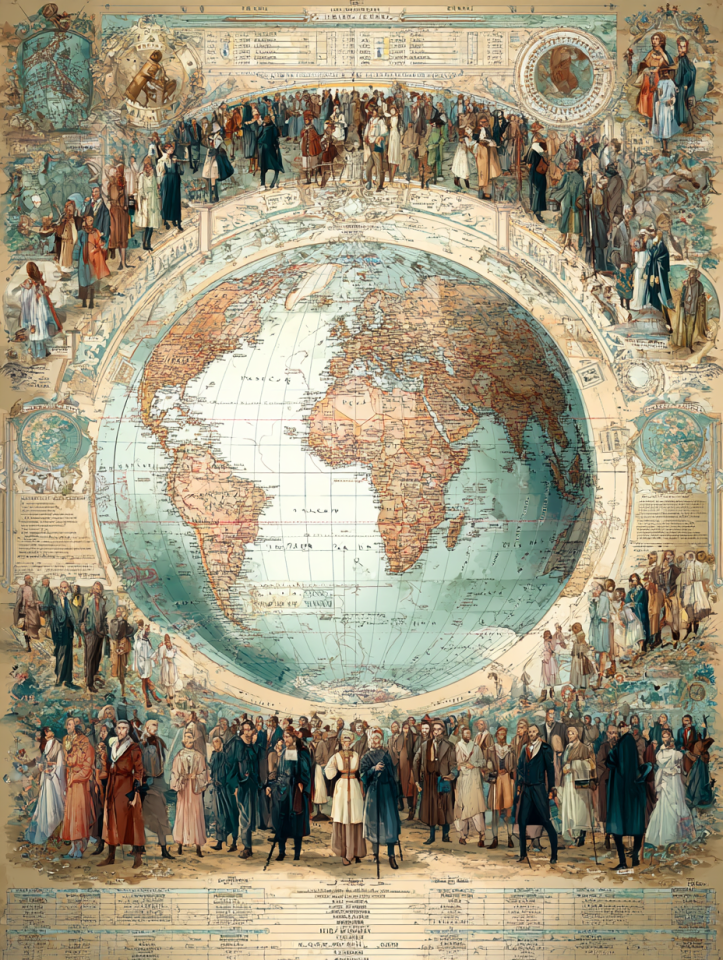
Yeshua ben Yosef is remembered as a Jewish reformer and teacher who emphasized love, forgiveness, and humility. His followers form communities across Judea and beyond, but these never become a persecuted underground nor a state religion. Without Rome’s empire, there is no machinery to impose orthodoxy, no councils defining heresy, no centuries of theological monopoly. Instead, Christian communities remain plural, adopting the federative model of Koina and aligning with local traditions.
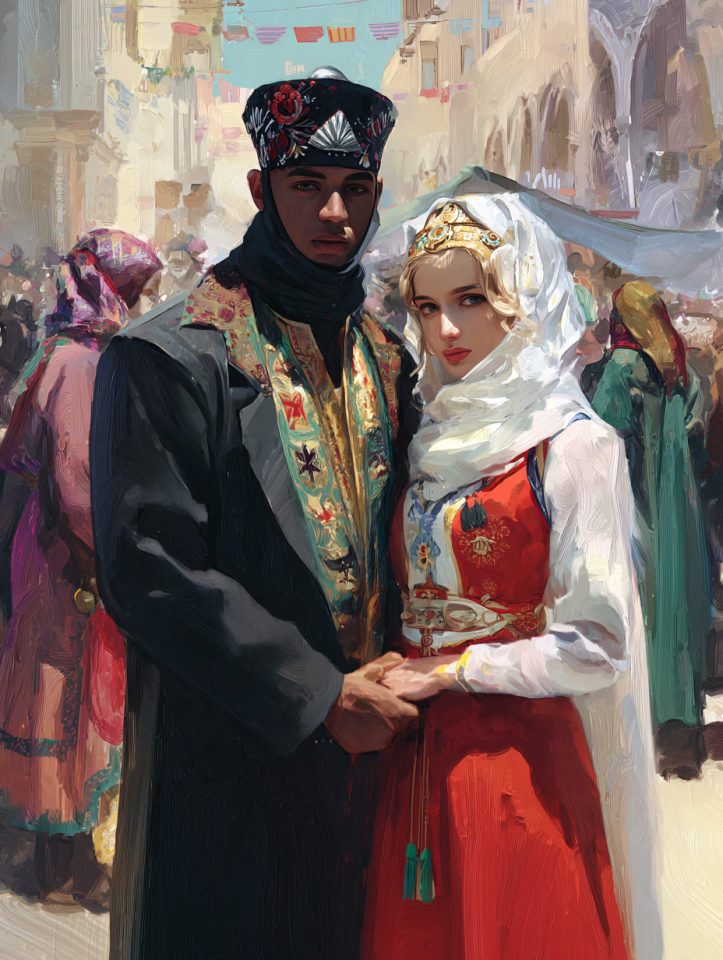
This circle consisted of Yeshua’s own family — his wife Mary of Magdala, his brothers Yaakov, Yeshuda, and Skimon, and his sisters Miriam and Salome. Their presence grounded the School in lived covenant: marriage, children, siblings, and household life were not obstacles to faith but its very foundation. Each carried forward a principle rooted in family practice — endurance, justice, humility, reasoned faith, nurture, and continuity — making the household itself the first academy of compassion.
Drawn from the lakeside guilds of Galilee, the Fishermen Circle represented courage, generosity, and inquiry. Shimon, Andrew, and Philip embodied the ethos of the working guilds: practical men whose daily labor shaped their understanding of covenant. Their voices ensured that the School remained accessible to artisans, traders, and those whose lives revolved around the shared waters of Galilee.
The Younger Circle included Yohanan, Mattityahu, and Toma — figures remembered for love, integrity, and wisdom through doubt. They were not tied to household or trade as strongly as others, but brought sharpness of thought, devotion of heart, and the questioning spirit that pushed parables into deeper meaning. They represented the School’s more reflective, meditative strand, linking it to wider philosophical traditions in the Persic and Hellenic assemblies.
Formed by Mary and Martha, this circle was anchored in devotion and service. Their household near Jerusalem became a gathering place where Yeshua and his companions found welcome. Through them, the School preserved the understanding that philosophy must be lived not only in teaching or meditation, but in acts of care, labor, and presence. Their principles shaped the School’s rituals of hospitality, meals, and household balance.
Original Structure
The Household Circle:
Mary of Magdala, Yaakov ben Yosef(James), Yehudah ben Yosef (Jude), Shimon ben Yosef (Simon the Twin), Miriam bat Yosef, Salome bat Yosef.This circle consisted of Yeshua’s own family — his wife Mary of Magdala, his brothers Yaakov, Yeshuda, and Skimon, and his sisters Miriam and Salome. Their presence grounded the School in lived covenant: marriage, children, siblings, and household life were not obstacles to faith but its very foundation. Each carried forward a principle rooted in family practice — endurance, justice, humility, reasoned faith, nurture, and continuity — making the household itself the first academy of compassion.
The Fishermen Circle:
Shimon Kepha (Peter), Andrew, Philip.Drawn from the lakeside guilds of Galilee, the Fishermen Circle represented courage, generosity, and inquiry. Shimon, Andrew, and Philip embodied the ethos of the working guilds: practical men whose daily labor shaped their understanding of covenant. Their voices ensured that the School remained accessible to artisans, traders, and those whose lives revolved around the shared waters of Galilee.
The Younger Circle:
Yohanan (John), Mattityahu (Matthew), Toma Didymos (Thomas).The Younger Circle included Yohanan, Mattityahu, and Toma — figures remembered for love, integrity, and wisdom through doubt. They were not tied to household or trade as strongly as others, but brought sharpness of thought, devotion of heart, and the questioning spirit that pushed parables into deeper meaning. They represented the School’s more reflective, meditative strand, linking it to wider philosophical traditions in the Persic and Hellenic assemblies.
The Bethany Circle:
Mary of Bethany, Martha of Bethany.Formed by Mary and Martha, this circle was anchored in devotion and service. Their household near Jerusalem became a gathering place where Yeshua and his companions found welcome. Through them, the School preserved the understanding that philosophy must be lived not only in teaching or meditation, but in acts of care, labor, and presence. Their principles shaped the School’s rituals of hospitality, meals, and household balance.
Core Beliefs & Practices
From Yeshua’s household and Whispers emerged several enduring lineages, each carrying forward a principle of his teaching into councils and communities.
The School of Compassion — Guided by Mary of Magdala and John, this School emphasized forgiveness, love, and the kingdom of balance within each heart.
The School of Justice — Shaped by James and Jude, it taught that covenant is preserved through fairness, humility, and restoration in community life.
The School of Reasoned Faith — Inspired by Simon the Twin and Thomas, this School affirmed that inquiry and doubt refine truth, making faith durable.
The School of Service — Rooted in the example of Martha and Andrew, it emphasized devotion through daily labor, generosity, and hospitality.
Together, these Schools became known collectively as the Christian tradition — not a doctrine of empire, but a family of paths in which compassion, justice, faith, and service wove together as living covenant in Koina.
Sacred Texts & Traditions
The Gospels and early letters circulate widely, but they are read alongside Jewish scripture and Greek philosophical texts. Without imperial canonization, multiple gospel traditions remain in use — Matthew, Mark, Luke, John, Thomas, Mary, and others. Rather than heresy, diversity of text is seen as richness. Commentaries by local Christian teachers are preserved in the Net of Voices, shaping regional schools of practice rather than a single creed.
Institutions & Structure
Christian communities are organized as fellowships rather than hierarchical churches. Elders, teachers, and healers guide practice, but councils maintain oversight. There is no papacy, no centralized authority. Instead, federations recognize Christian schools as philosophical guilds, similar to Stoic or Buddhist schools. This keeps Christianity woven into civic life while preventing it from dominating or marginalizing others.
Relation to the Accord
Christianity thrives as one of many traditions within the Cooperative Federation. Its emphasis on compassion and forgiveness harmonizes with Koina’s restorative justice, and Christian healers are highly respected in the League of Healers & Watchmen. Rather than seeing itself as the sole truth, Christianity frames itself as one school of the Anointed, a path of moral discipline and community belonging.
Cultural Influence & Legacy
Christian hymns and festivals become part of the plural rhythm of civic life. Seasonal celebrations of birth, death, and resurrection are shared across communities, even by non-Christians, as symbols of renewal. Christian storytelling — the Good Samaritan, the Prodigal Son, the Sermon on the Mount — infuses broader Koina ethics with metaphors of humility, mercy, and love.
Modern Presence
Today, Christianity exists as a mosaic of schools: Compassionate, Forgiving, Enduring, and others. Adherents may align with multiple schools, blending practice with Jewish, Stoic, or Buddhist paths. Christianity is not a dominant world religion but a resonant tradition, valued for its contributions to ethics, music, healing, and communal life. It is a faith of plurality — never universal, never persecuted, but fully present in the cooperative chorus of Koina.

Founding Date
312 zc
Type
Religious, Other
Alternative Names
The Schools of the Anointed / Christian Paths
Demonym
Christians
Leader
Founders
Subsidiary Organizations
The Christian Way
Non-Koina specific - Un-Romanized Teachings from the Bible




Comments