Vodun (VOH-doon)
Vodun is a polytheistic and animistic religion — venerating many spirits (Loa) associated with natural forces, ancestors, and human conditions. Polytheism here refers to honoring multiple Loa such as Legba (guardian of thresholds), Danbala (serpent of creation), and Ezili (love and motherhood). Animism means rivers, forests, and ancestors are living presences that participate in ritual life. Unlike monotheism, which emphasizes a single universal god, Vodun is relational, weaving human and spirit communities together.
Origins & Historical Development
Vodun originates among the Fon and Ewe peoples of West Africa, centered in present-day Benin, Togo, and Ghana. In our history, it was fragmented and carried to the Americas through enslavement, merging into diasporic traditions. In Koina’s divergence, with no Atlantic slave trade and no colonial suppression, Vodun develops continuously as a respected federative tradition. It spreads through trade, cultural exchange, and pilgrimage, forming guilds of healers, drummers, and diviners that integrate with local councils.
Core Beliefs & Practices
Central to Vodun is the relationship between humans and the Loa, mediated by ritual, song, and possession. Olodumare (supreme source) is acknowledged but distant, while Loa embody daily forces of life. Rituals involve drumming, dance, offerings of food and drink, and possession ceremonies where Loa speak through devotees. Ancestor veneration ensures continuity of lineage, while protective charms (gris-gris) and healing rites safeguard communities. Festivals often center on drumming circles and processions, celebrated as federative events in Koina cities.
Sacred Texts & Traditions
Vodun is primarily oral, transmitted through chants, proverbs, and initiation lineages. Myths of creation, serpent symbolism, and ancestral guardianship are preserved in ritual performance. In Koina, priestly guilds record these oral traditions into the Net of Voices, ensuring preservation without diminishing the importance of live performance. Knowledge remains layered: initiates learn through experience, while communities participate in public rituals.
Institutions & Structure
Vodun authority rests with priests and priestesses (bokonon and mambo), who conduct divination, healing, and ceremonies. Temples (hounfò) are community centers with altars to multiple Loa. In Koina, Vodun federations organize guilds of diviners and healers, ensuring their authority is recognized in civic assemblies. Possession rituals are civic as well as religious, treated as public forums where community and spirit deliberate together.
Relation to the Accord
Vodun contributes to the Accord by emphasizing interconnectedness. Its ecological reverence aligns with federative environmental policies, treating rivers and forests as sacred commons. Its diviners and healers contribute to the League of Healers & Watchmen, while its emphasis on spirit possession informs Accord philosophy of participatory voice — seeing truth as emerging through multiple speakers, human and divine alike.
Cultural Influence & Legacy
Vodun art, drumming, and dance enrich global culture. Ritual masks, serpent motifs, and drumming ensembles influence theater and music across federations. Ethically, Vodun reinforces values of reciprocity, community protection, and honoring ancestors. Its imagery — serpents, crossroads, veves (ritual symbols) — becomes recognizable across Koina, carrying meanings of balance, guidance, and transformation.
Modern Presence
Today, Vodun thrives in West Africa and diaspora communities across the western continents and Europe, spread through voluntary migration and cultural exchange rather than forced dispersal. Temples and drumming festivals are celebrated internationally, drawing participants beyond the Vodun community. Far from stigmatized, Vodun is recognized as a living, vibrant faith of spirit and community — one that embodies Koina’s ethos of plurality, ecology, and balance.
Type
Religious, Organised Religion
Alternative Names
Vodou; Vodu; Faith of the Loa
Demonym
Vodunsi (initiates) / Vodun practitioners
Related Myths
Afterlife
Vodun Afterlife
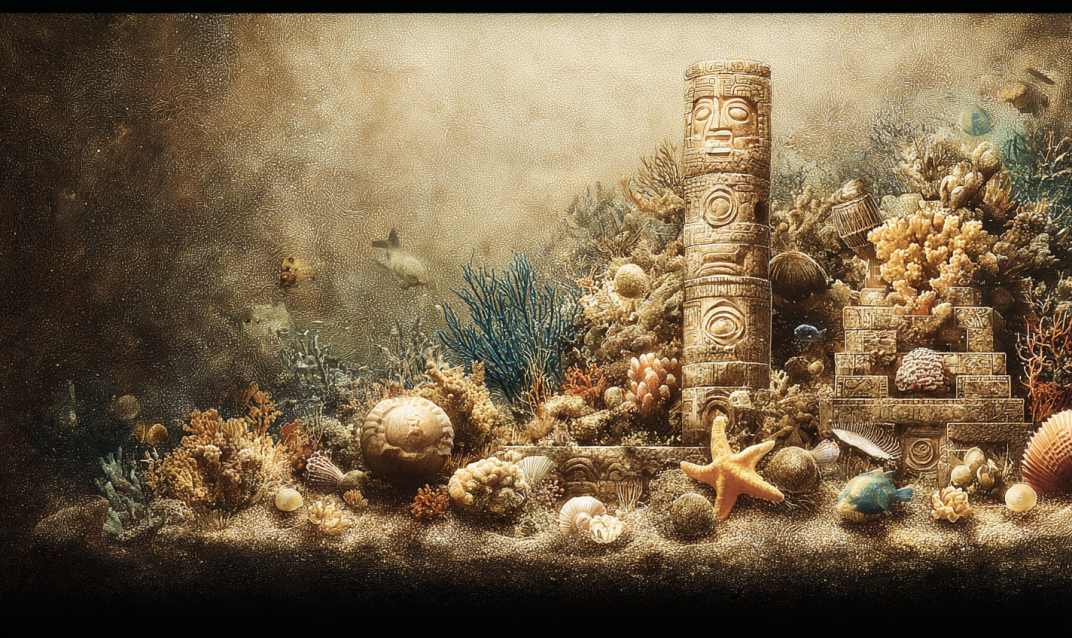
The fulfilled spirit merges with Ginen, the sacred realm beneath the sea. There it joins the ancestral assembly, surrounded by song, water, and drums — peace through unity and continuity.
Vodun Afterlife
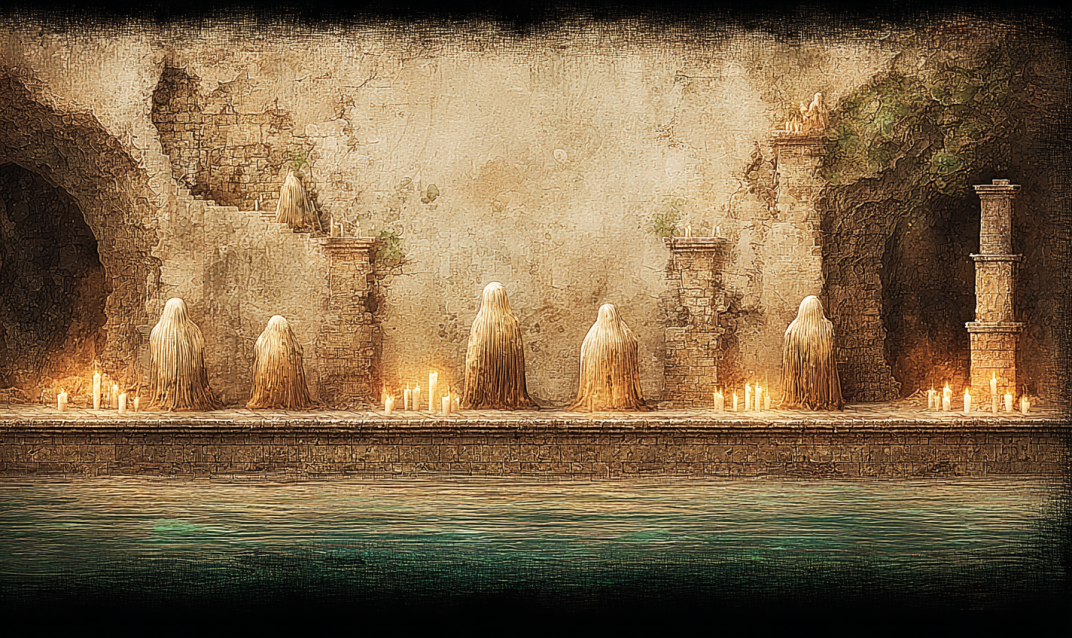
The unhonored remain near the shore as zonbi, not wicked but unfinished. They await the ceremonies that will release them to Ginen, longing for remembrance and completion.
Pantheon of Worship
The following entries offer only a partial glimpse into the living mosaic of belief. Across the federations and the Free-States alike, divinity takes many forms: anthropomorphic gods, elemental forces, moral principles, ancestral spirits, and philosophical ideas. None of these lists are exhaustive, nor do they presume uniform worship or singular interpretation. Over millennia of dialogue and migration, names have changed, stories have merged, and meanings have diverged—each person, community, and age reshaping the sacred to mirror its own understanding. Within the Accord, faith is treated not as doctrine but as conversation: these are simply the primary voices that endure within that vast and ever-evolving chorus that lies within each individual.
Ayida-Weddo
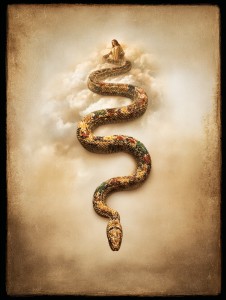
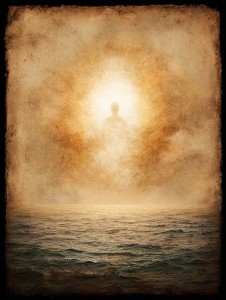
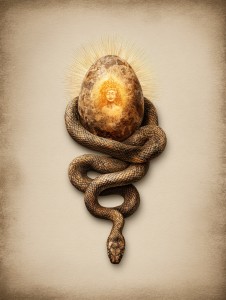
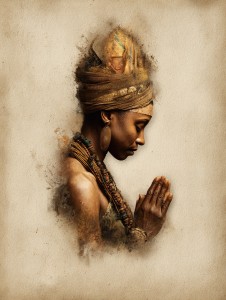
Rainbow serpent and consort of Damballa, uniting heaven and earth. She personifies Balance through Connection—emotion meeting intellect, sky mirrored in sea. Her arc in the sky is the Accord’s oldest metaphor for synthesis: beauty as covenant between opposites.
Bondye
The distant creator, source of all life but not its micromanager. In Accord philosophy, Bondye reflects the Proto-Force of Detached Benevolence—divinity as origin that trusts creation to sustain itself. He is not worshiped directly but through his intermediaries, a cosmic decentralization that parallels the Accord’s own governance: authority dispersed through trust rather than hierarchy.
Damballa
The serpent of creation and peaceful renewal. Damballa embodies Order through Continuity, life’s unbroken spiral. In Accord cosmology, his coils encircle the world as symbol of permanence sustained by motion. His silence teaches patience: the power of calm that underlies all transformation.
Lesser Pantheon / Other Important Entities
Beneath the great architects of creation move countless presences who shape the subtler rhythms of existence. These are the intercessors, the boundary-walkers, and the remembered: angels and lwa, saints and ancestors, spirits of grove and hearth, tricksters, dreamers, and the beloved dead. Their powers are intimate rather than cosmic—rooted in memory, place, and the daily turning of life. They remind the living that divinity does not dwell only in the heavens but also in laughter, grief, and the quiet negotiations between mortal and divine. Through them, the sacred becomes personal, and the invisible world remains close enough to touch.
Baron Samedi
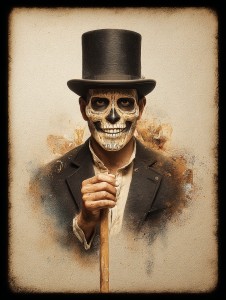
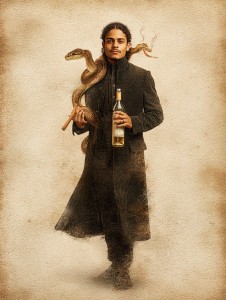
Lord of the dead and master of irreverent wisdom. The Baron represents Truth through Mortality—humor in the face of endings, dignity unafraid of decay. Accord healers and philosophers alike honor him as keeper of perspective, reminding that death, too, is part of the cooperative cycle.
Erzulie
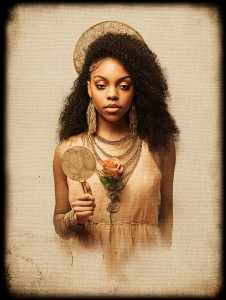
Spirit of love, beauty, and human longing. Erzulie is Compassion in Motion, the divine vulnerability that reminds reason to feel. Her tears sanctify desire, making affection a moral force. Within the Accord, she is invoked where empathy and aesthetics meet—art as care, love as justice.
Gede Nibo
Spirit of the young dead and patron of love without shame. Once a mortal youth, Gede Nibo was raised among the Barons after a violent death moved even the keeper of graves to pity. His laughter bridges the living and the dead; his mirror reveals truth without judgment. He appears in violet and black, crowned with butterflies of smoke, carrying a mirror and cigarette, dancing at the threshold where sorrow turns to joy.
Maman Brigitte
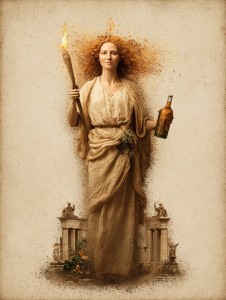
Guardian of graves and protector of women, Maman Brigitte walks the line between mourning and laughter. With flame-colored hair and rum in hand, she brings dignity to death and ferocity to love.
Marinette-Bwa-Chech
Wild spirit of the forest and night; rides the disobedient in dreams until they confess. Her laughter both terrifies and cleanses.
Ogoun
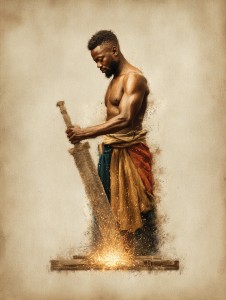
Patron of iron, strength, and technology. Ogoun embodies Labor as Liberation, the belief that creation and craftsmanship are paths to freedom. He is venerated by the Builders’ Guild as the spirit who welds force to purpose, passion to precision. His fire is that of progress guided by conscience.
Papa Legba
Guardian of thresholds, translator between worlds, and opener of ways. To the Accord, he represents Communication as Access—the sacred duty to make understanding possible. Every dialogue, every bridge between cultures, bears his spirit. He stands at every crossroads of language, embodying the Accord’s conviction that truth exists only when it can be shared.




Comments