Mexica / Aztec (MEH-shee-kah / AZ-tek)
Mexica religion is a polytheistic and cosmological tradition — venerating many gods tied to natural forces, war, fertility, and cosmic cycles. Polytheism means devotion to deities like Huitzilopochtli (sun and war), Tlaloc (rain), Quetzalcoatl (wisdom, wind), and Coatlicue (earth mother). It is also cosmological, meaning it interprets existence through cycles of creation and destruction — the “Five Suns” being successive worlds, each ending in cataclysm and renewal.
Origins & Historical Development
In our history, the Mexica Empire (Aztec) rose and fell under Spanish conquest. In Koina’s divergence, with no European colonization, Mexica religion develops continuously, evolving from city-state temples into federative councils of priests, astronomers, and philosophers. Without conquest, human sacrifice remains, but it shifts in meaning: smaller, symbolic offerings replace large-scale rites, integrated into festivals of renewal. Over time, the Mexica faith becomes one of the guiding spiritual forces of the Meso Leagues, shaping ecological and civic philosophy.
Core Beliefs & Practices
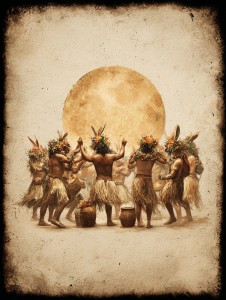
Mexica cosmology teaches that gods sacrificed themselves to create the world; humans must reciprocate through offerings to sustain cosmic balance. Rituals include bloodletting, food offerings, music, and dance. Gods embody dual aspects — benevolent and fearsome — reflecting the balance of life and death. Festivals mark agricultural cycles, solar events, and civic rites of renewal. In Koina, these festivals become federative celebrations where ritual drama, astronomy, and ecological stewardship intertwine.
Sacred Texts & Traditions
Codices — pictorial manuscripts recording myths, genealogies, and rituals — preserve Mexica traditions. In Koina, these codices are never burned but digitized into the Net of Voices, ensuring preservation of mythic cycles. Oral traditions — songs, chants, and ritual speeches — remain central, performed at temples and festivals. The myth of the Five Suns and the feathered serpent Quetzalcoatl becomes widely known across federations, inspiring global philosophical dialogue about cycles of time.
Institutions & Structure
Temples (teocalli) anchor each city, staffed by priests, astronomers, and ritual specialists. Priests oversee daily offerings and festivals, while astronomers track calendars and celestial events. In Koina, priestly guilds integrate into civic assemblies, ensuring ritual and governance remain intertwined. Education, particularly in astronomy and ritual philosophy, is a major civic duty, training generations in both science and religion.
Relation to the Accord
Mexica religion contributes to the Accord through its ecological and cosmic outlook. Its emphasis on reciprocity between gods and humans aligns with federative principles of reciprocity between communities. Its calendrical and astronomical expertise strengthens global science, feeding into cooperative observatories. Festivals of renewal — where cosmic cycles are ritually reenacted — become major cross-cultural events, reinforcing Accord values of continuity and balance.
Cultural Influence & Legacy
Mexica art — featherwork, sculpture, codices — flourishes, influencing global aesthetics. Architecture, with pyramid temples and ceremonial plazas, becomes part of Meso civic design. Philosophically, Mexica thought on cycles of destruction and renewal contributes to Koina’s plural cosmology, resonating with Indic and Norse ideas of cyclical time. Ethically, the emphasis on sacrifice and reciprocity informs federative law on duty, responsibility, and shared burden.
Modern Presence
Today, Mexica religion thrives in Mexico and across the Meso Leagues. Temples and festivals remain central to civic life, with rituals adapted to modern contexts. Pilgrimages to sacred sites like Tenochtitlan, Cholula, and Teotihuacan draw participants from across the Cooperative Federation. Mexica spirituality stands not as a defeated past but as a continuous, evolving tradition — one that affirms cosmic reciprocity and the shared responsibility of sustaining balance in the world.

Type
Religious, Organised Religion
Alternative Names
Mexica Faith; Nahua Religion
Demonym
Mexica / Nahua Peoples
Related Myths
Afterlife
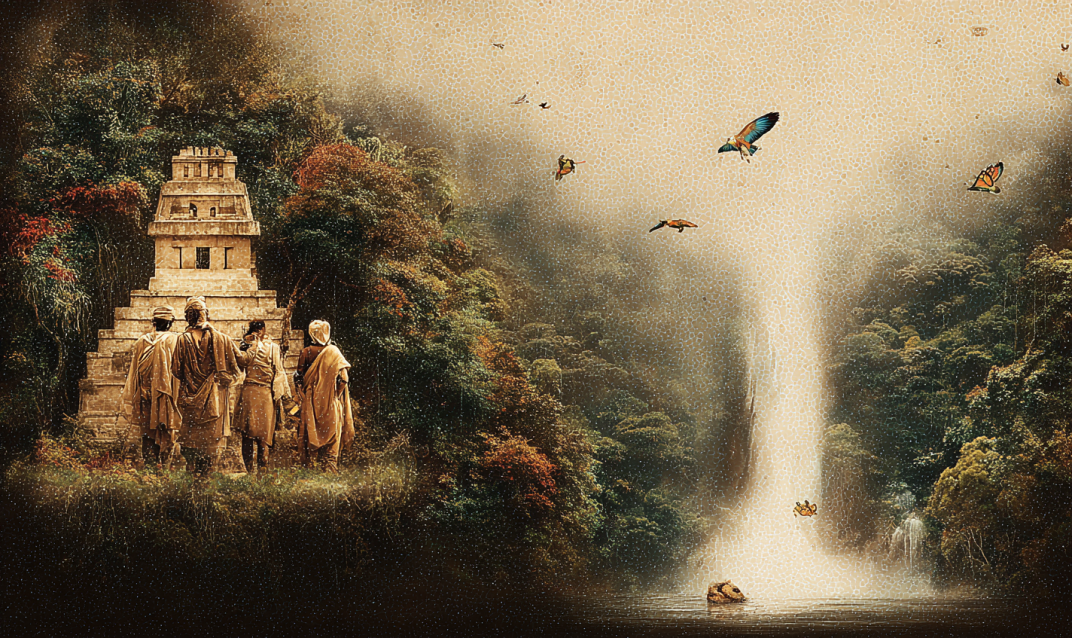
Mexica Afterlife
The noble and the brave join Tonatiuh, the Sun, in his daily journey or rest within Tlalocan, the lush paradise of rain. Warriors rise with dawn’s light, and those of peaceful virtue dwell in verdant abundance beside the gods.
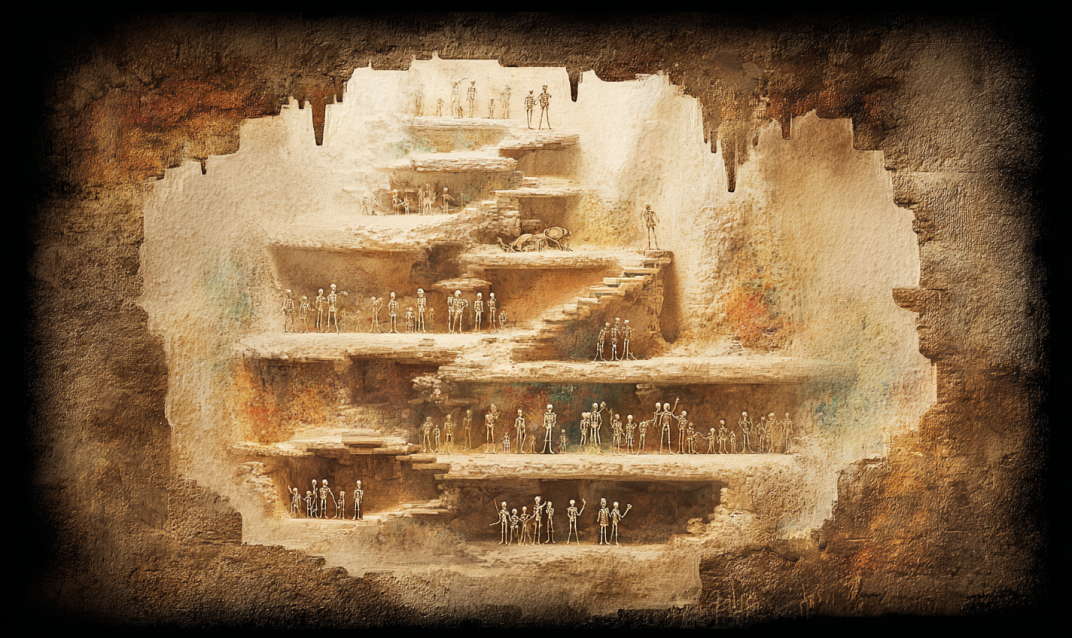
Mexica Afterlife
Souls not bound for the heavens begin the long passage through Mictlan, nine shadowed realms of earth and wind. It is not punishment but pilgrimage, each trial stripping illusion until the spirit rests purified in the heart of the earth.
Pantheon of Worship
The following entries offer only a partial glimpse into the living mosaic of belief. Across the federations and the Free-States alike, divinity takes many forms: anthropomorphic gods, elemental forces, moral principles, ancestral spirits, and philosophical ideas. None of these lists are exhaustive, nor do they presume uniform worship or singular interpretation. Over millennia of dialogue and migration, names have changed, stories have merged, and meanings have diverged—each person, community, and age reshaping the sacred to mirror its own understanding. Within the Accord, faith is treated not as doctrine but as conversation: these are simply the primary voices that endure within that vast and ever-evolving chorus that lies within each individual.
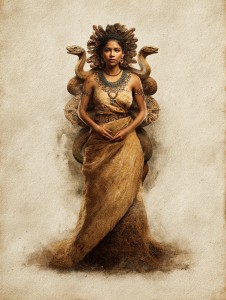
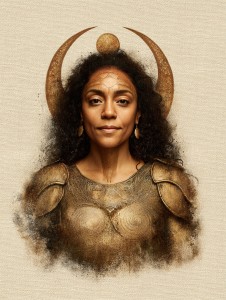
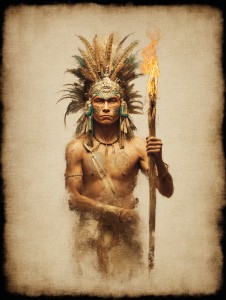
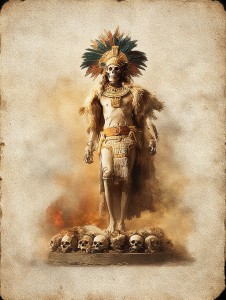
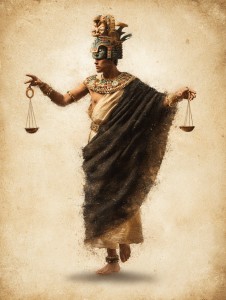
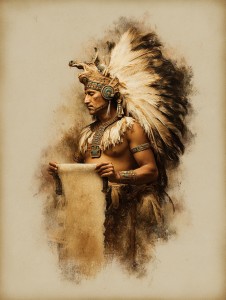
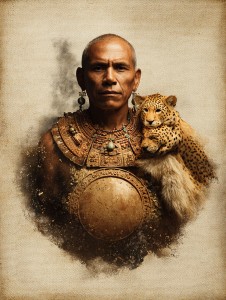
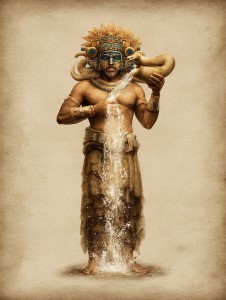
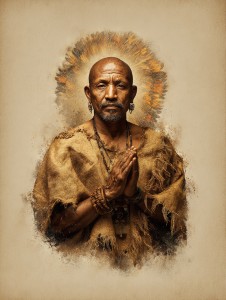

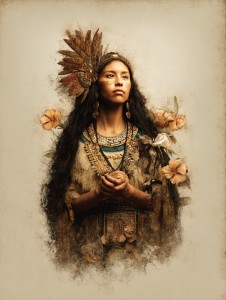

Coatlicue
Mother of gods, wrapped in serpents, both nurturing and terrifying. Coatlicue embodies Creation through Continuum, the understanding that birth and death are one motion. She is the raw power of origin, the unrefined consciousness from which compassion and terror both arise.
Coyolxauhqui
Moon goddess and symbol of fragmentation. In the Accord, her myth is reimagined as a story of dismemberment turned to wholeness—Identity through Reconstruction. She represents cultures and peoples once broken by empire, now reassembled through remembrance.
Huitzilopochtli
Solar warrior and patron of perseverance, Huitzilopochtli is the embodiment of Purpose through Struggle. Once tied to conquest, his spirit in the Accord is reinterpreted as the endurance of light amid shadow—the discipline of civic courage. He represents the will to protect balance, not to dominate; the sun that rises through effort rather than entitlement.
Mictlantecuhtli
Lord of the underworld, Mictlantecuhtli presides over the still kingdom where all journeys end. His reign is not cruelty but completion—the silence after the song.
Ometeotl
The dual god, father-mother of creation, Ometeotl embodies the principle of Complementary Unity—existence born from balance rather than opposition. In the Accord’s metaphysics, Ometeotl stands as one of the purest expressions of non-binary cosmology: creation as dialogue between dual energies, endlessly recombining yet never divided. His abstraction finds kinship with Koina’s Proto-Force of Harmony—life sustained by the equality of contrasts.
Quetzalcoatl
The feathered serpent, lord of wind, wisdom, and renewal. To the Accord, Quetzalcoatl is the Proto-Force of Knowledge as Compassion—learning shared freely, not hoarded. His descent into the underworld to restore humanity from bone dust mirrors the Accord’s principle of restorative creation: intellect as resurrection, not vanity.
Tezcatlipoca
The smoking mirror, master of illusion and revelation. In Koina interpretation, Tezcatlipoca embodies Self-Confrontation—the moral necessity of reflection before judgment. He is the mirror that shows one’s hidden motives, the philosopher’s trial that all must endure before claiming virtue. His smoke obscures only what pride refuses to see.
Tlaloc
Rain-bringer and patron of fertility. Tlaloc governs the cycles of nourishment and fear, embodying Benevolent Uncertainty—the acknowledgment that dependence on nature is both gift and risk. Accord ecologists revere him as the symbol of gratitude through unpredictability: reverence for that which sustains but cannot be controlled.
Xipe Totec
The flayed lord, god of renewal through shedding. In Accord thought, Xipe Totec’s skin represents the willingness to discard decay—Transformation through Vulnerability. He is patron of rebirth through exposure, reminding artisans and reformers that growth demands surrender of the old self.
Xochipilli
God of art, music, and ecstatic beauty, Xochipilli is the radiant patron of creative joy. In Koina’s Anahuac Federation, he symbolizes the sanctity of artistic expression as a form of prayer. His laughter is the pulse of color; his temples, the hearts of song.
Xōchiquetzal
Goddess of love, fertility, and craft, Xōchiquetzal presides over weaving and adornment—arts that bind emotion into form. In Koina she stands as the emblem of joyful creation, where beauty itself becomes devotion.
Lesser Pantheon / Other Important Entities
Beneath the great architects of creation move countless presences who shape the subtler rhythms of existence. These are the intercessors, the boundary-walkers, and the remembered: angels and lwa, saints and ancestors, spirits of grove and hearth, tricksters, dreamers, and the beloved dead. Their powers are intimate rather than cosmic—rooted in memory, place, and the daily turning of life. They remind the living that divinity does not dwell only in the heavens but also in laughter, grief, and the quiet negotiations between mortal and divine. Through them, the sacred becomes personal, and the invisible world remains close enough to touch.
Centzon Tōtōchtin
The Four Hundred Rabbits, divine patrons of revelry and fermentation. Born from the moon goddess’s milk, they personify communal joy, intoxication, and creative excess.
Chaneque
Earthbound nature spirits dwelling in forests and rivers, the Chaneque guard sacred places and lead trespassers astray. Mischievous but moral, they remind humankind to tread lightly on living land.
Chantico
Lady of the Hearth-Fire; guardian of domestic order and faithfulness. Her flames purify betrayal, restoring harmony through heat and will.
Itzpapalotl
The Obsidian Butterfly, goddess of sacrifice and renewal. Her beauty is edged with danger; her wings are blades of night. She represents the transformative power of pain—what is cut away may yet take flight.
Xolotl
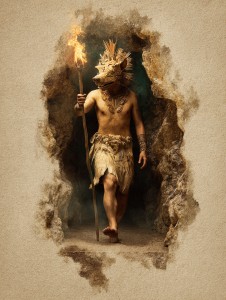
Dog-headed twin of Quetzalcoatl and faithful guide of souls through the nine underworlds. Xolotl guards the threshold between life and death, leading the lost with compassion and firelight.




Comments