Zoroastrianism (ZOR-oh-AS-tree-an-izm)
Zoroastrianism is an dualistic monotheistic tradition — meaning it venerates a single supreme deity, Ahura Mazda, but understands existence through the tension of two principles: truth and falsehood, order and chaos. Unlike polytheism (many gods) or animism (spirit in all things), Zoroastrianism frames the cosmos as a moral contest guided by human choice, where devotion to truth (asha) sustains harmony.
Origins & Historical Development
Founded by the prophet Zarathustra in ancient Persia, Zoroastrianism became the guiding faith of the Achaemenid Empire. In the Koina divergence, without Rome to displace Persia, Zoroastrianism never retreats to the margins. Instead, it remains one of the central philosophical-religious traditions shaping the federative ethos of the Cooperative Federation. Fire temples continue as civic and spiritual centers, but philosophy and law evolve alongside ritual, giving Zoroastrianism a lasting presence across the Persic Federation and beyond.
Core Beliefs & Practices
At its heart is devotion to Ahura Mazda, Lord of Wisdom, and alignment with asha (truth, order, rightness). Opposed to this is druj (falsehood, chaos, deceit). Humans are understood as moral agents whose choices tip the balance toward truth or corruption. Daily practices include tending sacred fires, reciting prayers in Avestan, and maintaining ritual purity through water and fire. Festivals such as Nowruz (new year) and Gahanbars (seasonal feasts) remain vibrant, celebrated across federations as symbols of renewal and balance.
Sacred Texts & Traditions
The Avesta — hymns, prayers, and laws — remains central, but commentary flourishes in Koina. Philosophical schools expand Zarathustra’s teachings, harmonizing them with Stoic reason and Buddhist compassion. Rather than being eclipsed by Abrahamic dominance (as in our world), the Avesta becomes one of the foundational texts of federative philosophy, often quoted in councils and assemblies alongside Aristotle and the Buddha.
Institutions & Structure
Zoroastrian communities organize around fire temples, overseen by priests (magi) who maintain ritual purity and teach ethical law. In Koina, these priests are also trained philosophers, serving as mediators and educators in local councils. Authority remains decentralized — temples form guild-like networks, sharing responsibility for ritual, education, and social care. Burial practices (exposure towers, water rites) continue without persecution, becoming recognized markers of cultural identity.
Relation to the Accord
Because the Persian federative model underpins Koina’s structure, Zoroastrianism is woven into the very DNA of the Cooperative Federation. Its concepts of layered identity, tolerance, and moral responsibility shape Accord law and civic philosophy. The imagery of fire as wisdom and water as purity pervades civic symbols across federations, not only in Persic lands but also in Indic and Mediterranean contexts.
Cultural Influence & Legacy
Zoroastrianism contributes enduringly to Koina’s sense of moral order. The emphasis on free will, truth versus falsehood, and stewardship of creation informs federative law, restorative justice, and environmental ethics. Architecturally, fire temples inspire courtyard-centered civic halls across the Accord. Linguistically, terms like asha and druj enter common speech as shorthand for ethical balance. Its festivals, especially Nowruz, are celebrated across cultural boundaries, marking spring renewal for Persians, Greeks, and Indians alike.
Modern Presence
Today, Zoroastrianism is not a small remnant but a thriving tradition, practiced widely in Iran, Central Asia, and diaspora communities across the Accord. Fire temples stand in every major city, often serving both Zoroastrians and the broader public as spaces of reflection. Adherents live their faith not in isolation but as civic participants, embodying Koina’s pluralism. In this cooperative world, Zoroastrianism remains a living flame — one of the oldest traditions still burning brightly, its wisdom woven into the shared fabric of modern life.

Type
Religious, Organised Religion
Alternative Names
Mazdayasna (“Worship of Wisdom” Zarathustrian Path
Demonym
Zoroastrians / Mazdayasni
Afterlife

Zoroastrian Afterlife
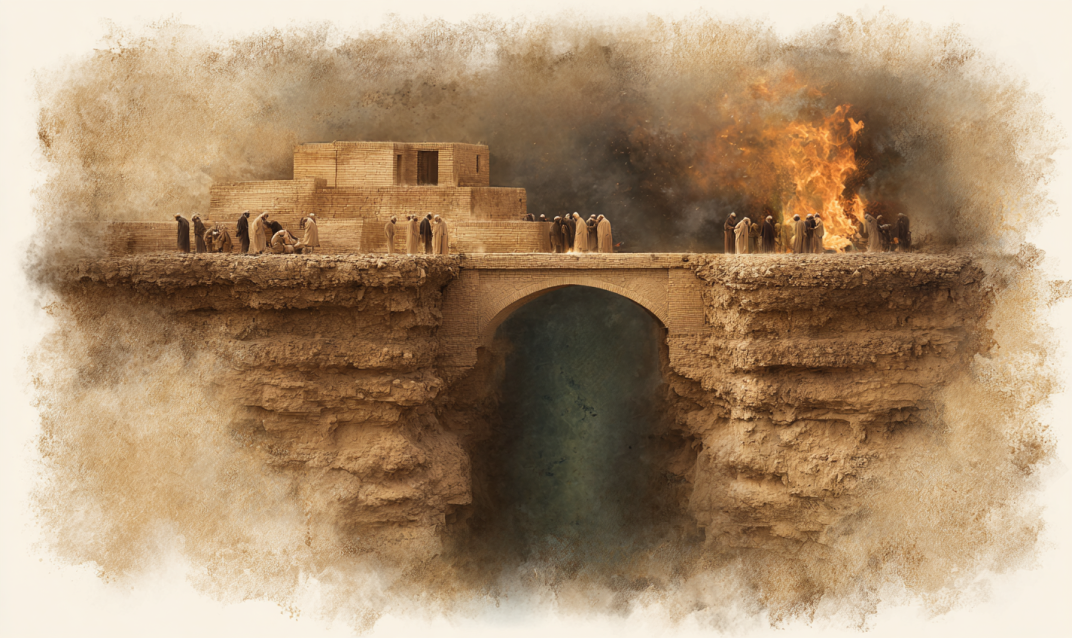
At death the righteous cross the Chinvat Bridge into the House of Song, greeted by light and the fragrance of truth. Their souls join Ahura Mazda’s creation in eternal harmony, singing the hymns of renewal.
Zoroastrian Afterlife
Those shadowed by deceit fall from the bridge into the House of Lies, a realm of confusion and cleansing flame. They endure reflection until purified, for in the end, all will rise renewed in Frashokereti, the restoration of the world.
Pantheon of Worship
The following entries offer only a partial glimpse into the living mosaic of belief. Across the federations and the Free-States alike, divinity takes many forms: anthropomorphic gods, elemental forces, moral principles, ancestral spirits, and philosophical ideas. None of these lists are exhaustive, nor do they presume uniform worship or singular interpretation. Over millennia of dialogue and migration, names have changed, stories have merged, and meanings have diverged—each person, community, and age reshaping the sacred to mirror its own understanding. Within the Accord, faith is treated not as doctrine but as conversation: these are simply the primary voices that endure within that vast and ever-evolving chorus that lies within each individual.
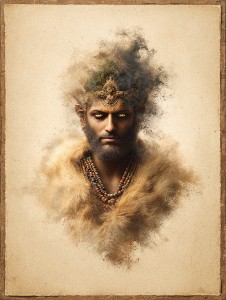
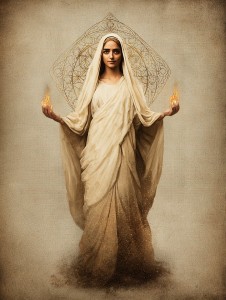
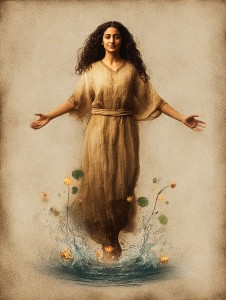
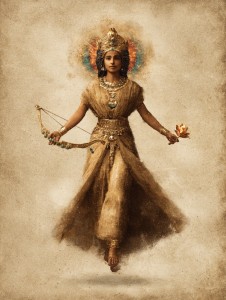
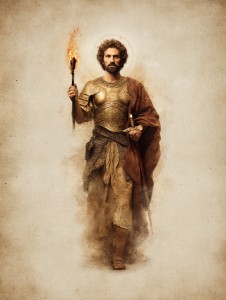
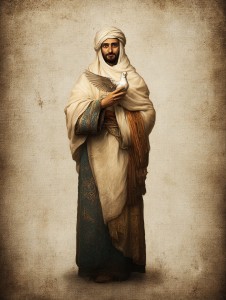
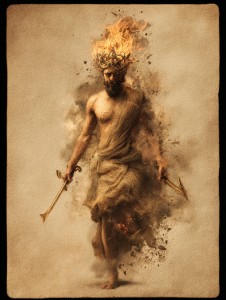
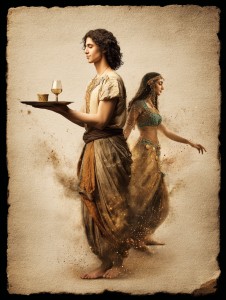
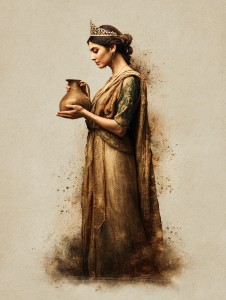
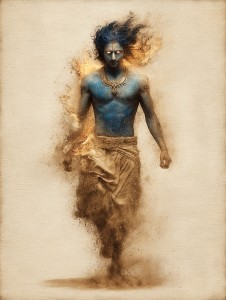

Ahura Mazda
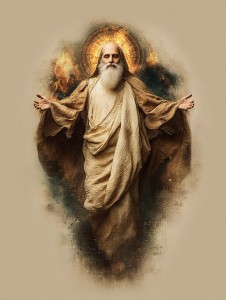
The Wise Lord, radiant origin of order, light, and moral clarity. Within the Accord, Ahura Mazda represents Conscious Goodness—reason illuminated by compassion. He is not simply the god of truth, but the awareness that truth requires maintenance. His light is not blinding but deliberate, the flame of intellect guided by empathy. Accord jurisprudence and philosophical academies trace their roots to his principle: that enlightenment is an ethical obligation, not a gift.
Ameretat
Spirit of immortality and plant life, Ameretat symbolizes vitality’s eternal renewal. Where she walks, gardens thrive; where she is forgotten, decay follows.
Anahita
Goddess of waters, fertility, and purity. She embodies Vital Purification, the renewal that comes through flow. Her rivers cleanse without erasure, nourishing both body and mind. Accord healers and architects alike invoke her name, believing that movement—of water, air, or compassion—prevents stagnation and decay.
Angra Mainyu
Spirit of chaos and deceit, but in Accord understanding, not an equal evil—rather the Disruption Necessary for Choice. He embodies temptation as awareness: the contrast through which morality gains meaning. His existence is the question that gives truth its gravity. Accord thinkers view Angra Mainyu as shadow’s pedagogue, teaching discernment through struggle.
Asha Vahishta
The highest truth, cosmic order, and principle of justice. In the Accord’s moral vocabulary, Asha Vahishta translates to Rightness as Alignment—the coherence of thought, word, and act. She is the invisible architecture of all law, the geometry of integrity itself.
Haurvatat
Holy spirit of wholeness and health, Haurvatat governs waters and the integrity of creation. She embodies completion, reminding that well-being flows from unity with the living world.
Ishtar
Goddess of love, justice, and war, Ishtar embodies passion’s dual nature: the power to build or destroy. In Koina theology, she is the conscience of desire—divinity tempered by empathy.
Mithra
Guardian of contracts, oaths, and social trust. Mithra is Justice as Reciprocity, ensuring that honor binds speech to deed. In Accord diplomacy and law, he is patron of covenant: the invisible agreement that sustains harmony between individuals and nations alike. His sunrise marks every Accord oath-taking, sealing dialogue with light.
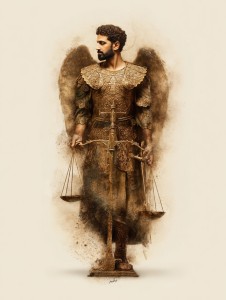
Rashnu
Angel of justice and balance, Rashnu holds the scales of truth. Neither merciful nor cruel, he measures every act by intention. His impartiality anchors the moral cosmos.
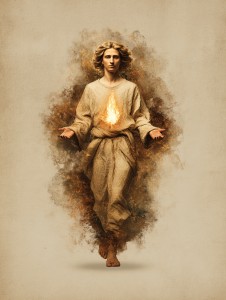
Spenta Mainyu
The creative spirit of Ahura Mazda, representing Active Benevolence—goodness enacted rather than contemplated. Accord teachers call this the principle of lived virtue: that wisdom without action is incomplete. Spenta Mainyu is moral motion, the spark that converts reflection into service.
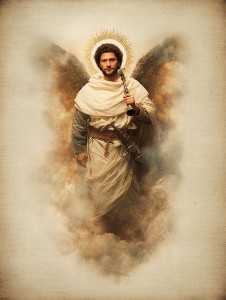
Sraosha
The divine voice of conscience and faithful messenger of Ahura Mazda. Sraosha listens to every prayer and guards the soul’s passage after death. He is the sound of righteousness within silence.
Vohu Manah
The Good Mind, representing empathy and right thought. Vohu Manah is Ethical Perception, the mental clarity that precedes moral choice. Accord scholars describe him as the inner equilibrium between reason and compassion—the dialogue of conscience that sustains civilization.
Lesser Pantheon / Other Important Entities
Beneath the great architects of creation move countless presences who shape the subtler rhythms of existence. These are the intercessors, the boundary-walkers, and the remembered: angels and lwa, saints and ancestors, spirits of grove and hearth, tricksters, dreamers, and the beloved dead. Their powers are intimate rather than cosmic—rooted in memory, place, and the daily turning of life. They remind the living that divinity does not dwell only in the heavens but also in laughter, grief, and the quiet negotiations between mortal and divine. Through them, the sacred becomes personal, and the invisible world remains close enough to touch.
Aeshma Daeva
Demon of wrath and frenzy; once guardian of passion, now the spirit of conflict unchecked. His name warns that fury without reason devours its bearer.
Al-jink
Servants, companions, and dancers of the Djinn—human or half-spirit beings who blur the boundaries of gender and devotion. Drawn from many peoples and lands, they serve as intermediaries between mortal desire and unseen will. Some are fluid or intersex, others male but adorned and perfumed, known in history as mukhannathun. Revered for their grace and condemned for their freedom, they remind the Accord that harmony often begins at the edges of form.
Ardvi Sura Anahita
River-mother and purifier; her waters cleanse corruption and bless fertility. She is the eternal flow linking earth to sky.
Djinn
Elemental beings of smoke and will, older than humankind and born of free choice. They mirror mortal intent—capable of devotion or destruction depending on the heart that calls them.
Gilgamesh
The ancient king who sought immortality, Gilgamesh stands as the archetype of human striving against time. In Accord philosophy, he represents the hero who discovers that eternity is found not in conquest but in companionship.




Comments