Akan (AH-kahn)
Akan religion is a polytheistic and ancestral tradition — meaning it venerates a supreme sky deity (Nyame) alongside many abosom (deities) of rivers, forests, and community, while honoring ancestors as active guardians of the living. Polytheism here refers to devotion to multiple abosom, each linked to a natural or moral domain. Ancestral veneration recognizes that departed kin continue to guide and protect families and villages through ritual memory.
Origins & Historical Development
The Akan religion develops among the Akan peoples of present-day Ghana and Ivory Coast. In our history, colonialism and missionary activity displaced it; in Koina’s divergence, without European conquest, Akan spirituality remains continuous and thriving. Akan federations incorporate priestly guilds into their civic assemblies, ensuring abosom shrines and ancestral rituals remain central to community identity. Over centuries, Akan merchants and travelers carry their faith across West Africa and into the wider Cooperative Federation.
Core Beliefs & Practices
At its heart is Nyame, the supreme creator, who delegates authority to abosom — deities of rivers, earth, fertility, and justice. Among these are Asase Yaa (Earth Mother), Tano (river spirit), and Bosomtwe (sacred lake spirit). Ancestors (Nsamanfo) are honored in libations, sacrifices, and annual festivals, ensuring continuity of kinship. Rituals include drumming, dance, possession ceremonies, and offerings at shrines. Ethical life emphasizes reciprocity, respect for elders, and alignment with communal harmony.
Sacred Texts & Traditions
The Akan religion is oral, preserved through proverbs, stories, and ritual chants. Priests and elders maintain genealogies and mythic cycles, which in Koina are transcribed into the Net of Voices for preservation and cross-cultural dialogue. Proverbs, in particular, serve as vehicles of wisdom — short sayings that encapsulate moral lessons, often cited in federative assemblies to resolve disputes.
Institutions & Structure
Religious authority rests with priests and priestesses (akomfo), who serve as mediums for the abosom. Shrines and sacred groves are maintained in every village, often doubling as community courts and meeting places. Chiefs and elders are recognized as both political and spiritual figures, bound to uphold tradition and maintain harmony. In Koina, priestly guilds of the Akan contribute to regional assemblies, with diviners and mediums serving as Whispers in councils.
Relation to the Accord
The Akan religion enriches the Accord through its deep integration of ecology, kinship, and law. Sacred groves and rivers influence federative environmental treaties, while ancestral veneration reinforces Accord commitments to genealogy and memory. Akan festivals — such as Odwira (purification) and Akwasidae (ancestor remembrance) — attract pilgrims from beyond West Africa, turning local traditions into global civic events.
Cultural Influence & Legacy
Akan art — goldweights, kente cloth, and symbolic adinkra designs — spreads widely across Koina. Adinkra symbols, representing virtues like strength, wisdom, and unity, become popular emblems across federations. Music and drumming patterns shape global rhythms, while storytelling traditions influence theater and education. Philosophically, the Akan emphasis on communal balance and respect for elders becomes part of Accord political discourse.
Modern Presence
By modern day, Akan religion thrives in Ghana, Ivory Coast, and diaspora communities across Africa and the western continents. Shrines, groves, and festivals remain central to community life. Chiefs and priestly leaders continue to mediate between tradition and modernity, while Akan symbolism is visible in art, clothing, and public life across federations. Far from being a suppressed tradition, the Akan religion stands as a continuous, living faith — one that embodies the Cooperative Federation’s ethos of kinship, reciprocity, and balance with nature.

Type
Religious, Organised Religion
Alternative Names
Akan Spirituality; Faith of Nyame
Demonym
Akan
Related Myths
Afterlife
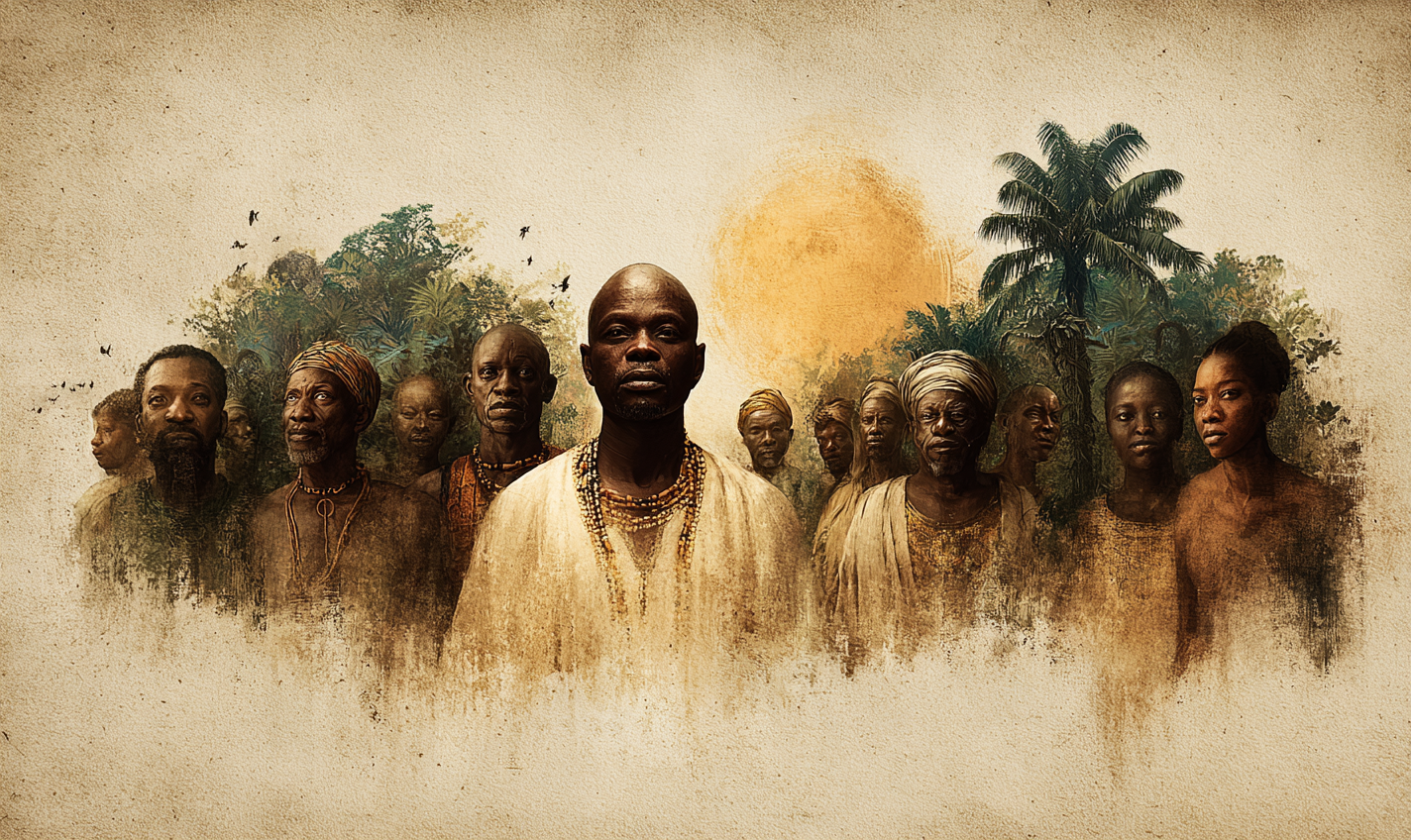
Akan Afterlife
In Akan thought, the soul’s fulfillment is a peaceful return to Asamando, the realm of the honored ancestors. There, spirits dwell among family lineages, guiding their descendants through dreams and omens. The living pour libations and call the names of the dead, keeping the chain of memory unbroken.
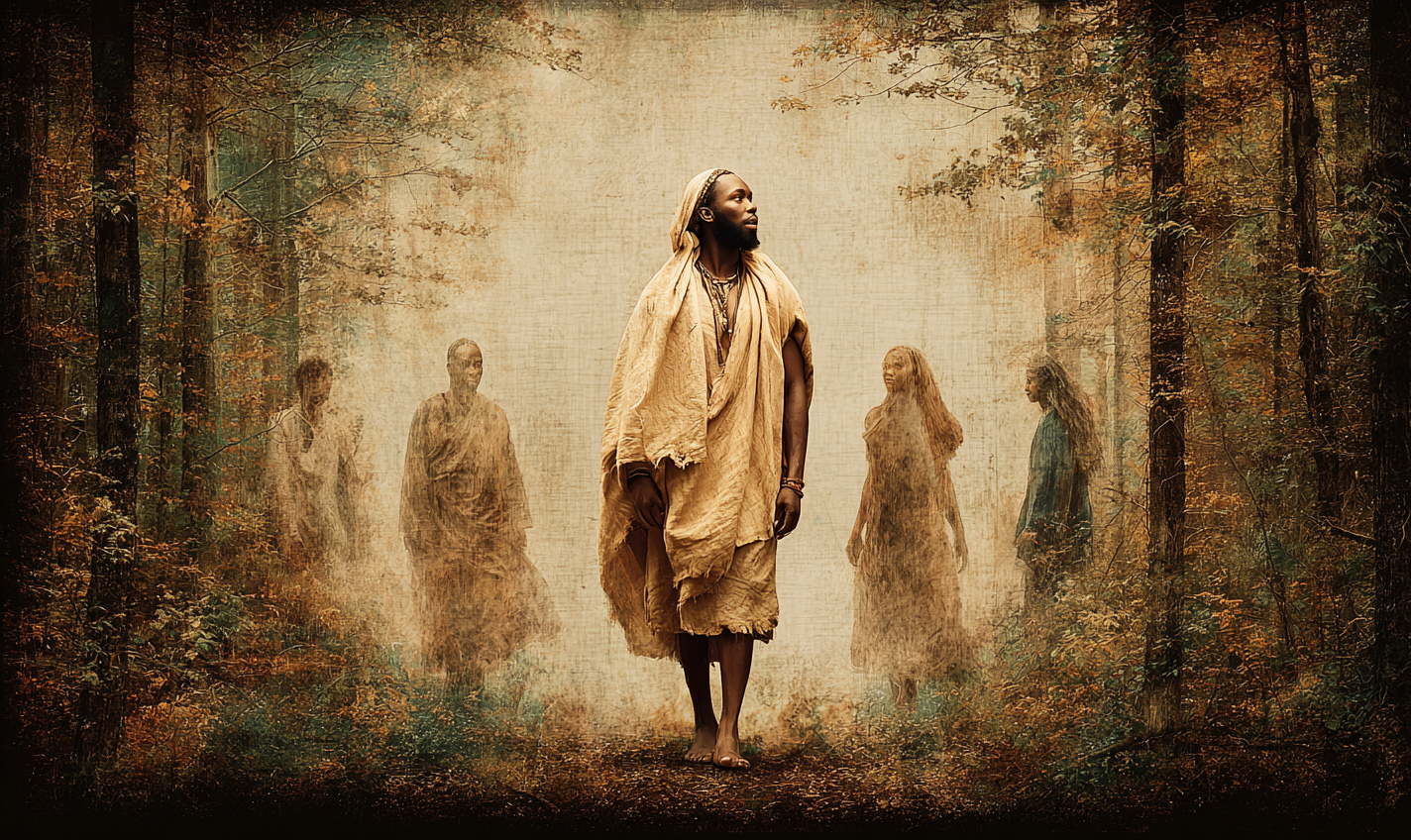
Akan Afterlife
Those who live selfishly or betray communal harmony are denied that welcome. Their spirits become sunsum mu ye fɔ — restless shades wandering between worlds. They linger on the edges of villages or forests, unseen but felt, yearning for the rites that would restore them to their people’s embrace.
Pantheon of Worship
The following entries offer only a partial glimpse into the living mosaic of belief. Across the federations and the Free-States alike, divinity takes many forms: anthropomorphic gods, elemental forces, moral principles, ancestral spirits, and philosophical ideas. None of these lists are exhaustive, nor do they presume uniform worship or singular interpretation. Over millennia of dialogue and migration, names have changed, stories have merged, and meanings have diverged—each person, community, and age reshaping the sacred to mirror its own understanding. Within the Accord, faith is treated not as doctrine but as conversation: these are simply the primary voices that endure within that vast and ever-evolving chorus that lies within each individual.
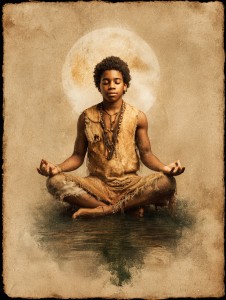

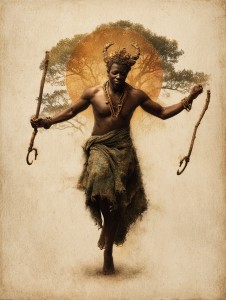
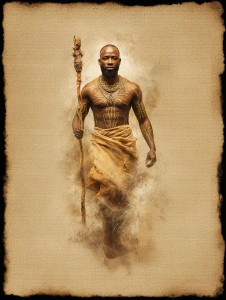
Asase Yaa
Mother Earth and the living memory of the soil, Asase Yaa is the moral conscience of the Akan cosmos. Farmers leave her the first fruit, and oaths sworn upon her ground are sacred. In Accord philosophy she represents the stewardship of life—the shared covenant between human need and ecological patience. Her festivals mark rest days for the land, reminders that labor must also pause to let the world breathe.
Nyame
The distant yet all-pervading creator, Nyame embodies the Akan sense of cosmic order—unreachable but present in every breath of sky. He is the wellspring of destiny and the unseen architecture of life’s balance. In Koina’s philosophical reading, Nyame aligns with the Proto-Force of Unity: the principle that binds multiplicity without consuming it. Worship of Nyame is quiet rather than grand; his presence is affirmed through gratitude, not petition, and through the harmony of community with the natural world.
Lesser Pantheon / Other Important Entities
Beneath the great architects of creation move countless presences who shape the subtler rhythms of existence. These are the intercessors, the boundary-walkers, and the remembered: angels and lwa, saints and ancestors, spirits of grove and hearth, tricksters, dreamers, and the beloved dead. Their powers are intimate rather than cosmic—rooted in memory, place, and the daily turning of life. They remind the living that divinity does not dwell only in the heavens but also in laughter, grief, and the quiet negotiations between mortal and divine. Through them, the sacred becomes personal, and the invisible world remains close enough to touch.
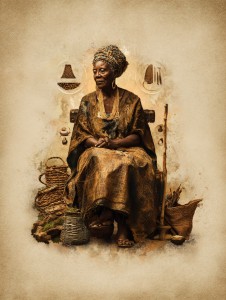
Aberewa
The ancient grandmother of fate and wisdom, Aberewa teaches patience, memory, and the quiet authority of age. Her counsel is sought in times of conflict, her presence marking the continuity of generations. In Accord symbolism, she is the matriarchal thread linking knowledge to compassion.
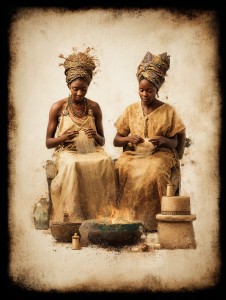
Aberewa's Daughters
Twin spirits of lineage and renewal, Aberewa’s Daughters weave the destinies of families through patience and care. They embody generational strength, ensuring that wisdom never dies with the elder.
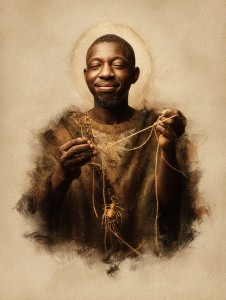
Anansi
Trickster, teacher, and teller of truths through contradiction. Anansi’s webs bind stories and wisdom alike, proving that cleverness can balance the power of kings. Within Koina, he is cherished as the archetype of adaptive intelligence—the cultural memory that resists domination through laughter and narrative. His myths persist wherever storytelling becomes rebellion.
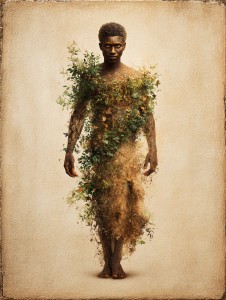
Bia
Guardian of the forest’s interior strength. Bia personifies endurance and unseen force, the power that upholds mountains and roots trees against storm. His worship honors restraint and resilience, virtues often invisible but essential to communal survival.
Bosomtwe
Spirit of the sacred lake, Bosomtwe represents reflection—both literal and inner. The Akan see their souls mirrored upon his waters; in Accord metaphysics, he stands as the emblem of self-knowledge through stillness, where the surface of being shows its depth.
Mmoatia
Small, fairy-like forest spirits who dwell among roots and stones, the Mmoatia guard the boundary between human and unseen worlds. They reward respect but vanish from arrogance, guiding hunters and children who walk gently. In Accord thought, they personify the ethics of humility before the living land.
Sasabonsam
Forest-dwelling trickster with iron hooks for feet, Sasabonsam embodies the wild edge of morality. He is both predator and teacher, testing mortals’ courage where light gives way to shadow. Within Accord interpretation, he represents the danger of power without restraint—the reminder that nature’s law precedes human order.
Tano
Spirit of the river and of righteous challenge. Tano guards boundaries both physical and moral; to cross him unjustly is to invite imbalance. In the Accord’s symbolic taxonomy he embodies the Proto-Force of Justice—liquid yet firm, flowing yet incorruptible.




Comments