Artisan Guilds
Custodians of Craft and Material Balance
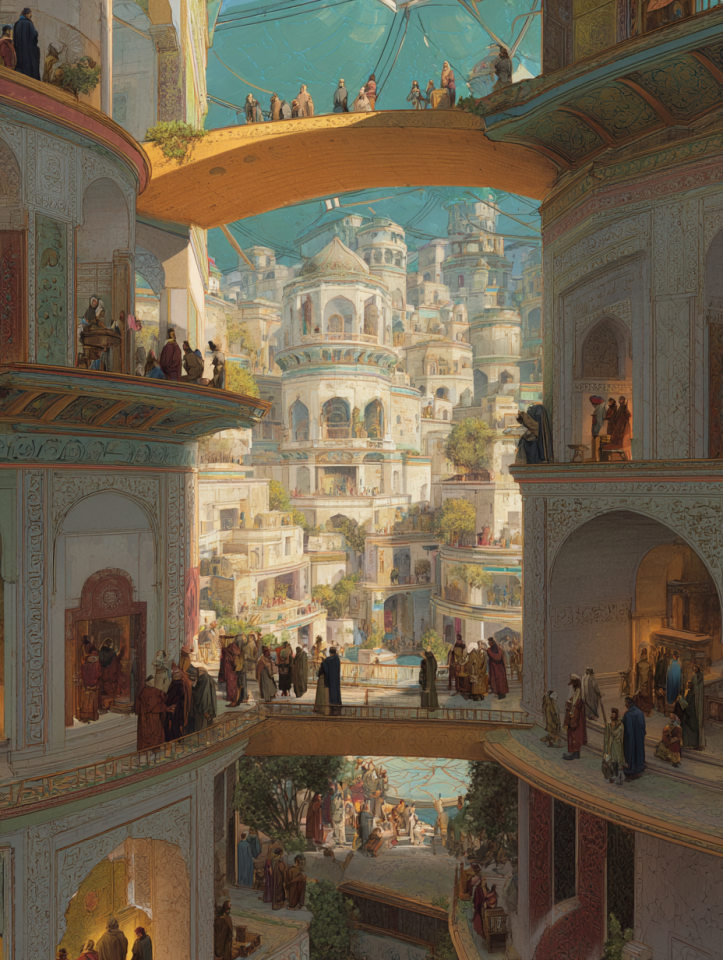
In the heart of a Koina city, sunlight filters through open courtyards where artisans work side by side. A sculptor chips rhythmically at marble, her strokes punctuated by the hum of a loom nearby. Across the way, a calligrapher bends over a parchment, his brush moving with meditative precision, while apprentices grind pigments for a mural destined to brighten a temple wall. The guild hall is no silent workshop - laughter and debate mingle with hammer strikes and the shimmer of molten glass.
Here, art is inseparable from philosophy. A potter explains the curve of a vessel as a metaphor for balance; a painter speaks of harmony in color as a reflection of civic unity. None labor in isolation: every act of creation is witnessed, critiqued, and celebrated by peers and community alike. The result is a civic culture where beauty is not luxury, but woven into daily life.
At festivals, the Artisan Guilds unveil their newest works. A tapestry that captures the history of a city, a mural that retells an ancient philosophical parable, a sculpture whose symmetry invites quiet reflection - all are displayed not as private commissions but as gifts to the commons. Prestige accrues not to the wealthiest patron but to the craft itself, visible proof of cooperation between hand, mind, and community.
Weaving - Creating durable and symbolic textiles for clothing, ritual, and trade.
Metalwork - Forging tools, instruments, and ornamentation that balance beauty with function.
Ceramics - Shaping clay into vessels, tiles, and art that preserve food, memory, and craft traditions.
Glasswork - Blowing and casting glass for vessels, windows, lenses, and ceremonial art.
Sculpture - Carving stone, wood, and metal into forms that embody philosophy and civic memory.
Painting & Muralism - Bringing color and story to walls, banners, and canvases through symbolic design.
Calligraphy & Engraving - Inscribing words and patterns into stone, parchment, and metal to preserve language and art.
Jewelry & Ornament - Crafting adornments that signify status, devotion, or cultural belonging.
Origins & Purpose
The Artisan Guilds arose in the centuries after Persia’s federative model spread, when communities needed a means to safeguard their crafts without empire’s dictates. In a world without conquest-driven uniformity, artistry became the marker of identity and resilience. Weaving, ceramics, and metalwork ensured survival; sculpture, painting, and calligraphy ensured memory. Guild halls became both repositories of skill and living academies of philosophy, uniting practical necessity with cultural expression.
Their purpose was always twofold: to maintain standards of durability and to align craft with the cooperative ethos of Koina. Unlike the extractive economies of our world’s empires, where mass production eroded individuality, here artisans preserved plurality. Their survival meant every federation could flourish on its own terms while remaining part of a greater cooperative whole.
Major Specialties
Organization & Practices
Training within the guilds begins with apprenticeship, where youths learn both technical skill and philosophical grounding. Journeymen travel across federations, carrying knowledge from city to city, while masters gather in congresses to set shared standards. The system ensures that artistry remains both diverse and mutually intelligible - a ceramic jar made in the Andes can fit a metal lid forged in Persia, and a mural in the Sinosphere echoes colors familiar in the Nile.
Rituals mark progress. The first finished painting, the first vessel without flaw, the first sculpture that earns silence from a crowd - each becomes a civic celebration. Tools and instruments are honored in annual rites, polished, repaired, or ceremonially retired. In this way, the guilds teach that art and craft are not possessions but responsibilities: continuities that demand care across generations.
Contributions & Influence
The Artisan Guilds have shaped not only material culture but the philosophical tone of Koina. Their innovations - from resonant-dyed fabrics to glass lenses for observatories - sustain daily life, medicine, and science. They advanced technologies of preservation, memory, and communication, always measured by durability and harmony rather than speed or profit.
Culturally, they embody civic pride. Streets and temples bear their murals, plazas host their statues, and homes carry their textiles as both adornment and inheritance. By anchoring beauty within everyday life, the guilds prevent the divide between “high art” and “common craft.” To citizens, the Artisan Guilds stand as proof that human hands and minds, working together, can make balance tangible.
Role in the Accord
In the Accord, the Artisan Guilds provide both practical standards and cultural bridges. Congresses of artisans ensure that units of measure remain universal and that techniques, once tested, are shared across federations. When disputes arise - whether over dye formulas, sculpture commissions, or trade imbalances - guild representatives mediate with reason and precedent.
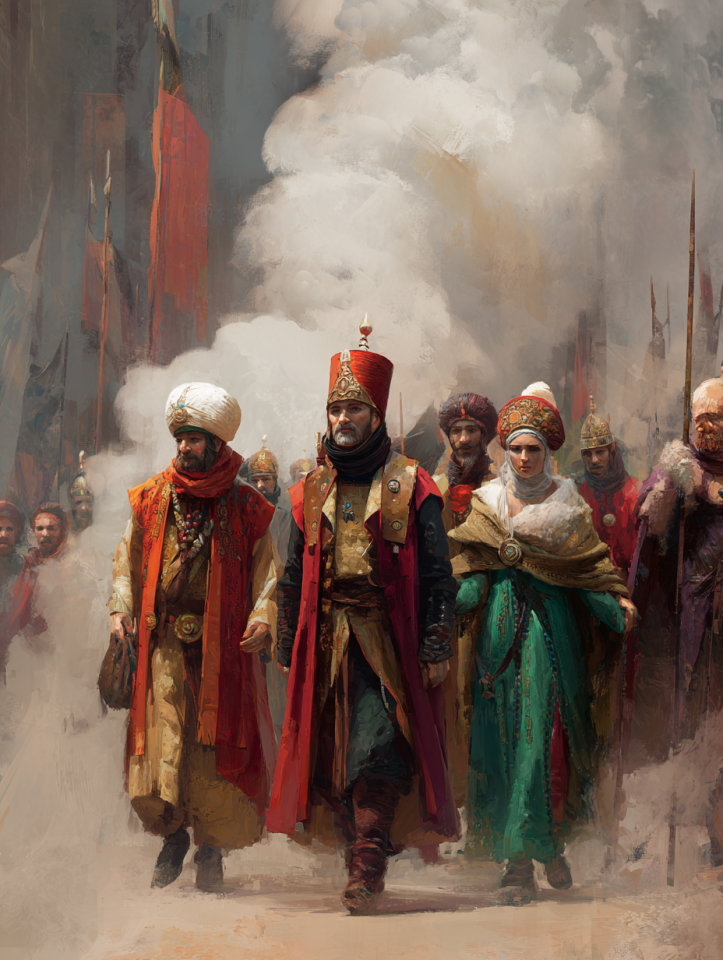
They also serve as ambassadors. Delegates to the Grand Assembly are greeted with gifts of cloth, vessels, or artworks, each piece symbolizing both the uniqueness of a federation and the cooperative values of the Accord. Through these offerings, artisans reinforce trust between regions. In Koina, a tapestry or vessel is never just an object - it is a covenant of cooperation, visible and enduring.

Type
Guild, Professional




Comments