Merchant Congress of Caravans & Seas
Keepers of Exchange and Fair Measure
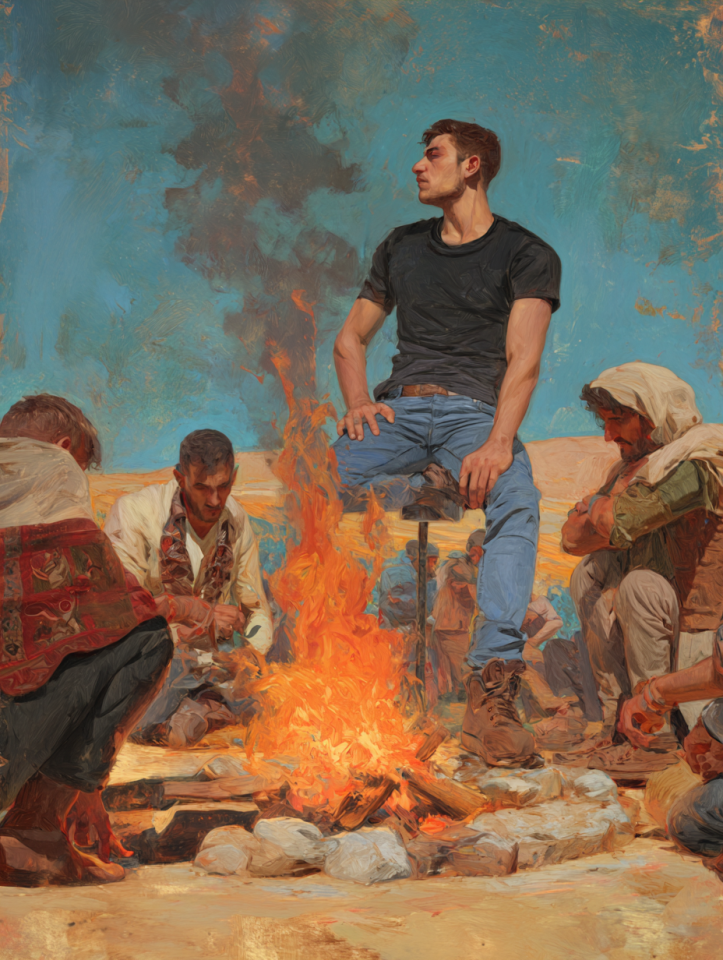
At dawn in the desert, a caravan sets out under banners of the Congress. The camels are laden not just with silks and spices but with trust, for their scales and weights are stamped with the seal of fairness that every market honors. At dusk, a ship glides into a Hellenic harbor, its sails painted with the same emblem. The merchant disembarks with goods from across oceans, welcomed not for the rarity of wares but for the legitimacy they carry under Congress law.
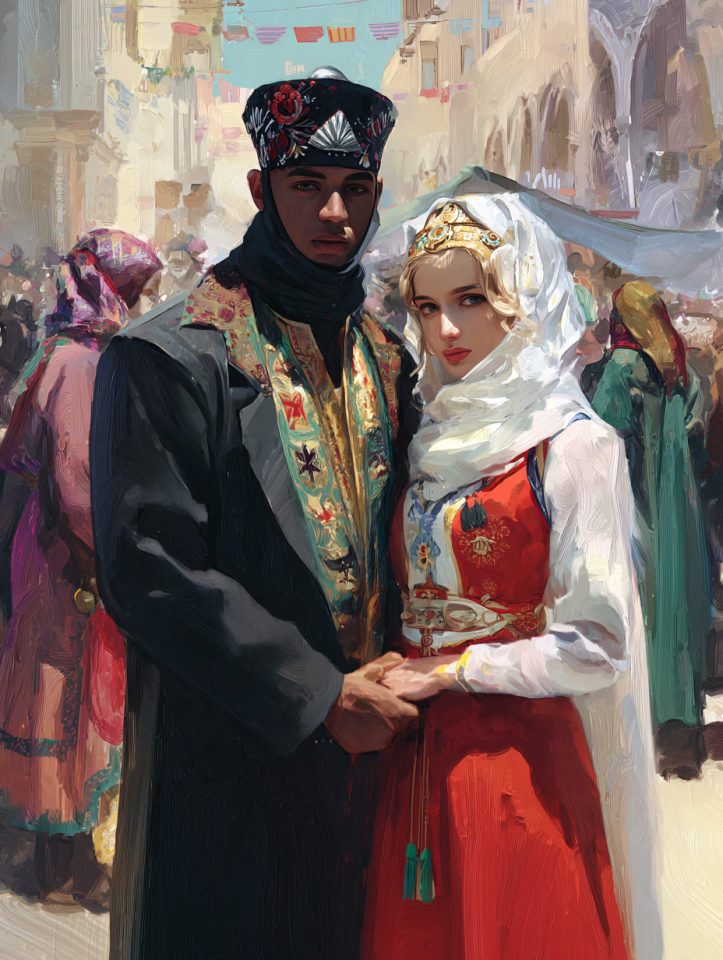
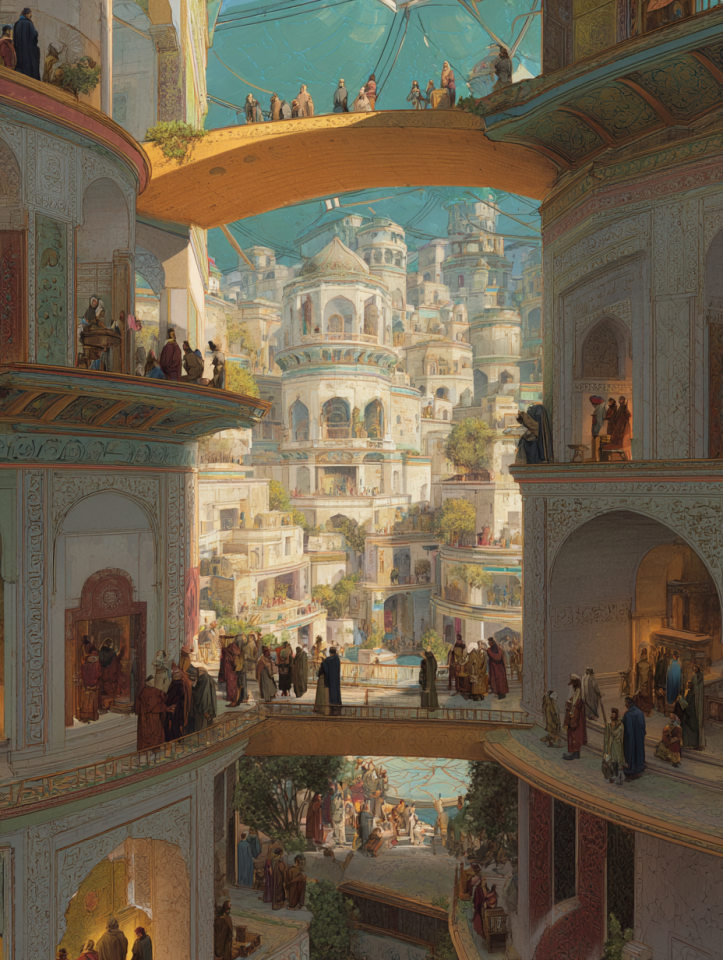
Markets are never silent in Koina. Under shaded awnings, traders call out prices, but debates over tariffs, safe routes, and harbor treaties hum just as loudly. Children run between stalls, holding tokens that serve as lessons in fair trade, while elders mark the arrival of caravans like clockwork - each one a proof that the arteries of the world still flow in balance. To be outside this system is to stand in shadow; to be recognized by it is to belong to a living river of exchange.
In every federation, festivals of exchange honor the Congress. Ships are garlanded, caravans painted in bright dyes, and merchants showered with petals as they pass. Such honors are not for wealth alone, but for upholding the invisible thread that binds distant lands into one shared world.
Caravan Leagues - Organizing overland trade across deserts, steppes, and mountains.
Maritime Guilds - Managing ports, shipping lanes, and coastal exchanges.
Currency Stewards - Setting standards for coinage, barter, and exchange tokens.
Market Regulators - Overseeing fairs, weights, and consumer trust.
Tariff Councils - Mediating disputes over duties and passage fees.
Cultural Brokers - Facilitating exchange of languages, rituals, and ideas alongside goods.
Origins & Purpose
The Congress emerged when caravans first crossed deserts under Persian oversight and sea leagues tied distant ports together. With no empire to dictate terms, federations required a neutral body to regulate fair measure, currency, and tariffs. From these needs grew the Congress of Caravans & Seas - part marketplace, part parliament, and part treaty forum.
Its purpose is not conquest or monopoly but trust. The Congress ensures that a measure of grain in the Nile matches that of the Indus, that weights in the Andes balance with those in the Sinosphere. Its honor system, reinforced by boycott and reputation, replaced armies as the guarantor of trade.
Major Specialties
Organization & Practices
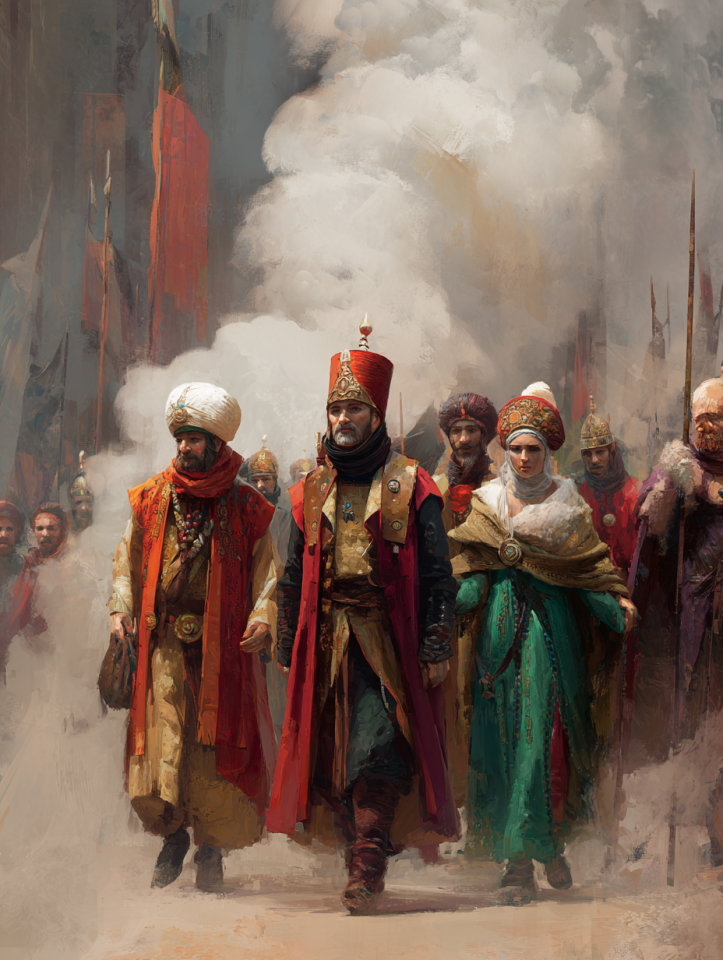
Membership is layered: merchants, caravan masters, ship captains, and market stewards all send representatives. Congress meets in rotating sites - desert oases, coastal ports, and crossroads cities. Sessions blend negotiation with spectacle, as wares are displayed while treaties are debated.
Each transaction is marked with seals of legitimacy, often impressed directly on goods or scales. Violations are rare, for dishonor leads to boycott, and a merchant barred by the Congress finds no welcome in any market. This system of prestige and trust replaces force, making trade a civic ritual as much as an economic act.
Contributions & Influence
The Congress made possible the dense web of exchange that defines Koina. It standardized weights, measures, and currencies centuries before our own world, ensuring that knowledge and goods could flow without barriers. Its networks of ports and caravanserais became schools of philosophy and culture as much as warehouses of trade.
Beyond commerce, the Congress has influenced diplomacy. Many treaties are first tested in its markets, where negotiation takes place over shared meals and exchanged gifts. In this way, it acts as a soft parliament of the world, where even rivals find neutral ground in the language of trade.
Role in the Accord
The Congress serves as the backbone of the Accord’s economy. No federation dominates it, yet all depend on it. Its rulings carry weight because compliance ensures belonging to the world’s shared market, while defiance risks exclusion.
At the Grand Assembly, Congress delegates are often the first to speak, reminding all that philosophy may guide, but trade sustains. Their presence guarantees that the Accord’s debates are grounded not only in ideals but also in the practical lifeblood of exchange.

Type
Guild, Professional




Comments