Cultural Exchanges
Weavers of Art, Learning, and Fellowship
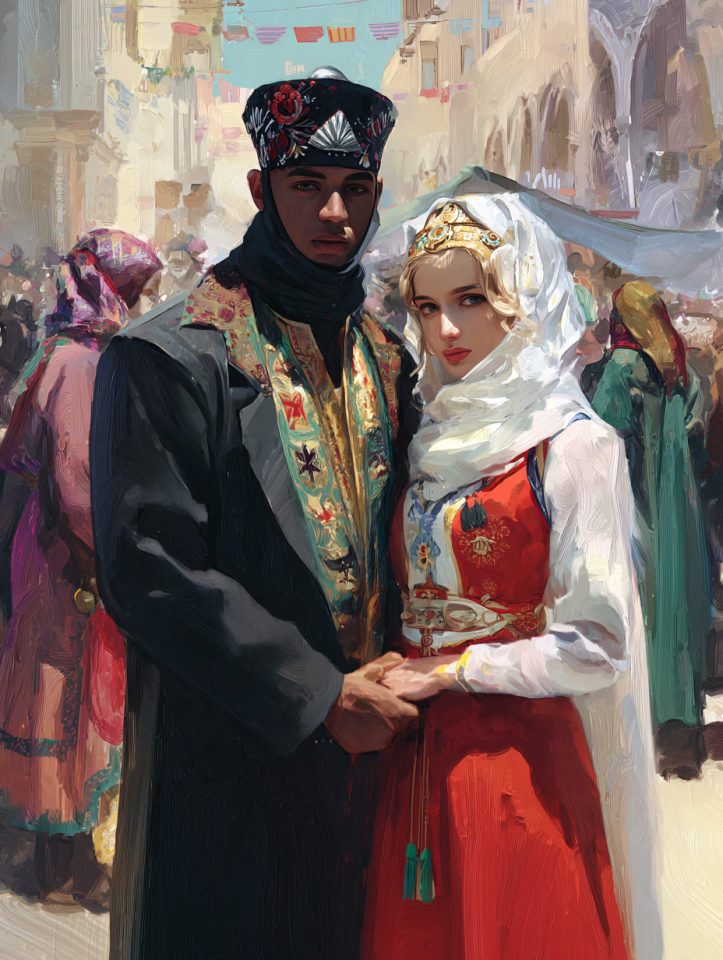
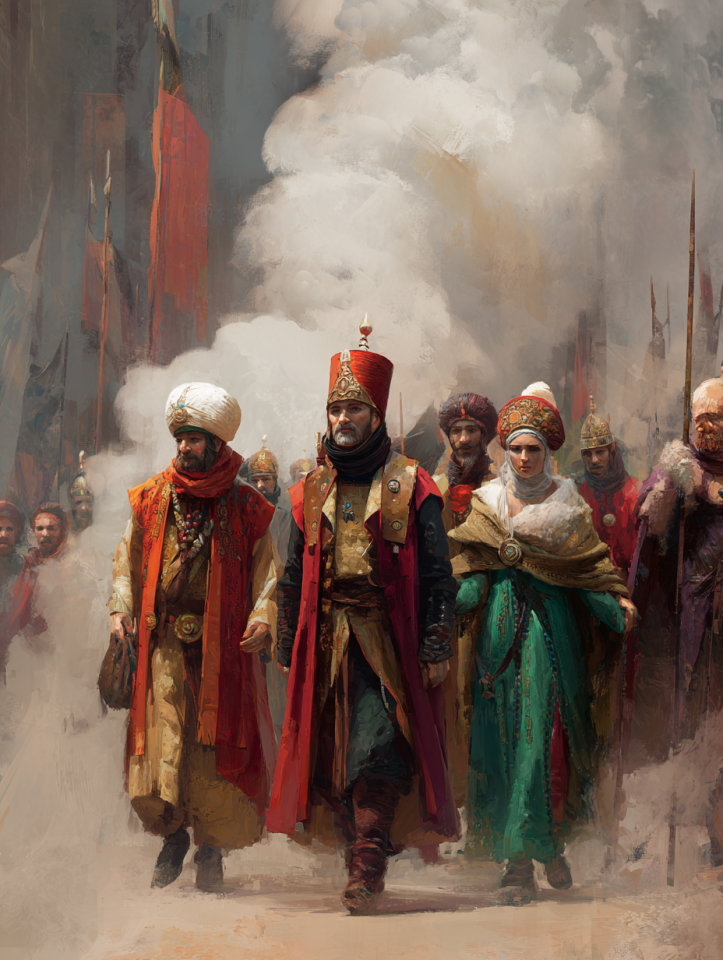
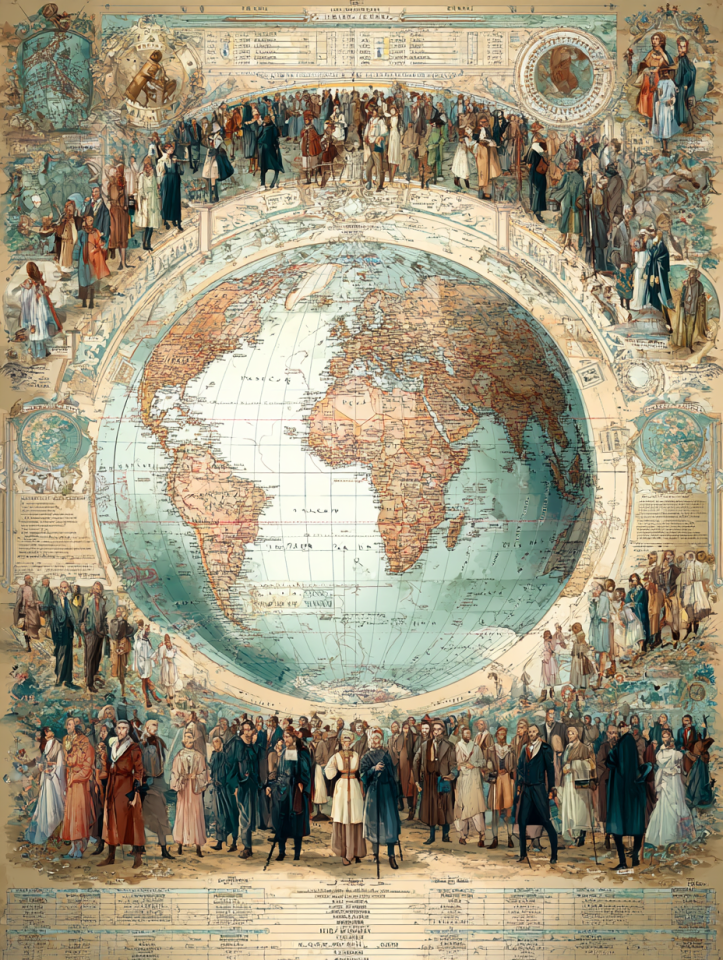
In the square of a port city, banners ripple as troupes from five federations arrive at once. Musicians tune instruments in unfamiliar keys, artisans unpack tapestries embroidered with foreign patterns, and scholars unroll scrolls covered in scripts new to local eyes. Citizens crowd the plaza, eager not just for spectacle but for the sense of belonging to something larger than themselves.
On festival nights, the Exchanges transform entire cities. Streets fill with stalls offering foods from distant lands, while children play games learned from travelers. Stages are built for performances where one story is told in many tongues, each actor stepping forward to carry a fragment. The air becomes a chorus of difference, woven into harmony.
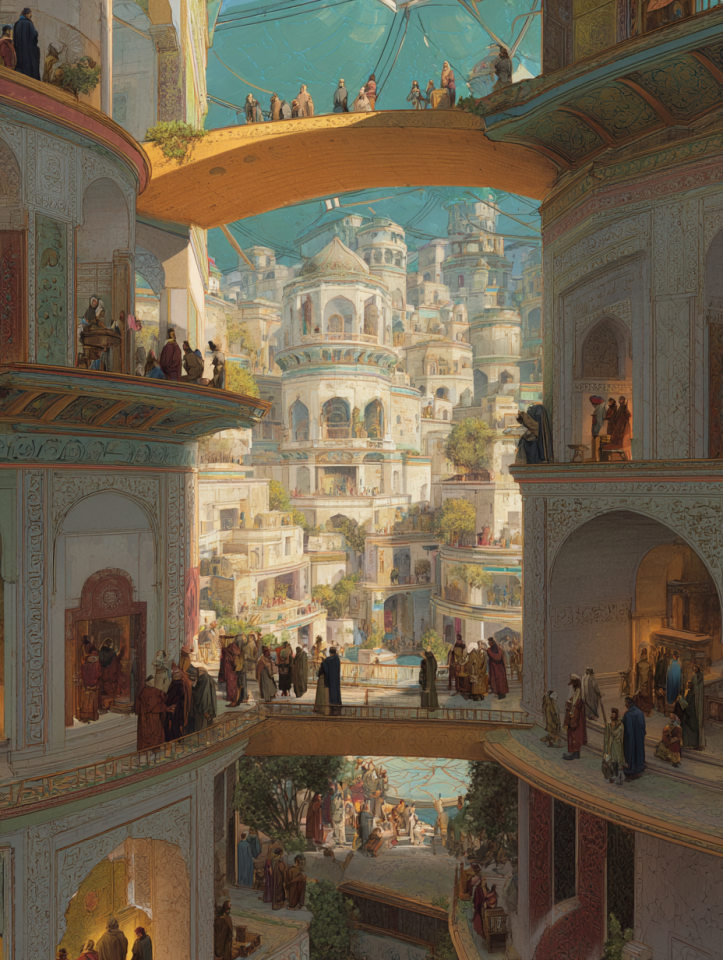
Even between great gatherings, Exchanges persist. Schools host visiting teachers, archives share manuscripts across oceans, and traveling exhibitions carry art and memory to places that might never meet otherwise. Every encounter affirms that identity is layered, and that plurality is not threat but strength.
Festival Organizers - Coordinators of seasonal and inter-federation gatherings.
Scholars & Teachers - Exchanging knowledge through lectures, apprenticeships, and shared curricula.
Art Carriers - Traveling custodians of exhibitions, performances, and artifacts.
Linguistic Hosts - Facilitators who guide visitors through local speech and custom.
Archivists of Memory - Recorders of festivals, stories, and shared rituals.
Ambassadors of Fellowship - Mediators who ensure cultural encounters remain respectful and balanced.
Origins & Purpose
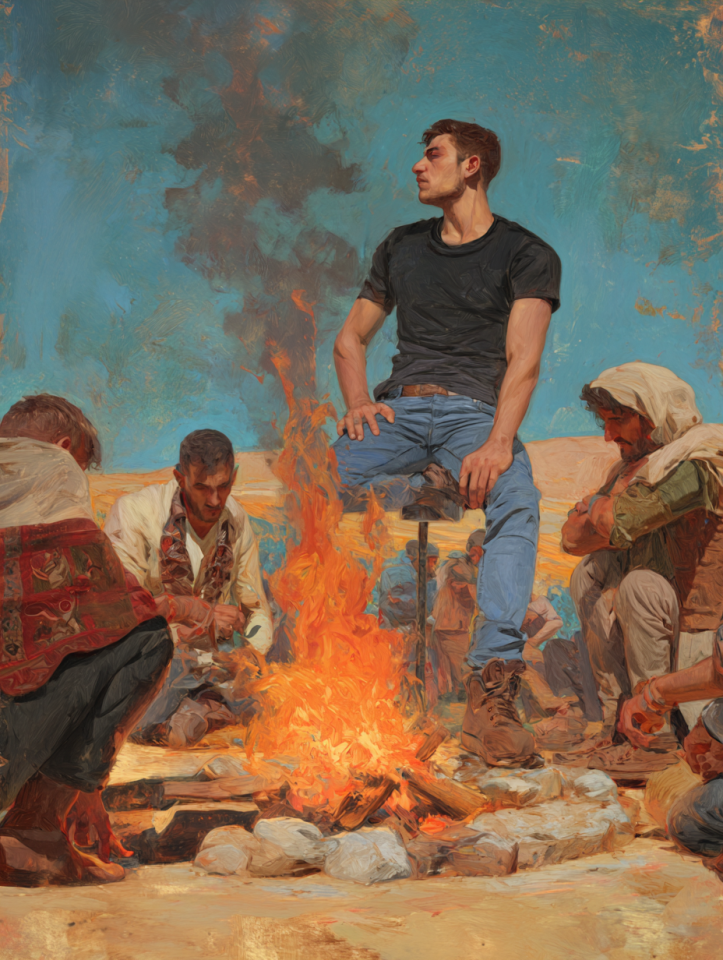
The Cultural Exchanges began informally, when caravans and ships carried not only goods but also songs, stories, and teachings. Over time, federations recognized the need to nurture these encounters deliberately, ensuring that cultural sharing was valued as highly as trade.
Their founding purpose is to weave diversity into continuity. By creating structures for exchange - festivals, traveling exhibitions, educational partnerships - the Exchanges ensured that no tradition became isolated, and that every culture could see itself reflected in the cooperative whole.
Major Specialties
Organization & Practices
The Exchanges are decentralized, organized by local councils that volunteer to host festivals or exhibitions. Membership is fluid: artisans, performers, teachers, and citizens all participate. Coordination relies on the League of Translators to bridge language and on guilds to provide spaces and logistics.
Practices emphasize reciprocity. Each participant is expected not only to display but also to receive - to teach and to learn, to perform and to listen. Festivals often include rituals of gift-giving, where objects or songs are exchanged as tokens of enduring connection.
Contributions & Influence
The Exchanges have enriched Koina by preserving diversity while fostering shared identity. They spread innovations in art, science, and philosophy, ensuring that no discovery or tradition remains confined to a single region. Their traveling festivals reinforce plural belonging, making difference visible and celebrated.
Their influence extends into diplomacy. Treaties are often accompanied by Exchanges, where delegations celebrate cultural continuity alongside political agreement. Through these encounters, the Exchanges soften rivalries and strengthen the threads that bind the Accord.
Role in the Accord
The Exchanges function as cultural glue between federations. They provide continuity where politics may falter, reminding all that beyond trade and law lies the deeper bond of shared humanity.
At the Grand Assembly, Exchanges provide the ceremonies, performances, and exhibitions that surround debate. Their presence ensures that even the most technical deliberations are framed within the richness of human expression. In this way, the Cultural Exchanges sustain not only art but also the Accord’s very spirit.

Type
Guild, Professional




Comments