

Builders’ Cooperative
Shapers of Space and Structure
In the rising light, a team of builders aligns stone blocks along a canal’s edge. Their movements are deliberate, guided not by overseers but by drawings traced in dust with a compass. Across the city, others climb scaffolds of bamboo and rope, adjusting panels designed to catch wind and light. Children watch from rooftops as guild members explain how shade, water, and air are as important as stone.
By dusk, the cooperative’s halls glow with lanterns. Models of domes, bridges, and courtyards cover long tables, and debates echo through the chamber: should a new school face the river for cooling breezes, or the square to encourage civic gatherings? Every design is tested not only for strength but for harmony, its worth measured by the lives it will sustain.
Festivals often culminate in the unveiling of a new civic space - a garden terrace, an aqueduct fountain, a shaded marketplace. Such works are not credited to a single patron, but to the Cooperative itself, visible proof that architecture in Koina is a communal philosophy, not a monument to power.
Architects - Designers of courtyards, domes, and civic halls.
Engineers - Specialists in bridges, aqueducts, and resonance infrastructure.
Urban Planners - Coordinators of neighborhoods, markets, and commons.
Masons & Carpenters - Craftsmen of stone, timber, and bamboo.
Hydrologists - Experts in irrigation, canals, and water management.
Energy Stewards - Overseers of resonance grids, wind towers, and solar structures.
Origins & Purpose
The Builders’ Cooperative emerged when federations realized that cities required coordination beyond individual artisans. Persia’s courtyard traditions, Indic sangha meeting halls, and Nile irrigation systems all provided precedents, but it was cooperation that unified them. The Cooperative ensured that every settlement could balance form with function, beauty with necessity.
Its founding purpose was to anchor human life within ecological rhythms. Unlike empires that built to dominate, the Cooperative built to harmonize. Courtyards for airflow, terraces for farming, and resonance towers for power all reflect this conviction: that architecture is a dialogue with land, water, and sky.
Major Specialties
Organization & Practices
The Cooperative operates through rotating councils of builders, with apprentices gaining equal exposure to design and construction. Journeymen circulate between regions, learning to adapt techniques to climate and terrain. Masters convene to codify standards - not rigid templates but flexible guidelines that preserve harmony across diversity.
Practices include community consultations before construction begins. Citizens gather to mark ground with chalk or plant the first stake, ensuring that projects carry civic consent. Rites of dedication are collective, with every member of the neighborhood pouring water or laying a stone to affirm shared ownership.
Contributions & Influence
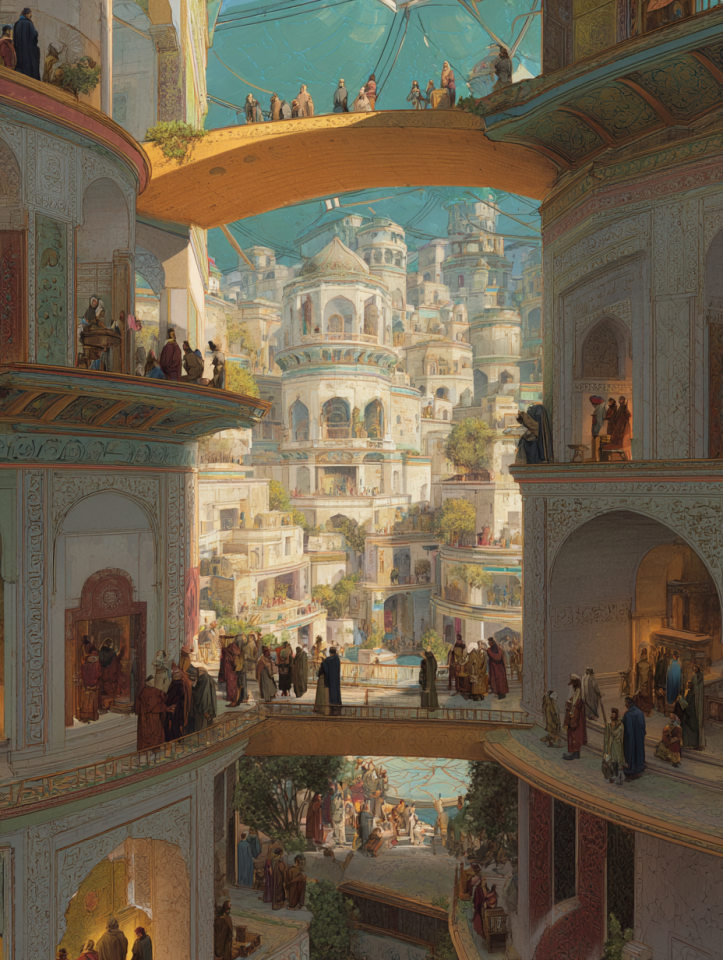
The Cooperative gave Koina its distinctive architectural character: courtyard-centered homes, shaded marketplaces, terraced roofs, and integrated energy systems. Its standards preserved durability while preventing exploitation of land and resources. By emphasizing repair and adaptability, it ensured that cities grew organically without displacing their ecological foundations.
Its influence reaches beyond buildings. Urban design became a civic philosophy, shaping how people live, gather, and remember. A well-built hall is not only shelter but also a stage for debate, a site for festivals, and a reminder of balance. Through its works, the Cooperative embodies the conviction that human settlements should be partners with the world, not conquerors of it.
Role in the Accord
Within the Accord, the Builders’ Cooperative provides expertise to federations undertaking large-scale projects: canals linking rivers, airship docks bridging regions, and assembly halls hosting debates. Its neutrality allows it to mediate disputes over land use, ensuring that shared projects serve all parties fairly.
At the Grand Assembly, Cooperative representatives present models of new halls and energy systems, often built collaboratively by multiple federations. These offerings stand as testaments to unity - structures raised not for glory, but for the endurance of balance.

Type
Guild, Professional




Comments