






Thought of Arbiters
Voices of Judgment and Balance
In a crowded council hall, tension thickens as two federations dispute over river rights. Merchants cite lost trade, farmers warn of famine, and tempers threaten to spill into recrimination. Then the Arbiters step forward, robes unmarked by guild or federation. Their voices are calm, their presence commanding not through power but through trust. They listen, they question, and they remind all that reason must prevail over rivalry.
Elsewhere, in a village dispute over inheritance, an Arbiter sits beneath a tree with both families. She listens to elders, children, and neighbors alike, weaving their testimony into a decision that all can accept. No decree is issued from on high; instead, the Arbiter offers a reasoning that binds, reminding both sides of their shared responsibilities.
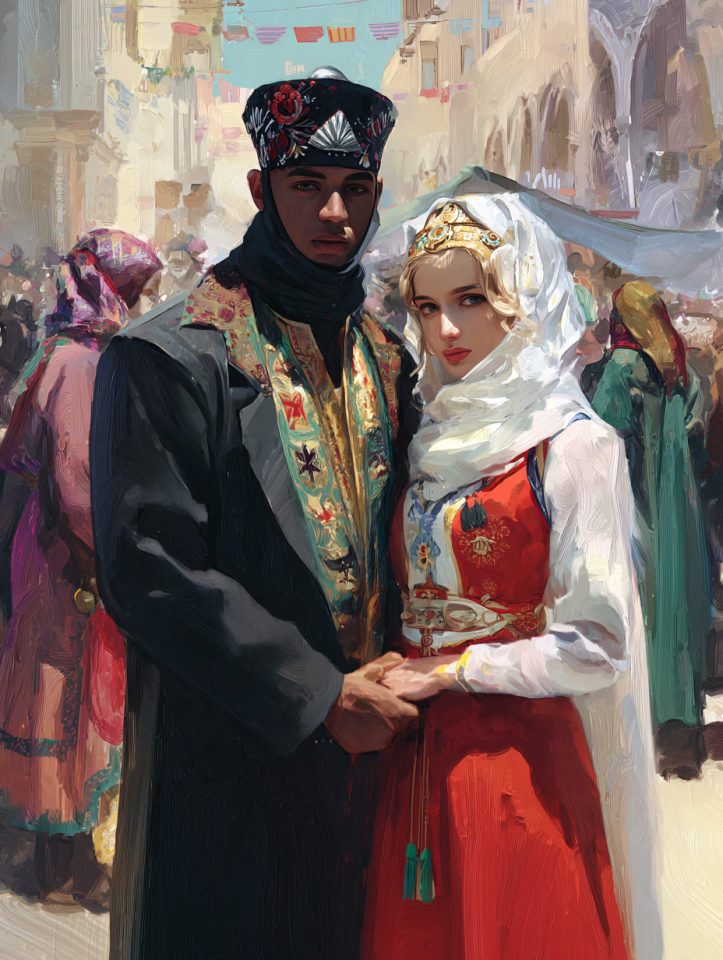
In another setting, a young couple seeks counsel on their union. An Arbiter listens without judgment, offering perspectives drawn from philosophy and precedent. In matters of grief, heartbreak, or reconciliation, they provide clarity where emotions cloud reason. Their authority rests not in command but in the trust that they will see all sides without bias.
Mediators - Facilitators of dialogue in civic, familial, and inter-federation disputes.
Judicial Scribes - Recorders who preserve proceedings and reasonings as precedent.
Philosophical Advisors - Counselors who frame conflicts in terms of ethics and balance.
Personal Counselors - Guides who address matters of family, partnership, love, and loss with impartial care.
Accord Envoys - Representatives called to resolve disputes in the Grand Assembly.
Teachers of Reason - Instructors who train apprentices in rhetoric, logic, and humility.
Origins & Purpose
The Thought of Arbiters was born when federations recognized that not all disputes could be settled by guilds or councils. Too often, conflicts crossed boundaries of craft, family, or tradition, requiring mediators trusted by all yet beholden to none. To fill this need, communities elevated individuals trained in philosophy, law, and dialogue, whose sole allegiance was to balance itself. Over generations, these individuals organized into a recognized body - not a guild of trade or craft, but a guild of reason.
Their founding purpose is to ensure that disputes, whether between federations or within households, do not fracture the cooperative fabric of Koina. Where law risks rigidity and guilds risk bias, the Arbiters provide neutrality. Their work spans from treaties and inheritance to love, grief, and personal reconciliation, embodying the conviction that every imbalance deserves to be heard and addressed with care.
Major Specialties
Organization & Practices
Arbiters are trained from youth in rhetoric, philosophy, and observation. Many begin as Whispers in councils, honing skills of listening and dialogue before pursuing the neutrality required of their order. They do not inherit their role but earn it through reputation, examination, and community affirmation.
Their practices emphasize patience and inclusivity. Whether mediating a quarrel between spouses or resolving a treaty deadlock, Arbiters collect every testimony before offering judgment. Their reasoning is always recorded and archived for transparency, ensuring consistency across generations. In daily life, they are accessible to citizens - anyone may seek their counsel without stigma, trusting that their disputes will be treated with dignity.
Contributions & Influence
The Arbiters have prevented countless conflicts from escalating, offering clarity where passion or rivalry threatened fracture. Their reasonings became precedents, shaping civic law, family customs, and inter-federation treaties alike. By normalizing impartial counsel, they created a culture where seeking mediation is a sign of strength, not weakness.
Their influence extends into personal life. Songs and plays often depict Arbiters as confidants of lovers or guides for grieving families. In this way, they entered the cultural imagination not only as judges of law but as companions in the most intimate moments of human experience.
Role in the Accord
The Arbiters serve as the Accord’s conscience. When federations deadlock, it is often their voices that break impasse, not by coercion but by persuasion rooted in shared values. Their presence at the Grand Assembly ensures that disputes are heard with impartiality, and their judgments carry authority precisely because they wield no factional power.
They are equally vital in everyday life, where their availability to families and individuals reinforces the Accord’s philosophy: balance is not only political but personal. By tending both the great disputes of nations and the quiet sorrows of households, the Thought of Arbiters sustains harmony across the full spectrum of human experience.

Type
Guild, Professional




Comments