Lucien Crowley

Father of Gothic Literature

Author's Note
Lucien Crowley was conceived as a composite of several real-world figures and creative traditions. His temperament and worldview draw from Stephen King, H. P. Lovecraft, Mary Shelley, J. R. R. Tolkien, and Aleister Crowley-each contributing a distinct thread. King offered the realism of everyday terror and the geography of haunted place; Shelley, the moral conscience of creation; Lovecraft, the cosmic indifference of knowledge; Tolkien, the architecture of myth; and Crowley, the fascination with ritual and forbidden truth.   Within the Koina setting, Lucien Crowley represents an imaginative inversion: the scholar who invents fear in a world that reasoned away gods. His “Dominion world” is Koina’s mirror image-an alternate civilization where conquest replaced cooperation and virtue decayed into control. The horror he writes is not rebellion against Koina’s harmony, but its necessary counterbalance, a thought experiment in moral gravity.   The geography of his “America” draws upon the Appalachian Mountains, chosen for their ancientness and sense of memory, in place of the coastal isolation of King’s Maine. The Lendonium Pantheon and the unseen presence of the Murmur evolved from the same Gothic impulse that shaped early modern horror: the awareness that every light, no matter how pure, casts an abyss behind it.   Lucien Crowley is, therefore, not homage but synthesis-a “what-if” seen through Koina’s lens, asking how our own world might have looked had empire and fear triumphed instead of cooperation. He exists as both artifact and mirror, a reflection of the world Koina chose not to become.  
  • Morgan Berry
  • Professor Lucien Xerah Crowley (a.k.a. Inventor of Moral Horror, Father of the Gothic Age)

    Lucien Crowley (14 Soma 1957 – 27 Sankofa 2028 zc) was a Persic-born historian and novelist whose work defined the Gothic literary movement. Initially a respected professor of comparative antiquity at the University of Roma, he later achieved international prominence for his speculative fiction exploring the psychological and moral dimensions of empire, belief, and civilization. Crowley’s Dominion Cycle and Lendonium Cycle established the foundation of the Gothic horror tradition and introduced enduring motifs such as the Lendonium Pantheon and the figure of Columbia, the benevolent but imperial goddess central to his mythos.   Although trained as a classical historian specializing in Alexandrian and pre-imperial studies, Crowley became widely known for fusing academic realism with supernatural themes. Critics in his lifetime described his prose as “precise, deliberate, and quietly terrifying,” while later scholars credited him with transforming the study of moral history into a form of narrative inquiry. By the late 21st century, his works were recognized across all federations as seminal contributions to modern literature.   Crowley’s fiction gave rise to a vast shared universe known collectively as the Dominion Continuum, which inspired successive generations of authors, dramatists, and resonance-film makers. His influence extends beyond literature into popular culture, education, and political commentary, where his term "Gothic" has entered the language to describe any aesthetic that confronts civilization with its own shadow.  

    Early Life and Education

      Lucien Crowley was born on 14 Soma 1957 zc in the hill-town of Virell, situated along the southern edge of the Hercynian Wilds in what was then the northern frontier of the Persic Federation. The region’s dense, ancient forests and enduring oral traditions left a strong impression on his imagination. Local folklore, preserved in the dialect of the old Virellan villages, warned children against wandering too far beneath the trees after dusk, where, according to popular tales, “the forest could remember your name.” Crowley later credited these stories with shaping his early fascination with language, memory, and the thin boundary between reason and superstition.   He was the only child of Henrik Crowley, a surveyor employed by the Federation’s Bureau of Roads and Rivers, and Saphira Delos-Crowley, a schoolteacher who specialized in the comparative study of Hellenic and Old Etruscan languages. The family relocated frequently during his childhood as Henrik’s work brought them through the rural provinces between the Hercynian frontier and the Aegean coast. Crowley’s mother provided most of his early education and introduced him to classical texts and linguistic study before his formal schooling began.   At the age of sixteen, Crowley was admitted to the Academy of Ephesus-Maritime, where he pursued advanced studies in history and philology. He excelled in historical linguistics and developed a particular interest in the transitional era following Alexander’s eastern campaigns. His early academic mentors, notably Dr. Iason Thermenis, encouraged him to combine historical reconstruction with philosophical analysis. Crowley’s undergraduate thesis, Syntax and Sovereignty: Language as the Architecture of Power, explored how early imperial administrative systems used vocabulary and syntax to define political hierarchy.   Following graduation, he continued his studies at the University of Tarsis, earning a doctorate in comparative antiquity in 1983 zc. His dissertation examined the hypothetical continuity of Roman governance had the Mediterranean remained unified after Alexander’s death, a subject that would later inform the political architecture of his fictional works. As a student, he was noted for his meticulous scholarship and reserved demeanor. Contemporaries described him as “quiet, patient, and preoccupied by questions too old for his age.  After receiving his doctorate, Crowley accepted a junior lectureship at the University of Roma, marking the beginning of a long academic association with the city that would define his later life and career.  

    Academic Career

      Crowley began his professional career at the University of Roma in 1985 zc as a lecturer in comparative antiquity, specializing in the political and linguistic transition between the Alexandrian and early Mediterranean federations. His lectures examined how administrative power, trade, and philosophy interacted across cultures in the centuries preceding the rise of the Roman model that never came to dominate history. His early research focused on civic integration systems in the Hellenic Leagues and Persic Federation, exploring how federative governance functioned without recourse to conquest.   By 1992 zc he had been promoted to senior lecturer and later full professor, earning a reputation as one of the foremost authorities on pre-imperial Mediterranean civilizations. He published extensively in academic journals, most notably The Journal of Comparative Antiquity and Transactions of the Hellenic Historical Society, where his articles combined archaeological detail with linguistic and philosophical analysis. His monograph Echoes of Empire: Alexander and the Failure of Assimilation (1996 zc) examined the moral and political reasons why imperial centralization never took root .   Crowley’s teaching style was distinctive. Students described his lectures as “meticulously calm, as though each sentence had been weighed in advance.” Despite his formal manner, his classroom discussions often turned toward speculative questions that blurred the boundary between history and imagination. Colleagues later noted that these discussions, particularly his recurring thought experiment marked the conceptual beginning of his later fiction.
     
    What would the world look like had Rome prevailed?
      Throughout the 1990s zc, Crowley served on several editorial boards and academic councils within the League of Historical Societies. He was also involved in the Roma Antiquities Preservation Project, which catalogued and digitized thousands of inscriptions and civic records from the city’s classical strata. His immersion in the archives of Roma, with their vast collection of fragments from alternate historical traditions, gave him access to material that would directly inspire the architectural and bureaucratic imagery of his novels.   By the early 2000s zc, Crowley’s academic output began to slow, replaced by a growing interest in narrative as a means of exploring moral history. Colleagues observed that his later papers read increasingly like prose essays rather than formal treatises. This gradual stylistic shift culminated in his first experiments with fiction, initially published anonymously under the pseudonym L. C. Virell, a nod to his birthplace. These works, serialized in minor literary journals, formed the groundwork for his eventual debut as a novelist.

    Transition to Fiction

    Crowley’s move from academic historian to novelist occurred gradually during the late 1990s and early 2000s zc. At the time, he was chair of the University of Roma’s Department of Comparative Antiquity and considered one of the institution’s most respected lecturers. His long-standing course, The Administrative Inheritance of Alexander, had developed a modest following beyond the university through recorded lectures distributed by the League of Translators’ educational network. These talks-especially his recurring speculation on the moral hazards of unrestrained empire-attracted the attention of literary journals interested in the narrative possibilities of alternate history.   Between 2002 and 2006 zc, Crowley published a series of unsigned short pieces in The Roma Review and Courier of Letters, written under the pseudonym L. C. Virell. These brief fictions blended historical realism with elements of the supernatural and are now regarded as prototypes for his later style. The best known of these early works, The Cartographer’s Widow (2004 zc), follows a scholar who discovers that his city’s maps subtly rearrange themselves each night, suggesting that geography is rewriting history to suit power. The story’s quiet tone and clinical precision distinguished it from contemporary horror fiction and drew praise for its “archival restraint.  His first public acknowledgment as a novelist came with the release of Echoes in Marble (2008 zc), a collection of revised and newly written stories under his real name. Critics noted that the book retained the intellectual discipline of his academic prose while venturing into moral and metaphysical territory. Reviewers in the Roma Chronicle described it as “a bridge between the archive and the imagination.” The success of the collection led to a contract with Hellenic House Press, which would later publish all of his major works.   By 2010 zc, Crowley had largely withdrawn from administrative duties at the university, though he continued to teach a limited number of seminars on Alexandrian philosophy and ancient linguistics. During this period he began drafting what would become The Dominion Cycle, conceived as a multi-volume exploration of a world in which Rome, rather than Parsa, had become the defining civilizing force. His contemporaries later observed that Crowley’s decision to pursue fiction was not a rejection of academia but an extension of it-“an experiment in moral historiography,” as one former student described it.   The publication of The Dominion Cycle in 2014 zc marked a turning point in his career, establishing him as one of Koina’s most influential literary figures and effectively founding the nation’s modern Gothic tradition.
    Date of Birth
    14 Soma 1957 zc
    Date of Death
    27 Sankofa 2028 zc
    Life
    1957 zc 2028 zc 71 years old
    Birthplace
    Virell, southern edge of the Hercynian Wilds, Persic Federation
    Place of Death
    Roma, Hellas
    Children
    Other Affiliations
    CTU: Cryptids  
    Occupation
    Historian; Professor of Comparative Antiquity, University of Roma; novelist
    Genres
    Gothic horror, speculative history
    Years active
    1985 – 2028 zc
    Notable works
    The Dominion Cycle, The Lendonium Cycle
    Known for
    Coining the term Gothic in Koina literature; creating the Lendonium Pantheon; considered the Father of Gothic Horror and the mythic “Father of America.”
    “A mind that measured empires by their shadows.”
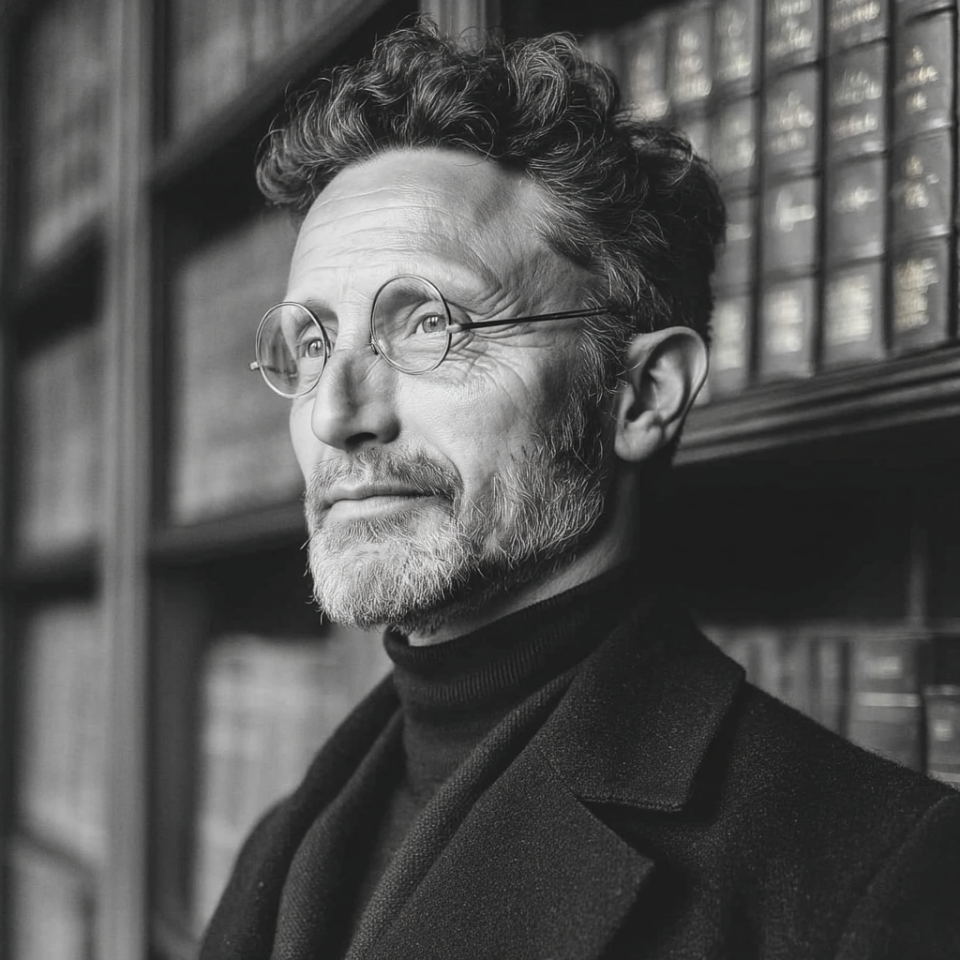
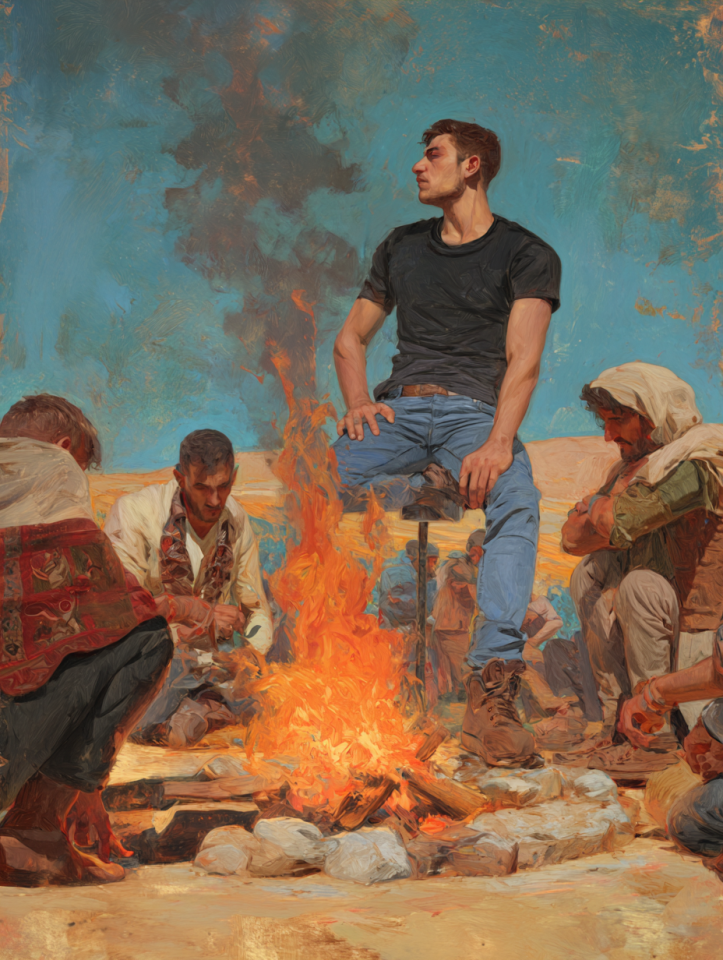
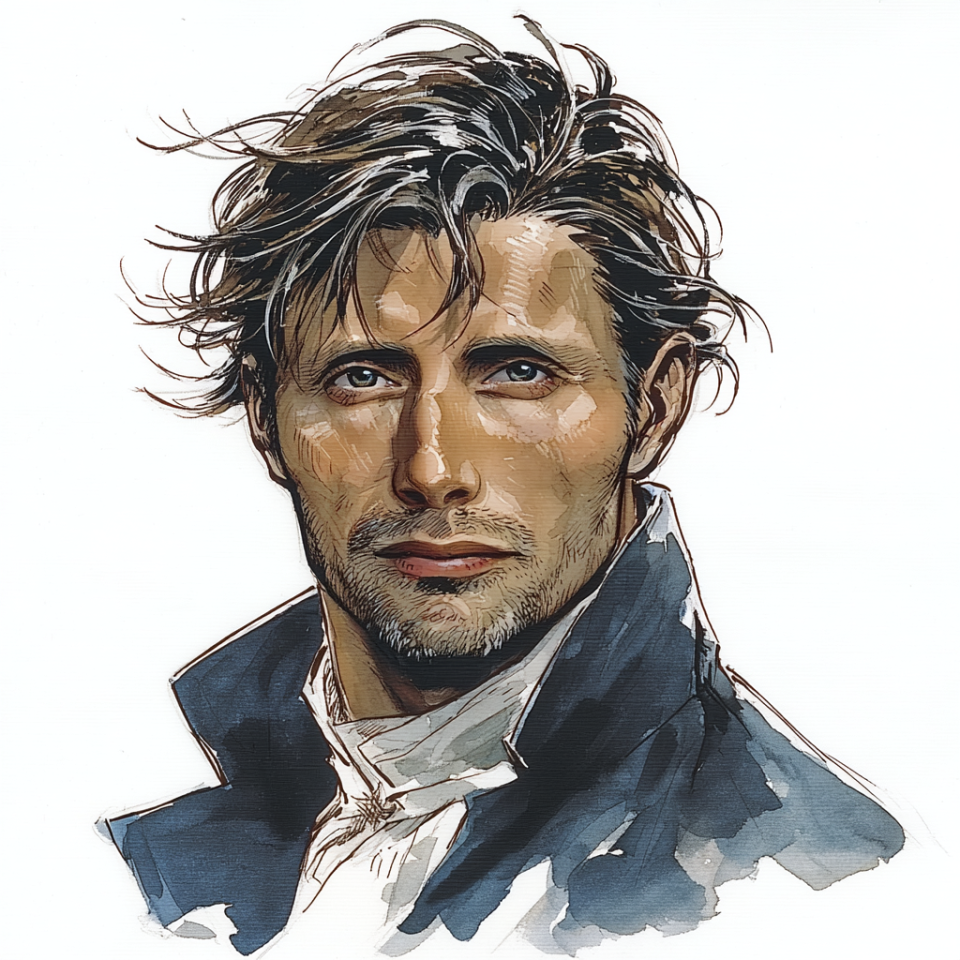
    Lucien Crowley (1957 – 2028 zc), photographed in his Roma study four years before his death.

    Major Works

    Crowley's Terran Universe - CTU
    Plot | Dec 7, 2025

    Crowley's Terran Universe

    Other Writings

    In addition to his major fiction cycles, Crowley produced a substantial body of essays, correspondence, and unpublished notes that bridge his academic and literary careers. Many of these works were collected posthumously by the Roma Institute for Historical Letters and the Hellenic League of Archivists, which maintain the Crowley Collection-a repository of manuscripts, lectures, and annotated drafts preserved in both print and resonance formats.   Among his most cited essays is The Gothic of Reason (2012 zc), first delivered as a public lecture at the University of Roma. In it, Crowley argued that the impulse toward fear in art arises “not from ignorance of truth, but from its overexposure.” The essay marked his first use of the word Gothic to describe a cultural mode rather than an architectural style and is widely regarded as the conceptual cornerstone of Koina’s Gothic movement.   Other notable papers include Fragments from the Administrative Dream (2015 zc), a meditation on bureaucracy and morality, and Notes on the Language of Shadows (2019 zc), a technical study of recurring etymologies across his fictional corpus. Several collections of his personal correspondence were published after his death, most prominently Letters from Roma (2032 zc), which offers insight into his relationships with editors, students, and contemporaries in the early Gothic scene.   Unfinished works discovered in his archives include drafts for a projected third cycle, tentatively titled The Mirrors of Terra, believed to have explored the metaphysical consequences of overlapping realities. Only scattered outlines and fragments survive, many of which were later incorporated into The Dominion War Chronicles by subsequent editors.   Crowley’s notebooks reveal a methodical writing process: extensive chronological charts, maps drawn in red pencil, and cross-referenced linguistic systems connecting his invented languages to classical Etruscan. These materials remain a primary resource for scholars of his worldbuilding technique and have been the focus of multiple exhibitions at the Roma Museum of Literature since 2040 zc.

    Personal Life and Death

    Crowley married Dr. Helena Myrris, a classical archivist at the University of Roma, in 1987 zc. The couple maintained residences in the city and later in a restored villa overlooking the Tiber Valley. Their marriage was regarded by contemporaries as “quietly devoted,” and the pair frequently collaborated on translation and archival projects. They had two children: Elara Crowley (born 1990 zc), an illustrator and cultural historian who contributed artwork to The Illustrated Immigrant’s Guide to America, and Marcus Crowley (born 1993 zc), an editor who later supervised publication of his father’s posthumous manuscripts.   In 2001 zc, Crowley entered into an adelphopoietic partnership with Adrian Loris, one of his former graduate students and later a lecturer in historical semiotics. The partnership, formally recognized through civic oath in 2003 zc, was viewed in Koina society as an extension of family rather than an alternative to marriage. Loris became Crowley’s closest collaborator during the writing of The Lendonium Cycle and remained by his side until the author’s death. Together they managed the extensive correspondence and editorial tasks associated with the growing “Terra Universe” project.   Colleagues described Crowley as disciplined and intensely private. He maintained fixed daily routines and was known for his near-photographic recall of text and detail. Students noted his tendency to pace while lecturing, tracing invisible diagrams in the air as he spoke. Friends characterized him as literal-minded but generous, “a man who preferred pattern to spontaneity and clarity to charm.” He collected antique writing instruments and geological samples from his travels through the Hercynian provinces, keeping them arranged in symmetrical displays throughout his study.   Crowley’s health began to decline in late 2027 zc, though records from his family and university give no specific diagnosis. He continued teaching in a limited capacity and was completing revisions for The Quiet and the White House Cycle when he died suddenly at his Roma residence on 27 Sankofa 2028 zc at the age of seventy-one. The official cause of death was listed as cardiac failure.   In the months following his passing, several accounts emerged that contributed to his posthumous mystique. Neighbors reported seeing the villa’s lights burning continuously for three nights after his death, despite the house having been sealed by university archivists. Others claimed that a half-finished manuscript found on his desk contained a final line-“I have heard the city dreaming again”-which was absent from all known drafts. Rumors circulated that certain passages of his unpublished notes shifted wording between cataloguing sessions, though archivists have attributed this to transcription errors.   Crowley was cremated at the Roma Civic Gardens, and his ashes were divided between a memorial grove at the university and the family estate near Virell, his birthplace. His adelphic partner, Adrian Loris, oversaw the organization of his papers and correspondence, while his wife Helena and their children jointly established the Crowley Trust, which funds research in comparative literature and archival preservation. Annual commemorations of his life are held in Roma and Ephesus, where readings from The Quiet traditionally close with the phrase attributed to his final manuscript.

    Legacy

    Lucien Crowley’s influence on Koina literature, scholarship, and popular culture has remained profound since his death in 2028 zc. Within a decade of his passing, his complete works had entered the national educational curriculum, and multiple universities established chairs in Gothic and speculative literature in his name. His synthesis of academic precision and imaginative fiction is widely credited with elevating speculative writing to the status of serious cultural inquiry within the Persic and Hellenic federations.   Critics and historians frequently describe Crowley as the founder of the Gothic tradition, a movement that redefined horror not as superstition but as moral introspection. His novels replaced supernatural punishment with psychological and philosophical consequences, transforming fear into a tool for ethical reflection. Later writers adopted his approach to moral allegory through works set in the shared Dominion Continuum, a collective term for fiction derived from his Terra Universe. Among these, Elara Crowley’s illustrated companion volumes, Marcus Crowley’s editorial expansions, and Adrian Loris’s commentary series, The Dreaming City Papers, are considered canonical continuations of his world.   Throughout the 2100s zc, adaptations of Crowley’s works proliferated across media. The Lendonium Cycle inspired several acclaimed resonance-film productions, most notably director Naila Derenis’s 2115 adaptation of The Iron Gospel, which won multiple Accord Arts Guild awards. The White House Cycle was reinterpreted as a serialized drama under the title The House That Governs Itself, maintaining its original phrase as a cultural idiom for self-perpetuating institutions.   In academic circles, the Roma Institute for Historical Letters published a comprehensive twenty-volume critical edition of his writings between 2125 and 2132 zc, including correspondence, marginalia, and unfinished fragments. These volumes remain the definitive source for Crowley studies. Conferences dedicated to his work, often titled Crowley Symposia, are held biennially across federations.   Cultural references to Crowley’s settings and terminology have entered everyday language. The adjective “Lendoniumian” is used to describe works that evoke urban decay, moral ambiguity, or the aesthetics of civility masking horror. Phrases such as “the house that governs itself” and “the pit that stares back” are commonplace in political commentary and popular journalism, while the term Crowleyesque denotes intellectual or psychological horror grounded in realism.   A number of myths have also developed around his final years and supposed “missing works.” Stories persist of an unverified manuscript, The Mirrors of Terra, believed to contain alternate endings to The Quiet. No authenticated copies have been found, though speculative fragments circulate among collectors and online archives. These legends have contributed to Crowley’s enduring reputation as both scholar and mythmaker-a figure whose life and imagination continue to blur the boundary between historical inquiry and the supernatural.   Later scholarship and popular adaptations expanded Crowley’s mythos to include recurring references to the Murmur, an unseen force described as “the silence that listens back.” Critics interpret it as a metaphor for the abyssal consciousness central to his Gothic philosophy. Post-Dominion authors of the Continuum also introduced the concept of the Quiet Apostasy-a symbolic “death of the old gods” and rise of new deities of excess and technology-believed to derive from fragmentary notes found among Crowley’s late papers. These additions are widely accepted as thematic continuations of his original canon, reinforcing his reputation as the writer who taught that “the abyss, once imagined, never stops looking back.

    Selected Quotations

    We build the pit to measure our own depth, and it is courteous enough to stare back.
  • The Gothic of Reason (lecture, University of Roma, 2012 zc)
  • No empire ends; it only changes the name it uses to justify its hunger.
  • The Dominion of Ashes (2014 zc)
  • Fear is the only teacher that tells the truth. It never flatters, never forgets, and never lies about what we are.
  • Letters from Roma (2032 zc)
  • The gods of civility will always smile as they devour you, because they believe it is for your good.
  • The Iron Gospel (2023 zc)
  • The house that governs itself and governs nothing-such is the heart of every institution that mistakes permanence for purpose.
  • The House That Governs Itself (2024 zc)
  • If language is the architecture of power, then silence is its ruin.
  • The Quiet (2027 zc)
  • We have never escaped the forest. We merely learned to plant trees that remember us.
  • posthumous fragment, The Mirrors of Terra (unverified manuscript, 2029 zc)
  • References in Popular Culture

    Crowley’s life and work have remained persistent fixtures in the cultural landscape. Numerous literary institutions, festivals, and academic programs bear his name, reflecting his dual status as both historian and novelist. The Crowley Trust sponsors an annual fellowship in comparative literature and speculative history, awarded jointly by the University of Roma and the Academy of Ephesus-Maritime.   The Roma Museum of Literature opened a permanent exhibition, Lucien Crowley: The Architecture of Fear, in 2060 zc, displaying manuscripts, annotated maps, and replicas of props from early resonance-film adaptations. His restored study, preserved at the family villa outside Roma, serves as both museum and writers’ residency. A memorial sculpture titled The Pit by artist Iria Solomene-a black marble spiral inscribed with his most famous quotation-stands in the university’s central gardens.   His fiction continues to inspire adaptations across media. The 2115 resonance-film The Iron Gospel remains one of the most commercially successful productions in history, while The House That Governs Itself (serialized 2128–2130 zc) popularized the phrase “governs itself and governs nothing” in political satire. Interactive archive editions of the Illustrated Immigrant’s Guides are widely used in educational settings to teach narrative historiography.   In the cultural lexicon, “Crowleyesque” has become a shorthand descriptor for intellectual horror or any narrative that reveals moral dissonance beneath civility. Festivals in Myra, Roma, and Virell commemorate his birthday with public readings, symposia, and dramatizations of his work. His influence extends beyond literature into philosophy, architecture, and visual art, where his imagined worlds continue to shape interpretations of Gothic aesthetics around the globe.   Contemporary serialized media has also adopted Crowley’s work as a source of stylistic homage. The long-running exploration drama Wind Walkers included a quiet tribute to the Terran Universe in its alternate-reality episode arc, incorporating set motifs and narrative beats modeled on Dominion-era aesthetics. Series creator Sohan Yun later acknowledged Crowley’s novels as a formative influence, noting that the homage was intended as a private nod rather than a literal crossover. The episode’s careful mirroring of Crowleyesque themes—moral tension beneath civility, bureaucratic dread, and speculative historiography—earned praise from critics for bridging two distinct storytelling traditions.

    Articles under Lucien Crowley


    Comments

    Please Login in order to comment!
    Powered by World Anvil