


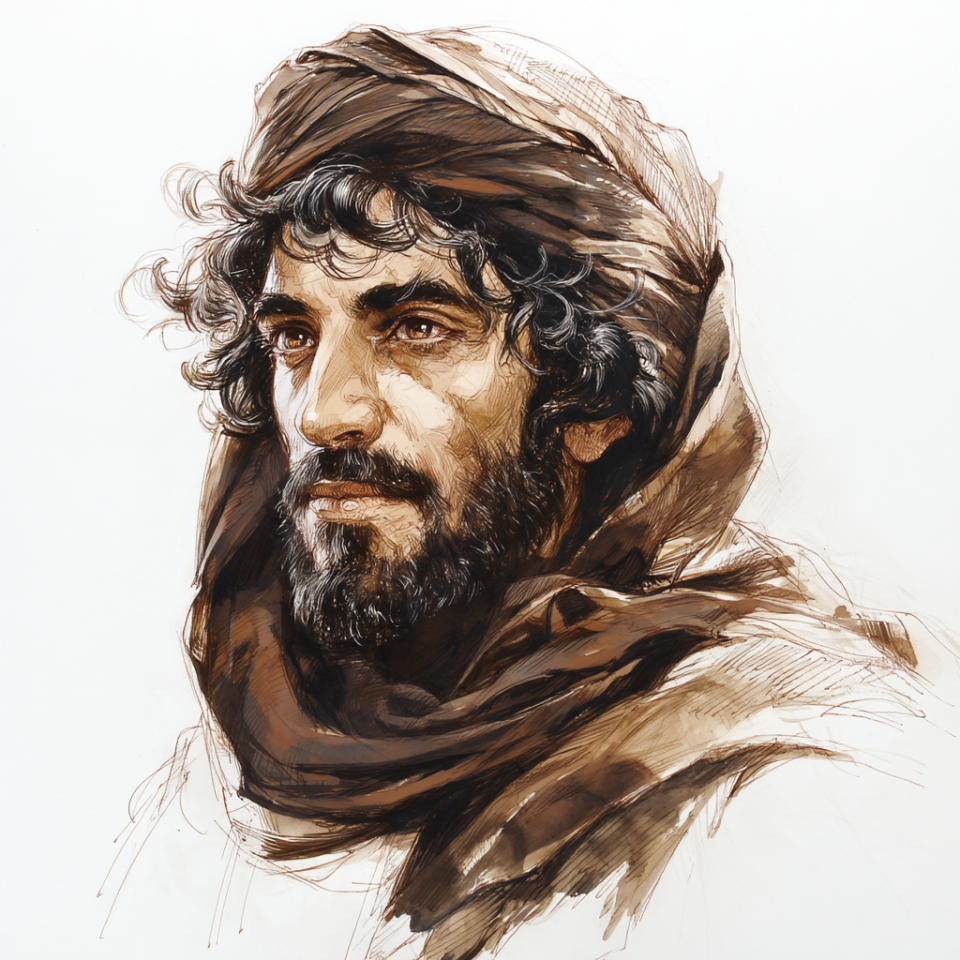
Muhammad ibn Abdullah (moo-HAH-med)
Voice of Justice; Founder of the Mohammedan School
(a.k.a. al-Amīn (“the Trustworthy”), al-Ṣādiq (“the Truthful”))
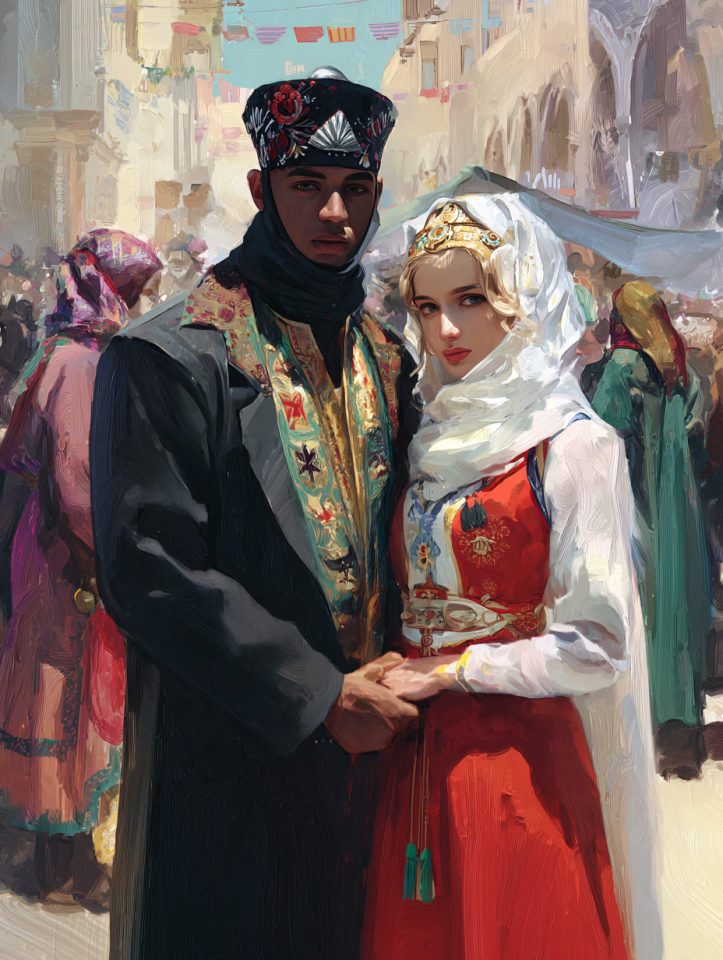
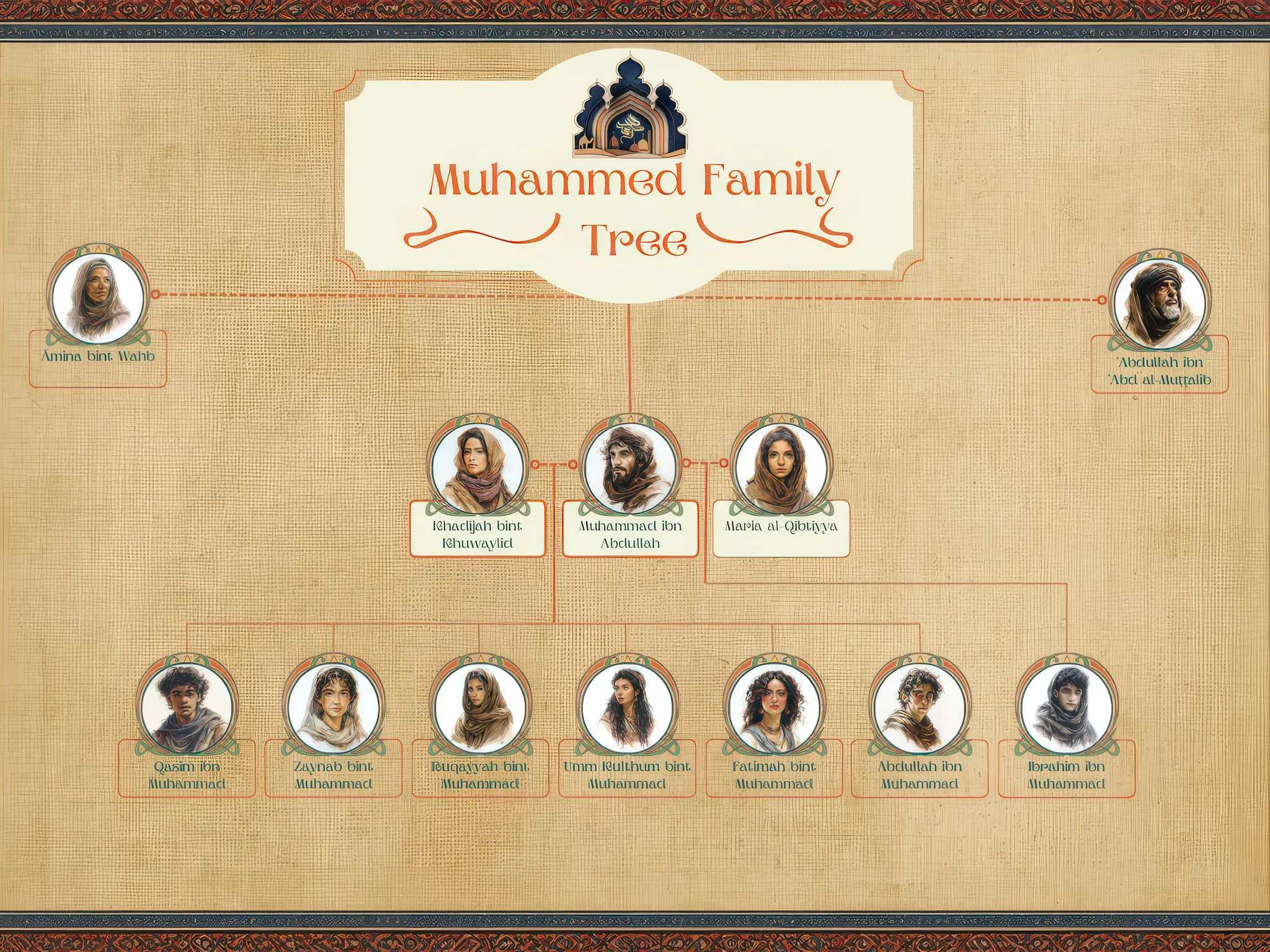
Muhammad was born the son of Abdullah ibn Abd al-Muttalib and Amina bint Wahb. His father died before his birth, and his mother passed away when he was still a child. Raised first by his grandfather and later by his uncle Abu Talib, Muhammad experienced the fragility of childhood without parental protection, but also the resilience of extended household life — a norm within the federative system of Koina.
ʿAbdullah ibn ʿAbd al-Muṭṭalib (c. 825–850 zc, Yathrib Oasis) – Merchant of the Quraysh.
Āmina bint Wahb (c. 825–856 zc, Yathrib Oasis) – Remembered for her piety.
The Yathrib Oasis at this time was a thriving trade hub within the Persic Federation, a crossroads for caravans flowing between Arabia, Mesopotamia, and the Red Sea. Philosophical and religious ideas traveled alongside spices and textiles: Zoroastrian priests, Buddhist monks, and Stoic teachers were familiar presences in caravanserais and markets. From youth, Muhammad was known as al-Amīn, “the trustworthy,” for his honesty in trade and integrity in relationships.
Khadijah bint Khuwaylid: Merchant; first and primary partner, Whisper of Justice.
Sawda bint Zamʿa: Known for generosity, especially in household care.
ʿĀ’ishah bint Abī Bakr: Remembered for her sharp memory and role in preserving sayings.
Hafsa bint ʿUmar: Keeper of written scrolls of Muhammad’s teachings.
Zaynab bint Khuzayma: Known as “Mother of the Poor” for her charity.
Umm Salama (Hind bint Abī Umayya): Advisor and teacher in assemblies.
Zaynab bint Jahsh: Remembered for devotion and independence.
Juwayriya bint al-Ḥārith: Active in building bonds with her kin’s community.
Umm Ḥabība (Ramlah bint Abī Sufyān): Known for bridging family rivalries.
Ṣafiyya bint Ḥuyayy: Of Jewish heritage, symbolizing covenantal inclusivity.
Maymunah bint al-Ḥārith: Last of his wives, remembered for her devotion.
Qasim ibn Muhammad
Zaynab bint Muhammad
Ruqayyah bint Muhammad
Umm Kulthum bint Muhammad
Fatimah bint Muhammad – Married Ali ibn Abi Talib; Whisper of Mercy.
Abdullah ibn Muhammad (also called *al-Ṭayyib* and *al-Ṭāhir*; died young, Yathrib Oasis).
Ibrahim ibn Muhammad (son of Maria al-Qibtiyya).
Parents
Marriage and Household
As a young man, Muhammad entered the service of Khadijah bint Khuwaylid, a respected merchant widow. His fairness and ability in caravan management impressed her, and their marriage soon followed. Their household was cooperative, prosperous but marked by generosity, care for the poor, and honesty in trade. Khadijah was his equal partner — both in commerce and in philosophy — and is remembered in Koina as a Whisper of Justice in her own right. Together they raised several children: daughters Fatimah, Zaynab, Ruqayyah, and Umm Kulthum, as well as sons Qasim and Abdullah who died young. Their home became a place of welcome for travelers and apprentices, remembered as one of the first living embodiments of the Mohammedan School. Family Tree - LimitedOnly parentage and progeny (with mothers). For all wives/household partners, see below.





Comments