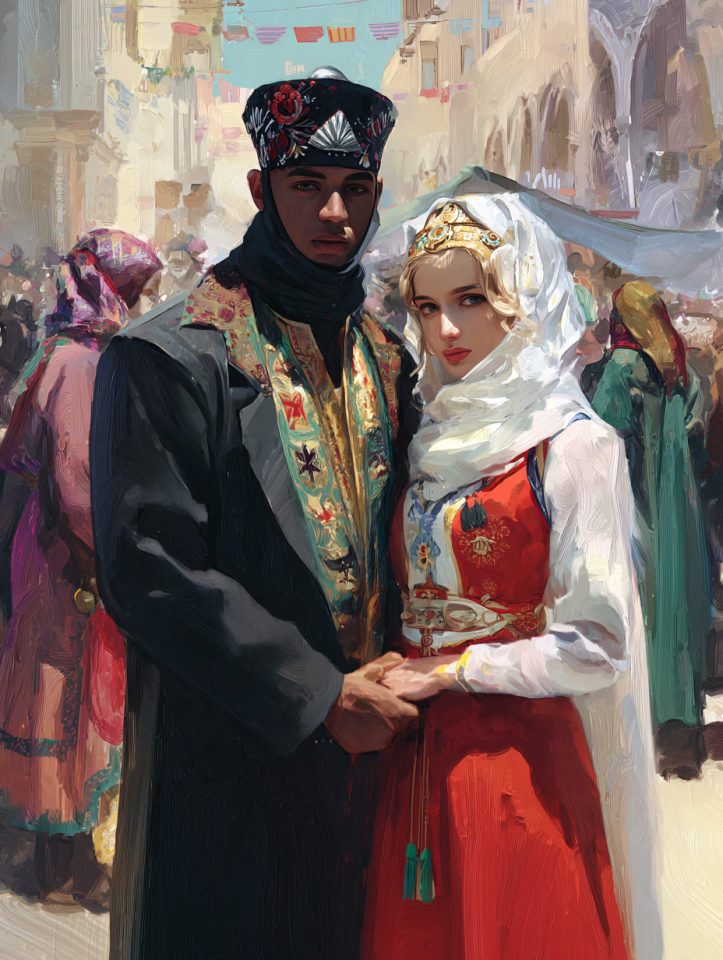
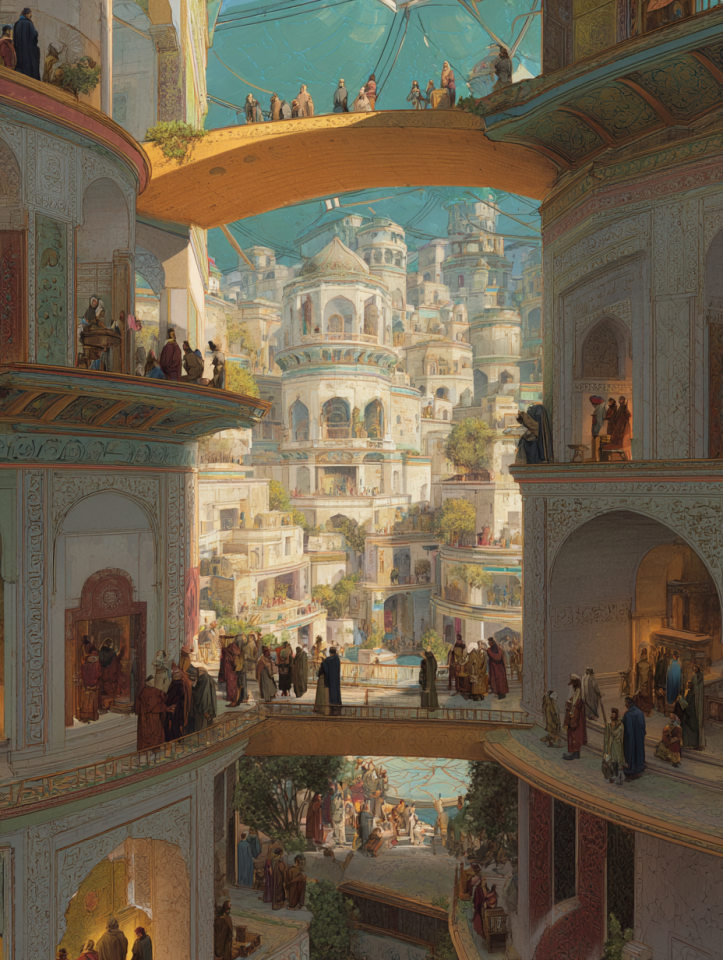
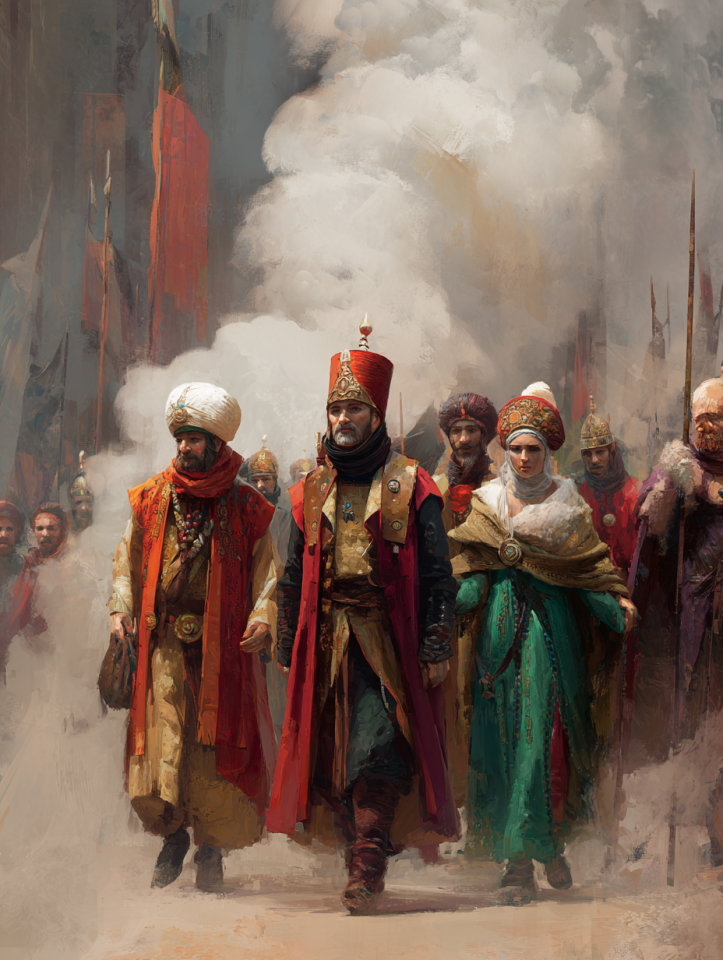
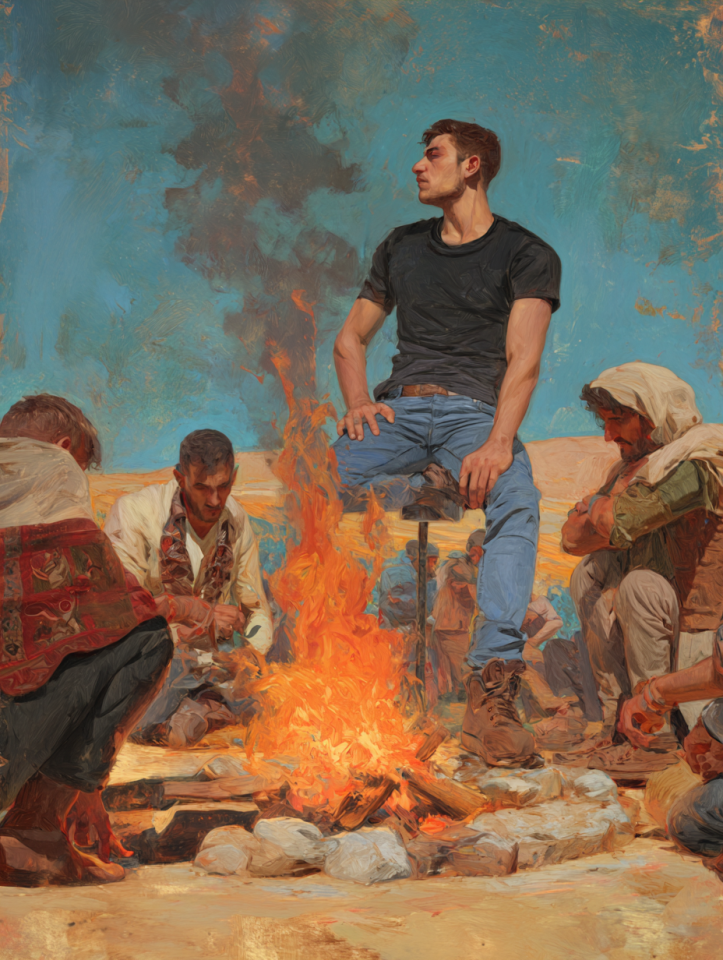

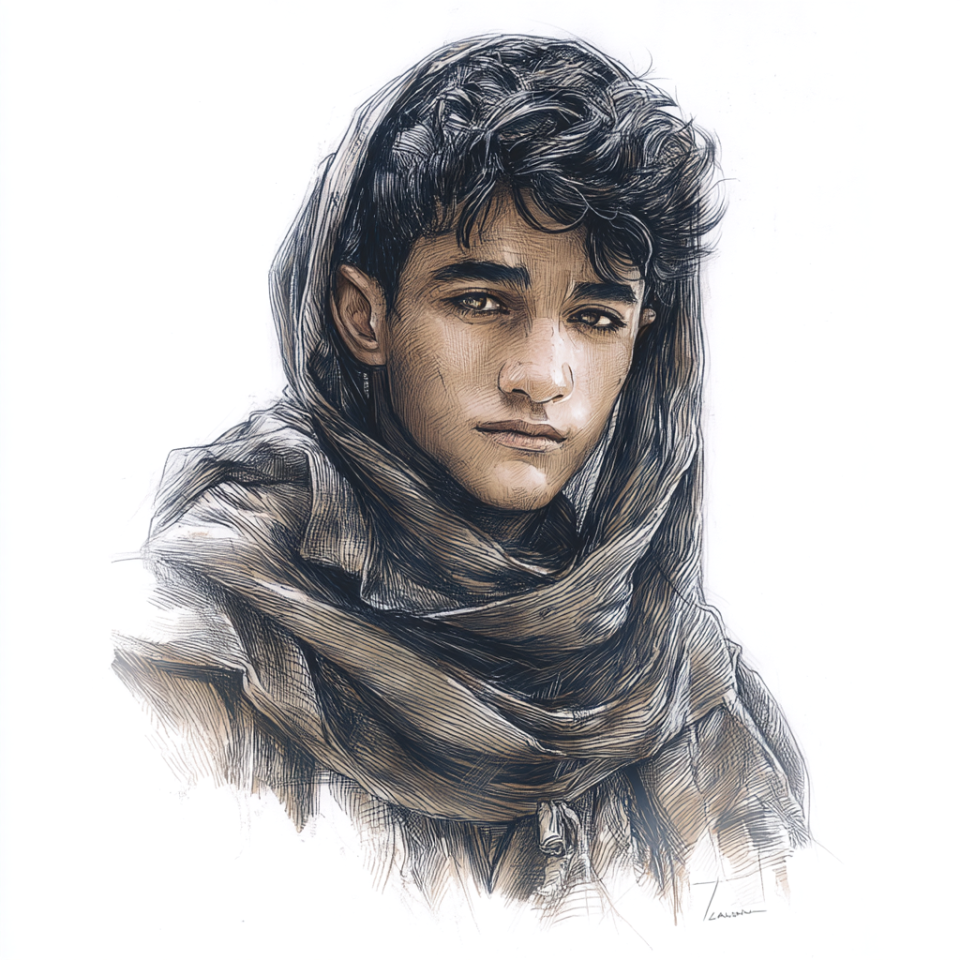
Ibrahim ibn Muhammad (ee-brah-HEEM)
Second Founder of Adelphism
Ibrahim ibn Muhammad lived centuries after Eliezer’s courtyard gatherings had faded into legend. Born in the caravan towns of Arabia, he grew up in a culture where hospitality was the highest law of the desert — to turn away a traveler was to endanger life itself. As a youth, Ibrahim was shaped by long journeys across the sands, where survival depended on trust between strangers. This upbringing instilled in him a fierce sense of justice and a devotion to equality among companions.
When Ibrahim encountered the scattered teachings of Eliezer, he recognized in them an echo of his own convictions. Yet he also saw a gap: Eliezer had taught the welcome of the stranger, but had not fully addressed the coexistence of entire traditions. Ibrahim extended the ethic. To welcome the stranger was not enough; one must also welcome their gods, their scriptures, their philosophies. In his words: “The table is not full until every path has a place at it.”
Ibrahim spent much of his life traveling between councils and caravanserais, speaking not of conquest or conversion, but of companionship. He was known to carry multiple scriptures with him — Torah, Gospels, Qur’anic verses — reading from each as though they were chapters of the same story. His charisma lay not in oratory but in fairness: opponents trusted him to mediate disputes because he refused to elevate one tradition above another.
By the time of his death, Ibrahim had transformed Adelphism from a philosophy of welcome into a cooperative faith of plural belonging. Under his guidance, the motto “We are all one in the light” became its enduring refrain. His re-affirmation of Adelphism in the 7th century marked its second founding, ensuring its survival not as memory but as movement.






Comments