




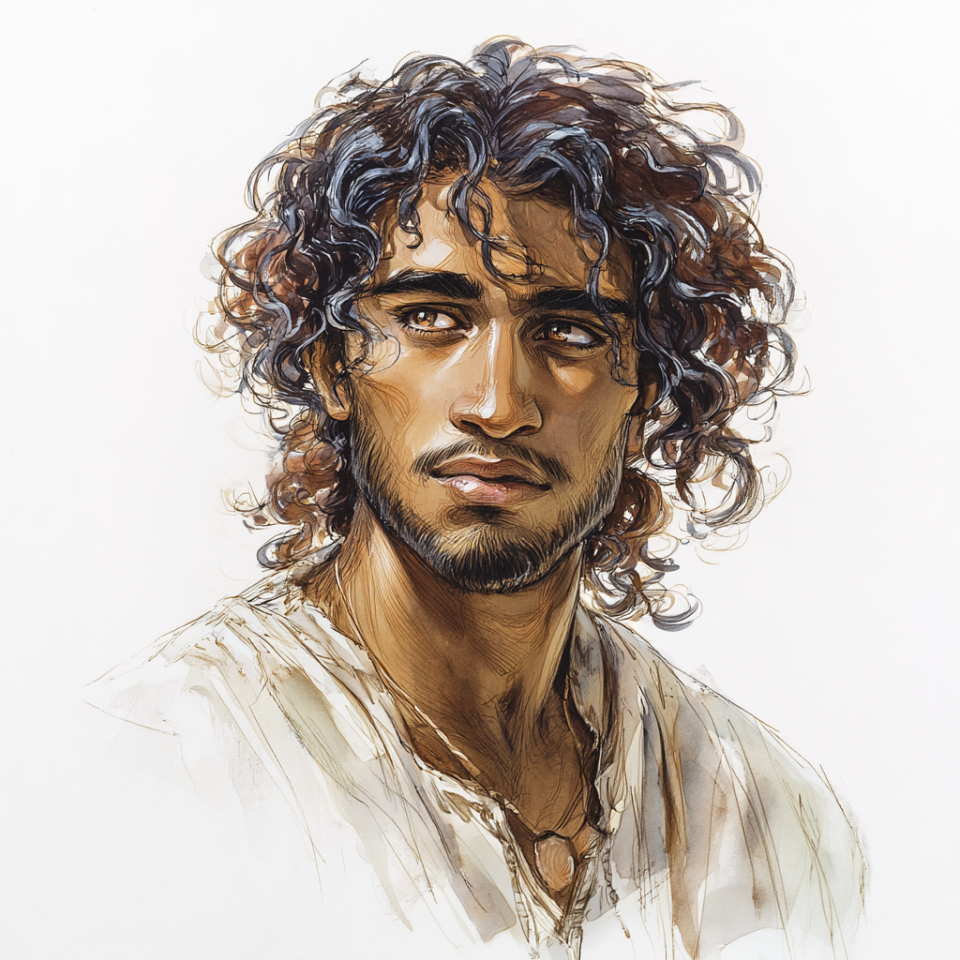
Yeshua ben Yosef (YEH-shoo-ah)
Voice of Compassion; Founder of the Christian School
(a.k.a. Jesus)
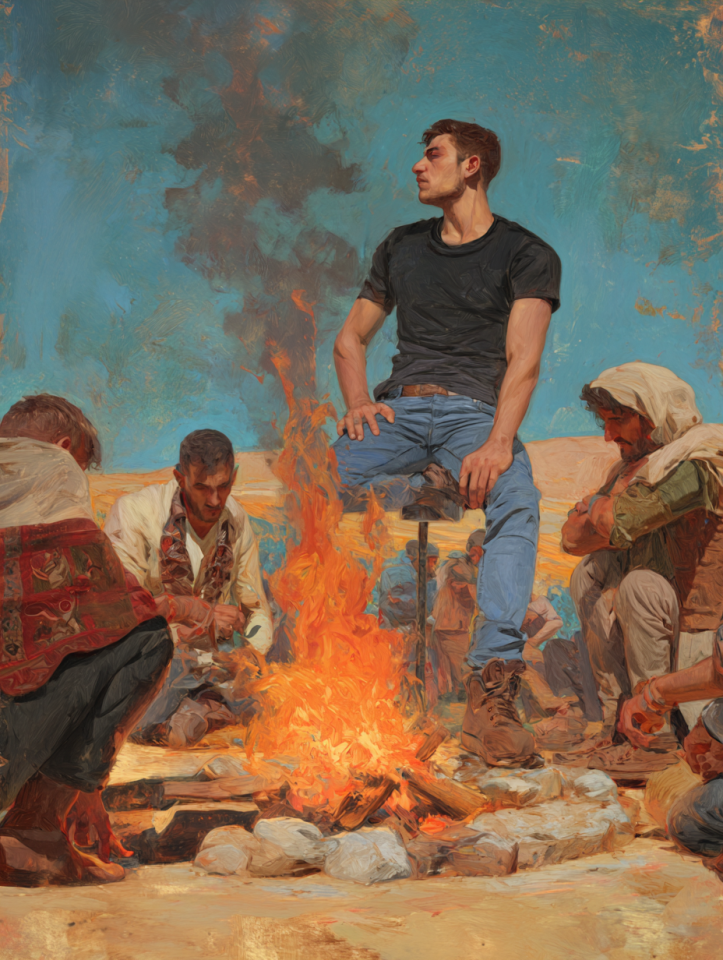
Yeshua was born in Nazareth, in Judea, during a period of relative stability under the federative system inherited from the Persians. His family was part of the Artisan Guilds — carpentry, small trade, and seasonal agricultural work — and his childhood was shaped by both Jewish ritual and the cooperative rhythms of council life. Unlike the embattled province of our history, Judea in Koina was a place where traditions thrived alongside the presence of foreign merchants, philosophers, and healers traveling through Galilee.
From his earliest years, Yeshua was drawn to scripture and story. He listened attentively to elders reciting Torah, but also to caravan travelers recounting Buddhist allegories, Stoic debates, and Zoroastrian hymns. This plural environment gave him an expansive view of faith: covenant was not isolation but dialogue, a living agreement between community and the wider world.
Marriage and Household
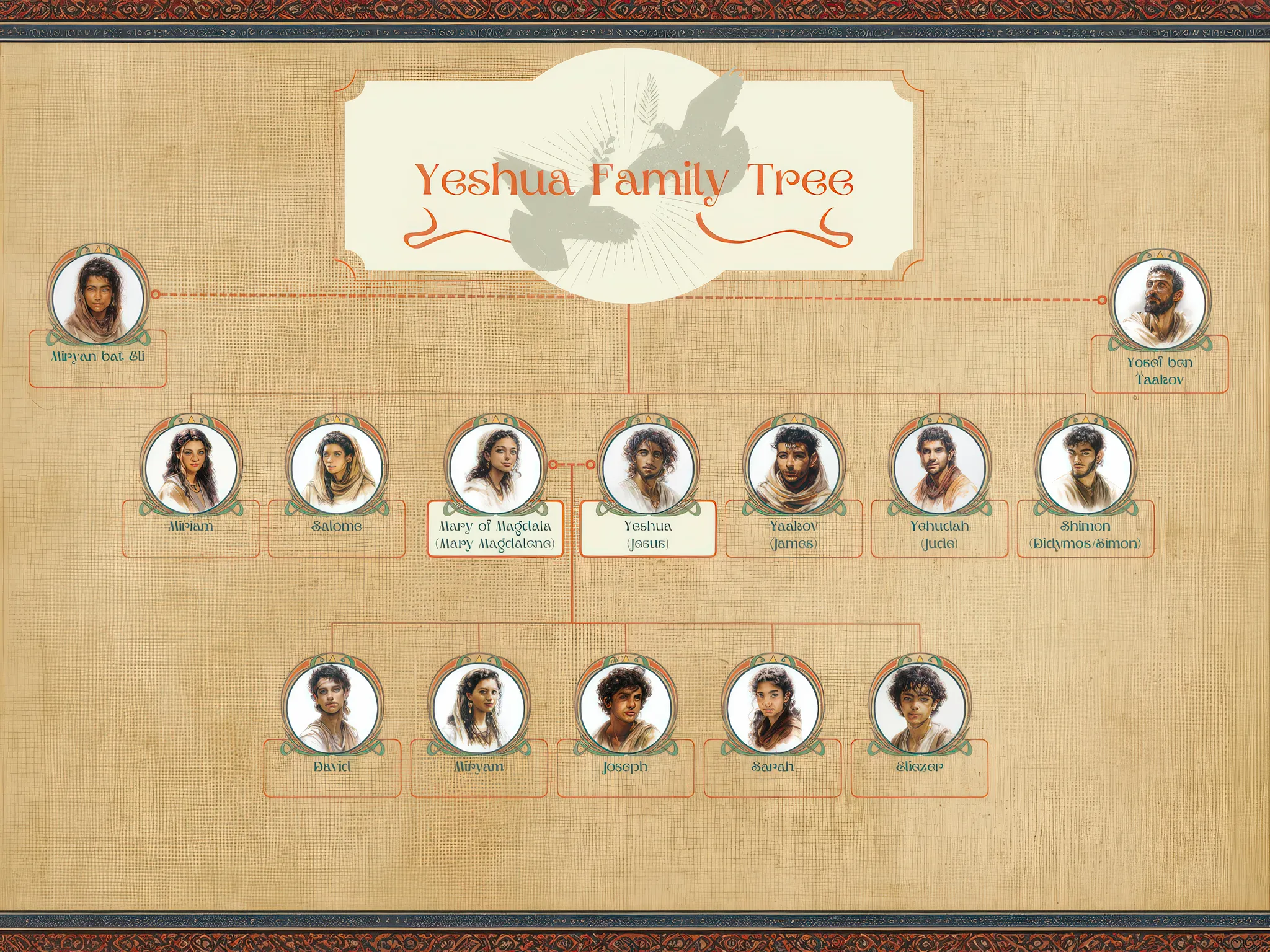
In keeping with Jewish tradition, Yeshua married in early adulthood. His partner, remembered as Mary Magdalene, was not only his wife but his co-teacher, a woman of intellect and conviction who embodied the principle of endurance and compassion in their shared path. Together they raised children, grounding their teachings in family life. His siblings — James, Jude, and others — were also active in his community, creating a cooperative household that blurred lines between kin, apprentices, and extended family. This household became a model in itself: a living parable of covenant, where forgiveness, dialogue, and care were not abstract virtues but daily practice. Family TreeJourneys and Encounters
In his twenties, Yeshua began to travel widely along the caravan routes. He visited Antioch, where he debated Stoic philosophers; Babylon, where he observed Zoroastrian rites of fire and balance; and further east, where Buddhist sanghas were moving westward into Bactria and Persia. These encounters deeply influenced him, reinforcing the conviction that compassion, forgiveness, and balance were universal truths, not bound to a single people or creed. He returned to Galilee with a message that reframed Judaism without rejecting it. For Yeshua, covenant was not obedience to hierarchy but the practice of harmony — between rich and poor, neighbor and stranger, body and spirit. His Jewish identity remained central, but it blossomed into a philosophy resonant with Buddhist compassion and Stoic endurance.Voice and Whispers
By his thirties, Yeshua had become recognized as a Voice: a teacher, mediator, and healer whose charisma drew communities together. His parables blended Jewish storytelling with Stoic logic and Buddhist allegory, making them accessible yet profound. Around him gathered a circle of Whispers — his wife Mary Magdalene, his siblings, and his closest companions — who each embodied a facet of his philosophy: forgiveness, justice, humility, compassion, endurance. Rather than founding a centralized church, Yeshua fostered communities of dialogue and healing. He taught in homes, marketplaces, and guild halls. His leadership reflected the cooperative system of Koina itself: rotational, accountable, and plural.Later Years and Death
Yeshua lived into maturity, guiding his household and communities across Judea. In his later years, he participated in assemblies linked to the First Accord, where his philosophy of compassion and forgiveness found receptive audiences among Stoics, Buddhists, and dharmic thinkers. His Sayings were collected during his lifetime into scrolls and oral traditions, later preserved as the *Book of the Compassionate Voice*. He died peacefully in Galilee, surrounded by his family and community. His death was marked by mourning festivals, but also by celebration of a life lived in balance. His children and siblings continued his work, ensuring his household remained a living strand of the broader cooperative world.Legacy
Yeshua’s legacy was not empire or creed but a school of thought: the Christian School, rooted in Judaism yet dialogic with the philosophies of the wider world. His Whispers carried forward diverse paths — some emphasizing compassion, others endurance, others justice — but all remained loyal to his vision that harmony was achieved through forgiveness and care. In Koina, Yeshua is remembered not as a martyred savior but as a Voice of Compassion — a teacher, husband, father, and philosopher whose household embodied The Covenant of balance. His story remains one of the great threads of the cooperative world, a reminder that faith, when lived through family and community, becomes not doctrine but daily life.Relationships
Date of Birth
19 Sophia 275 zc (Bauen)
Date of Death
340 zc
Life
275 zc
340 zc
65 years old
Circumstances of Birth
Marked by the 70-day Dawn Star
Birthplace
Nazareth, Judea
Place of Death
Galilee, Judea
Spouses
Mary of Magdala
(wife)
Siblings
Yaakov ben Yosef
(brother)
Yehudah ben Yosef
(brother)
Shimon ben Yosef
(brother)
Miriam bat Yosef
(sister)
Salome bat Yosef
(sister)
Children
Belief/Deity
Christianity + Judaism
 Foundational teacher of Accord’s Compassion School; compassion as civic law.
Other Affiliations




Comments