
The Great Yu Taming the Flood
Cooperation, engineering, and ecological balance.
In the ancient days, before kings and dynasties, the earth was wracked by flood. The waters surged from the mountains, rivers overflowed their banks, and the plains drowned beneath endless waves. Villages were swept away, fields turned to marsh, and humankind cried out in despair.
First came Gun, a man of ambition, who sought to block the waters with walls of earth. He heaped embankments high, but the waters only rose higher, smashing through with greater fury. Nine years he labored, and nine years he failed. At last he was cast down, and his son Yu was chosen in his place.
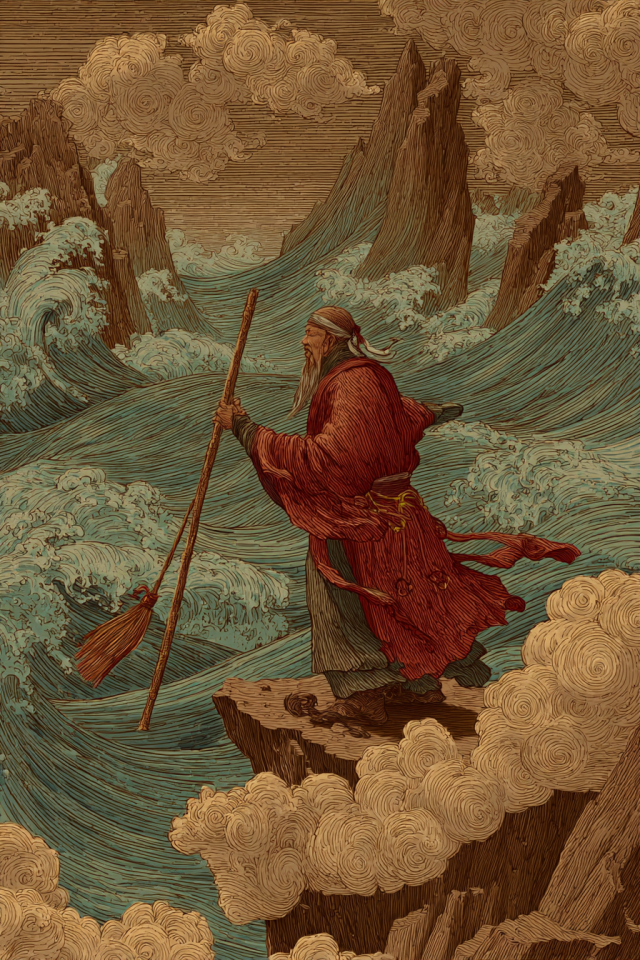
Yu took another path. He did not try to fight the waters with barriers, but to guide them. Day and night he traveled the land, surveying mountains, valleys, and streams. He cut channels through stone, deepened riverbeds, and opened paths for the flood to flow to the sea. Where Gun had resisted, Yu cooperated, shaping harmony between water and earth.
So tireless was his labor that he passed his own home three times without entering, though his wife and child stood at the door. “Not until the waters are tamed,” he said, “may I rest in my house.” His body grew gaunt, his hands calloused, but still he pressed on, leading the people in carving canals and building dikes where needed, always letting the waters move freely rather than damming them in anger.
After thirteen years of toil the floods receded. The rivers ran clear to the sea, fields dried for sowing, and villages rose again on firm ground. Where once the land was chaos, now it was ordered by channels, banks, and fields in balance with the waters.
The people hailed Yu as savior, and the sage-king Shun, seeing his virtue, yielded the throne to him. Thus Yu became ruler, the first of the Xia, remembered not for conquest but for service. His name was carried in song: Yu the Great, who tamed the flood not by strength alone but by wisdom, patience, and devotion to the people.
Even in later centuries, when dynasties rose and fell, the story of Yu endured. He was remembered not only as founder of a line, but as the one who taught that harmony with nature is the root of just rule. The canals he carved became symbols of order itself, flowing through memory as surely as the rivers flowed to the sea.
Related Organizations




Comments